
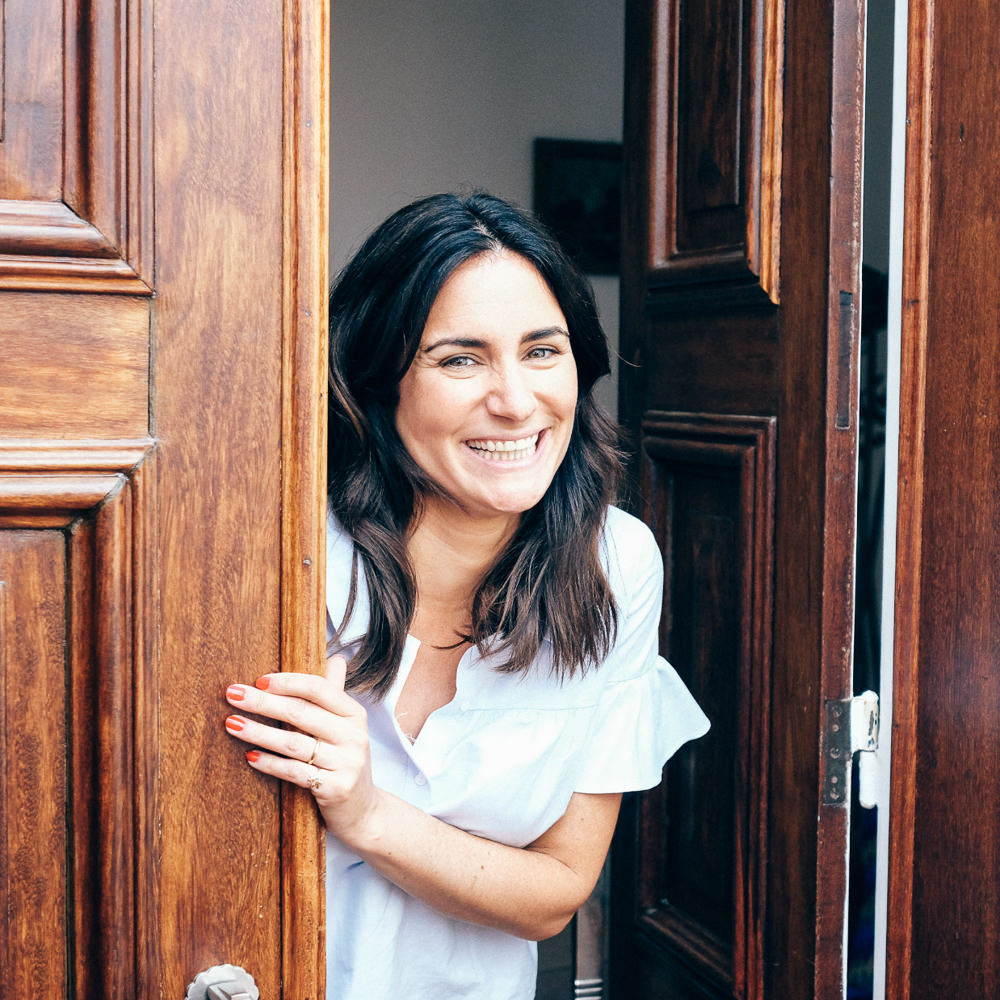
Episode 16 · Season 1
A estabilidade que leva à felicidade
Pureza Mello Breyner Fashion DesignerPureza Mello Breyner
transcript + show
episode: 16 title: "Ep. 16 - A estabilidade que leva à felicidade, com Pureza M. Breyner" pub_date: "Mon, 15 Jul 2024 05:00:00 +0000" original_language: english source_audio: "aa572670.mp3"
Hello, welcome. I'm Rui and this is the WACK Podcast. Hello Pureza, always welcome to the WACK Podcast. Are you ok? Thank you for the invitation. I'm great, thank you. Impeccable. Look, I'm going to start by telling you this. To talk about purity, for me and I think for a lot of people, is to talk about elegance and romanticism. When a bride tells us that the dress is made for you, we know that it will be beautiful, that it will be romantic, that it will be unique. It's a certainty and we know that this bride will be special. We know that she is a special bride. So, I thank you for your presence here. I'm very happy for this conversation and I think it will be interesting. At least for me. I hope so, let's try. Yes, yes, it will be. Look, I'm going to ask you that first question, which I think is the most obvious and the most interesting to start with. How did you come to stop the world of marriages? Look, I don't even have a very direct answer. I mean, I have and I don't have, I don't know why. I always wanted to make wedding dresses. If you asked me when I was 11 years old what I wanted to do when I grew up, I wanted to make wedding dresses. If you ask me why, because you're a romantic, you're in love, you love weddings, no. I mean, I am, but that's not why. That's not why. The wedding dress is a dress that has a huge symbolism. It's a dress, I mean, it's the most special piece, I would say, of a woman's life. A whole life. If you lived 100 years, the most special piece of your life, I think, was the wedding dress. General rules. And I like to work, I love to design clothes, I'm very observant, I like to understand how the clothes, how it is necessary to cut something to reach that, fall and I don't know what. And this is only possible with large pieces. I like to work on large pieces. I would never be able to make lingerie, baby clothes, bikinis. It's all very small and there's no space for that kind of life. I mean, but it's not for me, it's not for me. I like to work with large pieces and I love weddings, of course. But I think it was a lot of this, it was working on fabrics and creating big things with my hands. I always wanted to work in fashion, but the wedding dress is the perfect combination of everything I created. It's big. I mean, nowadays it's not that big, it's not those little princesses I used to make when I was 11 years old. But they are large pieces, they are very special pieces. They are pieces that give me work that I can invest a lot of time and creativity. And I love weddings, I love brides, of course, I love it. But it's not so much there, it's more the practical part of the thing. Take the scissors, cut a big screen. It gives me a lot of things. Yes, that's super interesting. But you really had it. Before you came to weddings, you still worked in the fashion industry for a while. Two years. I had two years. I took the Industrial Stylism course. My course is Industrial Stylism. I took it here in Portugal. And then I had two years practicing Industrial Stylism in a store, in a well-known Portuguese brand. I was there for two years and I learned a lot, a lot, a lot. A lot, a lot, a lot. My course was spectacular, super complete. But then, when I went to work, I realized that, in fact, I was minimally prepared for that. But I learned a lot. In the industry, I learned to be demanding with the suppliers. I had two years where we designed clothes, went to the factory, came back, everything was wrong, everything was the other way around. In the end, I had said that the button was here, they put it there. But why? Communicate, communicate, communicate, communicate, communicate with who is making the piece. In my case, I was stuck in an office where the light and the piece were made in the north. Therefore, communication was very important and a little difficult. I learned to be very diligent with who is working on the piece, with who is cutting, from making the fabric to cutting, to ironing to deliver. I think that's what I learned in the industry, which I was able to bring to an atelier job, which is very different. And how was that transition? Because you really worked on something that I remember reading on your website, in which you made two collections, that old thing, which even today no longer works, but that thing of two collections per year. Exactly. How was the transition from making this fashion in a traditional way and making a unique piece for each person, for that person, for that moment? I knew that I wanted to do, that one day in my life I would make wedding dresses. It was what I wanted, I was there for two years, I really liked the place where I was working, but I knew that it would never be forever. But the environment was great, the work was good, it was close to home. And in those two years I got married and had two children. When I had the first one, then I stayed in the company part-time, because for me, children, babies, I didn't want to put them in a nursery for four months, I really wanted to accompany their growth up close. So, when Vicente was born, I stayed part-time. Then I got pregnant very soon after Henrique. When Henrique was born, by the way, before I came home to have Henrique, before I got pregnant, two days before I said goodbye. Because, I said it right away, I wasn't coming back. Because I was going to have two children at home, I was going to be working, I was going to start traveling a lot with this company. I had to travel to China, Bangladesh, where the pieces were being left to be made in northern Portugal to be made there, in Asia. And I was going to have to start traveling. And when you travel to China to visit factories, you're not there for three days, right? You're there for two weeks. And my colleagues, with whom I worked at the time, had no children. I was younger, by far. I joined the company part-time and suddenly I got married and had two children. One of them also had a baby at the same time as me, but all the others were women in their 30s and so on, without children. And they traveled, traveled, traveled, traveled. And when Henrique was born, I said no, I'm not going to start traveling for two and three weeks, being away from home with two babies at home, not even thinking about it. So I talked a lot with my husband and together we decided that I was at the perfect age. I was 20, let me think, 25 years old. So I had all my friends starting to think about getting married. My husband is a little older, so all our friends were there between 25 and 35, perfect. He was my target, they were all our friends. And I thought, look, I'm going home, I'm going to look for a seamstress and I'm going to start making wedding dresses. Because then you do one, it goes well, two come, then those two, each one brings three, then each one of those three brings four. And so it was. I started making the dresses with a seamstress, but still without a tailor. Nothing, everything very friendly, everything made for my friends. The first test I did in the life of a bride was at my house for dinner, at my house, giving Henrique a bath at the same time. Because he wanted to bathe, he was there for two months. And it has to be, right? When the baby wants to bathe, you have to give him a bath. So the bride sees me giving him a bath and putting pins at the same time. That's very good, because I really have the experience, and Elsa many times edited giving him a bath. We have a series of wonderful photographs of that kind. Multitasking, it really has to be. Always, it has to be, it has to be. And look, one thing, how do you see, this is a two-part question, how do you see the current fashion, but in a general way, but also in a particular way in marriage? Because we are living disruptive phases and a bit contrasting and strange. How do you see both general fashion and part of marriages? Look, general fashion, yes, they are very different things. General fashion and wedding fashion are very different things. First, general fashion changes much more quickly. It changes all situations and sometimes it changes within the situation itself. It's crazy. Wedding fashion is something that scares me a lot. You will see the documentaries, by the way, I ask people who are listening to this podcast to go and see the documentaries about the waste in the world of fashion. It's something absolutely scary. The amount of waste and the amount of clothes that go to the trash. There is no trash, the trash is here on Earth, right? There is no trash, the clothes are not wasted. It's transformative to watch these podcasts. Fast fashion scares me a lot. And there is another thing that scares me a little bit. I'm not even 22 years old, I'm 41. And there is one thing that scares me a little bit, that I see a lot in fashion. You start to see trends in the United States and after a year they are here in Europe. It's not that it scares me. I think maybe it's a matter of taste and maybe there are people who will hear me and who will take me wrong. There is one thing in fashion that I see a big trend, which is sexless fashion. You are neither feminine nor masculine, that gives everything, unisex clothes. I wear wedding dresses, I'm very feminine, very romantic. I think a woman's body is completely different from a man's body. We can do beautiful things and work on a woman's body and the elegance of a woman. I'm not talking about codes, or sensuality, or sexuality. I'm talking about the elegance of a woman that I think is being lost. Now I sound like an old woman, but that's what I think. I think it's being lost a little bit in fast fashion and that scares me. In the world of marriage, we don't see that at all. But I understand a little bit, let me just interrupt you in this part, I understand, I think, there it is. It's a question, I talked a lot about this in the episode with Ana Luisa, it's a question of society. You, at this moment, have a lot to change in terms of society, in terms of gender equality, and I think that one of the things that new generations are doing is also using that... The way to get in. Yes, that non-interesting linear fashion. In my very particular opinion, I agree with you, because I think you don't need to look for a sameness, a mismiss, that is, we're all the same, we're all the same in dignity, but we're all different in everything else. That's why I think it's one of the parts of fashion that I believe, as Ana Luisa said in her episode, I think it's a question of a pendulum. You come from an extremely conservative pendulum, Yes, and I don't believe it stays. Yes, and now we're passing that extreme of when the pendulum goes to the other side, and we're going back, and I think it's a bit... I believe it's a bit like that, and I hope it's a bit like that, because... And it already happened, if you look at the history, it already happened. Of course, yes. It happened in the 1920s, when women started, or in the 1930s, when women started wearing pants, that was... A woman dressed as a man, calm down. So I also believe that we need to go to an extreme and think that's crazy, so that later everything is a little more balanced. But other than that, more scary than that, then, if you want, is the waste and the... that there is in the fashion phase and in fashion in general. Tell me something, I know there are very small recycling things in terms of clothing, but it's really irrisory in this phase, isn't it? What can be done in terms of recycling. It is, thank God. It is, less and less irrisory, less and less. In fact, you already have some areas and some H&M's asking people to recycle the clothes. But I think the problem is not in the clothes, the clothes are the final product. The problem is long before. It's in the fabric manufacturers, that yes, if you're making clothes with fabric that has no quality and is cheap, the clothes, for the best finishes it has, won't last, right? Maybe you wear it three times and it rips, rips, rips, loses color, loses quality. So, I think the problem is not so much in the final product, it's long before, it's in the fabrics. It's in the fabric manufacturers, that nowadays you have spectacular things made with recycled materials or even with waste materials. The other day I had a supplier who was showing me a fabric, super cool, made with orange peel, and it was super cool. It was a wedding dress. Wonderful. But now, help me with this part, because this is something that I have, there it is, I'm here in Guimarães, I'm in the North, and I have at least two or three friends who work, sorry, at least two or three friends who work in confectionery or have already worked, and their parents and all that. I have many of these businesses that I know. And one of them gave me an example, I'm not going to talk about the brands, because it's a matter of, but he told me about, he makes shirts in his company, and he gave me an example of, you had a Portuguese brand that used fabric of, I don't know, 8, 9 euros a meter, and the shirts were sold for 70 or 80 euros. And you had a Spanish brand, this is not a matter of country, it's just to give an example, you had a Spanish brand that used fabrics of 2, 3 euros and charged 150 euros. My question in this is, when you are in the area, when you are, when you realize what you are talking about and seeing, how do you manage to perceive these nuances when you buy a piece? I don't understand, because sometimes it's strange, for example, you have Zara, you buy a shirt for 30 or 40 or 50 euros, and you have Massimo Dutti, and you buy at 80 or 90 or 100. They are from the same group, all right, but how do I distinguish one from the other? Because I think that sometimes the price has nothing to do with it, and you are able to buy a piece with more quality at Zara than Massimo Dutti. For example, I'm talking, I'm just giving this example, how can we distinguish that? Yes, many times you are paying the label, not in the case of Zara, Massimo Dutti, but in the case of a Zara and a Gucci, I don't know, it's also better not to name brands, but hey, you are paying the label, you are, you are paying the label, maybe it all goes to the same suppliers, or something, a hundred percent, something, maybe it all comes from the same place and you are paying the label, there is no doubt about that. Otherwise, I think these people have to, the first brands had to be more transparent, which they will never be, there are certain brands that will never be. You have a very cool Portuguese brand, for example, which is this, which is a shirt brand, which shows you the whole process of the shirt, how much it costs, how much it cost, where it comes from, that's very cool. You have a very cool movement that started in the United States and that has now spread all over the world, which is called Who Made Your Clothes, which are also brands that are open doors, that show who made it, where it is made, how much it cost, from one place to another. I think the first step should be the brands and there should be more transparency. And the second, the consumer has to be informed, of course, but if the brand doesn't inform, you can't be informed. If you don't want to buy cat by lebron, you're even willing to pay a little more, as long as the clothes have more quality, you have to inform yourself, sometimes informing is talking to your friends and talking to other consumers who consume the same product. But it's not easy, if it's a brand that is closed doors, it's a brand that is closed doors and you don't... you stop buying that brand and you buy more brands that are transparent. Give more power, it's the consumer's responsibility to give more power to brands that are more transparent. For example. Because, in fact, when you look at the product, for someone who doesn't have that knowledge, it's not from one day to the next, from one moment to the next, that they will understand, right? No, no, no, no, no. And stop buying... It's obvious that a shirt, I don't say Nazar, but a shirt, in a brand, in a Chinese website, that costs 4 euros, I mean, there's no way. Right, of course. It's obvious. And it comes, it was made in illegal factories, it has no working conditions, no safety conditions, with very poorly paid workers. How is a shirt that comes from China and arrives in Portugal and costs 4 euros? A shirt, a top, a skirt, any crap. And everyone buys it. It's something that absolutely shocks me. I have a 13-year-old daughter. Every day she asks me if she can order this from China. No, she can't. She can't. She can eat it. It's our responsibility. You can't eat that kind of trade. Yes, no doubt. I understand that... I understand that there are people who really can't buy things a little better. But I also think it's the problem of what you were talking about, of fast fashion. Because you have a need. Fast fashion forces you to remodel your style, to remodel your wardrobe every three weeks because you think you've already exceeded it. It's not necessary. It's not necessary. But I think that only when... I saw these days this sentence and I liked it. You need to live to have lived. That is, you need to spend the years to realize that you really don't need to change your style, your elegance and your way of being in terms of appearance. You don't always need to change. No, and it doesn't have to be expensive to be well dressed. It's not well dressed. It's to be well presented. You don't have to spend a fortune. You have to treat your things well. And there it is. It's that thing that usually only when you wash a piece for the first time do you realize what you bought. And really, giving this very concrete example, it's funny because I never in my life spent... I never remembered spending money on a white t-shirt. And that's it. I bought t-shirts. I don't know the price, but I bought whatever it was. And about two or three years ago I was offered a white t-shirt by Levi's. And really, there's something different. You spend 20 or 25 euros for a white t-shirt. But then you realize why. Because it really continues. And it works. Exactly. There are brands that do. Yes, and more. I think it's really just a matter of experience. You need to take a risk and put the money ahead and then realize why it's ahead. But it's... But the sad thing is that it's not always the case. Of course. A lot of times you're paying 50 euros, 70 euros for a white t-shirt and it turns out to be crap. Yes, yes. But that's it. You need to live to have lived. How did you say? Live to have lived. Yes. Live to have lived. You're going to live by learning. It's a bit. But that's it. We've talked a little bit about this general part. Now let's go back to weddings. How do you see fashion in weddings and how does general fashion tinge the wedding, in your opinion? General fashion tinges... Anyway, if we're going to talk about cuts, knits, dresses and that, maybe it doesn't fit. It doesn't fit. It fits more... trends, more... How can I explain? Not so much fashion trends, but lifestyle trends. For example, nowadays, a bride enters my atelier and the first thing, when we start talking about the dress, a bride I'm meeting that day goes there for the first time. One of the first priorities that a woman has nowadays for the wedding dress is comfort. You haven't heard this for 30 years. 30 years ago, a bridal dress had to be comfortable, heavy, boring to wear. You'd arrive at the end of the day angry because you'd been carrying your dress all day. Nowadays, don't even think about it. That's why this transformable dress fashion, because this transformable dress thing isn't just because it's cute. It's because you, throughout the night, you're getting more and more... losing pieces along the way, as is customary. You take off the coat, you take off the long skirt, you take off the collar, you take off the veil. You're losing pieces along the way. But the big goal, if we look at it, is comfort. No girl nowadays accepts to walk around with a huge dress all night just because it has to be. Just because it has to be. Don't even think about it. Comfort above all else, which is great. I mean, I think it's super positive. Comfort above all else. And then you have, in terms of, if you want more fashion trends, you have Spain, which is queen and absolute queen of all of this. Spain is the second largest exporter of wedding dresses in the world, following, obviously, China. It's the second largest exporter of wedding dresses in the world and it's in charge of all of this. It's in charge of all of this. We're here... Let me just interrupt you there. Let me just interrupt you there. Even for the United States, that is, the most common brands, the country, The ones that sell the most, the ones that produce the most, even in the US, are the Spanish brands. Yes, ma'am, because you have those two big light pink polos for us. Yes, but I knew that this had a huge influence here in Europe, but I had no idea that it also had... No, no, all over the world, all over the world, forget it, it's crazy, all over the world. And then, in terms of trend, you have, nowadays, right? With social media, obviously, a bride comes out... at the beginning of summer, a big bride, an impactful bride, a well-known person, a wedding that was released on social media, that doesn't even... I don't know what. You're already going to have some impact in that summer. And in the next one, even more. A Maria Pompo, let's see. A Maria Pompo. An influencer with 1 million followers, she was at the time, nowadays I don't know how many she will have. She got married a few years ago, now, if you ask me how many, I don't know. 3, 4, I don't know. Then, the COVID messes up the timeline a lot. And it was a huge influence in fashion. So, you're going to have some... It's not every year, it's not every season, don't even think about it. But you're going to have it. You had a Princess Diana in the 80s. Boom! All over the world. Laces on the sleeves, balloon sleeves, tails, tails, laces, laces, leaves, leaves, reins, reins. You had it. The 80s and 90s. Then, in the 2000s, suddenly, some much more minimalist things, at the end of the 90s, you had a Caroline Kennedy, a super minimalist thing, very lingerie, the opposite of the Princess Diana. Then you had a Kate Middleton. Also, boom, a bomb. All over the world. A little bit of an armed skirt. Reindeer in transparencies. Transparent back. Reindeer on the skin. Totally. And then you had... Then you have the Spaniards. You have a lot of Spaniards who send me this stuff. But despite everything, it's a change. It's a fashion that's becoming much calmer and with much smoother transitions, isn't it? Much slower. Much slower. And I'm glad we can keep up. The rhythm is crazy. Imagine if this were to change. No doubt. But that makes an interesting connection with a question I wanted to ask you. You just spoke, and I fully agree. The bridal dress is probably the most important element of the imaginary of the dream associated with marriage. Brides don't dream of a photographer. They don't dream of a photographer. They don't dream of a bed. They don't dream of cakes. But they dream of a dress. When you're a kid, you dream of a dress. And this... And it's what you were saying. It's what will be etched forever in her mind. And my question to you is this. How do you draw a dress that is timeless? That makes a bride happy today, but that at the same time satisfies you creatively? Because it's not an easy exercise, I imagine. It's not. And there are brides who give me more space for that. And there are brides who give me less. And everything is valid. And everything is right in the same. You have a bride who gets there the next day and knows exactly what she wants. And if that looks beautiful... It's a woman who knows her body well. And what looks good on her. Maybe she has an easier body. Maybe she's connected to the fashion world. And she gets there and I want this and this. And okay, it's great. And it always has to be a partnership between me and her. Because I always give my input. But the last word is always the bride's. And then there are brides who get there and have no idea what looks good on them. Because they are women who don't care so much about fashion. And they don't have to be super organized day by day. And they never thought. They never cared. I have thousands of friends like that. And there are many women like that who have no idea. So they sit there. They are all ears. And I say this, this, this, this. And then you have the difficult cases. Which are people who want things that look bad. It can happen. I want this. But maybe she's super short. I want a 1.49m dress. I want a dress full of volume and sleeves full of volume. You can't. It will be swallowed by the fabric. It will disappear in the middle. But I think. I usually say. She gets there and the first conversation is very free. I want this. I want that. Or I don't want anything. Or I don't know. Or I'm lost. Or I want everything. But I can't have everything. Or I ... There's everything. The first conversation is very free. But then. When the time comes. And I'm going to get dressed. In front of a mirror. And I see a bride who is 1.49m tall. And who asks me for a skirt full of volume and sleeves full of volume. And I put it on. And I look at the mirror and say. Now if we took this off. Just to see if this one looks better. Oh. Look how funny. I wasn't expecting it. Okay. So now. If we were to take this volume off the skirt. And we put on a skirt. Which has wheels on it. And has a wonderful tail on it. But it has less volume. And suddenly. Oh. Look. I mean. They face a mirror. I'm not fooling anyone. I'm not fooling anyone. So. Although the last word is always from the bride. When she gets there. And says she really wants something. She can leave there. With something totally different. But they face a mirror. There is no way not to understand. What gets better. And what gets worse. That is. You really feel. It has to be. It has to be a job done. She has to feel. She has to see. It has to be. It has to be. Without a doubt. Without a doubt. Because we really. We sometimes have this. This conversation. Between professionals. In the matter of educating the grooms. And I. It's been a while. It's been a few years. That I. I'm of the theory. That you don't educate anyone. You don't have. Oh. I'm always annoyed. That expression. Of educating the client. I don't educate. I don't educate my children. That's not it. And already. I have three. And it takes a lot of work. And sometimes. I have to educate the husband. Also. Because it's going to take work. Exactly. Exactly. Usually it's what gives more. At least. That's what Elsa tells me. Don't want to educate the client. Exactly. But it's that. I have another question. Which is. You don't. Mainly. I look at the wedding. To the wedding process. How do you make a house. Usually. When the house is made. He says. Ah. If I knew how to do that. But in principle. You are not. There are people who can do it. But usually. You don't make two. Three. Four houses in your life. So. It's very serious. And marriage is a bit of that. That is. You are there. Accumulate an experience. That later. In a way. You don't use it anymore. But. What you are telling me. It's super interesting. Mainly. Maybe you are one of the few areas. Who can do that. Which is to show. It is. You have that advantage. Because you can put it there. And say. Ok. What you want. It doesn't work. And really. That's an advantage. Because. I can't do that. If I say. Look. You will see that it will go wrong. Ah. Damn. If it went wrong. That's not the coolest thing. But I think it's super interesting. You can use that. But. It happens that many times. You really have. You have. A large number of brides. Who give you. Who really need to see. To realize that it doesn't work. Yes. With all. Almost all. No. That doesn't work. They need to see. Yes. All. That doesn't work. No. No. No. That doesn't work. No. Bride experimenting. Right. So. Bride experimenting. Bride experimenting. Everything loose. From the body. The sleeve is loose from the bodies. 10 braids on different backs 20 different, different braids. 10 types of skirt. In several fabrics. So. That moment. What only happens after an argument. This moment. Because in fact. You stay there a long time. And that is. It is not a joke. It is a serious moment. With that bride. Who has already argued. Who will be my client. And I'm already there. It isn't. And I was there. It was very serious. Really. You get married. You get married. You have a client. And I'm there. To dress. To take off. To put on. To take off. To test. And we come to a conclusion. And even so. After we come to a conclusion. Ok. This is what we want. Next. Is that we will choose the materials. The rents. The things. What are we going to put where. And then. Even in the moment of proof. Already with your own dress. The bride can still change ideas. In relation to. Sleeve. Or braids. Or whatever. Can change ideas. Even after we have chosen. The dress. That's right. Everyone has the right to change ideas. Even the day before. On the day of the wedding. And it changes. As long as it is for the best. It changes. And how do you do it? How can you include your creativity? To make sure that you are not just doing just one more. How can you insert your thoughts? Ah. I can. First. Because I have 20,000 million drawings. In my head. In the portfolio of things that I want to do. In my head. So, I have. First. I have the idea. I have the idea. I have the idea. I have the idea. I have the idea. And then. I have the idea. So, I have the idea. Sometimes I have an idea. Sometimes at 4 am. And I draw. Ah. I would love to do that one day. And then, I go. Sometimes a drawing stands still for two years. Waiting for its owner. As I say. And suddenly the owner appears one day. It's very cool. A bride appears. Ah. That was really interesting. So I can. And this foundation. That I say. The one we get in front of the mirror. Through the assembly of the prototypes. It's a foundation. It's a foundation. I then take this foundation. And I will. Draw. And develop. From there. Because I don't. I don't come. Imagine. I meet a bride. At a quarter of an hour. And I'm not going to draw her dream dress. After a quarter of an hour. There. In the first line. On top of the knee. All this takes its time. And creativity. Sometimes it comes down. And sometimes it doesn't come down on me. So. These things take. It takes its time. But. But. But. But I can. And the person himself. Inspires. But they are all different. From each other. From afar. It was exactly. It was exactly what I had to ask. What inspired you when you started. And what inspires you now. Look. I. The person himself. It's my inspiration. And there's only one doubt. I love talking. I love. A bride enters the atelier. I take off my shoes. I put my feet on the chair. The bride sits in front of me. And I'm. Hours of conversation. And. And. The person himself. Inspires me. A lot. I think I'm good. At stopping. At stopping. At stopping. At stopping. At stopping. I think I'm good. At stopping. The type of person. Who is in front of me. I think I'm fast. This is that type of. Sometimes I cheat. Obvious. And it's good to cheat. Because the mistakes. It's that it keeps me alert. It's not hard. But it's not always like that. Attention. But I think I'm fast. At stopping. The person who is there. In front of me. I think I'm fast. To know. And I think that. Nowadays. After 16 years. Of doing wedding dresses. I know how to lead the conversation. To. What interests me. That. In this case. It's to understand the person. It's to know the person. Who is there in front of me. Who came in now. That I've known for a minute. And that I have an hour. To. To. To clear the way there. To. To bring out. What interests me. So I think. My inspiration is a cliché. But my inspiration is the bride. It's really. It's the person. And you always have a lot of margin. To be inspired by people. Because. For all reasons. And some more. Because they are fascinating. I fully agree. I don't even know. I don't know. I don't know. I don't know. I fully agree. Not all of them. But of course. But I fully agree with that. That's why I started this podcast. It's true. It's true. I hear wonderful stories. And I meet people with very funny life stories. And that's it. People are. I'm fascinated by people. People are fascinating. Sometimes I see a person. I want to sit next to her. And ask. Who are you? How funny. Where do you come from? And where are you going? And that. And that question. Only gave. To. To. To. To. To. To. I. To. To. To. To. To. To. I. To. To. To. To. I. To. To. To. To. To. To. To. To. To. To. To. To. To. To. To. To. To. To. To. To. To. To. To. To. To. To. To. To. To. To. A. To. To. To. To. To. To. Do. To Do Some. To do. Do a little Carole. To pick. A little Carole. To pick some cinnamon. To pick some cinnamon. To pick some cinnamon. To pick some cinnamon. To pick some cinnamon. To see if someone wants to help us get the carrot out. To see if someone wants to help us get the carrot out. It's a small thing. Yes. It's the Portuguese unpeel. Super. No and in the pickling it is. In the pickling it is. You have to put your hands on the dough. You don't know how to do it one way, you do another, but you have to peel. And in the pickling it is. Go and cut, without fear. We are there without a mat, we are there to use this expression. Go. No fear. Put the scissors. Put the scissors. A scissors in the whole hand and nervous because the clot is in you. Or because there is no more fabric. Or because you don't know if that will work out well. No fear. We should have a huge sentence hanging on that wall. No fear. You know, actually this is funny. I think it's a bit unusual for all of us, more or less, but sometimes, it's true that marriage is something important, extremely important in a person's life. But we sometimes talk about our profession as if we were surgeons. We say, this is just a marriage. It's just a profession. I'm always saying this. I'm always saying this. We are not doctors. No one is going to die. I'm always saying this. We are not doctors. Let's go. Go. No one dies. Let's go. Yes, that's it. And the urgencies. I'm always saying this. That's it. Urgencies. The clients who have a lot of urgencies. Urgencies are in the hospital, in principle. Calm down. And sometimes the bride and groom are also afraid of this, afraid of that. Oh, I don't know. One year left for my wedding. I don't know if I have time. I'm like this. I'm like this. I'm like this. I'm like this. I'm like this. I'm like this. What is the worst thing that can happen at this shop? What is the worst scenario? The worst thing is, I don't know, a dress being ready. Thank God it never happened. A dress being ready and for some reason gets ruined. I don't know why, because ... I don't know, because they gave him... I don't know. I don't even know. The worst thing that can happen is us getting together here, three or four people, and we take a night off and work all night. But everything is done. No one... That's what I'm trying to say. No one dies. No one died. Calm down. Let's work. I had a very bad dream two years ago. They're going to kill me if I tell this story here. But it's a story that really shows that everything is done. We had a dress ready. It was to be delivered the next day. The dress was completely... It wasn't completely ready. It was almost, almost, almost ready. And the seamstress who was holding it in her hands had to leave, because this is how it is. The stress is all in the summer, isn't it? So we had to leave. We had to leave. We had to leave. We had to leave. We had to leave. We had to leave. We had to leave. We had to leave. Well, and that was like 8 at night. She's crying because she broke her colleague's dress. Right? The colleague had to go to her son's school. One of them had burnt her dress. She was crying and I have this filmed. Vela doesn't let me post this on Instagram, but I loved it because I was like... Don't ask me why I'm filming all this. She's crying. She's laughing at me. She's crying with panic. And what do I do? What do I do? What do I do? And I... Stop crying. Stop crying. Grab a pair of scissors. We're going to take off this seam. We're going to take off this front of the skirt. We're going to make another one and that's it. And we left the atelier at midnight. We ended up ordering pizzas and beers at midnight. And the next day at 8 in the morning, the dress was delivered. Beautiful, wonderful. And no one ever heard of anything. This is the worst that can happen. Yes. That's it. It's done, it's solved. I already had a situation. I was talking about it. I remembered one. On the day of the wedding, we were there, preparing, dressing up. And I had a situation. I was talking about it. I remembered one. On the day of the wedding, we were there, preparing, dressing up. And I had a situation. I already had a situation. I was talking about it. I remembered one. It wasn't hers. It wasn't hers. Fortunately, it was a bigger one than the smaller one. If it were smaller, I think things would be much more complicated. Exactly. Exactly. But, there it is. That's it. It's not that serious when you think about it. No. Because, it is. Elsa and Maria from the video were there. And I remember one. It's done, it's solved. I already had a situation. I remembered one. I remembered one. It's done, it's solved. I remembered one. And I remembered one. And I remember one. And I remembered one. It's done, it's solved. It's done, it's solved. It's done, it's solved. I remembered one. She and Elsa and Maria of the video were there. And the mother ... TheGot things. And, I don't know how to call that. And the mother... She and Elsa and Maria of the video... But, the marriage went so great and I remember that. She and Elsa and Maria of the video... How did you not remember? You never remembered that it was from her. Of course. And she did. You never remembered that one, that was not hers. Of course. But you have that expectation. You have the expectation that everything must be perfect. Of course. Of course that yes. Of course that yes. The truth is that you today have lots of expectationsborod. Very good stories. What are the good stories about weddings? It was what went wrong and ended up going well. Without a doubt. There are a lot of stories like that. Without a doubt. It can take a while, but then you'll end up laughing all day. No, I tell you, my wedding with Elsa was exactly that sense. A series of things that went wrong, but not according to plan, just to give an example, without wasting a lot of time, we had planned to enter the room, not the room, that was outside some closets, but enter the dining area at 7.30, because we were going to do a first dance, in American style, just the first dance, we were going to do our vows there, and I was going, at the time I had a band, I was going to play 15 or 20 minutes with that band, which was also a surprise for Elsa and the rest of the people. This was supposed to be at 7.30 and at 8.30, this time and these three things were over and we sat down to eat at 8.30. It was 9 o'clock, I was at the door saying to my mother, sit down so we can enter. So, all these things, forget it, move on. However, we played, the band played between dishes, very quiet, we did our speeches, our vows, along with the cake cutting, which for me was even more interesting, even more beautiful. Exactly. And the first dance, we had the opening of the dance with a different song, the first dance, that song was forgotten, it was moved on. Because of that, I have something that usually the grooms don't have, the couples don't have, which is a final memory. Okay? It helps to have the right professionals. Who did the DJ was João Marques, from Jokebox, I'm sure you know him, and... Of course. In the end, it was around 5 in the morning, they were already releasing the wedding guys, because the rest had already left, and there it is, the wedding guys, which was a party, there were only photographers and videographers, and the guy who worked with our wedding friends. And João remembered, okay, if I'm here with this, this will be until tomorrow, and I have to go to Lisbon. So, he put that last song, the one that was supposed to have the first dance, me and Elsa, I grabbed Elsa, dancing, crying, shivering, a terrible thing. And after that, the song ended, he hung up, the lights came on, I just gave him a hug to say, you're the best. That is, because of what didn't happen as planned, I have an absolutely extraordinary memory, that you usually don't have at the end of the wedding. And this was one of those things that, we've been married for 10 years, right? And in this experience, still continuing in the world of weddings, I always remember this a lot, many times, what doesn't happen as planned, will give you memories that you wouldn't have. It's a real story. And it's super interesting. It's true, it's really true. Now, this made me think of something that I would also like to ask you. You, as a designer, you have the same, I won't say the problem, but you have a... your work, your part in the world of weddings, has a characteristic similar, for example, to the guest designers, and other guys like that, which is, what you do happens much earlier in the day. That is, you, in a way, in physical terms, you're not present with the rest of the colleagues. How do you see this? Do you think this is something that makes you a lady? Is it a little irrelevant to you, because you have your community? Or do you think it's really something that should be changed? Changed, like, to sing, for example? I don't think it makes me a lady at all. I've always liked, I've always been a lot more of a backstage person, I have a sister who is an actress, and I'm always saying, she's on stage, I'm in the backstage. It's always been like that. Like, my dad and my mom. My dad is on stage, my mom is in the backstage. We are like that. I confess that I really like not having to deal with the bride on the day of the wedding. Nowadays, I try to deliver all the bride's dresses, not on the wedding week, but the previous week, because I used to deliver everything on the wedding week. Like, Monday and Tuesday we only delivered to the brides who were getting married that Saturday. Nowadays, no. Wednesday, Thursday and Friday we deliver to the brides who are getting married on that Saturday, but not the following Saturday. So, a week and a half, two weeks before. Because the nerves and the pressure and everything that was spectacular before, on that day, is all wrong, and I'm not... I'm already defending myself from that. And I like to accompany this pre-wedding, I really like to accompany this pre-wedding, and I'm not going to dress up as a bride, it's something that I don't do to anyone, I don't know, family and friends, obviously, but I don't do it because I also tell you, if I did, I wouldn't have a life. First, on Saturdays I marry ten brides, I couldn't dress ten brides, how would I choose one to dress? And then, it was what I said, sometimes I have three children, they're not that small anymore, but they still live with me, and I don't see them much. So, it comes to the weekend, and for me, the important thing is to be in a family, and I've worked on Saturdays, but I've done weddings to those brides who live far from Lisbon, and they came to the weddings on Saturdays, but even so, I ended up with that. One day, my husband came to me and said, on Saturdays, I'm leaving this house, I can't take it anymore, I'm on the weekend alone with the kids, and I ended up with Saturday, I don't work on the weekend, and my work is delivered, it's early, and it's in the bride's house, hanging, clean, rubberized, ready to go to the day, and then I wake up every Sunday, I go to Instagram to see who tagged me, who sent me the pictures, and then there's always the brides, there's always that after, after the honeymoon and everything, in which they send me the pictures, and they send me a gift, and it's great, and I live very well with that. But what about the other colleagues? Do you feel a little bit... For us, who are in the backstage, even though it's the day, although I'm there, but I don't care about anyone, you also end up not having direct contact with us, right? Look, I talk a lot, just like I talk to you, on Instagram, I know a lot of photographers, mainly videographers and makeup artists. A lot, a lot, a lot of people, who I can say are my virtual friends, with whom I talk a lot, and that, personally, some, physically, I don't even know who they are. But sometimes it happens to me, the other day, I was in Zamorairas, and all of a sudden I hear, Poreja! And it was a makeup artist I talk to, but I talk to her every week, for three years. And you didn't know her personally yet? And all of a sudden she told me, it's me, Rita, Rita! And that's it, we hugged each other as if we were old friends, we had never seen each other before. But I talk a lot, and sometimes I talk before, it's not just afterwards, with the photographers, it's before, with the makeup artists and the hairdressers, I had that bride, she's going to be so beautiful, she's going to show me some pictures of the dress, we had to discuss the hair, we had to discuss the makeup, I talk a lot virtually, but no, physically, I'm not part of it, but I also deal well with things. I'm here in my corner, I like being in my corner. Do you feel like you have that well-defined division between, okay, this is my life, job, fiancé, colleagues, and then I have my family life here, and fun and everything else, and you don't mix it up much? No, I think I don't mix anything up, I don't know if it's an intentional thing, but I don't mix it up, I'm always telling my husband that there's a purity that he doesn't know, which is the purity of the atelier, with the brides, he doesn't know, I say, one day I'm going to put a hidden camera there, I can't, right? These are two, it's not right. But I would love to have a hidden camera there, and you would see who I'm working with, because I'm someone he doesn't know. I'm much more introverted, much more, I'm much more talkative, I think I'm a bit of a person who... I think I have a bit of a professional cover, which I see in the atelier, and then I don't have at home, but it's what it is, it's my way of differentiating the two things. Do you think it's also, in a way, a defense, being so introverted? I think it's a defense. Yeah, exactly, I think so. I think I created this person from the atelier. It's funny because I think I talk a lot about it with my husband, but I don't think I've ever talked about it with anyone else. I'm talking to him for the first time now. I think I created a person there, who's there in the atelier, and who speaks loudly, and who's introverted, and who cries, hugs his mother, and cries, but then in personal life, I think I'm much more introverted, much calmer, I speak lower. It's capable of being a defense, yes, maybe it's a defense, I think so, because I need to be like that in my atelier, I need to captivate people, and I'm looking for that strength, that person who's here inside me, and it has to be me, but I'm not always like that 24 hours a day, I'm not. I understand perfectly, and I relate, because although I define myself as being an introvert with good social skills, that is, I... Not only... I have this podcast, but even though this is an intimate conversation between two people, and it ends up unfolding, but for me it's always... I always have butterflies, this episode that I'm recording with you, I think it's the 17th or 18th that I've already recorded, or more, I think I've already recorded more, 19 maybe, and I always feel the butterflies before I start calling... Good, but even more! Yes, yes, I... Even more! I take refuge in this, and if it causes you any kind of reaction, it's because it's good. If it doesn't cause you anything, it's because you're already in... Exactly! But even speaking, on the wedding day, I'm... I'm... I sit in a place, and there are 10 or 20 people, and I don't... I don't feel bad, I stay calm, and I go, and I speak, and I make... I make myself feel good. And on the wedding day it's the same thing, I go in, most of those people, I'm meeting them at that moment, and I'm fine, they give me a bath, and I'm there for 12 hours, and I'm calm. But if I get home, I think I've already told this in the episode, if I get home at 1 in the morning, at 2 or at 3, at any time, I'm going to be one hour, at least, looking at yesterday, lying down, looking at my phone, doing anything, because even though I get along well in social environments, I really need to restore... I need to restore... My energy is charged alone. Alone. Completely alone. That's why I love car trips, alone. A few years ago, I went to a wedding in Alentejo, I went alone, because Elsa didn't go, there was the other one, and my second, and my third, and my fourth, and my second, was going from Lisbon to Latvia, and I went to Alentejo, calmly, in my peace, alone, and for 50% of the trip, without the radio on. That's something. That is, I can identify myself, because even though I'm in the middle of a mess, I really need to be alone to recharge my energies. Yeah, to recharge energy, I also think that, you know, for 10 years, I have my atelier on the 5th floor, it's the 5th floor, and for 10 years, I lived on the 5th floor. So, from home to work, it took me literally two seconds. And nowadays, my atelier is still in the same place, but my house is on the other side of Lisbon, so I have a whole half-hour car trip, when there's traffic, even more, and people would tell me all, you don't even know what that is, going by car to work, you're going to be sad, you've never had that, and I say, I love it, I love it, because I leave the atelier, and the atelier is in such an intense way, it's in such an intense way, I don't stop going to the atelier, test, test, test, if I'm not in tests, I'm working with the seamstresses, and I have five people on top of me, asking how to do this, how to do that, and suddenly, I would close that door, and open the other one, and I would get home, and I had three kids, plus my husband, plus maybe my in-laws, or my parents, and so on, everything on top of me, and I, for God's sake, I can't take it, and nowadays, I have my moment in the car. Yes, you have a buffer, you don't have traffic, you don't have traffic, you don't have traffic, because you, you know? But it's... If there's no traffic, sometimes I get home, and I'm like this, ten minutes inside the car, still, like, calm down, I need to get this all out of here, so I can... I'm in those days when I'm at the ateliers, eight in the morning, eight at night, it's crazy. I prefer, like, sometimes I get home, I go to the kitchen, I open a mini, and I'm there, ten minutes, and I'm like, cleaning my mini, or, or, doing I don't know what, and that's it. And then I'm ready again, it's me again, hello, I'm back, good night. No, I understand, I don't know if this is very beautiful, I'll admit this on podcast, but the truth is that I, that's my moment in the bathroom. It's like, ok, there's too much confusion, I go to the bathroom, and instead of three or four minutes to do what I have to do, I stay there for thirty. You don't want to know, it's true. You don't want to know, it's true. Here, at least, I don't hear half the noise that goes on outside, and I really need that. I'm in the kitchen, I'm in the kitchen, and it's like, don't talk to me. I have an open space, like the living room, the dining room, and the kitchen, it's all an open space, followed by the bathroom. That's not good, that's not good. No, no, no. And then, and then in certain phases of the year, like, for example, where we are now, we've been staying a lot more at home, that is, I work from home, and it's not, it's not particularly easy, it's not particularly easy. How long does it take to work like that? It's crazy. Yes, and then there's also this phase, when they're younger, you end up, perhaps, at the age that they are, you need them to come and make noise and not be stuck in the room all day on their cell phones. Yes, it's also true. It's also true. Well, Beatriz is 11 years old and she's already entering a phase where I have to tell her, hey, less, cut off the cell phone, because you can't, because if you leave it, the class is done in mono, on the couch, all day long. But the one in the middle, João is also calmer, but a year or two ago I was the one who told him, please, João, leave the cell phone for a while, seriously, stop for a while, calm down. My children haven't been hit by that, you know, they're old, my children are 13, 16, they don't get that when they're so small, they're not even half people. How old are you? 41. So now the interesting part has started. It's true, by chance. I really believe that. I got neurotic at 40 and everyone said, 40, 40, 40 women, and I thought, it's impossible, my 30s were amazing, I'm really enjoying my 40s. I'll be 40 in a month, today is the 11th, on the 12th of August I'll be 40. I'm so excited, it's like that, I'm the youngest of my friends, I'm the only one who doesn't yet have 40. Elsa also already did, so I'm the youngest, I'm the last one to get to 40, I understand that their enthusiasm is a bit different. But I feel the same as you do, I think the 30s and the 50s are really the part, at least in life in which we are, in the world in which we are, the 30s and the 50s are really the most interesting years, where you already have some life experience, but you still have all a good energy, then of course, as you get older you have the experience but the energy already decreases, but I think it's an amazing phase, I really think that the 40s are an amazing phase. So, going back a little bit, this is another question, a bit of introspection, which is how do you assess success? How do you see your success and how do you assess it? Look, what a good question, how do I assess success in everything, perhaps in professional life and in personal life? For stability, I think I have a life right now, personal life and work and everything, very stable, how do I assess my professional success? I think that as long as I have clients, it's because I have success, in fact, as long as I have more search than what I can offer, I think that this is a great sign, which is what has happened in recent years and is happening this year and I hope it continues to happen, but I think that stability, you know, sometimes people ask me, where do you want to be from? I don't want more, I don't want much more, I don't want to have a bigger studio, I don't want to make more wedding dresses, I don't want to have a bigger team, I don't want to have a bigger house, I don't want to have a better car, I'm great like this, I think that this is success, in 10 years I want to be exactly like I am, maybe that's it, but no, I'm very good and that's how I want to be and that's how I want to continue and we're doing great. That's extraordinary. I don't know if you've seen a short clip that's been shot by Jim Carrey in recent years in which he went through a strange phase of depression and all that and recently I started watching a video in which he says this is probably he was talking about the possibility of reforming, of withdrawing and at one point he says I'm going to say something that probably no celebrity will ever say which is I have enough, I've done enough, I am enough. And he says this and really it's not... It's so... It doesn't mean that I want to stop, isn't it? Of course, yes, yes, yes. I've done everything I have to do. No, I have a lot to do and many drawings that I have waiting for the owner. I still want to do it. Now, I want to continue but at the moment I'm... I have a tough life, I have a... with time. The most important thing is that I have time for the studio and I have time for the family. You know, that's it. As an independent mother and worker I will always think that I'm never enough time at home and I'm never always enough in the studio. When I'm at home I feel I have to be there. When I'm there I feel I have to be at home. But... But I want to continue like this. I don't want... I don't want to grow but I want to... I started one thing... a spectacular program that I don't know if still exists which was a flag program for the US Federation for development in partnership with the US ambassador with the US ambassador which was a mentor abroad to small Portuguese companies you applied and big companies chose you or not based on your profile to mentor you for a year. It was a 15 days program which was once a month or at first it was 15 days then it became once a month. I pointed my weaknesses in my company I needed help in this and that and L'Oreal then put me to talk to the various departments and help me. It's a spectacular thing I don't know if it was a CEO from any department came to me and said you want to arrive at night put your head on your pillow and know that you will pay your employees and that you will sleep well that night and wake up the next day and go to work or you want to put your head on your pillow and go to work and wake up the next day or you will no longer be able to sleep well and go to work and wake up the next day or go to sleep well and go to I'm not an economist, I don't work, I don't understand anything In fact, it was this failure that I pointed out to my company, to L'Oreal It was all the financial part of the company where I needed help How to manage, how to have a business plan and manage budgets And manage annual budgets, all those things And that's all I learned from them But I have to know what my limit is And I think that my limit, if I want to continue with the life I have Take vacations with my family I don't work on Monday afternoon because I'm going to pick up my daughter from school and take her to gymnastics I want to get home in time to have dinner with my children We cook a lot, they love to cook, we all cook together We have dinner together, I want to have time for them every day I want to wake up on Saturday morning when I feel like it and have breakfast with them So, for that, this is my limit So, in 10 years, I'll see myself exactly as I am I hope so Yes, we don't know, but it's really extraordinary Because it's inspiring You're at that point You feel like you're in a good balance You're 40, Rui, how many years do you think you'll be? Exactly, in a month In a month, suddenly, my life is so... In a month, you'll feel... You'll wake up the next day... I think I'm on that path But there's still a bit more to go Because my life has changed in professional terms And not only, but essentially professional In the last 9 months I've said this a few times Two years ago, or a year ago I was a step away from weddings From wedding photography Because there were a lot of things that I didn't realize were happening That I didn't like, that were happening to me What I was doing And I realized what it was And I started to solve it And the steps were taken, I already gave a few steps And I'm taking them I think I'm taking those steps And going up those steps That in a year, I'll be Very close to what you're saying now I really believe in that I'm going to do the right number of weddings I'm going to do the right weddings I'm going to be with the right people And I think I'll have that balance that I'm missing But also, on the other hand, I have this enthusiasm Yeah, knowing what your limit is And knowing how to say no To what doesn't matter, to what you don't want in your life And if so, it's... I have a limit I have a team, we're 8 people So we're able to do XX of weddings I don't do even one more Because then I'm going to have a tired team I'm going to have an angry team I'm going to have a team that when there's tiredness Everyone argues I'm going to have an angry team And I don't want any of that I want every day to knock on the atelier's door At 7pm, me and them And say, God, tomorrow Tomorrow there won't be any more Yes, no doubt And now, to finish, I only had two questions for you How do you see the community Although you're there, you're a little bit Out of the characteristics of your work But how do you see the community In general Of the wedding industry And a more specific and funny question Is there any kind of community Between your area Between designers, seamstresses People who do the same type of work Or complement what you do Is there any kind of community? There is... I think there is I think there is a little bit Of a pale rivalry For example Among you photographers I see a lot of friends I follow you on Instagram And I see conversations And sometimes we have events Where we're all together Stuff from Susana Steves Pinto For example, those dynamics That sometimes develop Which is very funny In the wedding dress world We're very few We're very few There can be Some pale rivalry It bothers me more Not so much that rivalry It bothers me a lot And I can use this mic To talk about the copies It irritates me in a way That I loved That doesn't irritate me But it irritates me And other things Instagram posts, Instagram photos Stuff that I write Sometimes there are copies That irritate me And I know them all Even though I don't react I see them all And I know perfectly well Where there is a lack of imagination And where there are cheap copies And I know perfectly well Who does them And that irritates me And I'm very tight In the wedding dress world But do you think there's room? Do you think there's room to see? Of course there is! There's a word from Denmark That I loved, I can say it now It sounds super cool But I have no idea what it is I just know it exists It's a wonderful word It has two translations For Portuguese Which is It's a random word That can mean two things Depending on the context And the competition We have to see it as a positive thing First, the competition A company that doesn't have a competitor I think it sucks, honestly Because it's not worried about anything It makes you change your mind Because it will always have clients It doesn't have competition It's terrible The competition forces us to be awake It pushes us a lot And another thing If I receive And the other day This happened to me With a wedding dress store And I never thanked them They rang the bell I didn't have a mark Which is something we don't do And she said I just came from that store And they gave me a dress And they said Go there She went It's amazing They didn't have the product she wanted And they sent it to me And maybe one day A bride will come to me And ask for something I don't have I saw a dress similar to this one Go there It's a win-win situation It's good for me It's good for them It's good It's good for everyone Yes The other day I had a I said I wouldn't tell But I won't But there are parallel stories And there is parallel competition And it doesn't have to be like that But if I think it will change No, I don't think it will change You know what I think it can change? Because it's not difficult I think so For example In photography And it's true I entered the world in 2010 In the world of photography Because in the world I entered a long time ago But At that time Mostly because of Susana In Simplesmente Branco People started talking And I have many of my good friends That I have today I raised them at that time Colleagues of mine Videographers And all that That little bit I told you about the change That is happening in my life Started because of a conversation I had With Vanessa Weave Videographers and photographers Theoretically We are competitors In practice we are too People can choose me or Vanessa In photography and many others In reality I think we are more colleagues And partners than anything else And the fact that the country is so small And we are so few Designers that do a job In the same way as you Except Pronovias and Rosa Claraz And the big brands I am able to know 3 or 4 Naturally There will be many more There may be smaller ones But the names I know with a national dimension There are 3 or 4 So it wouldn't be difficult In terms of practice In the same way It wouldn't be difficult to gather a series of photographers Or wedding planners Because I think this is happening And I already did that I didn't do it The initiative didn't start from me But I already had it But it's a very small medium It's not easy I understand I have this hope Because it's not from one day to the next And it may not even be from one decade to the next Exactly For example Yesterday I was talking to Jasmine And she was telling a story A colleague of ours Received a budget request For a foreign couple wedding That had a budget 3 times what she was comfortable with And it was completely the opposite This is the extraordinary part of the story She received a budget And she is more comfortable More used to it Because the budget is divided in two countries And she thought That the budget of 350.000 euros For the wedding Was more than what she was At this moment With the will, the capacity and the experience So she thought This is not the moment for this So As she had seen the podcast She said, I'm going to talk to Jasmine She sent him an email She wasn't going to do it anyway? Here the question is When it's for less or when it's for a different style It's more normal I think Now when you have the opportunity To do a wedding with a budget of 3 times What you are used to This is the moment where most people think It's now, all in But she had the discernment And she is also an extraordinary person Coming from her, she doesn't admire me at all But it was This is not the moment for me I have Jasmine there, I'm used to this type of wedding It's going to be peanuts for her So I'm going to do it And these are the things The Edimpleners community It's small, it's growing a lot But it's also recent And I think there is space for this For this conversation We have to sit down and talk And even interdisciplinary The conversation with Designers, cake designers With Edimpleners, photographers, videographers I think it's When you talk, things change And usually for the better Exactly Finishing this last question I'll give the microphone a slap Which is Despite this, what do you think we can do To improve? I don't particularly refer to your Specific area, but as a general community Exactly You said a while ago You were still answering the other question And you said you grow when you talk to other people With other colleagues That do the same as you And I think we should do I'm always teasing Susana with this Poor thing More initiatives for professionals It's not parties for the grooms It's not that Initiatives for small professionals Or for 10 suppliers Or for 100 It's always, always, always funny I'm always telling this story to Susana There was a lecture That Susana did A few years ago Down there I don't remember the lecture's name And at the end There were some questions and answers And I asked a question And my question got 50.000 answers We were there for an hour Because of my question And that changed a lot my way of working I started to charge All my proposals The bride would go there And then I would draw And the bride could judge or not And I didn't charge anything Nowadays I don't know A single creative proposal That is not paid They are all paid And it changed that day So everything that is Initiatives for professionals In small or big committees It's always, always, always positive It will never be a waste of time In the winter When things are calmer Susana, two years ago Did a great lunch at LX Factory That's where I met João From Jukebox And I met other suppliers That were great So everything that is free and open It's always positive It's always good But things for the suppliers We can't be serving clients at the same time It's not parties for us That's it That's it Those things are in the oven Of course I can't do it They are in the oven Because you feel that people Everyone I talk to Feel the same That's why they have to happen Small or big For the day to be big It's irrelevant Because you sit down And I can learn With a photographer Like I can learn with another designer I can learn anything With anyone It's always positive There are differences in disciplines But there is a lot in common That's why I think In your specific case And other colleagues That work in a different part of the money There are always things in common There are always things we can learn from each other We are the same clients Exactly It was an absolute pleasure This hour I had with you Thank you It was a pleasure It had to happen You were on my list from the beginning Before I started I made a big list And I organized everything But you were there from the beginning It was a great pleasure Thank you See you soon We have reached the end of this episode If you liked it, please subscribe to the podcast See you next week
New episodes, twice a month. Be the first to hear them.