
Episode 2 · Season 1
O processo criativo
Sofia Ferreira Floral DesignBrancoprata
summary
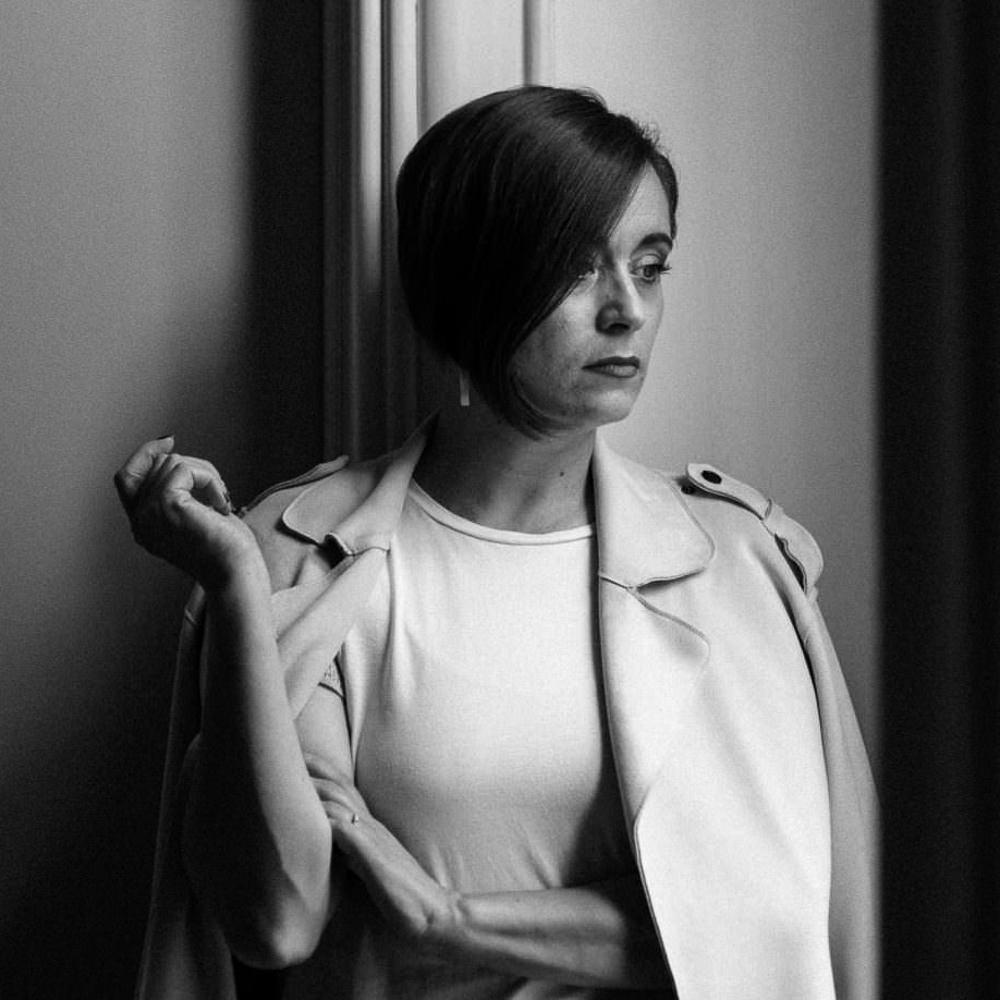
Sofia Ferreira has been doing this for twenty years, and one of the first things she says — after Rui asks what she's seen change in that time — is that the most important shift happened inside, not outside. Branco Prata, the studio she co-founded with André, began with a very simple idea: every event had to be genuinely personal, made in the image of the specific client who hired them. That was the premise from day one. Two decades later, it still is.
The conversation that emerges from this first guest episode of the WAC Podcast is in many ways a portrait of what it looks like when someone discovers exactly what they want to do with their life — and then builds, with a mixture of discipline and stubbornness, everything required to keep doing it. Sofia describes the moment she decided to become a floral designer as a literal flash: a lightbulb image she can still locate precisely in time and space, complete with what she was doing and where she was. From that moment, she says, the doubts stopped. The question became only: what are the next steps?
What makes her creative process unusual is how deliberately she has protected it from outside reference. She describes exercises she gives herself — looking at a rooftop, a texture of tiles, two colors in a window frame — and forcing those details to become the seed of something. Not as a gimmick, but as a genuine practice, one she's maintained since before she had the vocabulary to call it a practice. The notebooks are the center of it: she writes first, in loose sentences without much concern for grammar, because she finds that writing unfolds the story before she can visualize it. The mood boards come after. The document she eventually shares with her team is less a brief and more an invitation into a feeling — she wants people to be genuinely excited about the work before the work begins.
She also spent five years studying pure mathematics, something she initially refused to admit shaped her. She now says it gave her an organizational backbone she couldn't have built any other way. The left and right hemispheres of her brain operate, she explains, without a dominant side — creativity and structure running alongside each other without conflict. The calendar blocking, the color-coded scheduling at Branco Prata, the annual strategic retreat she and André do every January: none of this reads as contrary to her creative identity. It reads as the infrastructure that makes the creativity possible.
Between these two threads — the structured and the intuitive — the conversation keeps returning to the question of time. Not in the abstract sense, but the very particular sense of what happens when you start too quickly versus when you let things mature. Sofia doesn't consider herself a perfectionist, and she's clear about it: she says she can produce a full creative document in half an hour when needed. But she also describes spending several days with a concept on purpose, deliberately savoring the process, not because the deadline demanded it but because something in her knew the work would become different if she stayed with it longer.
On sustainability, she is unambiguous. It's not a value she holds loosely — it's where she draws her red lines. Floral foam, spray-painted flowers: she'd refuse those requests, and she says so plainly. But she extends the idea further than most do, to include how she treats the people on her team — whether they have water, food, breaks, whether they feel respected throughout a long event day.
The episode ends on community: what it could be, what it has been, and why Sofia thinks pre-judgment is one of the things most quietly damaging it right now. She and Rui trade stories about warnings they received about each other, years before they became friends. Both landed in the same place: the only way in is to actually talk to people.
key quotes
"From the moment I said, wait a minute, is this really what I want to do? It's over. The doubts are over, the uncertainties are over. It was, ok, ball forward, there's people behind, is this what I want?"
"You can go to the street, and look at the sidewalk, and see a little grass, and from that tiny, ridiculous element that no one looks at, I force myself to create a story there, whatever it is."
"When I write, I feel that the story unfolds in my head. And then it's easy for me to visualize things and go looking for images that are aligned with what I wrote."
"I am not a perfectionist. I am not. I really am not. When I get the idea, well, then I can only breathe again when it's ready."
"I draw a red line in everything that I consider unsustainable."
"If tonight I have a friend, a colleague, or someone I don't know at all, with a problem, and they contact me and say, Sofia, I'm struggling, of course I'm going to help. Why? Because tomorrow I can be that person."
"We all have the ability to share, to talk about the things that make us happy, to talk about the things that make us afraid, to talk about what's good for us, to talk about what's bad for us."
transcript + show
episode: 2 title: "Ep. 2 - O processo criativo, com Sofia Ferreira." pub_date: "Mon, 08 Apr 2024 05:00:00 +0000" original_language: english source_audio: "4c64d36a.mp3"
Hello, welcome. I'm Rui and this is The Wack Podcast. This week, as an inaugural guest, I have Sofia Ferreira, floral designer at Branco Prata. Sofia is an extremely inspiring person that I have the pleasure of meeting for many years. I learned a lot with her over that time and so, when I decided to start with this project, I knew that she would have to be my first guest. She was kind and brave to accept and the result was a great conversation that I now have the pleasure of sharing with you. I hope you like it. Without further ado, here is my conversation with Sofia from Branco Prata. Hello again, Sofia. Let's pretend we haven't been talking in the last two minutes. Hello, Rui. I want to thank you immensely for accepting the invitation to be here. And for me, I had already told you, but for me it only made sense to start this with you. Oh my God, this is a huge responsibility. Don't put that aside, please. No, but I'm going to explain to you even better exactly why. And now you will understand, because this is going to be really honest. I've told you this several times and I'm usually always ashamed to take my notebook when I'm going to have it with you. So, this time I decided to do a podcast, because everything is recorded and then I can study at the end. This is deeply true, but a little more seriously. I'm going to tell you now, I would like us to do this in a conversation. I'm going to ask you things, I'm very curious. We have, and they're always so good. The only difference is that this is recorded. And we're not going to have lunch before or after or during. Anyway, if you want to ask me something, you're free to do it, but you already know me, you've known me long enough to realize that I don't have much to say. That's a myth, that's a myth. If Elsa were here, she would agree with me, I guarantee you. I have some things here that are my curiosities. It's been a long time and we haven't had enough weeks together yet to be able to ask you all the questions and it's an opportunity I have to do them. But before that, you don't look like you're over 35, but it's true, you've been doing this for 20 years. That's a very, very good compliment, but... But believe me, it's true. But tell me one thing, what have you seen change in these 20 years? Look, a lot has changed. And the way we ourselves are in this industry has also changed. If 20, almost 21 years ago, Andre and I were two kids still trying to figure out what all this was, now we can have some discernment and even some notion of what this community of events, of weddings is. So we have a lot more at ease for certain things. Now, what I remember from almost 21 years ago is that we really wanted to do it and do it differently. We knew very little about what events were in Portugal, but we quickly realized that we wanted to do something that was different from what was being done at that time. I'm not going to say that it was being done badly. I think things evolve the way they have to evolve, so it's easy to look from the outside and criticize, but then when we're in the middle of this environment, we easily enter the same line of thought. Now I remember that, either me or Andre, we turned around without fear and said, look, if it works, it works, if it doesn't, it doesn't. Now, this is our notion of things. This is what we want to do. Above all, what I remember is that our goal was really to personalize weddings. That is, every event we did had to be something in the image of the client who hired us at the time and be something distinct and prepared for them. That was a point from the first day of Branco Prata. Do you feel that you made that entrance, that sense of fear that I know you both have? There are things that you look back and think, how the hell did I get into this, that I didn't have a clue what I was doing? No. I tell this story many times, and I'm sure we've talked about it. I remember it perfectly. I remember where I was, the time of day, I remember what I was doing, the moment a light bulb went on in my head, and I knew what I wanted to do for the rest of my life. And 20 years later, I'm still doing it. And I can't guarantee that in 20 years I'll still be doing it, but that's my plan. From the moment I said, wait a minute, is this really what I want to do? It's over. The doubts are over, the uncertainties are over. It was, ok, ball forward, there's people behind, is this what I want? Man, and then I have a problem, which is a very serious thing. When I get something in my head, I just stop while I can. And Branco Prata was a little bit like that, you know? Ok, that's it. I almost discovered the reason for being. And then it was... I knew that... even because from a very early age, and I can tell you that this was very... taking into account the first fiancée we had, Daniela, and from that first event, we had access to a world, in the event area, very foreign to Portugal. She ended up opening the horizons for us to a business and an industry that went far beyond the borders. So, we just thought... Did you say that right away? Right away, right away. And I can tell you that this client, which is a client, but not a client, obviously, it's a friend, was a friend's friend, and she said, maybe these friends of mine could help with the event. And this all happened almost at the same time. I mean, this person who contacts us because she needed help from a creative point of view, we who had this idea, this concept of doing something different and something more aligned with our vision, I mean, it's almost like being in the right place at the right time. And that's how it happened. And it was a person who had family, I remember, in London, and who had access. I don't know, I can't guarantee if at the time, in Portugal, Marta Stewart Weddings, which was like the Bible of weddings, if it was sold in Portugal. I know that this fiancée bought or brought from London a series of numbers from Marta Stewart, and I went through a lot. I vaguely remember us having, in 2011, to talk about that, I was like, ok, but where do you buy it? How do you get it? Even here in Portugal, after a few years, I had a lot of difficulty getting it. And I ended up using trips I had to Lisbon, those trips that also helped me buy the magazine, because they weren't all the kiosks, all the stationeries that you would find. I think that, in a way, opened a door that we didn't have access to until then. Because the first experience we had as Branco Prata, and without having had a single wedding, was the bride and groom. André and I went to the bride and groom, again, two kids, without ever having had a wedding. We were lucky to have the family that offered us a stand at the bride and groom, 9 square meters. And there we went, to decorate a stand, to create content. At the time, we didn't even imagine that content creation would be so important. And we even ended up creating a strategy to introduce potential customers and potential visitors to the fair. It was a fire test, but there it is. André and I never shrugged our shoulders, like, we're afraid, right? Whatever. And then, that was in January, we already had this event scheduled for July, and then it was crazy. Crazy. And 20 years later, we're here, right? And 20 years later, we're still here. From my perspective, and most people's, you never stopped growing, which is extraordinary. At least we try, yes. But I think that's something that's already ours, you know? We don't think about what's behind, what we've already done, what we've already achieved. No, it's always with a goal and a focus to do more, to want to do better, to seek constant evolution. It has nothing to do with wanting to have a lot of work, or wanting to be known. No, it's very much ours. Like, ok, we're already here, where's the next step? Very well, what do we have to do to get there? And I think that's also an excellent way to motivate us, but it's something very much ours. Yes, and it's that question of, if you're not growing, you're dying, so it's better to be growing. Stagnation doesn't exist, so it's better to be growing. Well, even if things don't work and you try to evolve in a certain way, even if you make mistakes, you'll always learn. And when you learn, you evolve. You only learn to make mistakes when things are going well, you don't learn. Do you think it's easier to start today, to get into this today, or is it easier? Look, it's a very difficult question, because if today you have a lot more information, a lot more tools to make your work easier, you automatically have a much greater exposure, which can inhibit your decisions. What you come up with and look at what it is, today, perhaps, is more difficult. I don't spend a lot of time thinking about it. I think that every phase of our lives has its pros and cons, has its challenges and its advantages. But it's what it is. It was difficult, but that doesn't mean that today it's less difficult, because it's very easy for things to go well and one day you can have a reference without having a wedding. You just need a good way of structuring your things, structuring your business, sharing your content. So that's good, but it can also be bad, because I really believe that time gives us tools that allow us to deal with certain challenges and only growth that is done with calm and certainty and with a head. It gives you that ability to solve any problem at any time. Any time. Some time ago, I was listening to an interview by José Vila, where they asked him something similar, but not specifically this, that nowadays you have new photographers starting and all that, and they have 2 or 3 or 4 years of experience and they are frustrated because they are not doing the weddings that he does. No doubt, no doubt. And he says, guys, calm down, because time will do its course. It's all so fast that whoever starts now feels that if they don't have 2 or 3 years where they want, it's already going badly. And then, I'm lucky to talk to a lot of people who have been in this world for a long time, or who are already starting, and I often notice a pressure that people put on themselves to get where they want, to have everything almost immediately, and it can't be like that, because you put pressure on yourself and it's often your worst enemy. And if there's one thing I remember that either me or André did 20 years ago, it was that. We never put pressure on ourselves. We're not going to give 100%, we're going to give 1,000%, we're going to give our best, we're going to try to be as professional as possible, responsible, and we're going to see if things go well. Pressure has never been part of our equation, and I think today it's much more difficult to happen. Yes, you have a... I don't know if we have, in general, a greater competitiveness or a greater need for immediacy, but... He's there, I don't know if it comes from us, if it comes from the younger generation, or if it simply comes from the circumstances, but he's there. We ourselves often look and compare. We have this need, if on the weekend we're at home and we go to Instagram or TikTok and we see the stories that people are sharing and that they're having beautiful weddings, we get more traumatized, but like, no, no, I can't do that, it's not necessary. Me and André, and I talk a lot, me and André, because we have very similar ways of seeing things, and as it's obvious, we talk a lot, and when we talk about work, we share a lot of... many ideas. And... Our perception of things is, they're having beautiful weddings, how good, how good, how wonderful, this is delicious, it's beautiful, I love it. Go and comment, and be happy for the others. I'll feel it, they're having beautiful weddings, more beautiful than mine. More than anything, it leaves a negative impact on you. Without a doubt. And that's the main problem. When you're frustrated that someone is doing something that you wanted them to do, for that person it's irrelevant. Now, if you create a good energy, like you're saying, of, hey, cool, or you think, damn, it should be me, you're the one who's going to change the energy, your energy is going to be positive, you're going to be happy, or you're going to be sad and frustrated, you don't choose. And I think we don't always choose well. That's what we always say. And I'm not a person of things related to energy, but I really believe that if you put good things in the world, the world only... Yes, they come back. I think that's really self-evident. Changing the subject a bit, and talking about some more concrete things, what inspires you? And I talk about this in two ways, not just in a more general way, in terms of the state of mind, if you're more stressed, or more excited, or more emotional, but also those more concrete things. Books, painting, movies... Look, I always considered myself, I don't know if it's true, an extremely creative person, and I remember being very creative, and I was also lucky to have parents who allowed me to do what I wanted. I remember that I always had a very fertile imagination. And even today, it's curious, and I remember having jokes with myself, when I was a kid, that I still have today, and that at the time were jokes, and that today, for me, are exercises or challenges, which is to look at the things and try to create something from there. And when I say that, it seems strange, but it's really like that. You can go to the street, and look at the sidewalk, and see a little grass, and from that tiny, ridiculous element that no one looks at, that probably the people in the Chamber will spend the following week cutting and undoing everything, I force myself to create a story there, whatever it is. It's like, look, one of the things that I sometimes, when I have time, which is a rare thing, look at clouds and try to give them a format. And I force myself to do that. A little while ago, you were talking, obviously, about films, books, art exhibitions. Of course, that inspires you immensely. One of my favorite things is to read a book, and when I read the description of certain scenarios, I have in my head the image right there, ready to be visualized. I can't I can't be, or live, without imagining. Whatever it is, whether it's for a job, whether it's to create something for us, what we call our creative exercises. I have to be constantly exploring a concept, an idea, any detail I see on the street. I can't say that I was born like this, and since I was born I've always been like this. Let me ask the following question, which is, who in Rui is the middle son? I don't know, look, the middle son is the one with the least photos, the one with the least activities, poor thing. He's the big brother. I've had this conversation with my parents many times. I believe João is still too young to have this conversation, but I think he's starting to feel it. But let's make an effort. But what I was going to ask is, the people who know you better know that side of you, but others may not know, which is, even though you're that super creative person, you're one of the most extraordinarily organized people that I know. I think that soon we'll have a side scene buzz for your notebooks. We'll do a kind of discussion and we'll see Sofia's notebook. I want to ask you this, how does this work? How do you go from, ok, Merva Daninha came here to do something, And how does this create an editorial for Vogue? In my opinion, it has to do with my creative process. How do you define or structure this process? I remember when I was in high school, and I remember that they did a test on me and at the time they realized that the left and right part of my brain, I don't have a dominant part, that is, I'm there a lot in the middle, which means that my creative part and my more... Structured? Mathematical? They concur side by side. And then there's another question. At the time, when I went to college, I studied pure mathematics for five years. And even though I, after finishing the course, had been in denial for a few years, like, I don't want to look at this time in my life, I now value those five years as an extremely important thing. Because it forced me, in fact, to be extremely organized to be able, during the five years of my life, to be in a world that had nothing to do with me. Because I like to see potential in everything, but to see potential in numbers and letters, I can guarantee you that it's not the easiest thing in the world. But it gave me a backbone, in terms of organization, which, in fact, nowadays I feel is one of the most valuable things for me. Now, I too, since I was little, have always been very organized. I like to feel that I have no cause. The world makes sense when you're organized. My workplace has to be super organized, things have to be tidied up, everything has to have its place, because in the end, when you use it, in the end it's easy to put it back in place. This has always been a very personal thing. I can say that while I lived with my parents, my mother never had to have me tidy up the room, or my father never had to have me tidy up the room. It was always like that. To raise my children, I always had the need to have things very organized. Nowadays, there it is, when we go from a sphere more in the wave of imagination, and I think of a concept, I think, I have to do something with this. The first thing I do is go to my notebooks, open them, and create there, I'm not going to call it an action plan, but almost a sketch of what I want to do. And I start by writing. And when I write, and we're not talking about writing a work of art, not at all, it's like loose sentences, without almost or little attention to Portuguese, but I have that need. And when I write, I feel that the story unfolds in my head. And then it's easy for me to visualize things and go looking for images that are aligned with what I wrote. They are not necessarily direct images of what I want to do, they are more conceptual images, but that fill the gaps in the narrative that I started. Well, and that's why then, these things in physical terms, go through being very clean notebooks, very organized, with beautiful images rolling, those things. I also have that part in me, I am also the organized one. And there it is, that's why when I grow up, I want to be like you. But then my question, my big question is, how do you go through, how do you essentially define the next steps, how do you define, okay, this idea came to me, and you go there and simply drag everything that comes to your mind, and you write. And it really is a super interesting part when you write, you immediately realize if it is stupid or if it has potential. Absolutely. Then, how do you, or what are the steps you need to take to make that a reality? That is, you go later, you look for the images, you do the mood board, you talk to someone, with André, you integrate someone, how do you structure in two or three steps and when do you start doing it? Because in my case, as you already understood here, in relation to the beginning of this podcast, my problem is always this, which is, ideas also come to me very easily, and I elaborate in my head a series of plans, but then, my professionalism is completely procrastinating. And I say, okay, but this has to be really like this. So, stay for later, stay for later, stay for later. And then at some point, how do you fight against this? And how do you define the steps that you have to take next? I am not a perfectionist. I am not. I really am not. I... When I get the idea, well, then I can only breathe again when it's ready. And even when it's ready, and I see the final result, I'm going to make mistakes, and I'm going to say, I should have done this this way, I should have done this in another way, did I fail my team? Well, and it's okay, I don't lose sleep because of that. I just think, okay, next time I'll do better. And this is constant, constant. Next time, okay, I've learned from these mistakes, next time I'll do better. Now, you were telling me about the creative process. Yes, in fact, the idea of having an idea, ah, this was cool, doing something inspired by this. And then, many times, even before writing, I'll research. Well, today we have online tools, right? You go to Google, write anything, and you find texts, you find files, articles, well, you find a lot of things. And as crazy as it may be, and notice, it may have nothing to do with photography, with floral design, or even with events, weddings, whatever, you try, in some way, to bring this research and make it work in your favor. And then, I'm talking, this is not a work order, it's the way I do things. And then, the more I know about that subject, well, that idiot part of me will have ideas about this, and say, it was cool to have a human element here, a model, a model, whatever, and then play with this, with this element. And based on that, I'm going to try to find images, I know, I know, that I'm not going to find the images I want. And I also know, at least at this moment, I'm not going to use artificial intelligence to create the images I want. I'll explain why. To manage expectations. And it's also the team's expectations that will see the document, to generate my own expectations. Because then, if I create those images, I feel that on the very day, when we're creating, I'm going to be completely fixed on that image, and I don't want that. Even because, in that kind of work, of situations, many times what happens are last minute changes, are things that you remember and start to develop. They are small things that you, or the team, give input, or remember, or have an idea, and that's when the results happen. Now, going back to the question of creative process, after that research, and this is what I tell you, Rui, I even, I've already done these creative exercises, with mathematical concepts, many years ago. I have to do that again, because it's something I really liked. And at the time, I was reading articles that had nothing to do with this area where we work. I'll tell you, the way a sentence is written, the words that are used, the way something is described, and you think, hmm, maybe I could use this, in this, in this way, in this concept, with this environment, with this type of clothing, hmm, all of that, then goes to my notebooks, with the texts, I can't even consider that a text, that's pouring ideas, and I also try to be very organized, and then, finally, I go to the computer, and there I write almost a little book, which I then share with the rest of the team, and I try, in some way, to share a little bit of what is moving me to do that creative exercise. It's not just saying, this is a mood board, that's it. No, I want people, when they read those documents, to feel that they are part of the experience, and feel enthusiastic to do this work. Sometimes, which has happened to me many, many times, doing things in half an hour, hmm, like, such was the amount of ideas, and suggestions I had, and I can do things quickly, and if I have to work under pressure, I can do that, hmm, but then there are also others, for example, I can say, two weeks ago, we did our last creative exercise, and I remember that I spent several days with the document, because I wanted to savor the process itself, and I wanted to understand how I could let it evolve. That's what I tell you, if you tell me, ok, Sofia, tomorrow we have to do an editorial, a creative exercise, I'll tell you, yes, ma'am, at seven, send me your document, and I'll do that, in a good way, Rui. Now, when you have time to think about things, to let your imagination evolve, and your creative process mature, well, then things will gain another shape and another dimension. But basically, that's it, you know, I consider everything very simple, I'm here talking to you, I'm looking out the window of our studio, and I'm seeing two roofs, a clay tone, a terracotta, and a dark gray, and the texture of the roofs is unbelievable, and then I have a chalet, black, and a little bit of white wall, why can't that be the beginning of a creative exercise? Why can't I take this structure, the way the light is shining on the tiles right now, and play, and create a universe around that? More than going to a Pinterest and seeing what other teams, other people, other creatives are doing, why can't I look around and feel inspired by that? That will always be my challenge, but it's a challenge that I do to myself, and it's not for, oh, because I need beautiful images, for the site, or for social media, or to submit, or for this, or for that, it's because I really feel the need to do that. Okay, I'm looking at that, what can I do with that? And the joke is often that, why? Because these are challenges, and these are goals that you impose on yourself, and it gives you that urge to go beyond, and to be able to get there, and to look at the final result, and say, yes, I did it, or in this case, I can't do anything on my own, but we did it, it was spectacular, when do we do the next one? And this is very, very, very, more, you know me from before, to know that I try my best, my best, not to be too attached to trends, or what is being done, or what is fashion, and now we're going to do things this way, or another way, no, it's to look and think, this, this is really part of it, this that I created here, it's a little bit of me, and I'm in this space, it has to be a little bit of me. You seem to have answered my next question, but before doing it. But I don't know. But before doing it. You have a context, which is extraordinary, you have yourself as a floral design, and you have André as a photographer, it makes things easier, it helps you in a number of things, but regardless of that, what we sometimes do, when we have our own exercises, or publishing houses, or whatever you want to call it, what experience has told us, or has given us, is, ok, sometimes we start with an idea, we start with a person, and we evolve, and we evolve, and we get to a point where everyone wants something and nothing comes out of it that interests them. And my specific question is, how important do you think it is to have a creative director? Not in an authoritarian perspective, of course, but in a perspective that says, ok, when we are here, between two rivers, one goes there, the other goes there, how important is it to have someone that says, ok, let's go for this one. Look, I, all the, let's call them publishing houses, all the publishing houses that I've prepared, and obviously not with André, I've worked with huge photographers, I've worked with other florists, I've done creative direction, namely for workshops, which is one of the things I love to do. I think that the secret, and there it is, I speak as a creative director at Branco Prata, and as a creative director in these publishing houses in which I have participated. I have, as a creative director, I have the team waiting for me to create the concept, and many times, mainly when they are workshops, I remember, and I've done many workshops with Craig, Craig Fink, and he always gave me a starting point, I remember one of them being inspired by Alice in Wonderland, and we had Rime, who is Craig's wife, who is a designer, unbelievable. She says, ok, Sofia, send us the visual proposal, because I, taking into account your proposal, I'm going to design the dresses. I needed that starting point. I believe that the way you present the concept, the way you present this project, if you can capture people, if you can truly explain what you intend to do, and this with words and images that support your concept, it is fundamental. If it is a well thought out thing, well structured, well written, and inspiring, from what I have felt, and attention, because I can only speak for myself, from what I have felt, until today, I haven't had a team trying to pull things to different sides. Obviously, they give their suggestions, and if they ask me to totally change the concept, I also do that. In fact, this happens to me many times, when I do creative direction, and only creative direction, for wedding planners, who have, imagine, projects that are creatively more challenging, they are very lost, they don't know what to present to the clients, and they hire me, and we always do this on an exclusivity basis, which means that I can't share these projects with mine, they are theirs, they pay for this exclusivity, and I take the initial concept that they give me, and then we can go on several paths, and they send feedback, and I make the changes, and this can also happen in publishing houses, and in creative exercises. Because, if tomorrow I'm organizing the next publishing house, and if someone in the team tells me I think we should go that way, I guarantee you that the first thing I'm going to do is explore that path. But that's exactly the point, it's important to see the person who will make the decision, of course you're going to listen, and you're going to think, and you're going to accept the opinions, but do you think it's important to see a person who takes the reins of the final decision? You know, I've never been in a position where I needed to make a final decision, maybe I'm not used to it, but seriously, I've never been... No, once, if I remember correctly, I did a publishing house in Sintra, with a photographer who became a friend, in the meantime, and who doesn't even photograph anymore, and I remember that the whole creative direction was made by her. And I had two hypotheses, Rui. From my point of view, being the creative director of that moment, I accepted or didn't accept to participate. Looking at that document, looking at what she imagined for the day of the session, I just thought, I love it, I want to do it, I want to be part of this team. Because I think that in this type of situation, it's like this, you're working for a client, and then the client's final decision, period. Another thing is to be a collaboration with a team, and all of us, all of us, have the final decision to participate or not. This is not an obligation, right? Imagine, if they sent one of my visual proposals to someone, and they said to me, Sofia, I didn't like it. Or there are two hypotheses. Or we try to understand, and if there's someone who doesn't like it, we also have to think, maybe I have to see this in a different way, right? I try to put myself in that person's shoes, and see what weaknesses they found in this document, and in this concept. Or the person can simply say, well, it's not aligned with what I like, what I want to do. Well, friends, it's the same. In these things, and this is another one of those situations where André and I don't open up much, or we have fun, or we savour what we're doing, or if this looks like a job for a client that you don't even like to work, and it's a boring thing, and it drains you, psychologically and physically, well, then don't do it. Don't do it. But I think I'm not used to it. Because, of all the exercises, of all the sessions we did, I never had, if I had participated, I don't have bad experiences. I never had that feeling of getting to the end of the day and saying, why am I doing this? Now I'm frustrated, irritated, bored. No. On the contrary. I always end the day thinking, so when do we do the next one? You also have that question already organized and you make that reading before and you think, ok, this is going to be interesting or not, and then you go in or not. When I talk about the experience I had, sometimes it was more of the genre, then you get into things that you like about people and then they become proportions and then you want to please everyone and that is not that it has been bad, but it ends up not being as interesting as you thought it could have been. After all, and above all, this is a team effort. If someone fails, as it has already happened, you have two options, either you give up and give the day as lost, or then, as it has already happened to us, you already have the sixth sense to think, this is not going to go very well, maybe I have to arrange a plan B, you arrange the plan B, then it is the plan B that works. And even today, you take pictures and think like this, wow, how spectacular it was. More or less as it happened about 15 days ago. Oh yes, and you don't know. Returning a little bit, you had touched on a point that I wanted to ask, which is this, you talked about some trends and all that, we already had some very interesting conversations about this, but despite being clear that you do not follow, neither André as a photographer nor you follow trends, you still manage to maintain some modernity and follow what is happening. My question, even because there are trends that are fun and you want to integrate them, and because they are cool, there are things that are just for fun and are only momentary, but others that are not. My question is more, and I think you will answer this relatively simply, but it is, what are the red lines? Look, and I think you know the answer. In what I say about my part of the work, including the floral design, I draw a red line in everything that I consider unsustainable. That's where I draw the red line. And I don't say this as a criticism of those who assume these trends and use them. I personally don't think they ask me to do this. They don't ask me because they won't do it. My conscience doesn't allow it. Because I, as part of Branco Prata, if I have as values, not only me as a person, but our brand, we have as one of the strongest and most precious values the question of sustainability. We are going to do everything, everything, to be faithful to those values. And there are certain things that I personally say, no, I don't do that. And it's not just in this question of creative exercises, it's also in the question of events. If I have a client, and attention, I'm just giving this as an example, if I have a client who, in the initial contact, forces me, for example, to use the floral sponge from Oasis, I'll tell you right away, no. I don't mind saying this, but I don't mind losing the client, but I don't give up on that. I might suggest, look, but at this moment we have other alternatives that are sustainable and, therefore, are more aligned with our brand, and that end up having almost the same type of response. Attention, no client ever told me that, but we are hypothetically imagining that the client would tell me, no. I only oppose it if they use the floral sponge from Oasis, which is clearly, or similar, which is clearly approved, which does not bring any benefit, neither to us, people, nor to the environment. So, I would draw, or, ok, Sofia, very well, let's do this editorial, but all the flowers and greens have to be painted with spray paint. I'm also going to say, no. Sorry, but no. Nothing against each one, or, Rui, notice one thing, each one, there are more decisions that you think you should make. And who am I to say whatever it is about that? Now, don't ask me personally to do that, because I don't want to do that. I really don't want to. I already suspected more or less your answer. Yes, but, I don't know, it's not just that. And for me, sustainability is something that people also forget, right? It's like, you have a team working with you, and that team, you managed to pay as much as possible, and you managed to ensure that that team is being well treated, that it has the breaks it needs, it has water, it has food, it has everything at its disposal. And that, for me, is very important. And that, for me, is also sustainable. So, there are a number of things that, or someone, someone being less nice, less nice to someone on my team, well, that would be a red line. There are a lot of things, but normally, none of these scenarios have yet been achieved, so... Yes, I believe it won't be now. Look, now I wanted to change the subject a little bit to a more concrete part, and the numbers, for you, the math teacher. Don't you want to go to class? Or did you come to class? I came, I came to give classes, and at the time, I could compete, and I had a full-time position, if I left the Porto area. Obviously, I was starting at Branco de Prata, I never... So, the little time I gave classes, I always gave, at the time, the so-called mini-contests, which means that they were short hours, I guess, I don't know. I don't remember how many hours a week there were, but like 10 hours a week, 8 hours a week, which allowed me... I always said, and it's funny, I talk to my classmates, they remember that for 5 years I said, no, I'm not going to be a teacher, no, I'm not going to do research, no, I just want to finish the course to prove to myself that I can finish it. And that's why nowadays I often say, well, we are capable of doing everything. If I can get out of that nightmare, anyone can do a number of things, within the acceptable limits, obviously. But I remember that it was, and I was 18 years old, it was an objective that I imposed on myself, it was a mistake of mine to have stopped that course, and although I had the possibility to follow other paths, I said, no, no, I made this mistake, this joke without a face, now I'm going to take things to the end. And you, when you finally get the last exam and you say, oh my God, I did it, I can't believe I finished this nightmare, you just think, well, now I take care of the world, no one stops me now. It's a bit like that, you know, because you're self-sufficient, you're in an area that doesn't tell you anything, and at the time I decided, for 5 years, to block my brain from everything else. I didn't go to art exhibitions, I watched movies, interviews and all that, but everything that gave me real pleasure, I didn't do, which I didn't want to do. And then, when I finished the course, I went back to my normal life, but during those 5 years, I said, it's over. I taught for a short time, why? I thought it was important to teach, because when I finished the course, I said, no, I can't say, ok, I always assumed that I would never teach, but I thought it was important to try. So I did my year of internship, I came here to Porto, where I taught for a year, I had 3 or 4 classes in my position, always with a person in charge, and then, for 2, 3 years, I worked in those short hours, and I remember that in the last year, I taught at night to adults. And I can say that it was very interesting, and I really liked it. I really, really liked it. And I loved teaching, I loved, there are my notebooks, and my notes, and the colored pens, trying as much as possible to keep the classes that I had, energized, at least that, with a subject like math, that usually people just think, no, it's horrible, I don't like it. Yes, because it's curious to talk about it, because these days I saw a little video, I was talking about a, I'm not going to get into details here because I don't know, we're talking about neurosurgery, neuroscience, but you were talking about doing what you don't like, your brain has two parts, two parts that, when you do what you don't want and what you don't like, those parts grow, develop. Tell me what I really want to read. I don't know, I was trying to be smart, but I don't know. No, but it really makes sense, because you realize, when you meet people who are, who have willpower, or you realize that people's willpower arises, not rarely, in people who, more than once, had to do things they didn't like, or because they went through more difficult situations or all that, and I think that then you take it to life, regardless of the rest. Notice one thing, until I was 18, I had a super creative life, there it is, as I said at the beginning, my parents let me do what I wanted, almost to the point of healing the house, because it was something that gave me great pleasure, and they entered my veins. This was all to make up for the fact that you didn't need to be a midwife, wasn't it? I have it here for me, yes. But, so, I was in Art and Design until I was in my 12th year, which means that we did a lot of things, from art exhibitions, we did a fashion show where we designed the clothes, and we had the clothes made, I remember with a 17-year-old father, because there was no money for models, so I went to the fashion show, I was the bride dressed in black, because I designed those things for teenagers, I thought my bride had to be dressed in black, small things, so it was all very creative, until I was in my 15th year, I was in a class where we were 12, 12 students, it's a spectacular scene, and then, for a week of, oh no, I don't know what to do now, I'm going to run, I only do specific math, I went to a math class where the environment and the vibe were completely different. But that was the necessary evil, don't you think? Now I think, now I can't imagine otherwise, because until I was 18, it was all easy, you know? For me, it was all easy. I'm one of those people who, until now, have always had a very easy life, but from a creative point of view, those five years were a challenge, because you think, come on, what is this? My colleagues study in the morning and at night, when I get to class, to college, they comment, yesterday I went out with my friends, we went to the movies, they are very shocked, but you weren't preparing for today's class, and I thought that gave me anxiety, it's a point that I said, wait a minute, are you a woman or are you a rat? Now you're going to stay here, you're going to prove to yourself that you can do that. And I had, fortunately, I had the opportunity and I had the possibility to go to another type of university, college, to a more creative area, but I said, no, I did this, I made this decision, now I'm going to take this to the end. You came in here, now you're going to go big. Let me just do a little bit, there is a part that I think is great, that you said you still have an easy life, even living with André and working with André 24 hours a day. That part, I always forget that part, you know that I'm good at that part. Exactly, exactly. Look, but what I had to ask you, in relation to the issue of numbers, was this. I imagine, knowing André too, that you are the one who does the most financial management of your company, right? I know he has a series, I'm kidding, I know he also has a series of good thoughts about it, but there it is, numbers, structure, organization, company, I think it's in your folder. Structure and organization, whether it's the team, whether it's work, whether it's projects, everything goes through my hand. Everything that is decisions, budgets and numbers, we both do it. The logic of a company's good functioning is the same. You have the partners, who are the ones who have to make the decisions, and then you have the person who, in large companies, are different people, in small companies, who are the ones who have to do the following. But my question was, do you define goals, whether it's revenue, profits, whatever, number of jobs, do you define goals with a number, or do you think, this is my path, I want to make this content, I want to pass on this message, and you wait for it to go well? Let me start by saying that we've been doing this for many years, me and André, every year, in January, regardless of what we're doing, and as you know, these last few months have been challenging because we're renewing the studio, so the time is in fact very short, but we took an average of two or three days to do a kind of retreat, and in that retreat, we do an assessment of the year that passed, of the practices applied to the various areas in which we work, not only in the event area, but also in the corporate area, and then we try to do a self-assessment of ourselves, to see what went well, what went wrong, we take notes, because then there's that document that we tend to look at from time to time, and see if we're actually trying to get around these issues that are going less well, and then in that retreat, and also in that phase of reflection, we prepare for the following year, and the following year involves what you were talking about, from setting goals, setting goals, understanding what they are, we go to the detail of listing all the expenses we have as a company, small things like water bills, electricity bills, social security, which is not so small as that, we have a document where everything is properly identified, and then we leave that margin of, look, things that may arise and expenses that we may have, how much money are we going to invest in advertising, how much money are we going to invest in material, either for the photography service, or for the floral design service, or for the styling service for the companies, so we try in some way to be as organized as possible, of course I can't compare myself to these big companies that have all the tools, and that create this with one leg behind, I don't have any kind of training, neither do I, nor does André, in the management area, so we've had the company for 20 years, and we're here like, okay, this works, let's see how we can improve it, but, for example, I loved doing a training with a manager, a manager of a company that taught us, because there it is, things are always changing, and you can always learn more about anything, even if it's a subject you don't love, which is the case, but I think it's important, if you have this brand, and if you're willing to give so much of yourself for it, you have to make some sacrifices, and those sacrifices are often, look, using your time to learn subjects that you don't like so much, but that you know will do good for your brand, but yes, we do that every year, for example, we did it in early January, and now in April we're back together, and I know it sounds strange, because you're going to tell me, yes, but you work together every day, and you live together, yes, but then there's the issue of balance, and separating the waters, and if I'm at home, on the couch, reading a book, or watching a series with André, I'm not going to tell him about the company's goals, no, that's for when I get here to the studio, and we're in work mode, in partner mode, at home André is not my partner, he's not my partner, here he's not my partner, he's my partner, and our way of communicating also, I think it depends a lot on where we are, and for example, what I was telling you, now in April, we have to schedule a meeting to go back to January, see what has already been done, what has been drawn, see what has already been done, what needs to be changed, what strategies have not yet been implemented, what we still have to improve, and so on, now this is something that has to be done, always, I think, because mainly when you're working for yourself, so Fausto, who is our production manager, I mean, he doesn't dream at midnight what he needs to do, but when he gets here, in two or one, or we have a long-term plan, and he already knows what he needs to do, then I, as the team manager, have to be sure that I'm passing on the right information, because, that's what I'm telling you, I don't pass things on to him by transmission of thought, like, I think, oh, I need to do this, and Fausto is in charge, he'll say, tomorrow I'll have to do this, no, all of this involves such organization of words, and the way of managing a series of tasks, and a series of internal work, and then, once again, the organization, I believe, is a point in our favor. Now, we're talking about a very small company. It's a podcast that has a team all the time and that can give you much more valuable tips than mine, without a doubt. But you know that the vast majority of people who are going to listen to the podcast are small and micro-companies. I think this is one of those points that takes a lot from people in general. There are people, and I am one of them, who are more... I went to the University of Economics, I didn't do the same as you, I realized right away that it wasn't about running away as fast as I could, but it's still a taste that I have. That is, I always had that enthusiasm for business and all that. But most of our colleagues, whether florists, videographers, photographers, are very small companies, they are micro-companies, or freelancers, or individual business, and they forget this little problem that is, from a certain moment on, you will become a manager. You have to do it, and then there is a lot of error in thinking that accounting is going to manage, but accounting, the only thing it's going to do is prevent you from getting arrested. The video. It's to pay for this, you have these percentages, and you need to do this. The rest, wherever you want to go, you have to be able to do it. And that's what you were talking about, the issue of time. I mean, I go with Elsa 24 hours a day, and we can't have that organization that you have, unfortunately. And what is terrible, because what happens to us is that sometimes we are on a family trip, we go by car, and suddenly the conversation comes up, and you're even there on a conversation train, and she has to be punished because something happened. Because it's a family moment, right? And you miss the moment of that conversation, that's terrible. That's one of the things we talked about when we were with you in the studio, it was one of those things that we sometimes think about, but we really have to make it happen. If you spend a whole day, eight hours, just talking about this, I think so many things can be solved. And also because, from what I feel, it's also a way for you to talk about your own fragilities. Imagine, when you're making an assessment of what happened, you make that reflection, you think, look, I feel like this, I feel like I have to change, there are things I don't like to do, there are things I have to do differently, that's very good, there you go, it all comes back to the same. Assuming your own mistakes makes this evolution, or the evolution we want and look for, happen in a much easier way. Now, what I can tell you, and this was a habit I gained several years ago, which is, and you know that, and it's blocking my calendar, I have to do certain things, as I'm scheduling work, it's not just the work I have for clients, or the meetings that are scheduled, everything. If I have to schedule a budget, I'm going to block a time in my calendar to do that budget. If I can't do it in one day, the next day I know I'll have time to do that. And everything I can do, beyond what's stipulated, I earn. And I know I've also talked to Elsa about this, I finish the weeks all the same way. My Friday, I'm not going to do that today, curiously, but my Fridays always end the same way, or it's the first thing I do, or on Monday morning, or if on Sunday, if I say, look, I'm going to lose an hour now to organize my life, that the week will go like this, if I feel like doing that on Sunday, I'll do it. But not always I feel like it, and very rarely I do it, which is usually on Friday. And it's organizing those time blocks throughout the week. Here at Branco Prato we have a color system, and you go to our calendar, which is obviously accessible to me, to me, to André, to Fausto, and we all have our blocks organized by specific colors, and even lunchtime is structured there. You get everything, from the time to reply to emails, the time to update social media, or to create content for social media, or to organize the subtitles, and the next publications, or to create, for example, on Monday, I always share on Stories a sentence of the week. I love to be inspired by quotes, and so the first thing I do, on my calendar, I put half an hour to do that. Maybe I won't need that much. I look for a sentence that's already in a folder of things that inspire me, I choose an image that somehow works with that quote, I get it, I publish it, and it's already there, but it's on the calendar. So, what happens? Every day, when I sit at the computer, maybe this doesn't work for everyone, Rui. Be careful. I think this method doesn't work for everyone. For me, it works. Because if I don't do that, I wake up in the morning and think, what am I going to do today? I look at the computer, or I go to Instagram, or I go to WhatsApp and send a message to some friends. No. And so I know, okay, I'm in this time, I have to do this, this, this, this, this. For everything, for everything, even when I prepare the editorials, I make lists of things to do, with the little squares in front, for when they're done, put a cross. But this is something that comes out naturally to me. I'm not saying this is business, or longevity, or whatever. It's the way. I can't be confident. But you know, I think this works for everyone. The big difference is that it can be more natural for some than for others. Well, I don't know. Because the truth is, I see this example, with people I know, when you know what you're going for, when you remove the uncertainty from your day-to-day, because it's all very nice to talk about good uncertainty. It's all very nice to say that you have to be spontaneous in life and live in spontaneity. I agree with all that. But when you're talking about your day-to-day, your work, I wouldn't plan my holidays like that. But... Not me, not me. Yes, but in your work, I think you know exactly what to do when you sit down. It's one of the most... It's one of the most profitable formulas you can have. So, I'm also a little more naturally inclined to that, but my life has been a chaos lately, so I can't do it. But it works much better. For example, I can give you an example. 15 days ago, in terms of food, on Sunday I made two meals for the whole week. But I really did. I cooked, I froze. That week was a dream. You don't have to think about what I'm going to do today for lunch or dinner. And this, when you combine it all now. I could only do this twice in my life. Spend two hours on Sunday cooking for the week. I know if I could catch up on that time, it would always be better. I can ask you, if you were cooking at my house, which is not me, André, I would do that every week. Because I know it's much easier. But, as he is the enthusiast of cooking, I respect his creativity, his creative process, and I try to help as much as I can. But that, for example, is not the way he works. And then there you have to respect it, right? Because this is also important. And you know that André and I have very different ways of being. He is much more relaxed than I am, although in terms of work he is extremely focused and organized and everything else. But it leads to... His process is very different from mine. What happened? We've been working together for 20 years, so it's natural that at this point we already had the machine well wired and working well. We managed to find a middle ground there. I quickly realized that André, this is not the best way, or it's not something that comes naturally to him, but if someone structures and organizes for him, he will be impeccable and will thank you for having that plan. And that's why, since early on, I took on certain tasks at Branco Prata, namely managing the email at Branco Prata, which is general, because I know that the answers will be much faster. I am much more incisive in answering. André already likes to write and then think and such. I don't anymore. That is already a faster process. So, the client or potential client, the potential employer or other suppliers, will win if I manage the email. Obviously, nothing related to André is sent without him previously approving it. Although we are talking about different positions, in which I am responsible for the plural design, André is responsible for the photography, and therefore each of us, in his own service, has the last word to say. Did these divisions of tasks happen naturally? Or were there some that were like, I even try, but I can't, so stay there with this, because I can't. I don't remember having one of those moments where we said, look, I can't. I, from the beginning, was in charge of a series of tasks from day to day. Because there it is, because I also do them in a very natural way. And therefore I think that, and there are others for which I don't have the slightest patience. And André does that naturally. So, from the beginning, I think it was done very... You manage the company, and André does the bar. Look, no, look, no. Look, no, look, in terms of management, André does much, much, much more than his friends. People close to him. They usually joke about it with him, but look, no, look, no. Don't forget, as you know as well as I do, you were the one who decorated my wedding. André was the one who photographed it. And it was funny that when we went, I don't remember if it was in the rural area, or if it was a few years ago, but we got married in 2014, I think it was a month later, or a year later. We went to a workshop, and one of the best classes I chose was André's. I mean, anyway. But what does this mean? I know André very well, from the perspective of that spontaneous chrome that you are talking about, and I also know him very well working. And I think it's really funny to understand that difference. Because if you only know... I think in your case you are more coherent, more consistent, you are more or less the same person in different situations. But André is really very different. And who only knows him on one side, sometimes it's an interesting and very fun surprise to meet him on the other side. I think he is always very available, very nice, very open. But when he is in an environment where he is truly relaxed, and doesn't need to be worried or focused on work, it's something we all know and know. Look, now I wanted to... We are already here for a while, I also don't want to... I want to respect your time and I don't want you to be here all afternoon, even though it would be really fun. But I wanted to ask you one or two questions more... I don't know exactly how to define this, but more related to the emotional part of the job, which is... What did Branco Prata give you that you think you wouldn't have otherwise? Branco Prata was... From the moment I told you I had the lamp always on top of my head, it was already given to you. Rui, I don't know how to explain it to you. In fact, my life changed at that moment. And I really saw a lamp light up in my head and I thought, Oh, Raias! I know, this is what I'm going to do, because this is what I like to do. I never did the same thing again. I can't... I don't have children, so it's very bad for a father to hear what I'm going to say now. But somehow... I'm just an aunt. I'm just an aunt. For me, Branco Prata is almost... Of course, I'm not comparing it to a son, but it's almost like a son. It's a life project that is so intimate, so intimate, so personal. And it's so much part of what you are as a person, as a creative person, as a human being. Look, whatever you want. That I can't imagine my life without Branco Prata. Now, I can also be cold enough to think, Hey, if this ever stops working, I'm not going to let go of my arms and I'm going to do anything else. But that's not a scenario that I see there, you know? In the background, like... Ready to... To rob you. No. Hey, it's a... It's a very strange scene, what happened to me, and then later, the same way André and I started working, it was so... It was so natural, so... You know? It seemed like everything was in the right place, at the right time, at the right time, with all the data in the right position. And... I can't imagine myself doing anything else. I can't. The other side of the coin, what took you? Look, it took me time with my family, which, especially in the first, I would say, 10 years, a lot of time with my family, and with my friends, obviously. But, now, that we finally feel, it's been many years now, that we have such a great balance, we managed to recover that lost time. That is, when we finish our interview, I'll work a little more, and then I'll hang up, because André and I go on weekends with our family to Douro, to enjoy and spend time together, and have fun. That's what we're going to do. Get out of here, honey. Here's the secret, and André taught me that, because I was, I don't want to use the word risky, but I was very motivated to work, and for me, I worked 20 hours a day if they let me, but many, many years ago, especially when we became a couple, we realized that to have balance, either at work, or on a personal level, we had to make changes, and it was there, that André managed to help me get to a point where, looking at my day-to-day today, I say, at this moment, it doesn't take anything away from me, it only gives me strength. Here's a curious thing, and several people even sometimes give me a life lesson, which I think is incredible, and they tell me that André and I only work, and that we have to rest. What people don't know is that André and I, when we normally rest, other people don't know that we are resting, we share a lot of our work, but in fact, in terms of private life, and leisure time, and rest, I have nothing against it, but normally you don't see me sharing on social media that I'm reading a book. I can say that I spend many hours reading books, because I have that need. Now, no, we don't only work, on the contrary, we even have a ratio of working hours with hours of family life, and time for us, quite nice. Normally, we don't share much when we're having fun with friends or family, as you know, when we're together, I'm not even taking selfies, I don't even remember. That's the funny part, that normally happens when we get home, we don't even take a picture. It's a bit sad. Now, to wrap up, in 5 or 10 minutes, I'm going to talk about the main purpose of this podcast. I said at the beginning that it was to take notes and study later. But, in a global way, what I would like to do is to create, and I think you've already shared a lot of things that will be incredible for a lot of people, to create a sense of community so that we can talk among ourselves, about what's good, what's bad, how we can... In that sense, I would like to ask you a question that is similar to the previous ones, which is, maybe you can start with the fastest one, which is, what was your best day at work? Something that happened and you weren't expecting, but also, that you do the other exercise of what was that day. You think, how spectacular, we're getting married, and we're going to be there, and it's all great, but what was that day when you felt, or needed, and didn't want to be, didn't want to work, but as many people don't have that notion, we didn't take a day off, we couldn't, Or it's very serious, or it goes in any other way. So I'd like you to give me those two sides. What was your incredible surprise and what was the one you said thank you, today I didn't want to do this. I can't, like this, without thinking a few brave days, answer that question. I obviously have many good and bad stories of things that happened. For example, almost 20 years ago, I remember André calling me and saying I'm a little late because I'm in an emergency. I had fallen, opened my chin, and he showed up at the event here full of dots. And then he even felt bad and everything. This always in the backstage, but I have it there. So I remember a situation. But they're not that serious. But look, I remember a wedding that marked me immensely. And I'm sure that if any of the two freelancers who worked with me at that event if you listen to this podcast, you'll know exactly what kind of event it is. In which things went very badly, not because of us, but because Kettering sabotaged our work from start to finish. Because it wasn't them doing the decoration, it was us. I even had people on my team at the end of the day crying because they thought it was an injustice. Because it was a huge pressure. And I remember that for me it was a very big turning point. It was a few brave years ago. It was a very big turning point. And I still come back to that day and think, it was bad, but look, I'm glad it happened. And then you have situations that you think are very unfair, of things that reach your ears, of people who talk about you, and you just think, oh, really? We're still in high school. We're still talking bad things about each other. No, I'm not going to feed this. I don't want to know any of these things. I don't want this to control my day. And that was another thing that, if I think about it today, it's because of André, who is this kind of person, and who taught me to be a little more like that. Because I'm not as calm about these things as he is. But I don't have... I said at the beginning that, until today, I've always had a very happy life. So I don't have episodes of those dramatic ones, in which I, at that moment, had to make an option. Look, I have to go to a wedding. I've never had that. And I don't have a stick to hit the wood, but look, whatever. I've never had that. But there it is. The way you're saying things is also showing your way of seeing things. Because, obviously, if you're in a day... The story you told about André is exactly that. A younger guy, because he doesn't have the notion that, ok, he had a good time. He opened his chin, but he still has to go. It's that situation where you realize, man, I can't have a bad day and I'll come back later. Or it happens that the plan B is very well structured. For example, in relation to the floral design, and people work with me, they know that because I often say it, and I joke with them, look, what do you want? This has to be all organized, because I already work on this, I give you a day of this, and then, if it's the day before the event, then you arrive and don't know what to do. You can't do anything. But it's a bit like that, you know? You don't know. It's obvious that you're putting the extreme example, but in less extreme examples, that's what happens. We all have the possibility of being in something that really goes wrong and you can't. If you have someone who somehow helps you, or a community that hugs you and helps you in a less... And that will always be one of our goals. That will always be one of our goals. And I feel that I'm not talking in terms of Portugal and abroad, I'm talking at a global level, which is a feeling of... We all work in a very specific area that involves a lot of emotions, that involves moments that cannot be repeated. We see ourselves and others, our colleagues, our friends, have this ability of, ok, he needs help, I'm going to help. And I say this many times, Rui, if tonight I have a friend, a colleague, or someone I don't know at all, with a problem, and they contact me and say, Sofia, I'm struggling, of course I'm going to help. Why? Because tomorrow I can be that person. And then I want to have that group of suppliers, of friends, of creatives, of whatever, to help me if I ever need it. And that sense of... It's very interesting that you talk about it, because it's actually... If I... If you ask me what I imagine for the future, or what I wish for the future of this community, it's the same. It's to feel that we're a group, that if I ever need help, everyone's going to help. I know, you can talk about competition, you can talk about, oh, because he does the business this way, because she does the business that way. Well, ok, it's your business, you know, the choices you make, you can even criticize or not, but they're your choices. And no one cares about that, how you manage the business, the value you charge, all that stuff. But having someone, having people who are actually there if you need them, in a job like the one we do, is fundamental to me. And it should be the goal of all of us to work for this sense of community. And when I say community, I don't mean groups of 10 or 20 people. You know? In fact, we all have the ability to share, to talk, to talk about the things that make us happy, to talk about the things that make us afraid, to talk about what's good for us, to talk about what's bad for us. Because we all have bad stories, or not so good stories, of jobs that we could have done otherwise. And do you think we're on the right track? Do you think we're better at this point, in this sense of community? Do you think we're on a more positive path? Than 20 years ago? I wouldn't say so much 20 years ago, but I think the pandemic disrupted a bit of things here. I can only talk about my bubble, and really, as we've said, in the last 3, 4 years, we've had a lot of going on. I had one more son, and that was it. But let's put the thing in the last 10 years. We also have our own bubble. About 7, 8, 9 years ago, we had an incredible community, but you felt it was an incredible community. And suddenly, we don't have another to form. I believe so, but do you think globally, in this period, we're... We have new people who work together, who have their own communities. What I feel is that nowadays, when people show up and see other investors, sometimes they make value judgments without knowing the people. And I speak for all of us. I'm not talking about the others, I include. We have... Now we're like this, and that's very bad. If I told you, if I told you how many times I've had people tell me or André, and the first thing they told us after talking to us for a while, was, look, you guys are nice, I thought it was not accessible at all. And I ask myself, Rui, you know me for much more than 10 years, where... I know I have a moustache that is worth a lot of money, it's a disgrace, but where, on what day, was I not accessible? Why? Because people enter the studios and leave from the beginning, and people are like that. And I speak against myself, we can't never... Never. Look, Sofia, what you just said is absolutely perfect for what I wanted to tell you to finish. I've already told you this story, but I'm going to... I'm going to tell you again because I think it makes perfect sense, look, 14 years ago, I think, 2010, 2011, we still didn't know each other personally, and we had an afternoon. I went to Elsa with a person that we had a conversation with, and she was an extremely dear person, and we talked for a long time. And during those hours there were constantly comments like Sofia and André this, or Sofia that, or André, I don't know. And they always work by themselves, and they are super closed, and... And... And that was... It was a little bit... I only thought about it in the end, and then I left to talk to Elsa, and in the car I said, what the hell is that we had two or three hours when it wasn't even a subject, you guys, why did we have two or three hours always with this conversation? And that, for me, made a little bit of confusion, and that's one of those points that I think is one of my many defects, and this one I don't have, which is that I try to think with my head, and the situations... I mean, if I took into account what they were telling me... We wouldn't be friends. We wouldn't be here, we wouldn't be here. Not even if we had gotten married, which is one of those memories... For Elsa it won't be so much, but for me it is, of course. But I remember it perfectly, because shortly after, we had a dinner at Simplesmente Branco, one of the first, and I was in front of André, and the feeling was really... the amount of prejudice we had heard up to this point, and if I had kept that in my head, I wouldn't be with my arms open, like everyone else, because even in relation to Marta and Luis, you were perfectly... A lot of people think the same, they are the most beloved people you have, and super good-natured, and super open. And you think, why are we going to be criticizing, judging, or speaking fast, when we can get to know each other first? And I think we all gained a lot from that, in a positive way. And the bad truth is that you know that last week we were in Barcelona, watching God of War, we were there with Ana Luisa, with Amel, with Vanessa and Ivo, we were obviously with huge people, people that André and I hadn't seen in 9 years, he hadn't seen in 9 years, we met people, people who came to have us, because they follow us, it was a wonderful experience. And that's the most important thing, is to have an opening to, in fact, meet people, talk to them, and only then do you judge them. Because none of us wants everyone to like us. You think, look, I'm like this, if they like me, it's good, if they don't, you can't please everyone. And I would like that there were more of the others in relation to us, and us in relation to the others. And let me just do one thing, yes, yes, André and I work a lot together, if you find your soulmate in life, you won't want to do as many things as possible with her. And if it's a creative person like you, and if your minds work in such a coordinated and well-structured way, and if it's a huge pleasure to work with that person, you won't want to work with them. You don't need to ask me, right? It's obvious, it's obvious that Elsa and I always need someone to give us something to photograph. If you have this incredible equation, it's only obvious, but the fact that it happens more often at no time says that you are not open to doing other things in a different way. We already did. The problem is that people's resolutions make you not have an invitation. That's it, there are no invitations. That's the problem, right? Because I'm sure that if a florist sends an email and asks André, I'd like to do an editorial or spend a day creating things, and if André has the availability, I guarantee that he will. He has the availability of the agenda, I guarantee that he will. Unless it's a style that is completely different from what he's used to. Things that he naturally doesn't like to do. But that generates the way you create your things. That's what we do. But that's it. Maybe we all have to put our hands on our conscience. Once again, I include myself in the group. And try somehow not to make judgments without actually knowing the people. Because there are many, many... And now I'm just talking about Portugal. There are many, many, many good people working in this area. And when I say good people, it's not just creative people, it's very professional people. I'm talking about good, good people. Good people who genuinely like to talk and get to know and share experiences and give a good laugh and tell an anecdote. You know, and tell stories. And it's curious, when you least expect it, you find these people and you think, this happened to me recently. And I thought, look how funny, so dear, so... Look, I loved meeting them. I loved meeting them. You know, that good energy. You follow them on Instagram, you like their work, you comment on their work, and you say, they do really beautiful things. But then you meet these people and you say, how did I have so much time without talking to these people? They inspired me, they gave me you know, that really, really good vibe. And you say, I really want to be with these people again, you know? That's why I miss... That's why I want community. Wait a minute, our Cocktails and Flowers on Friday, very soon, my dear. Very soon. And I've already been doing research about that. Without talking, I would say two weeks at most. And we have to start. We have to start because this space is very big and we need good people. I can't thank you enough. I want to let you go because you still have things to do. It was an absolutely extraordinary pleasure. It was really a pleasure and I'm absolutely sure that I couldn't have started otherwise. I know, I think I never have anything interesting to say. I think I will naturally and honestly disagree with that. But then, when this goes to the air, I think we'll see what people have to say. No, it was very good. It was another of our conversations. Really. One of our lunches, or dinners, whatever it was. Look, I really liked it and I'm sorry to say, I think I didn't say it at the beginning but I ask now to say it at the end. It was an honor to be the first guest and a huge responsibility that I only hope to have been given at the time. And I wish you the best of luck for this project that I know you have it with a lot of affection and that you're giving it a lot of thought and I'm sure I'll meet very, very interesting people here. Thank you. Thank you very much. Thank you. We've reached the end of episode 2 and if you liked it, I ask you to subscribe to the podcast and see you next week.
New episodes, twice a month. Be the first to hear them.