
Episode 3 · Season 1
Como nos mantermos actuais e relevantes
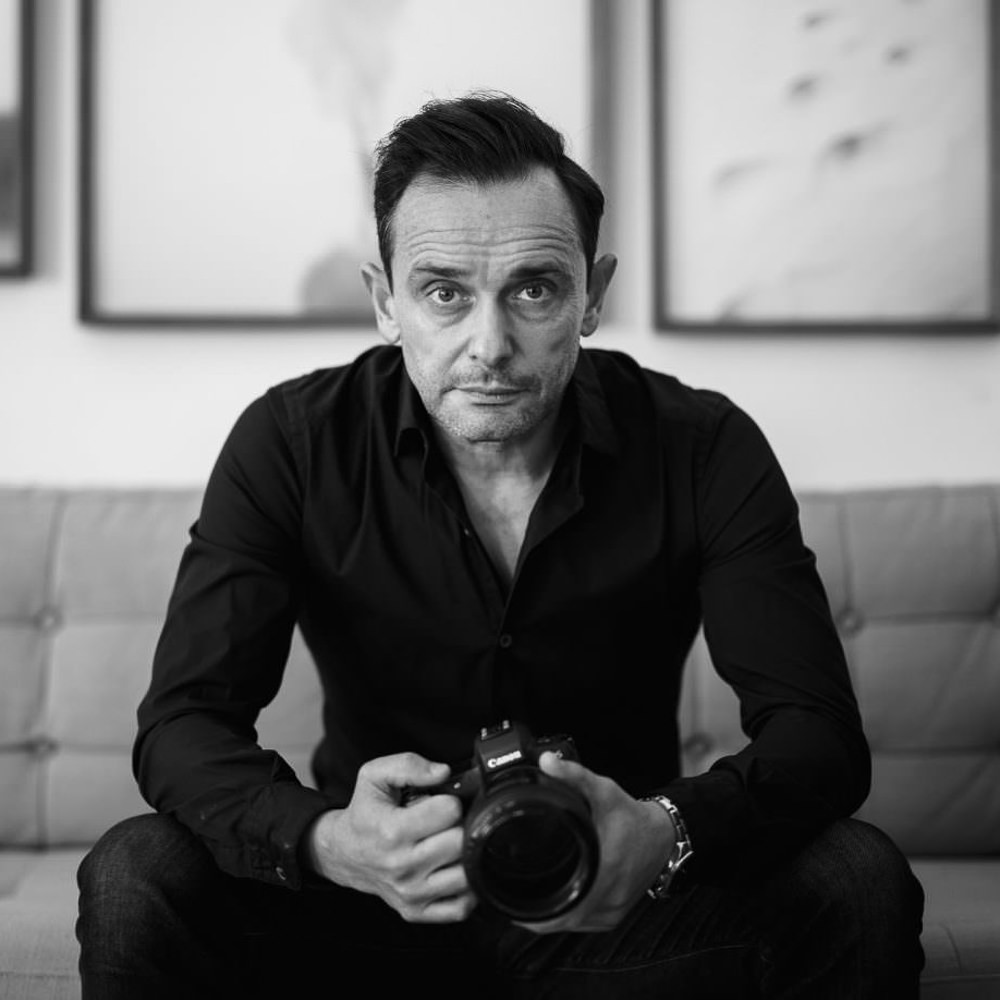
André Teixeira PhotographyBrancoprata
summary
André Teixeira brings a rare perspective on what it takes to build a sustainable career in wedding photography—one that spans decades without burning out. His story is about staying relevant when the industry shifts, maintaining creative integrity while serving clients, and understanding that longevity isn't about chasing every trend but about building genuine relationships.
The conversation starts with a simple question: how do we stay current? For André, it's not about obsessing over what's new, but about consistency. He talks about the balance between personal vision and client expectations, a tension every artist faces. When you do work that's authentic to you, clients sense it. But there's a paradox—too much personal agenda and you alienate the market; too much client accommodation and you lose your voice. André navigates this by being intentional about who he works with, understanding that the right client recognizes and values your specific approach.
What strikes most is his philosophy on sustainability. André speaks candidly about the physical and mental toll of wedding photography, the importance of protecting your personal life, and the evolution of your practice over time. He's not romanticizing the hustle; he's being honest about the cost. The conversation touches on stepping into luxury markets, understanding client psychology, and building a community of peers who understand the work. He emphasizes that staying relevant means evolving as a person, not just as a photographer—developing wisdom, deepening relationships, understanding what truly matters.
There's also a practical dimension: Andre discusses market adaptation without losing identity, the necessity of boundaries, and how community—whether it's with other photographers or with your clients—becomes the foundation of your professional life. For photographers at any stage, whether just starting or decades in, this conversation offers a masterclass in thinking long-term, protecting what matters, and building a career that sustains both your income and your soul.
key quotes
"When we do what we like, this is a cliché, but when we do our thing, our personal work, it shows in our images. So I think to stay relevant, you need to keep this consistency, and that consistency has a lot to do with the quality of your work."
"Consistency has a lot to do with the quality of your work, and it's very hard to fake it or to just follow trends because trends come and go. But when you have a consistent vision, people recognize it."
"This balance of personal life with professional life is something I think is really important. If you don't take care of yourself, how can you take care of your clients?"
"The client is paying for your vision, your style, your way of doing things. If you are trying to do what everyone else does, you're just going to be another photographer in the crowd."
"I think the key is to understand your market, understand who you are as a photographer, and build relationships with people who value what you do."
"Wedding photography has changed so much, and it's going to keep changing. The only way to stay relevant is to evolve as a person, not just as a photographer."
"Community is everything. Whether it's other photographers, mentors, or your clients, building genuine relationships is what sustains you long-term."
"The luxury market isn't about charging more for the same work. It's about understanding a different client psychology and delivering a fundamentally different experience."
transcript + show
episode: 3 title: "Ep. 3 - Como nos mantermos atuais e relevantes, com André Teixeira." pub_date: "Sun, 14 Apr 2024 23:16:12 +0000" original_language: english source_audio: "71c0eca8.mp3"
Hello, welcome. I'm Rui and this is The Wack Podcast. This week I have with me André Teixeira, photographer and the other half of Branco Prata. André was and continues to be my main reference in wedding photography. The way he follows the times without ever exposing his identity as a photographer and creative is something that inspires me in a very intense way. He is also an extremely generous person with the departure of his experience, which allowed me to learn a lot from him. Much was the stone that I did not need to leave because he did it before. I hope I can do the same for you on that side. So, without further delay, follow me in the conversation with André. Hello my dear André, how are you? Hello my Rui, how are you? It's always okay. Look, I have about 72 questions for you. How? 72. Do you think we can solve this until Easter? I thought it would be 20 minutes, 20, 25 minutes. Look, first of all, I wanted to tell you two or three things, for you and for those who listen to us, the 7 people who listen to us. You may have, I imagine you have some notion in relation to this, but you, over the last 12, 13 years, you were not just a great inspiration for me and for us. You were THE great inspiration. You were and you still are. And not only for the images you take, but mainly, not mainly, but also for the way you approach both photography and marriage in general. And so, a lot of people know your playful and spontaneous side and all that, but I don't think everyone knows your dedicated, serious and deeply professional side in everything you do. And there you are, even a king of a studio bar, you do it in a way that no one would say is not done by a carpenter, which is deeply annoying, you know? For those who are on this side, it is deeply annoying. And that's why today I have this great pleasure, which is to get a little closer to that little head of yours, and to have the opportunity to learn a little more. And if someone listens, they can learn what I was with a lot of luck. The 6 people, however, have already left. The 6 people, however, have already left. Exactly. And what I was lucky to learn in the last 10, 12, 13 years we've known each other, which can also help someone else. Yes, look, I'm very happy to hear those two words. When we do what we like, this is a cliché, it doesn't look like work. And in fact, we never think that we are inspiring someone to do something. For us, we work in this industry, it's something that fascinates us. It fascinates us a lot, this industry, everything, how things are processed before marriage, on the day of marriage, after marriage. But, well, I'm happy that somehow I managed to get a little bit into your head. I wouldn't say this, I wouldn't say inspiring in terms of photography, but other things, other values, the way we face our profession, our personal life, the way we try to find what I think is fundamental here over the years, which is this balance between the entrepreneur, which is a very fancy word in fashion, and the personal side. And we're not just colleagues, we've been friends for many years. I was lucky to have photographed your wedding, which is something that makes me very proud of how many people I could have photographed. It doesn't make me proud, but it brings me even greater happiness when we have people who also work in this industry, who know the industry like no one else, much more than our clients. And when they make these choices, and those choices fall on us, it obviously brings even greater happiness. And regarding our wedding, don't worry, it was one of the easiest things for us at the time, it was really deciding who would be. It was basically a 30-second conversation, and it was resolved very quickly. Fortunately, it happened. And now we're celebrating 10 years, which is absolutely incredible. 10 years, right? It's true. Time flies. Time flies. And what a wedding it was. It was great, it was great. It was amazing. Ok, let's move on to the good questions. I have a lot of curiosity here. You're playing around with the 72, but there are 14 with some aligns. So I think you don't have anything marked up to Jantapas, right? No, no. Don't worry. I worked all day for this. I already knew this was going to go wrong. Exactly. This was Sofia's example, wasn't it? It was just Mori42 with Sofia. Ok, ok. But she talks a lot. Exactly. So, I talked to Sofia. You've been with Branco Prata for 20 years. You're almost 21. But you have a few more photos. Yes. So, in all this time, how do you maintain not only the enthusiasm, but also the inspiration? Where do you find it when you feel it's missing? That's a good question. I finished my course in 1996. And in the meantime, I started working in the newspaper. So it was in Jornal Motor, around 1998, maybe. I don't remember. I spent some time connected to photojournalism. Then I started with weddings. And we're already on our 21st anniversary. This is one of the things I talk about all the time. Related to longevity. Not long ago, Marcos Sanchez, a Spanish photographer, asked four or five old people to make a video for him to present at the BDF. So I was included in the group of seniors. And it was very curious because at the time he also talked about it. I've been collecting silver for almost 21 years. In the meantime, I had already photographed weddings for other photographers before. But I don't want to say that. Basically to make money on the weekend. And he asked two or three other photographers. There was John Dolan, from the United States. A photographer... I don't know how many years of career he will have, probably 30 or so. Cáquia, a photographer from Spain. And the answers were all very similar. Cáquia talked about the importance of education. To refresh ourselves. To stay up to date. To keep in touch with other educators. To refresh ourselves. John Dolan talked about what I think everyone in this area is talking about. Over the years, I've heard several photographers talking about this. The importance of photographing for yourself. First, and then for your clients. And he talked about three things that I think are very important. Over 20 years of a career. Which is, in fact, work. You have to work. Work a lot. Never stop working. Some people have a slightly wrong perception of what we are, the white plate. Because they think we work day and night. Seven days a week. And that doesn't correspond to the truth. But we have a working schedule. Monday to Friday. We have our studio. We work from 9 to 6 in the afternoon. Weddings are not always on weekends. I have more weekends than busy weekends. I photograph 10 weddings. Even if the wedding is on the weekend. I had 10 busy weekends a year. The other thing that I talked about at the time. In relation to the consistency of the work. We talk about consistency, but it doesn't mean that we always do the same thing. Consistency has a lot to do with the quality of the work. And quality is very relative. I have a more specific question about that. But in relation to the consistency of the work. Do you always do a job with the quality you think? For me, this consistency is reflected in the way I give myself to each job I do. It's exclusively there. And the other part that I already talked about. This balance of personal life with professional life. We have to have time for ourselves. This is our company. It depends exclusively on us. But I can't be on the phone 24 hours a day. I can't be on the phone 24 hours a day. I can't be answering emails 24 hours a day. In the past, I did meetings with clients. I did it within their schedule. When we had different schedules, we did it within their schedule. Nowadays, people have more respect in this situation. Last week, I did a blue call with a couple in California. I did that call at 4pm. For them, it was 8am. But I think this balance is very important. Going back to the question of inspiration. My inspiration comes from these family dynamics. From my personal life. From what I do in my free time. I'm not a consumer of wedding photography content. I like to see. I follow the people I have to follow. People who somehow have a connection with me. I like to follow their work. But I'm not a consumer of wedding photography content. My inspiration comes from there. Maybe from consuming other types of content. Music. Music has an important part in what I do. Television. Cinema. Series. I'm a consumer of series. So, it comes from there. I can't lie. The fact that I have a person like Sofía by my side. We share our space professionally. Our space and time. Our space and personal time. It helps a lot to maintain the levels of inspiration. The will to take the camera and do things. With Sofía by my side 24 hours a day. It's hard not to have that will to try new things. I believe so. I think anyone can understand that. We can see that your dynamic is like a perfect storm. If something goes wrong... Not only in practical terms. But if something goes wrong, you balance each other. I think that's incredible. Absolutely. Some time ago, you made me notice something funny. Although we get older, couples still have the same age. More or less. Yes. That brings cultural and generational changes. My question is, how do you deal with that? How do you maintain that relationship with them? It's interesting. To be coherent and logical to them and to you. How do you deal with that? That's an excellent question. It's something I've been debating for years. Every 5 years, I make a breakdown of the past 5 years. And what the next 5 years will be like. I work with these goals. More 5 years, more 5 years. To be closer and closer. Connecting parents and children. There's something curious that helps. Nowadays, people wait a bit longer to get married. I'm 23, 24, 25 years old. My client has 30, 40, 50 partners. Then, it's a bit... The speech, the way I approach photography, I approach it in a more emotional and timeless way. I'm more concerned with what will be their memories in the next 15, 20 years. I already have some experience. And then, the most important thing. Parents have a big influence on the children's marriage. In the organization. Many times, in the management part. I tend to lean more towards the parents. I'm the best friend of the parents. I'm the best friend of the children. That helps a lot. Despite being an older person, they see me as a role model. We play things a bit like that. So, you end up being the connection, a bridge between the two. You can create a cool connection with the spouses, but at the same time, you can also connect with the parents. You can create an interesting triangle of trust. It wasn't like that 10 or 15 years ago. The parents were... I didn't want to say this. Don't get me wrong. But the parents were the secondary characters on the wedding day. This is a narrative. We have the main characters, and then we have... This is like an onion. It has several layers. We have the closest family core, then we have the other family core, which is not so close. Then we have the friends. It's exactly the same with friends. We have the closest friends. The friends... Then the other friends, which are almost... The colleagues work. They won't be friends, they'll be colleagues. This is a matter of managing all these layers of the onion and managing it in a different way. Giving more importance... Not more importance, but bringing more people together. In the past, you just needed to approve the grooms and create a closer relationship with them. Nowadays, because we don't share many things, 10 years ago I shared my musical tastes, my cinema tastes. All this is not important, but it helps to unblock people. It brings more closeness between people. Because we're talking about personal things, we're not talking exclusively about our work. Nowadays, I have fantastic stories with parents of grooms. I remember a wedding I had in Washington. The grooms were amazing. I have an amazing relationship with them. But we're almost best friends. My father is a builder in Washington. During the wedding, he was always by my side, hugging me. At all times, my father was always by my side. It's that kind of relationship that I look for nowadays. Because it helps me. I don't have many things in common with them, like I did 10 years ago. I need to find this closeness with other people. Maybe a 50-year-old father. Let's imagine that in the United States, all parents are very young, but if they marry a 30-year-old couple, the parents are 50 years old, if they have older children. So, there's not such a big gap between me and them, as there is between me and the grooms. We look for points of closeness between them. This is beneficial for me, because the grooms, who hire me, see that I have such a close relationship with the parents. It doesn't influence the way I deliver the images. I don't know if you have any questions about how the market is, or the evolution of things. Not specifically. I think you're going to talk about that. Let me introduce this part. I imagine you're going to talk about photography itself. I believe you're going to say that, in general, you maintain the way you photograph, and you take pictures in the same way. Exactly, because of your timeless goal of the photography that you do and what is supposed to last 30, 40, 50 years. It's a legacy that should not be given up to fashion. Even so, I think you end up including some of those elements. Some of those questions of modernity. My question was, how do you find that balance? Do you do exclusively what you like and what you want? Or if they asked you something specific? I am extremely flexible. It's one of the things that I've been talking to a lot of photographers for years. I met a lot of people who said, I only do this type of photography and I don't do anything else. But we can't forget that on the wedding day there is room for everything. There is room for your creativity, there is room for your photographic style. But we can't stop refusing or stop doing certain things that the members think are important. Whether you like it or not. For example, we can talk about the photos of guests. We all fight to take photos of guests. If I have a couple who wants to take photos of guests, I will not do it. I'm probably not the one who does it. Because it is not a photograph that requires an artistic vision. We all have a unique vision. Let me tell you something. One of the first photos I printed to put on my wall, here at home, was a photo of the guests. Although it is not the revolution of portrait photography, but it was an amazing touch. It was one of the things I learned from you. And even today, when I see that there is a possibility of doing that, I do it. I'm looking at her now. It's a photo of me and Elsa. Instead of being facing each other, we are slightly facing each other. And on each of our sides are our parents. Exactly facing each other. That is, we have the three couples in that photo, instead of having six Palermas looking forward. For me, it was one of those situations. Because a little touch, creative, made the photo amazing. And it was one of the first ones we printed to put on the wall. Yes. You talk about the importance of this type of photography. What I always say, over the years, the importance that we give to these photographs will be exponentially greater. People are disappearing. And at least we will have that memory. It is a very large memory. And we can't forget it. That's why I always say, the day of the funeral is a very special day. And we can't forget what we are doing. We are doing an untimely work. We are doing an artistic work. But in the meantime, we manage to do that, which ends up being more important. Over the years, I have realized that the photography that the couples prefer is never the one we have in mind. We always choose an incredible light, a spectacular pose, a moment. And the couples always have a photograph that is usually not a photograph. It's a moment. Or because it represents something to them. Or because it's a photograph with the parents. A different photograph. Or because it's a genuine smile. It's never that photograph that we think is our favorite photo of the day, of this wedding. For them, it has to be any other photograph. And I think that we, as wedding photographers, and the builders of future memories, we also have to be flexible. And I am flexible. It doesn't mean that it's me doing it. I have a team that works with me on the wedding day. It doesn't mean that when there is a situation where it's not a type of photograph that requires the artistic vision of the photographer, the other photographers are with me. I'm not saying that the other photographers who work with me are always as good or better than me. So, I don't want you to understand this as... No, no. They are serious about this. No. It's just because I feel the need to have control on the wedding day. That is, more than being stuck there for 30 minutes or 40 minutes doing that type of photograph when I can go and create another type of image. Of course, now, in relation to what we are experiencing in photography, I don't think this is... Nowadays, a lot of people complain. They say, now everyone takes pictures with flash. Why does everyone do this? Why does everyone do that? This has always been like this in wedding photography. But they always had... We call this... These are not fashions. These are artistic chains. This is like any other type of art. Things... Music was like this. In the 50s, rock and roll appeared. In the 70s, disco music appeared. And then it goes back and forth. You have what is called the full circle. Things come and go. And we are in fashion. Things are a bit like this. We don't invent... I don't like to say that wedding photography has to innovate. Wedding photography doesn't innovate. Wedding photography serves a purpose which is exactly what we do now. 30 years ago, wedding photography was done in a certain way. 10 years ago, it was done in another way. Today, it is done in another way. And things follow what the client wants. What the client wants. And we have to go a bit... We gravitate a bit. We go around what they want. We never stop. And I think that during these 20 years I have already photographed in several ways. I remember that in the beginning maybe I photographed in roll and things were as they were. Then digital photography appeared. Photoshop appeared. And we loaded that with... It wasn't Percepts at the time. It was called... I don't remember. The actions of Photoshop. And we loaded that. Each photo had a different action. Because we had all that at our disposal. So I think things are a bit like this. Many people complain a lot. Some complain. Others are more modern. Others are less modern. I think it is important for us to keep what is our vision. But in some way also to deliver what the clients are counting on. They are counting on the work they saw in ours. In our portfolio. But maybe later... Information today is much greater. Research engines are very large. People have a lot of information. They saw a picture of the neighbors at night with sunglasses. Everyone wants pictures with sunglasses. I don't see any problem in taking a picture at night with sunglasses. I used to photograph with flash. Twenty years ago I used to photograph a wedding with flash. From beginning to end. You see? I think we are not innovating anything. We are adapting. Weddings continue with the same... With the same dynamics. Weddings have the same moments as 20 years ago. Maybe nowadays weddings are made in places where they weren't. Now we have the Destination Weddings. Things work differently in the wedding dynamics. But if you look at it... Weddings didn't evolve. There is no evolution. It is a party. It is a gathering of the bride and groom with their families and close friends. It starts in the morning or in the afternoon. It doesn't matter. Then we have a ceremony. Then we have a cocktail. Then we have a dinner. Then we have a party. In the middle there are people who don't want a dinner. They prefer a pool party at the end of the day. But in general weddings are the same. I see pictures of my mother's wedding 50 years ago. The picture was different. It wasn't as complete as it is today. But all the moments are there. Everything is there. In a way it shows in the dresses. In the fashion of the bride and groom you spend 5, 10, 15, 20 years. Of course there are always extraordinary alternatives and super out there as you said before. But 80% or more serves those 2 or 3 purposes those 2 or 3 structures. Yes, that's it. This is often the problem of the artists. Maybe we waste too much time thinking. I wouldn't say discussing but 10 years ago there were the fine art photographers and then the documentary photographers. This question of labeling the types of photography. The discussions that the fine art photographers had the light ones and then we had the moody dark ones of the documentary photography. As you get older you realize and you become more intransigent and you get into these discussions and these struggles. And we get into these discussions and then there are these struggles and as you get older you stop being so intransigent so radical and you realize on all sides the categorization of photography. It's also important that there is a categorization of the type of photography that the photographer does. The wedding photography has always been the record of the moment. To take this moment to future memories. If there is a photographer who does street photography the street photographers 10 years ago were the best of all. It's just another way to do a job. Like any other. As I say nowadays I understand and embrace all sides. The goal is common to all people. Let me finish this part of longevity. A question that I think is quite emotional. When you... In 20 years you've had ups and downs the company has had ups and downs you... at some point as time goes by do you feel afraid to become irrelevant in the industry to see the relevance you've gained over the years? I think things are hard to measure. When people talk about success and photographers success this question of relevance is a good question it doesn't scare me because I don't exist the company doesn't exist for... consumption and external I mean... How can I explain this in a more clear way? When we decided not to do many weddings we decided not to do many weddings so we could have a different lifestyle so we could do other things and embrace other projects. So... What I think and what I was saying this has to do with the amount of work you do the way you do it it's not the number of weddings you take but the amount of work you do nowadays the wedding market is not just taking pictures my cousin got married and I want her to be a photographer there's a back office job that has to be done and it's so important because you publish your portfolio on your website and you upload pictures on the blog I think as I said I'm not going to take pictures of weddings forever I'm going towards my goals and if I get to a point where I think or where I don't feel capable I don't feel inspired to do this I stop taking pictures of weddings I won't stop taking pictures over the years we've also created a structure where the company doesn't depend exclusively on weddings we have corporate work that I love doing we have excellent clients that give us a lot of freedom to do whatever we want I don't worry about the relevance I'm not the kind of person that doesn't like to show up and this was a program to send you a picture I loved the first one I thought it was perfect it's not something that I worry about it's not my goal to be the most famous person in my neighborhood it's doing what I like I understand the relevance if you stop being relevant people stop knowing what you do another thing I said in my video was something else it was related to an industry test one of the things I said was old clients don't guarantee new clients nowadays word of mouth doesn't work like it did 15 years ago old jobs don't guarantee new clients new clients guarantee future clients or future jobs it's a matter of being in the market showing what you're doing what you're working on showing what you're keeping up these relationships we have with other people in the industry people that are our partners planners tourists, videographers we keep our relationship, our proximity and when I find in a day that people take longer to respond to a message maybe they already have other more important things and I tell myself I'm going to have a hard time on the day I stop recording weddings I've dedicated half of my life doing this but I'm not going to be I'm not going to start seeing works on the street with some frames because I always have other things to do what an image let's close this part of your experience of your huge experience of the time you've had this is something I can't understand why you and Sofia have this idea and I can't understand why you're one of the people that I know that shares everything you do it's true you're not a social media monster you don't make stories of everything you do but the truth is that anyone that knows you minimally knows that you're one of the people that shares everything Sofia too but in this case photography is an example and my question is why do you do it if it's something absolutely natural or do you think this is a bit of a struggle against what I found when I got to the market business secret no one talked to anyone no one shared anything things were very different and I always felt that to evolve it was necessary for people to all go to the same side and all together it's easier for us to take something to another level if we work a lot think a lot rather than individually I won't take the wedding industry to another level we all need to work together it's also a bit I felt this need when I finished my photography course and I went to work for Jornal Motor and I tried to get in touch with other photographers from other magazines from other magazines that did motorsport and if we shared to ask for some advice I had just finished my photography course I was looking for some advice nothing I had nothing I had to go to another area one thing is that you like cars another thing is that you deeply understand What is the automotive industry, another thing is that you go to see a rally of Portugal or Formula 1 and you don't have a clear idea of what it is. You go to FAF, if you get home, you're all covered in dust, you don't know how to find the best access points, if we are going to do all the pictures in the same place, or if we have the possibility to go to another place. During the day of a qualifying, if we are going to move to a new place. And I had to learn to do things, I learned to do a recognition, like we do nowadays. Like we do at weddings, we go to see the space, try to understand where the sun will be on that day, at that time, at the ceremony, try to find the best places to take some pictures, planning is important. And I think that at the time I struggled a little bit because I had no one to share with. And it's like I said, you have to be part of me, I have no secrets, people always talked to me, it seemed that they always had problems in sharing, how to approach a client, how to manage expectations on the day of the wedding. One of our clients, it's a tiring job, it requires a lot of mental gymnastics, it's not just physical, but also mental gymnastics. And I think that as you learn certain things, you realize that this works. Why wouldn't I share this with other people? We always had, the Portuguese always have a big problem with numbers, with money. How much does he charge? How much does the other charge? And that was always a big discussion of mine. People don't have to be worried about how much the others charge, they have to be worried about how much we ourselves charge. How much do you think it's fair to charge for the work you do? I think it's a little bit like that. I think it's a little bit like that, I think it's in fact, over the years, over the years, you learn the good, you learn the bad. You have to go through certain situations, you have to make mistakes, you have to eat a lot of dirt. This was like when I was going to photograph cars, it's also necessary to do a lot in the streets at weddings, to then realize that there is an easier way to do this, there is an easier way to manage the day, an easier way to, I don't know, sometimes people, equipment, how many machines you have to carry, how many lenses, how much this, how much that. It's easier nowadays if we all share with each other. I don't think, I still think we're not going anywhere if we individualize ourselves too much, you know? I think this works collectively. Yes, and there is a phrase that you say, that a tide, as it rises, takes all the boats. Of course. And I think this applies. And you've already spoken more than once about learning, and now I'm going back a little bit here. From my perspective, from the outside, I feel that there was an André before, and an André after the workshop you did with José Vila, a few years ago. I imagine you agree with me, but what has changed, that you still apply today, what has changed radically in your life, in the way you think, in those days you were there? Look, I didn't go there with the intention of learning to photograph, because I've been photographing for many years. What I brought from there was validation. It was... being with the one who was, in my understanding, the person who not only revolutionized wedding photography, but who transformed wedding photography into what wedding photography is today. And that continues, and that continues, even though it's not exactly... Yes, even though it's not exactly, from a media perspective, social media, it's in a media perspective of some of the most epic weddings that are happening right now in the past. Yes, yes, yes. But he was a person who, in addition to having risked and brought film normally to wedding photography, he was already completely out of wedding photography. He was a person who brought... That's it. This is not a revolution, but it started to give importance to other issues, to other moments of the wedding day that we didn't have in the past. How can I say? Things were all there. We were the ones who took advantage of them. Wedding photography is not just people. There are people, there are places, there are... The meteorological time, I mean, everything is part of the wedding day. All the five senses, the aromas, the wind, the heat, everything. All of that is part of it. And he brought, in a more accurate way, he brought all those elements to the wedding photography. That is, it's not a revolution. That is, it's a different way of seeing things. He wanted to make a report that incorporated all those elements. That was the big investment we made. I went to Mexico for 15 days. I did a public workshop for 5 days. And what I brought from there, in fact, was that validation, that confidence that maybe I didn't have, you know? Because I didn't have anyone to validate my work. I didn't have anyone here in Portugal. I didn't have anyone I could talk to and exchange ideas with. It didn't make me better at photographing, it made me worse. It made me more alert to certain things. That's why I saw the wedding in a different way. I wouldn't say we did things in a more unconcerned way, but in a simpler way, more simplistic. And we brought a little bit of the complexity of the thing, of incorporating all these elements in photography. I never forget, sorry, that we had some things we had to do, some assignments. Sorry for the English words, but I don't remember Portuguese. During those days, we had some tasks. Some tasks we had to do. At the time, I did it without thinking much about it. Only later, later on, here in Portugal, did I start thinking about it. In fact, it was refreshing. You see? It brought me a lot, it gave me some values I didn't have. For example, you have 5 minutes with a couple, it wasn't a couple, it was a couple, you have 5 minutes to do a session with them. And you can't stay there like, where am I going? And the light? And now? I mean, 5 minutes took me, in the past, to find a place to photograph, and in 5 minutes, I told them to do a session. Or we went out, it was in the middle of nowhere, and there was a village very close, I don't know, like 30 or 40 inhabitants, and we had to go out all morning, and walk around the plain, and make portraits of people. For me, obviously, it was easier, because of the language, we speak Portuguese, which is what we understand. For the Americans, it was a very interesting experience, because they don't speak Spanish, and you have to convince a person who doesn't speak Portuguese, to sit in front of your camera, to be photographed. And if, after a while, you start to think that these are things you can apply on your wedding day. I mean, you don't have to know everyone, because you don't know everyone at the wedding, but it gives you some confidence in the way you approach a person, to make a portrait, or things don't always go the same way, and you only have 5 minutes to take pictures of the grooms, and you can't block them, you have to use all your mental unblocking, accessible, to do what you have to do, which is to take pictures of them. So, I think that, basically, that was it. I mean, in the end, we had to make a presentation with our best pictures, which I didn't choose, so everyone took pictures in films, some had roll cameras, others took pictures in digital, but everyone had to do it in the middle, and also digital photographs. Then, in the end, we did a... He did a review of the pictures, in front of everyone, and I already had my block of glasses, ready to point out everything he was going to say, and I, of my 5 pictures, said, I have nothing to say, it's great, I have nothing to say, it's great, this is a little spectacular, this is a little funny, this is a little... I only smiled a little, but it's technically so perfect, this is Portuguese, right? I had never spoken to anyone about marriage, no one had ever... about marriage, I had made a... a review of my pictures, no one had told me about my pictures, I have no reason to say that, I left there with a lot of confidence, I mean, I think it was from that moment that things changed, because I felt that... I could do my job in a more... in a more serious way, more intense, I felt more fear, more risk. But in that... in that follow-up, because... there it is, I have followed all of this, all of your images, and all of the pictures you make, the marriages you make, and it is absolutely undeniable, also, if you had beautiful marriages, beautiful people, beautiful marriages, and you always had them. But in the last, say, half a dozen years, you clearly positioned yourself in a way that is, I think, undeniably, the first option for the big marriages that happen here, and you are one of those options of a small group, at the European level, and maybe even worldwide, but European it is, certainly. My question is, that positioning was something conscious and programmed? Did you hear it happening and... and you continued? No. There is such... such growth, you take steps, you go ahead of the others, you take a step back, you take two steps forward. When I started to make the marriage, among other things, good or bad, there are no bad marriages, there are only good ones. And I made a certain type of marriage. You know that, many times, the question of value also influences the type of marriage you make. I'm not just talking about military value, but also the value that people give and attribute to what you do. I can't say that I make many of them, because I don't, I return, but I make a medium-high segment, American, Asian, always with one foot behind, because I don't want to make marriages where people contract a silver plate, a brand. I don't want people to enter us with a brand. This happens a lot in the US market. So... People have the money to buy a Bentley, and they don't buy a Bentley because it's the most incredible car in the world, because of the status it has. And there are many photographers who are mistreated, also because of that. Sometimes you can create here, in terms of dynamics, between people, between the client and the photographer, very strange dynamics, and I don't want that either. I don't want, because if a luxury wedding appears to me, I don't want it. I don't want to be a photographer for 100,000 years. Of course. No. But, well, there is always that, there is always that, that footnote, that I think, I need to have the maximum of proximity with people, with the feet, that whoever goes, you understand, that they don't live in Olympus, and that they respect, they respect me as a person, you understand, as a professional, that they are not hiring me only because of the status it gives me. Nowadays, Rosa e Vilha, it is denied that Rosa e Vilha only does luxury weddings, weddings that don't exist, they don't do that type of wedding. But Rosa e Vilha cohabits there in Olympus with those people, because they will not be friends for life, but at that moment he is not being treated as a photographer. It is the chemotherapy that I hired you for. I think things evolve in a natural way, I think that in a conscious way, we always want to do another type of wedding, and you have to understand how you can achieve that, how you can achieve that goal. Nowadays, I don't have a goal, my goal is not to go to 10 weddings and photograph 8 outside. My goal nowadays is to do 10 weddings and leave those 10 weddings happy. I had to work and because I go home, I have been doing weddings outside for 14 years, a notification appears that the first wedding I did was 14 years ago, in New Zealand. I have also done most of the weddings outside of Portugal, it was not because I wanted to, it was not because I wanted to travel or do weddings abroad, it was because of a question, it was not out of necessity, but it was because things were happening that way, and nowadays, my 10 weddings, if I do them all here in Portugal, I am the happiest person in the world. If they are weddings where I go out there and the mission is accomplished, I like what I did, I like weddings, I am happy, I am cool. I think things change in a natural way. When you put too much pressure on yourself, because you have to achieve what you want, you have to achieve this goal, you want to do this, you want to do that, when you can't achieve these goals so quickly that nowadays people think that they work, you start to feel frustrated, you start to feel frustrated and you stop enjoying what you are doing, this starts to go in a spiral, and it was one of the things that we always knew, that was to give time to time, things will happen. It's not worth it if we are here pushing too many things, because things will happen, if they don't happen, it's all right, it's not the same. They will happen when they have to happen and as they have to happen. That's it. You do those weddings that most of us consider to be entering that light market. I understand what you mean in relation to the relationship you have with people, but in terms of budget, I think we can consider that we are already talking about very high values globally. And my question was that doubt you had, if you didn't know if you wanted to go up or not to that degree, why did you do it and what did you find different? That level above that I gave, it was always like that, in perspective, what always pulled me, what I felt some reluctance to take that step was what I ended up finding there, in terms of people, in terms of my creative freedom, what I managed to take that step above and I continue to work with good people, with exceptional people. The biggest surprise when we took that step to another type of marriage was that we continue to work with people for people. They spend a lot of money, they spend, they don't spend those millions, I mean, I got married a few years ago, with my daughter, the CEO of Burte, which is the giant of domestic investment, and not only in Le Mans, my grandfather is on the list of the 50 richest people in the world, we had a wedding, nobody was there, but it was a wedding where there were the richest people in Germany, the millionaires of Germany, and everyone was eating pizza with their hands, the wedding was here in Portugal, everyone was eating pizza with their hands, we went to the beach, the next day, everything was calm, people with a lot of money, and good people, normal people who do what we do, they have a little more money in their pockets, but they do everything that we do, and that was, for me, the biggest surprise, I didn't know what I was going to find, because I had to try, I had to try, it wasn't a goal, but it's almost like an attempt to understand how much you will like to be included in that market, as if people will also include you in this level, and what I found was that, I have people, celebrities, who have been doing things, apart from a Dodgers player, like Miss Puerto Rico, about 5 years ago, they were probably the most well-known people, for those who follow baseball, for those who don't follow baseball, they don't know me at all, for those who follow the Misses, they probably know me, for those who don't know me, so it's not a global scale, they are well-known, they are very well-known, she is one of the Dodgers stars, and I did the wedding with them, all their colleagues were there, all the baseball stars were there, and it's the same as a wedding with all the other people, having fun, drinking, doing breakdancing on the floor, it's the same as all the other people, so it's not a corporate wedding, We had, let's say, in those weddings, I see those dynamics that always fascinated me in weddings. I had a wedding in Liechtenstein with the godmother of Never, Atina Turner. Atina Turner, the next day, at the brunch, asked to take a picture with me. With me and the photographers. There you go. And you didn't end your career there? No, she didn't ask. At the moment you have Atina Turner asking you to take a picture? She asked me to take a picture, it wasn't because I was a beautiful person. She asked because... Because you think with your modesty, right? No, no. She asked to print a picture of the couple on the day she wanted to offer a painting in a hurry. She wanted to offer the bride, so when she came in for dinner, she and he would offer a painting with a picture of the groom. It was another movie, right? We were in the middle of Liechtenstein. In the middle of Liechtenstein, no, the wedding was already on the border, we were already in Austria. In the middle of a mountain in Austria, trying to find someone to print a picture of us, a 70-100, to put in a painting. And there we managed to do that. And the next day, her husband said, I would like to take a picture with you. It wasn't for her to take a picture, it was for us. For us to take a picture with her. But that's it, it's a lot out there, that's what I found. But tell me something, in practical terms, as a professional who is working to try to put you on those levels, did you do anything, even in the simplest questions, the way you are, the way you answer the email, the way you dress, the way you dress, did you make any change, did you reinvent yourself in any way, thought in that sense? Communication is very important, right? Which is one of the things that we actually had, I think we never worked in any other way, but fast communication is one of the very important things, the way you talk to people is also very important, the way you dress on your wedding day, I always used to, when I started photographing weddings, I used to wear high heels and high heels. Nowadays, whatever the wedding is, I go with the facts, because things like that require me, the way you dress, all this counts, the way you talk to people, I've never been a person to put myself, it's not that you misinterpret me, but you always try to put me on the same level as them, people like it when you talk to them, and they feel that trust, you know? We're not there, like, I'm shaking like Buenas Verdes, oh, the father of the baby, he's a CEO, I don't know how many, no, speaking is what I told you at the beginning, nowadays, the scene of the parents, for me, is fundamental in this beginning of my relationship, I mean, never being with them, showing too much pressure, being there, talking with confidence, but the way you talk, it's funny, well, unfortunately, over the years, over the years, we see it as a necessity, you have to speak more in English than in Portuguese, at work, and it's funny, I have a French wedding planner, she's French, she's English, but her company is in France, and she said, I love hearing you speak English, you sound like an Italian New Yorker, and I thought, am I talking like a gangster? Am I talking like a gangster? Maybe I'll have to change my way of speaking, no, no, you speak very well, with pleasure, I don't know how else, but, well, things have to change, obviously, I can't go to a certain point, I know we don't call, I don't say how people are dressed, but the customers may not call, you know, they may call, but I don't want people to look at you and say, you're dressed like this, you're dressed like that, I don't want that, I don't want to hear about smoking, and someone wearing bomba pants, and a t-shirt with keys, you know, it doesn't make sense, this is what I always say, I say this for years, I say this for years, we have to behave according to the place where we are, for example, a banker, a person who is in a bank, maybe the guy, on the weekend, he just likes to go to the gym and wear sneakers, and whenever he's not working, he goes to the gym and wears sneakers, but when he's working, he has to present himself in a way, it's not a question of being well dressed or not, it's a question of being professional, and that's what we have to do, I don't care how people dress, I don't feel comfortable if I like to go unnoticed, as you know, I'm not a very tall person, which is good for me, I'm a ninja, no one sees me, but when I'm dressed according to the standards of marriage, I can go unnoticed, for me it's very important, even though I talk a lot, when I'm with friends and people, I talk a lot, but in certain environments I'm the opposite, I'm a little shy, let's say, I don't like to be unnoticed. It's funny, I wouldn't classify you as being shy, but... Yes! But I understand what you mean. No, when I'm in my circle, with friends, I'm not shy in a marriage, I talk to everyone, I talk to everyone, I talk to everyone, but that's it, I don't want to be there, I don't want to be there, I'm not that photographer, everyone to the left, everyone to the right, for me when they ask me to take a picture with more than 10 people, I start to think, I have to go there with them, a little more to the right, a little more to the left, more to the right, but I don't do that because I don't want people to feel bad and people to look at me. So that's it, I wouldn't say shy, but I would say that. Look, I have here two questions that I asked Sofia, I would like to ask you more or less the same. Who is entering, who is entering the marriage? It can easily seem that it is a very easy life, that it is a very easy job, and in most cases it is, there are much more difficult and much more complicated things than ours, but it has a different feature, which is, if you are sick, you go anyway, unless you can't get up, you go anyway, today you can't go on a flight, you get a day off and you don't go. That's why my question is, what was, what do you remember, what was your worst day, in which you gave everything to not go, but you have to go anyway? I was having a mental intoxication, I had to go to the doctor, the doctor said, you don't need to say my name. It was the worst experience I've ever had. I don't think I need to say anything, because it was... Fortunately, I've never had, apart from this marriage, I'm not a person who gets sick, I don't know why, I'm not careful, I think it's bad, I'm not a person who gets sick, but I remember perfectly that it was a brutality for me, because that, every 15 minutes I had to run from one place to another, and if I had a mental intoxication, it's very complicated. Apart from that, I've never had, it's like you say, this seems like an easy life, because we work in a moment, in a party, we work in a party, it doesn't seem easy, because we are invading a space of joy, so it's not us who will take that joy away, we work in an environment of harmony, where everyone is happy, I travel a lot, and in fact, I travel a lot, I travel, I go to the hotel, I go to work, I work, I go to the hotel, I go away, I'm not going to stay there for a week, I'm not going on vacation, I don't bring money with me, I go away. But it was all very beautiful, if you do it like that. In the beginning, of course, maybe I would stay a little longer, two or three days, but not now, I'm going earlier, I'm always going earlier, three days before, because it's a hard job, a very hard job, and I sell my services for hours, but I'm not fulfilled in hours, there it is, it's my problem, it's eight hours, ten hours, but I can't leave at the wedding if I haven't done everything, and there are a lot of people who are very rigorous with that, I was never rigorous with that, I would say, my service has eight hours, if you want, it has ten hours, and I stay less than twelve hours at the wedding, sometimes I can stay fourteen hours at the wedding, not having that thing, I never felt that desire to leave, you know, this is perhaps due to the fact that there are a lot of weddings, and I understand, there it is again, I understand all the sides, all the variants, and all the sides of the industry, and there are people who are in a hurry to leave, and well, it's the management that they do of their work, I don't feel the need to leave, mainly if I feel that my work is not complete, my work has to be complete, and for some reason, or delayed, things happen, this is life, this is life happening, and I don't feel that need to leave, or I feel the need to do my full job, because it's a hard job, it's a very hard job, you don't always have a job, you don't always have a place to eat, you don't always have a place to sit for five minutes, fortunately, over the years, we've been lucky, but not always, I have a very different way of thinking, you know, because I don't go to weddings, I'm not a... I need to be respected, but I don't need to be put on the pedestal of the rest of the wedding, you know, of the grooms, I don't need to be put on the pedestal, you know, I don't need to be put on the pedestal, what I always say is that I need a hot plate of food, a glass of water and a coffee, that's what I need, I don't need to have two hours of dinner, I don't need to have a room for me, with a sofa, to sit on my feet, who knows me, who has seen me work, I'm always with my camera in my hand, ready to shoot, I'm not always with the camera in front of my face, my camera is always in my hand, and it only goes to my face when I take the picture, people always come to see my face, they always come to see my outstretched arm, smiling, but I think mentally it's a stimulating job, then, of course, when a person starts to reach 50, then he realizes that the physical is not the same, and then, of course, you have to go to therapy, and do more and more, because the back is not the same, but these are things that may or may not happen, but mentally it's a very tiring job, and it doesn't end there, because then you have to go to the hotel, a person goes to the hotel, comes home and still wants to do backups, and make two or three copies, and wake up in the middle of the night, I don't know how many hours, I know it's a lot of adrenaline, I don't do backups when I arrive, my routine is to arrive and watch TV until I fall asleep, and then all these things, but there are people who want to do backups, but it's not easy, it's not easy, you have to work a lot. I happen to be one of those, if I get home at three in the morning, or something like that, I spend half an hour or an hour doing backups, because it's a matter of adrenaline, it's a matter of adrenaline, it's a way to lower the adrenaline while it's already resolved, and then when I go to sleep, I'm already prepared. I can go up bursting, I can go up bursting, imagine that I'm going to stay there for two hours watching TV, a lot of people, a lot of sounds, a lot of animation, a lot of... visually everything, a lot of stars, a lot of stars, to get home and you can't sleep. This backup scene, for a long time, until the time of Covid, I did 80% of the work, I did it in film, so I'm not going to do backups, I'm not going to do backups at all, it was 200 or 300 pictures of the party at night, a card or two cards, but I wasn't going to do backups of the rolls. Then from 2020, 2021 I had a wedding, 2022, when I started again, the film cost me three times more, I still had weddings in 2020, with a budget of 2020, so I had to make the decision, I'm going to have to reduce here a little bit the amount of film, last year I also shot very little film, this year I'm going to shoot again, because I'm already feeling, it's not for any other reason, it's just because I feel that shooting in film makes me feel in a different way, a little more relaxed. And a little bit in that follow-up, and to finish this good conversation, I wanted to ask you, how do you see the sense of community that we have today, and what do you think each of us can do a little bit better for the community itself to grow and improve? In fact, things have changed a lot, when I started working there was no, how do you say, there was nothing, there was no interaction with anyone else. A few years ago, there were groups, people used to meet, out, and I don't know how, and I'm a little bit out, as you know, of social networks, I prefer things more face-to-face, but what I'm hearing, what people are talking about, the conversations I'm having, things have grown a little bit again, I think there is a sense of community, but there is also a community that is very predisposed to negative criticism, you know, confrontation, you know, I think I've grown too much, and I think this has a lot to do with the fact that we're not personally with each other, we're all talking on a keyboard, you know, and sometimes they are misunderstood, they are, quickly, well, there are many, I don't want to say egos, but there are many differences of opinion, many ways of being different, there are people who are more open, others who are less closed, there are others who receive my open-arm criticism, there are others who don't like criticism, and when you're not face-to-face with people, you don't understand, sometimes you don't understand the intention of what was written, and this, when I realize that there are some people who are telling me that they are in groups, I'm in small groups, friends, and what people are telling me is that there is starting to be, again, a certain, it's not separation, you know, but we don't talk so openly about things, I don't know, it can be, it's a perception of what they're telling me, it's not from my own experience, and it's a shame, in fact, which is one of the things we wanted to implement here in our studio, now that we have space, it's also opening our doors, it's not, we're not going to charge a ticket to the door, people come here in a relaxed way, on a Friday night, come here to have a drink with us, we're going to talk. What I want to implement is conversations, personal relationships, face-to-face, and it's one of the things we really wanted to do, and I think it's missing a little bit, to leave a little bit of keyboard and to try to be more together, because many of us only meet at work, Many people don't know me, and I don't wear jeans every day. Sometimes they say, you wear gang pants, and I say, yes, I do. I don't know, I can't give you a very concrete answer, because it's not an area I can intervene in, I'm very much out of that circle. But, as you know, we are a library. I know I get a lot of e-mails from other colleagues, asking for money. I have other photographers, friends, who send us e-mails asking how much we charge, just to get an idea. It's not to position ourselves, I'm not here to guide you. I remember years ago, some photographers would say, André, raise your prices, so we can raise ours. That made a lot of confusion, because it's my job, I'm not here to lead a consortium of photographers, that if I raise the price, you raise it. But I think it's important to know how much we value ourselves. It's important to understand how the market behaves, to understand if we charge too much, or too little. But that's an analysis that everyone has to do. They send me an e-mail and say, I'd like to know how much you charge. I send them my prices, there's no problem. But I don't... I don't know, how do you work with Carmincita? How do you do it? Because I talk to them, and I can't... I can't scan their rights. And I work... It wasn't overnight. It took me 5 or 6 years to work, send them here, send them there, send them my feedback, they send their feedback, it's a joint work. And... that's it. And I think people have to get out of their comfort zone, get together more, take advantage of these opportunities, because you often see people saying, I'm going to do an event there. And you know that we recently had an event together, and there were a lot of people who didn't go. You see? There were a lot of people who justified themselves and said, I can't go because I have... Today I have an important thing... Other people didn't even answer, and didn't even show up. And I think it's a lack of respect, for those who invite you to an event. If they invite me, I'll always go. So if there are cocktails, I'll have to go. I'm kidding. But I'll always go, unless... I can't really, I have a marked job, and I'll give a justification. I'll answer, thank the invitation, or I can't, I'm not here, or I'm photographing that day, I'm with a client, or because it's my aunt's birthday, or whatever. But I'll give a justification. But when it's us, when there's a group of people that tries, in some way, to unite, to bring people together, they say, come here, let's do a presentation, new wedding dresses, new... anything else. And people simply say, go there, do nothing, I'm not going. No, you'll go there, you'll talk to other people, you'll meet other people, maybe you've talked to them online. And here, I see a lot the market in the United States of Washington, which is where I do more weddings. And I've always been there, it's the last time I've been there, I've been there for a month and a half, I've photographed three weddings in a row. So I don't have to go back and forth. I've been there for a month and a half. And I often go there with a wedding planner, I arrange the work there. And she says, look, today, do you want to come? We'll have an intercontinental hotel here in Washington, we'll do a meeting for wedding suppliers. You go there, and it's full of people. And maybe, in two hours, you'll have another catering and you'll know how many people want to present the new dishes. They all come together, and everyone knows each other, everyone talks to each other, everyone talks to each other. And that's where you feel that there's a community. People you know talk to each other. There's a common goal, our area, a hotel that invited you and other wedding suppliers because they want to show you, or because they did a remodeling, or because they have a new idea to do in the next season, or the catering will be different and they want to present you. Of course, there's the intentionality of the work. But you only take that to 100% if you want to. Because if I find you at any event, I'll talk less about weddings. You know, we were together recently at an event and we didn't talk about weddings. I think that's what's missing. You see? So we don't go back to the point that the industry was when I started to talk about weddings. Yes, of course, because at that time you didn't have the tools that we have today. No, no. It was different. We were more interactive. The way we saw the business was different. There was a lot of competition. Today it's not competition, it's the market. They are my colleagues. You don't steal my job, I don't steal your job. Or even better, if you don't steal my job, you can give it to me. We have to see each one of us. In that perspective, he's giving me all the weddings. No, he's not giving me all the weddings. He's giving me his weddings. It's not like he doesn't have weddings. Things have to be seen that way. It's not in the perspective of competition, that I'm stealing, that I'm making lower prices. We started with that scheme and we're going back to 1998. and we're going back to 1998. And it's not worth it. That's it. The cover is already released. For those who want to come here. It's easy, we're going to have 6 people. In the meantime, another one has already come out. We have 5 people listening to this. There are still people who can handle it. One of them is doing other things. We're going to have to move the mouth. Basically, no. The idea we had was to do a Friday a month, to do a meeting, to be here. I'm already doing cocktail training. I'm already researching on Google cocktail training. I'm already getting ready. The bar is yours. You have the drinks here. You put your hands in the air. We're done. I've already asked all the questions and it was unbelievable. I wanted to thank you from the bottom of my heart. I already thanked you, but your availability was absolutely unbelievable. Your enthusiasm, your time. I wanted to thank you a lot. When we do this with people we like, we receive the invitations. There's no way to say no. It's just a matter of tuning in. And with people you like. There's no podcast if you had to do it with me. No. Seriously. Of course, it's an honor. I know Sofia was the first to agree. I'm the second, but it's an honor. It's an honor to be here talking to you. We're talking about a lot of things that we've talked about in person. We've been talking for years. These conversations are not new to us. It's just the fact that we're in front of the computer. We've had these conversations and many more in person. We've been through a lot together. And, of course, I couldn't say it wasn't part of your commitment. Thank you so much for all your enthusiasm. I'd like to tell you a short story. You've talked about it once or twice. It was funny. At the event you mentioned, Amar & Peonias, where we were together, I had a first-hand experience of the importance that you and Sofia – not necessarily Branco Prata, but you and Sofia – have in these small communities, but in these moments. You weren't necessarily the last ones to arrive, but when you arrived there were already some people at the entrance, and it's extraordinary to see how, when you arrive, the temperature in the room changes. And I was, curiously, I was facing the door when you arrived, and you realize that not only you and Sofia enter with the biggest smiles in the world, with the best disposition in the world, but you realize that that smile and your way of being contaminates everyone. I don't think I make a big difference when I enter. I think I make a difference when I leave. I'm almost always the last one to leave. Somehow one way or another, we stay in these events until the end. Maybe it's one of the cocktails. But no, there it is. This goes against what I was saying. The honor we feel every time someone invites us to go somewhere, we can only be grateful for the people who have remembered us and said, I'm going to do an event, a presentation, that was mostly women, we just have to feel honored for people to remember to invite us. It's a lot like that. I also want that when this happens here with us, when they invite people, people don't come in the sense of let's go there, it's for me to feel good. They want to be here. And I wanted to be at the Mari Pianos event. It wasn't a sacrifice. I want to be with people. I knew who was going to be there. Sofia always asks me if this was really for women, a makeup class. I said, no, no makeup class from beginning to end. I want to be there because I genuinely like these things, I like being there. I know it's not a sacrifice that we make. And I go for this as the greatest of dispositions. The smile you talk about is a genuine smile. Because I feel very grateful for people to invite me. I hadn't eaten in my life. I feel very grateful for being here with you. When you have ten people there, if you want, we can do it again. André, a big hug. Thank you. A big hug. We've reached the end of episode 2. If you liked it, subscribe to the podcast. See you next week.
New episodes, twice a month. Be the first to hear them.