
Episode 31 · Season 2
"Primeiro, um sorriso, depois vem o resto."
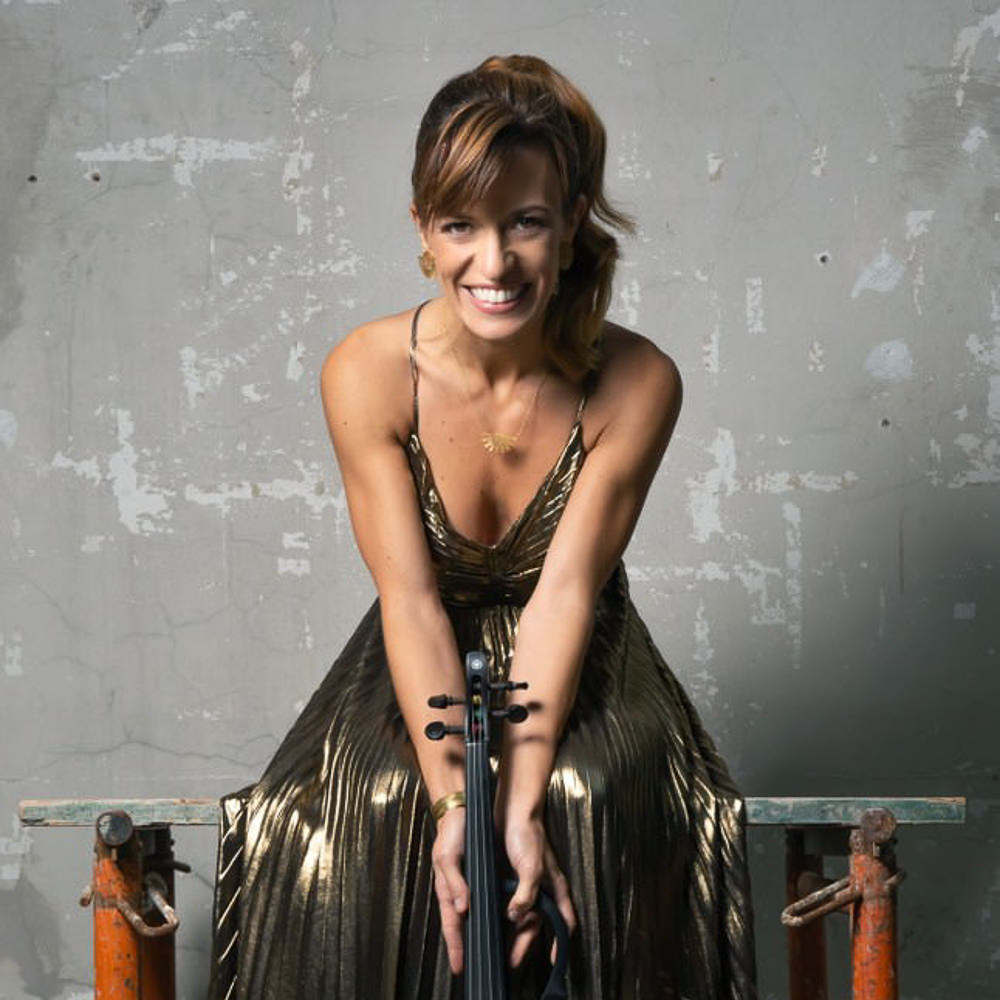
Francisca Pinto Machado MusicADLIB
summary
Francisca Pinto Machado, founder of Adlib Strings, brings a refreshing perspective on merging classical music with contemporary wedding entertainment. Her journey reveals the power of breaking conventions in a traditionally rigid market. Starting as a string quartet playing classical compositions, Adlib evolved into a versatile ensemble capable of seamlessly transitioning from Mozart to Coldplay within a single evening, fundamentally challenging how guests perceive classical music at celebrations. What emerges is a compelling portrait of someone who refuses to accept that classical music must be formal, boring, or disconnected from modern celebrations. The quarter's ability to engage audiences with pop arrangements of beloved songs demonstrates that artistry transcends musical categories when executed with intention and passion. Francisca's approach extends beyond mere performance; she functions as an entertainer and educator, gently shifting public perception while delivering unforgettable experiences. Her story also touches on the entrepreneurial challenges facing creative professionals in Portugal—the struggle to value one's work appropriately, manage business growth while maintaining quality, and balance personal life with professional demands. She openly discusses the transition from teaching to focusing entirely on Adlib, the deliberate choice to expand from a core quartet to a larger ensemble, and how strategic thinking about pricing and market positioning directly impacts sustainability. The conversation reveals someone who has cultivated genuine community connections within the wedding industry, approaching each interaction with authenticity and kindness. Her philosophy—starting every encounter with a genuine smile—becomes a lens through which to view professional relationships and networking. Rather than viewing other musicians or wedding professionals as competitors, Francisca demonstrates how collaboration strengthens the entire ecosystem. Her journey offers valuable lessons about pursuing passion professionally, valuing creative work appropriately, and building a business that sustains both financial stability and personal fulfillment.
key quotes
"We've been planning this for a while now and you're the first guest related to music."
"We, at an event, can start with Mozart and end with Coldplay."
"When we are learning an instrument, the lessons are individual."
"So, it's easier for the public, for the mortals, to enjoy a music that is more commercial than to have the sensibility of enjoying a Mozart concert."
"For example, we did an event on Women's Day in Sheraton."
"There are many competent people there, but I liked it and I still do."
transcript + show
episode: 31 title: "Ep. 31 - "Primeiro, um sorriso, depois vem o resto.", com Francisca Pinto Machado" pub_date: "Mon, 28 Apr 2025 05:00:00 +0000" original_language: english source_audio: "0fee34c8.mp3"
Hello, welcome. I'm Rui and this is the The Wack Podcast. Anyway, let's go. Francisca, welcome to The Wack. It's a pleasure to have you here. We've been planning this for a while now and you're the first guest related to music. Which is quite interesting and it couldn't be otherwise, because this was already planned to be like this. So, welcome. Thank you very much, Rui. It's a great pleasure for me to be here as well. As I said, I'm a regular listener of the podcast. I like it a lot. I think the name was also very well done. Congratulations for your work. I really like it. Look, I'm very happy, but I really have to give you something else to listen to, because only this, this... I'm going to arrange some interesting podcasts that we made. Because it's a bit... But look, it's funny you mention the name, because the name has actually existed for a long time. It wasn't all for this, but... 10 years or more. We had... I had thought of something... Also to bring the guys together. Completely different format. The only difference is that instead of being Wedding Artists Community, at the time it would be Wedding Artists Collective. Which is also... Which is also funny. It's also going to happen. It's also going to happen, because more... During this year I'm going to create, in some way, a collective and a series, but that... For the next episodes. Of course, I'm going to do it every time. Look, let's start from the beginning. So, let's go. Adlib. I did the homework. And now you're going to correct me if I'm wrong. This means, if I'm not mistaken, it's... Latin. And it means something like... At your disposal, or personalization, or something like that, right? Exactly, exactly. So Google didn't lie to me. No, it didn't lie to me. No, it didn't lie to me. In fact, adlib comes from the Latin expression ad libitum. And why was this the chosen name? Because, in fact, we... We started by being just a string quartet that was formed in the School of Music of Porto. School of Music of Porto. And we played classical music. Hence the term, the word, adlibitum. But then we started to personalize more and more the requests and the type of events. And we also started to play pop music. And we started to do a little bit of Bel Prazer. To the taste of the client, and also, of course, ours. Therefore, the name was adlib. And now, congratulations for saying the name right the first time. Because it's not easy. It's not easy. And many people, even clients, have some difficulty in pronouncing it. But how do you say it? Adlibitum. Adlib. We already presented the string quartet adlib. Adablib. Montañas, it's really hard to say adlib the first time. But it's like I say to everyone who works... We are already a big group, we are 30. So now, sometimes we have more than one event on the same day. You always work four, right? The band, the group, is always... Many of the times I saw you, even in terms of what you have on the networks and on the website, are always four. The base, as I mentioned, was a string quartet. But there it is. We also had to adapt to the requests. So we do duos, trios, quartets, quintets, so far with other instruments. But what I wanted to say is that many times we have more than one event in a day. So there are several groups. I was about to say, more or less, music is a very important thing for me. It has always been, and I think I already shared this several times, that although I really like what I do, I really like photography, my art is not photography. My art is music. Not even cinema. My art is music. It's the only thing, the only... It's the only piece of art that moves me. I have music, I have situations that I know I will have reactions to. And I know that there are certain songs that I put on and I know that if I let it go, after three minutes I'm crying. There are songs that I completely regret. I have no physical reaction to another type of art other than music. That's why I was also saying that last year, last season, there was no... There was no music, there were no DJs, there was nothing related to music. Because for me it had to make the same sense. And with you it does, clearly. This season there were also two, three brands, people, companies, whatever you want to call it, at most. But this is really very special to me. And it's funny, because if you asked me, half a year ago, if I liked classical music, I would tell you no. My band was Metallica, I always listened to heavy stuff. Although I have a very, very eclectic taste. But the funniest thing was that I had a relationship, I had a prejudice against classical music, which was instantly turned around. I thought classical music, because when you think of classical music, you think of Beethoven and Mozart, things like that, which are truly classical, with two, three centuries and things like that. And my daughter is now on the piano, and she likes classical music. She's in the sixth year, she's in CCM. Great school. I have a friend who also became a pianist there, and it's extraordinary. And now it's interesting that she's already starting to play, it's really cool, the evolution. And it's really interesting. But what does this mean? Until the moment I realized that soundtracks were classical music. And I thought, ah, then I love it. Because it's literally the only thing I hear when I'm writing, I don't know, emails, that kind of work. And I can't be with music, or with anyone talking. But even today, and yesterday, I was preparing your episode, to the sound of Hans Zimmer. I love it. That's why it's something that was strange to me, and I believe that this is a problem, your expression when I said this, I think it's a problem, a problem that many people feel. Like, you say classical music, and suddenly the people think of boredom, of operas, of Mozart. I thought it was annoying, exactly. And that's one of the reasons that keeps me going. Because really, people think, like you said, they think of a string quartet. Violins, viola d'arco, cello. Oh, how boring. Oh, how boring. And then, at the end of our events, the recognition is so great, people love it. Because we even make a mix. We, at an event, can start with Mozart and end with Coldplay. And that's fascinating, because people are initially like, oh, they're going to play Mozart. What a twist, how well-arranged they are. But it's a quartet that's going to play Mozart. And suddenly, we're in the middle of the dancefloor with the guests, and people are amazed. And so, I love it. I think music should be considered as one. And I studied, I studied violin, classical music, but I like all kinds of music. And I think that at a certain moment, music adapts to our state of mind, and we can also avoid that. Because classical music, Mozart, Beethoven, Bach, can be used in a happy moment, that doesn't have to be a dry moment. We're talking about weddings, right? Who's the most synoptic? The most synoptic is Mendelssohn. Mendelssohn, Felix Mendelssohn, Bartók. It's one of the happiest moments people live. Exactly, it's classical music. I use a lot the expression of the eclectic, because we're actually an eclectic group. In the sense that we can play Mozart, but we can also play Stairway to Heaven, Highway to Hell. That was funny. It was at a wedding in Amares. But that was a long time ago. The quartet is 10 years old. I did it 10 years last year. Was it 2015? 2014, yes. 2013, sorry. We're already there. We're doing 12. So, it was in Amares, and I said to the bride, we can do this song, but it's a risky choice. She talked to the priest, and he said, yes, it's all taken care of, don't worry. We started playing, and the priest told us to stop. But did he recognize the music? It was a problem. He recognized it, because that's another prejudice that I would like to denote here. Because only with instruments, without a voice, we can play exactly the music. We play Marry You, Viva La Vida, and the person immediately realizes what the music is. In this case, the priest realized that it was Highway to Hell. He said, stop, stop, what kind of music is this? He looked at us, with a questioning look, and then the bride said, yes, this is the music. Then we had to play Pachelbel's Canon, to replace it. It's also one of the classics that is often played at weddings, and we already knew the chords, we didn't even have sheet music. We only had those And then the priest said, play another song, otherwise this wedding won't start. And we started playing Pachelbel's Canon. But I'm already a big fan of these brides. No! It was the bride, and she had a short dress. But this was already in the early years of Adelie, 8 years ago. There was no wedding boom yet. Fantastic events. She came in with a short dress, mini skirt, blue shoes, Porto. Huge highlight. And then with that song. All in. Then Pachelbel's Canon was played, and the wedding happened. But really, from that day on, we always have a confirmation that the priest accepts the songs that are being played. I'm amazed, because they are my biggest fans. I'm their biggest fan. Entering a wedding with Highway to Hell, I don't know. Highway to Hell really needs courage. For example, I remember, I don't know if you know, but you must have heard of Apocalyptica. Yes, I really liked it. I knew Apocalyptica, because my band always came from Metallica, when they made an album 20 years ago, Apocalyptica plays Metallica in four cellos. I fell in love with that. But it's funny, because you hear that in my head, that was never classical music. Because they have to play Metallica. But then you say, but it's four cellos. So you're like, these are the notes that will define. But in a certain way, ending the cycle, it's just saying, for what do you label? You're putting a label that who composed this song, what is it? These are... Classical instruments, but it's a new clothing. It's a disruption of what is considered classical. Yes, yes. Returning to Metallica, they start the live concert with an excerpt, I don't remember if it was a concert or not, but I know it was from the movie The Good, the Bad and the Villain. I don't remember if it was 50 or 60 years ago, but it was a western. This is going to be spectacular in the podcast. I'm not going to see it. I'll make a plan later and put the music on. But that music is incredible. It's that scene of creating the mood, creating the environment. And then you walk with a brutality, and once again, you have different types of music everywhere. It's such a weird concept. I'm saying weird because I saw the light. A year ago I had a different conversation with you. But for me, the soundtracks, are great. I was listening to Anne Zimmery from the movies Inception, Gladiator, Time, I love it. I speak, it's surreal. But you listen to that, and you are put there. I think music and smells are the only things that can create this emotion. I hear that, and I'm watching the movie. I also love music, because besides being my profession, I really like what I do. And I think that shows. It's hard to follow our dreams. So, having the opportunity to do what you like, to show how good you are, I love being on stage, I love to transmit emotions. But before, I imagine you started at a young age. I started when I was 11. I grew up in Trás-os-Montes, in Mirandela. I grew up in a small village in Trás-os-Montes, called Arcas. I was influenced by my grandfather. He was an ambassador. He was married to an Argentinian dancer. At that time, in 1997, there was a large community of Argentinians and Russians who came to take refuge in our country. They went to several schools. CCM also has a community. There are teachers who came from their countries to these areas of the countryside, where they had good living conditions and were opening music schools. I went to Mirandela and I was lucky to have a fantastic violin teacher. Professor Gustavo, an Argentinian. You started with the violin. I started with the violin, but it was by chance. At that time, he was the teacher. I asked him to show me his hands. He said, go to the violin. I said, okay. I liked it a lot. We had a relationship. When we are learning an instrument, the lessons are individual. We spend a lot of time with our instrument teacher. It is a very close relationship. I also left home at that age, at 11 years old. I had a student residence in Mirandela. Because of the weather, in winter, it was very difficult to take me from Arcas to Mirandela at 8 in the morning, when the lessons started. The roads were closed. And it was that option. You started right there. I started right there. I was going to ask you, at that time, did you already have a taste for music? I ended up not explaining. It was a taste that I had passed on to my grandfather. He always had a great influence on me, in relation to the arts. He was always a person who admired a lot, who moved a lot in the artistic community, due to his marriage with this Argentine ballerina. He always influenced me, although at 11 years old, everything is very moldable. But then my parents saw that it was a great opportunity for me. Because, imagine, behind the mountains, a few years ago, a small village, that didn't give any world. To come to Porto, it took us about 6 hours. There was no P4, there was nothing. We were going more quickly from Spain to spend the weekend than we came to Porto. My parents thought it was a good opportunity for me to grow up, to see the world. And I went to Mirandela. Since I was 11 years old, I have been away from home. At the time it was difficult, I confess. You are used to having that affection, that quality of life at home. Suddenly you go to a more inhospitable place. It was funny. At this time, when I went, it wasn't easy. But now I recognize that it gave me a lot of talent. Have you ever wanted to send the violin to the window and go home? No, I have never. Do you know why? Because I am obstinate. When I put something in my head, I go to the end and I get it. Yes, but at 11 years old... It was this close relationship that I had with this teacher. I also had other teachers, not only in the music field, who encouraged me a lot. I always liked to study and learn new things. I was always motivated. It makes a difference. Yes, it does. Then I came to Porto to study and I continued with that motivation, but I like many things. I also had the desire to study diplomacy. You were also influenced by your father. Yes, he was very important in my life and in my personal and professional choices. When I finished the violin course, I went to study international relations. Your degree is a bachelor's degree? Yes, a bachelor's degree. Did you finish high school? Yes, four more years. Then I did the international relations course and then I went to Brazil to finish the last year. I lived in Buenos Aires. It was a fantastic journey. You are influenced by your grandfather. Completely. There are many things in life, but I don't know why, but music seems to be a seed that the older people put in us. It's funny, because what I feel is that you are influenced but you don't know why things happen. I don't know if your grandfather at that moment, maybe later, had the opportunity to tell you all this and he understood. But did he have this notion that was influencing you? In a way, I believe so. Do you think he did this game of balance? It wasn't on purpose, but he saw something in me. At the time of my father, my brothers, my grandfather was always away. He was an ambassador in many countries. He wasn't a very present father. I believe he saw in me the opportunity to redeem a little of the presence he didn't have. Because with me he was a huge presence. I don't despise my other grandparents. I'm only talking about the musical part, the professional part. It really was a good influence. But I would also like to say that the music is great. Learning a musical instrument, learning the taste for listening to good music, whether it's ACG Yes, Bach, Mozart, it is fundamental. I think that all parents and all of us who think that we can influence someone, we should influence with music. And classical music has this funny thing, I didn't know, but I had this information, this notion, when there was an opportunity at Beatriz's school, she went to Articulado, it was the largest part, I don't know exactly how the news was formulated, but the largest part, or a huge percentage, of students with the best grades, at the entrance to the university, they all have classical music studies. But you know that when you study, you are focused on that. There are no cell phones, imagine, when I was in college, we studied 4 or 5 hours a day. At that time, there were no cell phones, no e-mails, we were focused on our instrument. So, it gives us rigor, it gives us mastery, concentration, a power that really helps. Especially at that age. At that age, you can concentrate easily, you start to express yourself, and music brings that. And then you have the reward, you are on stage, and all that work, you were late and lonely, a lonely job, and a lot of resilience, but then you have the direct reward, and that's what I like. We have rehearsals, and we have a lot of backstage work, besides the rehearsals, it's the choice of the songs, the choice of the costumes, all the details. But then, when you are on stage, when you are in a ceremony, when you are acting, and you see that people thank you, and they liked what you did, it's a reward that you get right away. You are not waiting for months. No, you are there, at the very event, and you realize that people are with you, and that they are enjoying it, and that they thank you, and that's great. Music, if nothing else, creates you, changes you, involves you in the environment. And that also educates you. So, our perception, our understanding of certain works, and that's also one of the reasons why we make a lot of pop music. Portugal is not yet a country of classical music, it's a hereditary one. We have a completely different tradition of countries like Austria, Germany, England, these are countries where classical music has always been part of. We have some well-known composers, Portuguese, Italy, Portugal, this tradition is very recent. So, it's easier for the public, for the mortals, to enjoy a music that is more commercial than to have the sensibility of enjoying a Mozart concert. This was a gap that I found in the market. I mean, I noticed that, as I did it in other countries, I noticed that it could be a mark of differentiation of the groups that existed at the time, because Mozart and Beethoven didn't reach the public. We recently did a concert in Coliseum, in Novo Ático, and we played classical music, but when we played Material Girl, people were dancing with us, and in fact, what do I want? I want to have a happy audience, I want to have music for everyone. That's my main goal, to be able to reach, either with Coldplay, I want to share good moments, because I think music is good for that. We already have so much around us that lays us down. In a musical moment, I want to aspire to a better world, to a better country, and I know that Malice is going to continue. You started very young, did you already have something that you listened to? Or basically, your bands, your music, what usually happens in adolescence, not what marks us, was shaped by this? Or you had a style, you listened to things completely the other way, and then you started to join? Look, I always listened to a lot of everything. We always listened to Simply Red, George Michael, Queen, then I also had my Brazilian half, a lot of influences from Bossa Nova, Neymar Togorosso, also classical music, although when I was little, we didn't have a lot of tradition, sporadically. And essentially, it came from the study. The study, yes, the study. Essentially, we had some tradition of listening at home, there were no classical music concerts. Yes, there was no Spotify. Nothing, no. No, but a lot of tradition. I always listened to a lot of music, good music, those bands that I mentioned, that I consider to be icons, still today. And so, I think that's where my eclectic taste came from. That's why, with those childhood memories, transported now to my profession, that I really like to do, Hearth, Wind & Fire, Queen, really, Alicia, I love her a lot. Do you have anything that you would really like to play, but that is rarely asked of you, and you can't convince anyone to do it? No, that hasn't happened yet. Even because, I'm going to say this, my clients listen to it. No, I can turn it around. Because I think that sometimes people, clients, don't have the real idea of how the music sounds and what is the effect that they want in their own party. That is, sometimes they choose songs that don't match the moment in which they are inserted. For example, we had a wedding, I'm going to tell you a few episodes here. And the bride had chosen one or two songs, she was Swedish, so she had some Swedish traditions, up to that point, and it was great, I liked it, a very beautiful song. We had a composer who made the arrangement for us, it was amazing. But after that arrangement, the cocktail started. And the cocktail was on a magnificent sunny day, that was by the beach, it was at the Set Lounge, in September. And we started playing, and the guests were all excited, they were scattered. Suddenly I turned around, we were in a quartet, and I said, girls, let's shake this up, forget this set. I went to talk to the DJ, I always take the pen with the backing tracks, for anything that is necessary, and I said, sorry, no, not like that. So I put that pen, a 30-minute set list, which was the time we had set for that little bit. So I changed everything. The bride had not chosen that, she came to have with us, she danced, the guests too. But that was after that arrangement, but what was the arrangement? The arrangement was the exit of the ceremony, it was an arrangement of a Swedish theme, that she really wanted at the end of the ceremony, and of course, it was spectacular. But it was not really the beginning of the party. It was not the beginning of the party, it was very beautiful, but it was not the right time at the beginning of a party. And then I said, girls, let's change, and look, I have a fantastic group, and they are amazing, and they match my craziness. Because that was a success, everyone dancing, the bride at the end came to thank, she said, Francisca, thank you, really those songs were not suitable, they are much better. So I think that we, and also our role, we should be one step ahead of what the customers are thinking. Because we really want the success of the event. Yes, yes, but it is a risk, when you change the plan, sometimes... Yes, it is a risk, it is a risk. And it does not usually... In that case, it really went well, it was a risk that I ran, and I will run more times. Yes, you have to run them, but of course, you do not know, sometimes you do not push. Yes, you have to stick to the plan, that is also our adaptability, but really, she liked it, so I try to go around, and also after the hiring, the customers have a choice of music, of accompaniment, throughout the process, and sometimes there are songs that really do not fit, and I suggest others, that are more in tune. I was going to ask you, one of the things I had planned, and you have a choice of music, a piece or a phase, what did you enjoy playing the most? Was it the beginning of Highway to Hell? Or do you have a better story than that? For me, it was there, entering a Highway to Hell wedding, it is a dream. I really like to play tangos, the tango of Roxanne, for example, at the entrance, when we are playing, I like songs that make us transpose some limits, that is, I do not always like to do the same thing, I do not always like to be playing the Carnival of Pachelbel, we play, but we want more, we are professional musicians, we like to rehearse, to play really pieces that also enlighten us, so the tango of Roxanne was one of them, playing it at a wedding, we really enjoyed it. In what part? At the bride's entrance to the room, but it went well, and I really enjoyed that experience. What I regret, not only at the wedding in particular, but in music in general, or in people in relation to taste, or if they want, what I can tell you clearly, but I regret when what you hear seems too beige, too warm. Oh, for me it does not work. I think that in the music of your life anything that causes you some kind of restlessness, a positive restlessness, I know that exists, but something that takes you where you are. Yes, I feel it. And that's what I felt at that wedding. Yes, or even when you're sick, something that makes you worse. Because for me, a song that doesn't do anything to me, makes me very confused. And for example, a tango, if there's something that makes you, it's taking you out of that state of comfort and creating restlessness. Yes, yes, yes. It's really amazing. Now let's talk a little bit more about the team and this profession itself. As you started, the four of you. They are not the same. Someone who has been around since the beginning? No, look, meanwhile I have one or the other who have been around longer, but it's a relatively recent team. We are changing, because imagine, each song has its own life. It gives lessons, it also gives other concerts, other activities. So sometimes it's hard to manage everyone's availability at that moment. And I need to have a lot of people who work with me to be able to really do the events they ask me to do. And that's what happened. Initially, we had guests even at the time for the Web Summit. And it was an event that I really enjoyed participating in, because we do a lot of corporate events. And at the time, we only had four bases, and they couldn't do it. They had other commitments. And we ended up losing opportunities. And it was this desire not to lose opportunities that also made me grow the group. And invite more people to work. All women. Women power. I think that's cool. I think so too. I really like it. It's a fabulous team. Each one brings their input. Each one also expresses their opinion. We are always learning. And do you rehearse all together? No, I rehearse for the formations. For example, this weekend we have events. Each formation rehearses for the specific event. For example, we did an event on Women's Day in Sheraton. It's a very cool party in Sheraton, Porto. And it was Adlib Ensemble. It's a new product we're launching. We rehearse all together. It's a mini orchestra. I know that this is the part of professional musicians. You send the score and people know what they're going to do. And they only get together to make sure they're all on the same page. Exactly. And to control the way you play. For example, a big difference that I like to make noticeable in our group is that we're not just playing. We're doing a performance. As I said before, we're entertainers. So, just the fact that you're playing is no longer viable. Because people are looking at us. We're also part of that day, of that event, of that wedding. So, everything is important. And it's not just the score. And that's what I do with them. In a way, it's a coaching of what, for me, is important in a wedding, in an event. And that's not just learned in a rehearsal. We have several sessions, I create a guide. The connection that you create between you is the connection that is created by the music you're playing. Exactly. That's very important because on stage, it shows a lot. And it's one of the best feedbacks they give us. It shows our complicity, the joy with which we do the work. And that's great because it shows what really happens. But it's a hard work. It's not just about reading the music. So, it's not just the difficulty of the score, but also being there, arriving on time, being able to fulfill the requirements of the dress code, the label of the event itself. All of that is important. That's what makes the work different. So, I think it's also a big source of distinction. And if we want to elevate the market, this has to be the basis. We can't do things any other way. Speaking of that, how does a musician in Portugal make money? You're making me ask that question. It's so curious. We recently had an event at the Lisbon City Council. And there was Mr. President Carlos Moedas who, at the end of the event, asked us, how do you make money with this? Everyone asks us that question. In fact, I only work with ad-lib. This is my full-time job. Between the booking, the rehearsals, the recordings. We also have recordings. Do you follow our Spotify channel? No, I didn't know. Please do. I didn't do any research. Ad-lib strings. They're songs, arrangements. Yes, your arrangements of existing compositions. We have the Avião de Papel, for example, Scratch My Back. We have a concert program called Pop em Português. They're songs by Portuguese bands, pop bands. We arrange them for the string quartet. We have these songs on Spotify. Pedra Brunhosa's songs. We've played with him, with Mortesal, with GNR. To answer your question, it's not easy. But, I work for pleasure. I'm starting to reap the fruits of my hard work. I only do this. Many people ask us if we only do photography. Of course. And if we only do wedding photography. What do you mean? There are more worlds. It's a prejudice. But I don't mind answering this question. But it's true that our market is extremely small for music. It's a niche market. But we also do corporate events. We have this versatility. There's Adlib. We do weddings, live concerts. So, we're trying to mature. I stopped teaching during the pandemic. I have two kids. The oldest is 6 years old. 6, 5 and 3. And you're healthy. I think it's a good thing. It's not common. I have a husband at home. And I have a good back-up. Otherwise, it would be impossible. We're always out. Our schedules are to be forgotten. But it has worked very well. At the time, with the pandemic I had to stop teaching. So, I gave a full-time job. It was a challenge. I even had a schedule at the conservatory. I taught at the conservatory in Coimbra. I was coordinating a fantastic project of the Geração Orchestra. It's an orchestra for disadvantaged children. I did fundraisers, solidarity concerts, orchestras with children. Exactly. They were children from Coimbra. But they exist all over the country. I did that part. It's a job I loved. I loved doing it. But it was more and more work. Less remuneration. I had to make the decision to stop. I had to stop teaching because I was at home with my kids. But it's hard to stop something that is right because it's doubtful. At the events, we live with our hearts in our hands. You need a great balance, a great emotional balance to manage all these expectations in front of the people who work with you. It hasn't happened to us, but you can start a month without anything and you can have an event from one day to the next and you have to go out with your family or with your friends. You create connections. You want to go to your daughter's baptism and you have everything planned. But you can't go. It's a very big management of expectations from you and the people around you. It's not easy. I do yoga, I do sports. It helps me a lot. Yes, but that's a reality that you will realize later. It's very easy to get married. Almost all areas are very easy to get married. It's extremely interesting and easy in the beginning. But then things get complicated and when your life progresses, children and other responsibilities sometimes it's a bit... Now I'm making a small parenthesis, but it's one of the topics... It was the prices, the valuing, charging more, with strength and without fear. Essentially for that. If you don't have responsibilities, if you don't have a house to rent, it's all right. But if you don't have more than that, it's all right. It's easy to charge little. But then the expenses appear, the cost of living increases. You also want your life to get a little better. And then it's difficult. And it's interesting that this is something that also happens a lot with our global areas. Normally, those who are trained for artistic areas of creativity are rare people who say but look, this is a company that you have to learn to manage and you have to know how to make money. It's very rare to happen. And I see the amount of guys, I'm more into photographers, but I believe that with musicians, I also have some friends, it ends up being so that you don't know which way to turn. But this is a very large gap in our training. As musicians and you as artists, it must be the same thing. We don't learn to lead our profession and our life, the money, learn to manage. This is fundamental. We don't learn to manage our business. I'm also learning. I've been dedicating myself to Adlib full-time for two years. These are also steps that I'm taking and I'm getting training. I'm always trying to improve, to learn more and more. Why? Because I'm a worker. I have my own company, I'm a self-employed worker. But a businesswoman. A businesswoman, that's it. For me it's not so weird because I went to the University of Economics. I only found photography much later. The money, the economy, the management was something I always liked. I feel that most of the friends I've had over the years, I'm probably the one who likes this part the most. There are many competent people there, but I liked it and I still do. Because it was training too. Yes, but the number of friends I have, who have been photographers since they were born. They found a camera at home and fell in love with it. Sometimes it's very difficult to change the chip. I'm no longer a photographer, now I'm a director. And it's something that people find weird. I'm no longer a musician, I'm no longer a millionaire, now I'm also a businesswoman. It sounds bad. But I like it. You have to be aware, of course. And more and more. Because then the values have to match. You have to have a certain continuity. You have to know what you need. If you have a team, you are responsible for those people. I imagine you don't have any employees. There is a responsibility. Of course. In addition to the organization of the day, also of the payments. For everything to work. You get to that point and money has to be there. And you said it a while ago. Last year we had a period of great price change. We had four months without having a single reserve. We have. We have our finances, we have our savings, we were fine. But one thing, I'm fine now. Or I have the feeling that I wasn't always fine. Exactly. And our work has this advantage in relation to the bosses. Because it is sometimes marked with much more antecedence. The values themselves tend to be higher. That is, at the beginning of January, we can have an idea of what this year will be like. There is a margin that is improving. I'm still booking one or two more weddings. But my year is done. I know I'm not going to starve. Now I have to pay and that's it. But we don't. We have a ceremony. It's always a smaller job. In terms of size, it's obvious. It ends up appearing a lot at the last one. And entertainment is also one of the last things that is chosen. In an event. Almost always. But we've had very interesting weddings. The grooms wanted it to be Adlib. So it wasn't a string quartet. It was Adlib. That's the cool part. When people have quality. When they dedicate themselves to what they do. For me, quality should be an acquired gift. It's a minimum. You know what you're going to do and you do it well. But then, when you have that passion and dedication, it shows. Of course. And you dedicate yourself. Imagine, you have some grooms, some clients who tell you that. Your will to be there. That things go well. You feel very welcome. You want everything to go very well. Yes, without a doubt. Even better. We want everything to go well. But when they tell you, I want Adlib. Your heart is full. Of course. It's obvious. When you dedicate yourself. When you know that you're going to do something special. The grooms will feel it. Not all of them. You don't have to be there for everyone. Not all of them. Create relationships. I like it a lot. International relationships. Exactly. I like it a lot. They're very nice. I prepared 12 questions. I think I asked you 3. But this is already a habit of mine. I just wanted to ask you two or three more related questions. Like the topics we've talked about here. And one of them is the common one. It's almost a classic. How do you see the community? In your case, this question has a more special part. There are 3 or 4 areas of marriage where we spend the day together. Photographers, videographers. Sometimes makeup artists. Wedding planners. DJs. We spend many hours together. In periods that allow us to talk, get to know each other and become friends. Especially the type of service you do. We meet a lot of people and we don't have the opportunity to talk to anyone. Either because it's a ceremony and you have other things to do. Or because it's those special moments during the day. And you're there for a short time. And when you're there to play, you're prepared for that. That's why my question has this special part. Do you feel a community around you? Look, Rui, I'm going to tell you something. When we go somewhere, we always greet people. We often enter the kitchen. Our wonderful costumes. We enter wherever it is. And the first word we say is, good morning, with a smile. From there, everything is done. And there are no closed communities. Whether it's 5 minutes or 2. If you arrive with a smile, you greet people. You open doors. So, I don't feel it. I do it because it doesn't exist. It's obvious that if I'm playing, I can't be talking. But you don't have to talk. I think it has to come from you. If you want to embrace the community, if you want to have a good day, a smile. You're the one who gives it first, right? And then it's giving it back. But do you feel that out of the day? On a day-to-day basis? I feel it. Yes, I feel it. I talk to several wedding planners. I also have a relationship with whom I have already worked with. With whom I will work. Also with photographers. Do you feel it? No, I don't think so. But why do I say that? I don't think so. There are different people. Of course, we are all very different from each other. But in reality, we are united for a common purpose. What we want is for the event to go well. From there, I think that has to be the main thing. The client has to be satisfied. We have to manage that. Beyond our eventual differences. Or cynicism. These are minorities. We have to be superior. Now, to finish this last question. It has to be something very easy. What is the future? Adelino, the future. What is it? Are you going to internationalize? No, I'm interested. I'm interested. We have already had some performances abroad. Weddings and corporate. We were in Spain. Not abroad. But we also go to the islands. In Madeira. We have a wedding in May. In Funchal. It's interesting. Because we already have clients. Who recommend us a reception. In fact. They come to us through recommendations from friends. To do things abroad. We also have several requests. We've been to Egypt. Then they ended up being concretized. Morocco, the Marrakech. I like it. I like to internationalize. I like to travel. I like to show what we have of good. Because in fact, we have very good professionals here in Portugal. We don't always have to hire people from abroad. And it's interesting that people from abroad also hire us. Aren't we doing little to show everything we have? We tend not to promote what is ours. Not to promote. In what concerns me. I really like to promote what I believe. Which is my project. Promote first. And I like to do it. Internationally, I always take advantage of it. I really like networking. I like to go to events. And I always take advantage of it to show what we have of good. Which I think is very good. I believe. And I don't hide anything from doing it. But it is an attitude that is often seen in several branches here in Portugal. Many people often don't even like to show. Because they are afraid. From the point of view of the other, they will think that I am not exhibiting. But honestly, these opinions are not my faith. Because I think that we as businessmen, as workers against our own business, we have to show what we have. I think it's cultural. Yes, it's very cultural. We like it. But I'm not ... We do tourism. And music too. There is no such thing. Exactly. We are known for many things. We have our style. And so, it goes in and out. It is known for that world. But apart from that, we don't have ... We are not known for our clothes. We don't have a classical culture. We don't have a cultural culture. We don't have a culture of painting. We don't have a culture of anything. Even if it is not in a statistical way, it will always appear in a language. Yes, yes, yes. Then it seems that we are afraid. You are going to have a problem speaking French. Yes. And that also comes in line with what all the interviewees said. All the interviewees in this podcast. What we want is to raise the level of Portugal. We have a sea in the middle. The level of our industry. For that, we have to promote and be increasingly better. What do I mean by that? To continue to improve our services. To improve. To diversify. To internationalize. When there is a quality opportunity. And do it step by step. I want to do it while I feel good. I feel fulfilled with this work. It will continue. And it will continue to run well. I'm sure of that. And now, what about the drummer? I already have one. If you listen to our music video, you will hear it. Our music video of Mara Saudade. It has a drummer. It's Marito. You have to go and see it. Francisca, it was a pleasure. It was a pleasure. It was a pleasure. Thank you very much. Thank you.
New episodes, twice a month. Be the first to hear them.