
Episode 32 · Season 2
A primeira semente foi lançada, em The Planners Retreat
The Planners Retreat PlanningThe Planners Retreat
summary
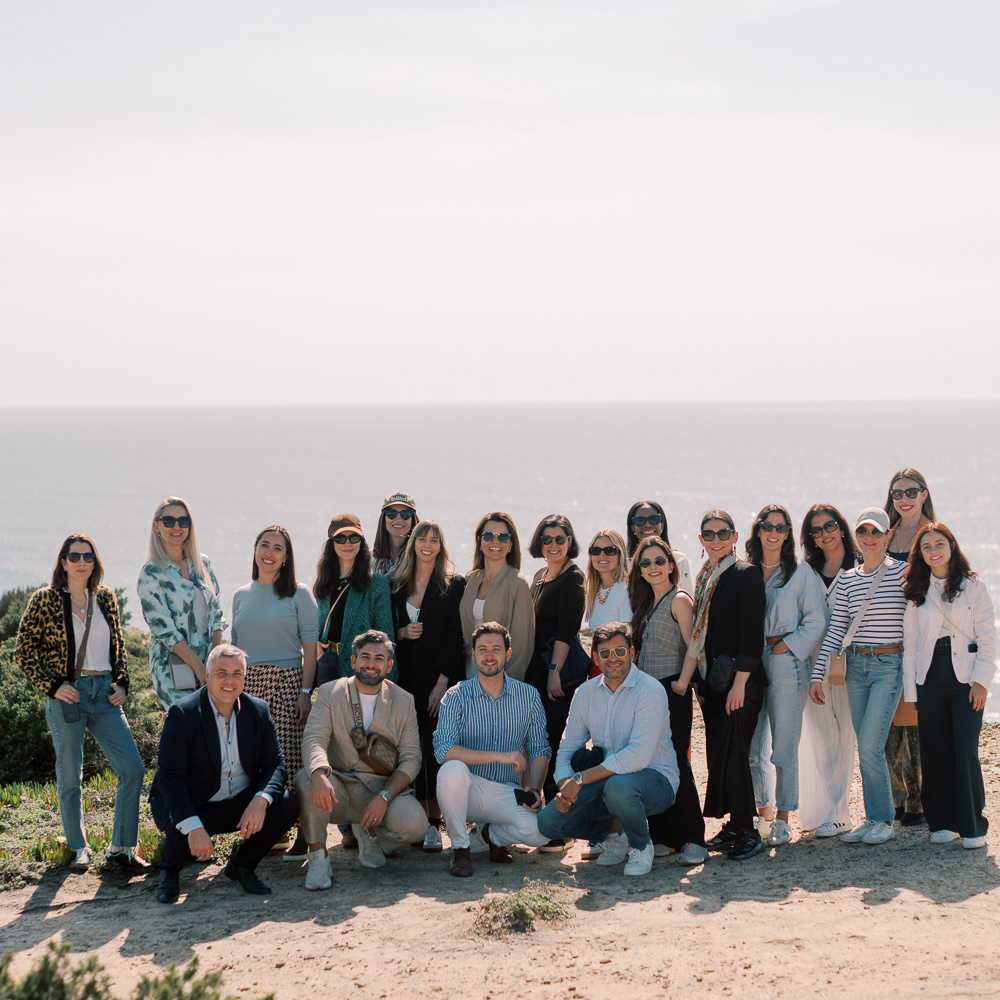
The Planners Retreat represents something unprecedented in the Portuguese wedding planning industry—a gathering orchestrated by a peer, not a supplier seeking to leverage professionals for commercial gain. This distinction matters profoundly. When wedding planners gather to discuss their craft, their challenges, and the future of their profession without intermediary commercial agendas, something genuinely transformative happens. The retreat in Ericeira crystallized this possibility, bringing together Portugal's most thoughtful and committed wedding planners for two days of intensive conversation, vulnerability, and mutual recognition.
What emerged was not a set of rigid rules or standards, but rather a shared commitment to excellence, a recognition that the market needs structure not through regulation but through collective intention. Excellence became the through-line, not as a vague aspiration but as a daily commitment to demanding more of oneself and one's suppliers, to honoring the complexity and weight of the work. The conversations went deeper than surface-level business metrics. Planners spoke about the courage to say no—to decline services that diminish the profession, to refuse partnerships that don't align with quality, to push back against client requests that fragment the planning process in ways that ultimately harm the final experience.
These conversations revealed a profession mature enough to critique itself, to acknowledge the gaps between aspiration and practice, and to recognize that Portugal's international reputation depends on every single planner maintaining standards others can trust. The presence of partners from the creative and hospitality sectors added texture to the dialogue, though the planners recognized that the core conversation needed to remain between peers. This is the real work of community: not the formal structures, but the repetitive, ongoing conversation between people doing similar work, wrestling with similar problems, trying to elevate a shared profession.
The attendees left energized, many feeling for the first time that they weren't isolated practitioners but members of a cohort, a movement toward greater professionalism. Several spoke of the validating effect of being surrounded by others who shared their values, their intensity, their refusal to compromise on the human dimensions of their work. What makes the Planners Retreat significant is its vulnerability to becoming just another event—a lovely moment that then fades into the background of ordinary work. The planners themselves recognized this risk and committed to continuity, understanding that real change requires not one-time gatherings but ongoing connection, shared standards, and the kind of peer pressure that compels growth.
The challenge ahead is translating the energy and insights from Ericeira into sustained practice, into changed decisions at the planning table, into demonstrating to the market that Portuguese planners collectively represent something worth seeking out.
key quotes
Excellence is a word that I like a lot, it means a lot, it is vague, but at the same time it means a lot, and I think that if we are all focused on excellence and giving the best, demanding the best, giving the best, demanding the best from our suppliers, we will have the best weddings in Europe.
This community brings, that's exactly what it is, we're going to find what is common, that unites us all, we're going to respect what distinguishes us, and appreciate what we all have different, and that's it, and we move on.
I invited people who do the same thing I do, to share things between us. But the idea came from someone who was just like me. You do the same thing I do, but I want to talk to you about this.
Success is not how high you have climbed, but how you make a positive difference to the world.
There has to be continuity, to have the pressure of, you know you'll be back, and you'll have to look back and think about what was done, and how we can continue to improve.
transcript + show
episode: 32 title: "Ep. 32 - A primeira semente foi lançada, em The Planners Retreat" pub_date: "Mon, 05 May 2025 10:44:29 +0000" original_language: english source_audio: "5126a265.mp3"
Hello, welcome. I'm Rui and this is the WEG Podcast. A few weeks ago, Isabel invited me to be part of the Planners Retreat that would be a retreat for the Web in Planners that would take place in Ericeira. Over the course of a few days, I thought about what I could do, how this could be interesting, and it occurred to me to ask the same two questions to all the interviewees and compile in an episode their answers. I started with the one that Isabel invited to be a mentor in this meeting, which was Jasmine, from the Wedding Company Portugal, and I ended with a slightly longer conversation with Isabel, which worked as a retrospective and summary of what happened. Just a little aside, the audio is not the best, we had these small conversations in the most varied places, there was more wind here, there was more confusion, there were people fixing certain things, but I think you don't take that part too seriously and that you focus more on the content, because I think it was quite interesting. So, without prolonging myself further, I hope you like it and see you next time. The questions I chose to ask were... to ask them what could be a point, a standard or a pillar that could start to regulate the wedding planners market. To be meticulous with the level of demand of all the people involved in a wedding, from the person who cleans the room, to the person who mounts the table, to the videographer, photographer, to the florists, all people have to be rigorous and proud, and intention, I hate that word, but to do the best they can do at that moment. As if it were a theater show, there is no way to look in front of the people, and then all the people on that stage have to be together and have to be proud and also happy, and with the intention of doing the best they can. Excellence is a word that I like a lot, it means a lot, it is vague, but at the same time it means a lot, and I think that if we are all focused on excellence and giving the best, demanding the best, giving the best, demanding the best from our suppliers, we will have the best weddings in Europe. I don't think there is only one standard, but I think it is especially this, it is loyalty to each other, it is respect for the market, and it is where we define our minimum and maximum limits within which we should work within our niche. What are our pillars and what we always do and do not abdicate is that initial part, when the client hires us, the initial documents, the presentations, the terms of service, the initial budget, I think that those documents, the estimated budget, have to be a must in any negotiation with suppliers, with any hiring, not suppliers, with clients. It is true that, culturally, Portuguese has a bit of a tear-up thing, and maybe, indirectly, it comes up here. It is not that we pass things to the last minute, it is not this tear-up of leaving everything to the last minute and then we go there and things happen, it is more this, almost, cultural question that exists of, yes, let's do it, let's deliver, and we are absolutely sure, you can be absolutely sure that things happen. I think one of the main things is really this, the service. We are here to serve, I think it is a common point, and it is very beautiful, the service is a dedication that we have, that we give to the other, and I think it is very beautiful, the service, the professionalism, without a doubt. I think that, above all, the quality, Rui, the quality of the service we offer, the quality of the work we do. This should be a mandatory requirement for all people in this profession, because we cannot forget that I think that all of us represent, or we represent, if the word is correct, our country. When we work with a foreign client, regardless of whether it is the A, B or C plenary, in the end, the client will take the experience of Portugal, will take the image of Portugal. This is what will later tell others, Portugal is this. Therefore, I think it is up to all of us, we all have this responsibility of offering a quality service, above all. Look, I think the question of value is one of the big questions that I feel, because I feel that there are wedding planners that charge little, then there are others that charge much more, and I feel that this is sometimes a challenge, the question of unfair competition, that is, to see that there are great discrepancies, I think that sometimes it harms us a little. The search for excellence, isn't it? For us to overcome and be able to deliver the best to our client, as is obvious, with a lot of passion for what we do and a lot of pleasure for what we do too. I think that we all have in view a work of excellence. I think that this can be held as the basis of a common work and a common service. I also think that we all have the notion that this market needs to be regulated and we all have, as Jasmine said yesterday, that feminine energy of a work that is mostly feminine. And within these groups that are formed, I think we all have this sorority and notion that we all have to support each other and promote the work of the women around us. To create a standard, a level, where below that is not considered the quality service, or in fact, that service that we are proud of. I think that the part of transparency with the client, I think that this is something that today, not all of us are transparent with the clients. We have different business models and this is understandable, but what is not understandable is that we sell things that many times we are not able to reach when the client comes with inspirations that we know that from now on are not possible to happen with the budgets that they present. I think that the part of transparency also with the level of service, which the service includes, made the market more balanced by the same level. I think that helped us a lot. I think provided there is a high level of transparency, realism, honesty, I think that would certainly keep the industry that we are in very strong and continue to make Portugal as desirable a place to get married in. So, I think that above all, it was what we talked about, to try to define here that below that minimum, we do not have the ability to work, because it will directly influence the experience that we are going to be able to give to the client. And the second was, what would be the next steps to build this community? I see this meeting as the beginning of the other conferences with whom I have had many times, which is Engage or DWP, but in a smaller way. And I think that the next meeting would be interesting to try to have more dialogue, so people can loosen up a little more within several specific areas. Not just planning, but perhaps a creative part, because the creative part, which also focuses on the photographer, the flowers, or the artistic part of the wedding, is very important. Bring more wedding planners. We actually work in a very special market niche, and we have been working for that for many years. And bring more to inspire us, and young people who are entering the market. We have been here for a few years, some 10, 15, 16 years or more, and young people always teach us a lot, so that we are not in our comfort zone, because it is very easy for us to go to our comfort zone, and these young people always challenge us, and I think that is the growth of the market. The next step is to organize more, and in other places. I think it is interesting, we also leave this area of Lisbon, we go to the north, we go to the south, for example. I have some version here, or an association, or something like that, but we need something. It may not be called an association, but we need something. A community. The next step was to keep this as a tradition. The next step, I'm not saying to create standards, but to establish some parameters, to try to make the service more equal between all of us. To continue, for sure. I think a very pleasant environment was created here. There was a very interesting sharing. Definitely, I think we have to be more connected. I think there should be more meetings like this, and I hope there will be. There is no solution here for me, as we talked about syndicates, and I don't think it is necessarily for that. I think it has a lot to do with giving continuity to this type of communication that is being created here, this type of conversation that is now opening up, for it to exist, and for it to be something more continuous, perhaps more frequent. I think this communication has to be allied, and it has to be done more often. The communication between us has to stop being a taboo, and it has to become much more linear, much more direct. The next step has to be to open up communication channels so that this happens much more regularly, and so that this exchange of information becomes much more fluid. I believe that setting a next date, setting a challenge, or reaching a theme, such as quality of service, or service standard, and setting a challenge for everyone. I think we should do this more often, and more casually. I think there is a lot of need, not only to exist in WhatsApp groups, but also among producers. We might book some coffees, some lunches, and try to understand people's real feedback. It's one thing to meet once, and to have these conversations once, but the truth about our industry is that it is forever changing. So, with that continuous change, we as planners would need to continuously change our approaches and adapt, and to ensure that everybody is aligned, more of these retreats are needed. For the next steps, I think it's really important to invest in this once a year, or twice, and also to pass on what are our weaknesses, and what were our difficulties, or what we can turn around and work on. Hi Isabel, how are you? Yes, I'm fine. Look, we are now doing this final episode, which will also be a retrospective about TPR, the Planners Retreat, and I had two or three things to ask you. First, I'm going to ask you the same question I asked everyone, which is, we spent those days in which we talked, you talked a lot about the things you have, basically you talked about what distinguishes us, what each one has in particular, what is going to be different, the special characteristics of each one, and that's really great, it's a different analysis. I would like to ask you what you think you have in common, and what could be a norm, a guide, a pillar, something that could be possible to define, so that, for the profession, we could start, in a certain way, to organize, regulate or structure. What do you think could be important? Ok, well, we talked about a lot of things. There are a lot of things, and I'm sure everyone must have said common things, and some must have said things a little bit different from the others. It's hard to put it all in one idea, in one word. What I think we all have, and that maybe I don't see in all the suppliers in this area, in Portugal, is basically what we discussed on the podcast, which is the search for excellence, the excellence of the service. And it's not contenting ourselves with something average, something that makes us give our best, which I always consider that we can give more, and the search for improvement in everything we do, is a point in favor, so that things don't stagnate. And what I criticize, or what I consider is missing, in the vast majority of suppliers in Portugal, is that when they reach the point of stagnation, sometimes they either give up, or they are always on the same line, trying to evolve, but inwardly, or always on the same level. And if we have a greater demand within ourselves, and we always try to be better, I think we can take this much further. And that's why I invited the people I invited, because they are people I identify with, even people who have been here for less time, and who started out wanting to be better, and not just for the land, like Vesicola. It was a search to enter a higher level, and that's something to be praised, I think that's necessary in our market. And that's what we have in common, in terms of having a norm that regulates, in the role of the wedding planner in particular, or in the wedding planning companies. I'm not even going to talk about prices, because I think values also have a lot to do with experience. I think we can't budget our work below a certain value, even if it's not because it's many hours of work, or four people in the company, this work must be valued with a decent minimum value, but naturally we have people with companies, with three or four, they are always micro-companies, but there are some that work alone, and so the values there are naturally a bit different, because one thing is to pay for a structure, another thing is to pay ourselves for our work, and that's different, you don't offer so many parts of the service when it's just one person, in our case we have design included in our work, and that naturally has other values. I think it's knowing how to say no, it's a norm, I think it should be a norm, to say no to certain things. To what? I think it's a list, to say no, but not being afraid to say no, and overcoming that fear, is something we should all go through, at some point, because that's what will set us apart. I think there's a list of things that we have to learn to say no to, it's not just one, it's a list, the norm is to say no, the common thing is that there are many things, I don't know if you want me to say some, No, if you want you can say two or three, we're at ease. I'm going to talk about my case in particular, one of the things I learned to say no to, for example, I don't do the coordination service during the day, this is a job, and I see a lot of people doing it, and I see that we often lose status in the market, because of the devaluation of our work, when someone says they're going to coordinate the day. Coordinating the day is not the service of a wedding plan, it's the service of a coordinator inside, who doesn't need to have the same experience as a wedding planner, to start from the beginning, to work on a plan with the grooms for all the goals to be achieved on that day, an event coordinator will receive all the information from outside, put it all in a timeline, and on the day ensure that things happen at that time, without having any responsibility in what was before. It's a job with a very diminished responsibility, compared to the job of a wedding planner, it's a job that doesn't make us, we can't be congratulated with the award of I was the one who did this, because we're just coordinating something that other people have chosen, and that doesn't have any responsibility. We can be extremely organized, and have the ability, when we're given the objectives, to put it all in one day, but everything that's behind has a huge impact on the final day. If we don't have that follow-up, we can be coordinating things that we don't even agree with. So I ended up saying no, I don't do my service in small pieces. You're saying that you started saying no, just to do that. Exactly. That is, you do that, for you it is part of the whole cake of your service, you plan and coordinate. Yes, exactly, that is, one does not exist without the other, and although there are business models, but I think I do not know anyone who has been at the event that agrees with the service of coordinating only the day. I know who has been, as I have been in some situations in partnership with other colleagues, that is different, I have also offered myself to do this work, for example, with Ivna, with Daniela, when they need a more cohesive coordination group, because they are more complex events and they need more experienced coordinators on all fronts, that is one thing, that is to help a colleague, I say yes 20 times, I will not say no, because it is a collaboration. Now, in front of a client, to say that they only want the planning, or say that they only want to coordinate the day, or arrive in the middle and say, I already did this, you can make a discount on the rest, even looking at the number of hours that I will lose to deal with certain things, it may even seem that the client is right, perhaps if we start this in hours of dedication, looking for a space that is no longer necessary, looking for a supplier, for example, to photograph the video, which is no longer necessary, which already comes with someone chosen, I really will not have that time, I will not lose it, I will not use that time to help the client, but the face of responsibility triples from the moment it comes to me as baggage, that is, I never reduced the value by coming in the middle, it is never, I go back, since I started saying no to this, I never made that mistake again, because I thought that from the moment I am segmenting this work in pieces and giving it different prices, the client will be able to establish the limit of what I deal with and what he deals with, or he gives me the project and gives me that responsibility, regardless of having already dealt with things, because I will have to take it as a history that is behind, and I will have to make it possible, or it just doesn't make sense, perhaps there are other services that I don't call it the wedding planner, I call it the event coordinator, which is a totally different thing, I'm sure there are those who do that service, but please don't call it the wedding planner, and we have to start saying no to clients who want to have a wedding planner, but who only work during the day, because that doesn't make any sense. And now that a few days have passed since the event, I imagine that you have already gone through several stages of the roller coaster, between work, some anxiety, some stress, and then all the good messages you were receiving, what do you take away from those days? Look, it was surprising that I wasn't expecting it to be positive, in fact, I shouldn't have gone forward with this idea, I'm an adventurer in many things, I'm more and more aware that I'm getting into adventures that I know will work, and I knew it would work, I knew that the people who invited me to be present, both the partners and the guests, the wedding planners themselves, are people who wouldn't waste time going somewhere if that wasn't really positive. It was two days, it was sleeping, it was leaving the family, and so I know, I know some more than others, that they would do it because they really believed in it, some people know me outside of the field, we talk on a daily basis, and I had no doubt that if I invited them today, even if it was a lunch, my colleagues would go, because they knew that the concert would be productive, because it's our day-to-day, but there were people I didn't know so well, that I took the risk of inviting, because I see them positioned in a very interesting way, and even my own partners, I was completely surprised when I just needed a phone call, saying, look, I'd like this idea to be this one, and people to follow it, I mean, they don't even question it, I was waiting for them to say no, like, look, there's no way, or I only participate in these things if the goal is really... Anyway, I think that in a previous phase, I was already surprised by so many people being interested, in terms of denial, we had a person who wasn't in the country, because she was on vacation, and the rest, all the people we invited, left. And just from there, I was already carrying a huge load of responsibility, which was like, well, my idea is apparently promising, because people really want to go, I'll have to move this forward, and at the time, I remember talking to Jasmine on the phone, about this, she was one of the people I talked to first, and we were discussing ideas, and in one of the last phone calls, she said to me, are you ok? Do you need anything? And I said, yes, I am, I mean, I'm not a client, the face of responsibility is, I can even consider it bigger in the sense of, we all do this, so I'm doing this, who does this? And something next to it, will soon be the target of criticism, but I want to absorb those criticisms, because if I want to continue, I can't be closed to receiving criticism, but I'm not, I'm anxious, and that's what I told her at the time, I'm anxious because I really want this to move forward, and Jasmine told me, I understand that you're anxious, you don't have to be nervous, we're colleagues, we want this, we need this, and we're all going to be ok, I'm sure. Of course, that speaks to the voice of experience, she's been here for a long time, she's been through a lot, and she gave me some security, and she's right, I'm a little anxious, this face of responsibility exists, but it's not entirely, it's something that makes me retract, maybe it makes me feel good, and better, in the midst of all these people. And then, during, I told you, my experience as the main organizer of the event was, I'm always used to being in the backstage, to want to control everything that's happening around, for the client to be ok, in this case I was also the client, because I was one of the guests, I wanted to be in the whole program, absorbing everything that I had created, together with the partners, that would be some activities that we would all go through, so, if I wasn't there at those moments, it wouldn't make sense to me, but at the same time I was organizing behind, so there was a whole layout, our team was supporting. So much so that in the first conversation, you were almost going without introducing yourself, when everyone was introducing themselves, you were almost going without doing your own introduction. It's so natural, I didn't even think it was necessary, I have to be there, because I invited you, people know who I am. But I don't know if, I think the guests know that I was there, I wanted to be there, with my body present in everything we had created, but at the same time, it was impossible not to think about my normal job, which is to be backstage and see if everything is going well, so that when the client arrives, the layout is in place, the food is on the table, the candles are lit, and I couldn't control any of that. Of course I was with my team, and I found a very interesting point, that Marta, who was with me in this, and I invited her from the beginning, she assumed that she had to leave at a certain moment, I stopped being with Marta, because Marta realized that she, as the second person who knew everything, assumed the role, and said, I have to go there. I didn't even argue, I got to the end, I looked at her and said, you almost didn't even have to leave. I got there at a time when I thought I had to leave, because it's a responsibility, and I really appreciated that, and she allowed me to absorb everything, as well as the colleagues who were there as guests. In that sense, we work, naturally, you are one of the partners, I think you could see as a team that was behind, some of you have known each other longer than others, but it's delicious to feel that we have our team working with Branco Prata, with Vosco, with Ninho, with Catarina Zimbarra, it was the first time that we had contact, because it was really necessary to invite someone from her area, I have a big weight, the way she sees everything from behind. And it wasn't necessary, there were no strange moments, I'm not used to working with this person, it was so natural, and in this, next to the partners, you realize when you are working on the same page, when it simply flows. This is also very important on the day of the event, when we are working for our client, but when you feel it on your skin, who organized and who is enjoying it, and suddenly everything flows, I had mixed feelings, proud of what was happening behind, and at the same time, absorbing everything before the event. For me, it was extremely... I felt a superb of emotions, always good, I didn't feel at any time that we could have done this. The little things, let's start the interview here, let's go there, let's start the meeting here, then someone says we are more comfortable there, it's all so natural, no one complains, no one says it's not well organized, we should have started here. No, people were there because they wanted to be. And it was a group so cohesive, that I can only get good things out of it, in the sense of what really happened, the sharing among colleagues, which was the main goal of the event. I felt a surrender and a transparency among everyone, relatively equal, there are people, there are professionals who share more than others, that's something I have to conclude. I'm an open book, I've always been, and I respect and understand that not everyone is. It also has to do with the way of being of people, there are shy people, it's not a question of wanting to not share, there are people who open up easily and faster. I think there were clearly people there and it makes sense when you see the background and when they came to the market and in what situation they are at the moment, there were people who were there more to absorb than to share, and there were many people who were there more to share and really try from the experience I had to launch the necessary premises to be able to get results. And naturally, the people who are there less time, or who are in a kind of market that can be a little different from others who were there, for the style, for themselves to have a personality a little different, maybe they even have difficulty in reaching a certain type of client, but maybe they don't even know why, and I feel that these people were a lot to absorb, which is good, and I don't consider that, of course there are also more shy people, but clearly, on all sides, I received a series of thanks, I received gifts, I don't do years of receiving, I receive a lot of bouquets of flowers and things, it's amazing how you really feel that you touch people in a way inside, because to remember to do that afterwards, and to have so much need to send so many messages afterwards to thank, that really moved me in some way, and it's good, at least I feel it, and I had already felt this when I met other colleagues at other events, but in my opinion they weren't so positive, for some reason I called it a retreat, it was supposed to be intense, it was supposed to be not having time to breathe, and just feeling what was happening, and in that sense I think the name of the event fell like a glove on what happened, and I feel like a better person and a better professional, and I think I heard this in podcasts of yours, with colleagues, being with people and discussing the same language it's like a validation that your work is being done well, and I think everyone felt that, and if you had doubts that you were on the right path, there you stop having them, regardless of how you want to continue, you can even get ideas from there, you can even not agree with a series of things, there were different opinions, there was discussion, in the sense that there are colleagues who believe in ways of work that are different from others, and they don't agree, they even say you have to stop doing this, and to what extent is the other one listening, when she heard you have to stop doing it, maybe she won't stop doing it, but she will listen, and I think that's what happened, I learned to listen to people, in a much more conscious way, and to understand why everyone has their own way of working, and I think there are positive points in all companies, and it's those positive points that we are all doing well, that have to become a constant, what we do differently, but that I don't consider to be bad, there are many things that I consider to be right or wrong, the things that I consider to be wrong were said, they are not things that I see these people doing, what I see in their work, and the way they express themselves, and talk about their experiences, I don't see what I consider to be wrong in the market, that's why I invited these people, because I consider that there are professionals that are not following a minimum of rules that should be almost, I don't know, natural, if someone wants to provide a good service in this area, there are ways to see it, there are different business formats, and there are different personalities, and so, what I think is sometimes bad in a supplier, can be a little different from what another colleague thinks is bad in a supplier, and sometimes it's not our way of appreciating things, for me it's a standard, but it's not what will disrupt or regulate the market, there are big issues that need to be discussed, but there are things that each one generates as they see fit, and that's where we see that there is a professional for each type of client, we attract people similar to us, in a job where we have to deal with people for two years, weekly at least, we need to identify somehow with that other person, and naturally if I'm a person who values more going to a luxury restaurant and eating very well, I'm fond of wines, I'm going to attract people who appreciate that kind of thing, I'm much more connected to entertainment, I want it to be a show, I want it to be music, maybe the type of client I'm going to attract is a client who wants a party, and maybe we're much more focused on the type of production that that wedding will have, than maybe if the wine is top of the range and it's a wine that will sell the country in a high way, and we all have standards that are different for each one, and that's what makes a client different, and that's what's healthy, and learning to look at that with respect, accepting that we're all different, and what we consider quality, at least, it's common, but everyone in their own way, it's just beautiful, it just makes us feel good doing what we're doing, and we don't feel that because that company does this, it's stealing my client, it's not stealing, it's taking that client that I won't know how to answer, because I don't have that profile, so let's accept, and let's understand that we don't all have to be the same, and we don't have to think that someone is working better than another, just because they do things in a slightly different way, as long as they meet the basic needs of a good service, and I think that's where we need... We clearly see that we are all aligned. The things that were discussed with more force, were things that we clearly felt that no one wants to be repeated, and we want to change. This recognition and awareness that we are all on the same boat, it's that feeling of community, that we can really talk to each other, we can ask a colleague, what would you do in this situation, if I were you? Without being afraid that the colleague will say something that doesn't mean everything. No, we talked about values, we talked about suppliers, we talked about, I use a flower supplier that does this and that, which is spectacular, and then I give your number. Why not? And until then, it's something that seems, at least in a relatively recent past, to ask who did this or who did that, or make contact, it's almost like, at least until now, a kind of, you're going to use my supplier, you should thank me, you know this. So, it's so good to feel that this doesn't exist, and that you can really talk openly about things, and you don't leave there with fear of nothing, I didn't leave, I just left, but full, with more good things, with more desire to talk, with more desire to share, maybe with less desire to complain, which is wonderful. I felt understood, I felt... These are the wonderful things that the community brings, that's exactly what it is, we're going to find what is common, that unites us all, we're going to respect what distinguishes us, and appreciate what we all have different, and that's it, and we move on. It's so beautiful when that happens. And you feel that this is a path that makes you walk, not a path that makes you stop. Yes, yes. I think the path that makes you stop is precisely not doing it. And that needs to change, that's something that I really took from it, that I'm very aware of, this can't stop. Sharing, meeting each other, I think it's starting to become obvious, that more and more, it's not an initiative between wedding planners, this was something... I invited people who do the same thing I do, to share things between us. You see a lot of people, which is already a big step, you see photographers, you see restaurants, you see hotels starting to do events to invite wedding planners, because they're really business partners, within this same community creation. I think the leap was... it was just for us. I didn't... Of course I supported myself with the hotel, with Ethos, which were spectacular, and they opened their arms to this idea, naturally, because they had a goal. But the idea came from someone who was just like me. You do the same thing I do, but I want to talk to you about this. And it's a little different from... I'm a photographer, so I invited these people, with whom I want to work, to give them a nod, and we're all here together to talk. I think it's spectacular, and it didn't happen, and I'm starting to see it happening, and I think it's great. And finally, you start to see this as a constant. But there's a big difference there. Of course it's great, and it's always positive when people get together to talk, but when you start from someone who isn't, you have the best intentions, but there's a commercial intention. When you start, as a planner, to invite other planners, there's no commercial intention. That's the big difference. You're inviting your peers to talk about your problems and doubts. Another thing is to invite a series of planners, who may have the best intentions, but there's also a commercial intention. And there's nothing wrong with that. But what you did was a different step. You can literally talk and invite your peers, and even your competitors, and there's a special nobility in that. And even in them, it's accepted. Of course, you sowed that, you planted that, but also those who participate, those who come to share, also have that point of community and openness, which is special. Yes, I felt... It's not something I look for. I always try to analyze after these things, and why I do these things. I try to understand my own personality, and what my real intention is. The other day I said this, it's surreal how I did this in a way that's extremely, completely unpredictable, of wanting to affirm myself in some way, because... That's why I invited Sofia to make the flowers, a partner of Rentals. I didn't want it at all. Of course, these were ideas from our team, with the partner teams, especially in the decoration part. But I didn't feel like I owned absolutely anything there. I owned the idea, eventually, yes, I have to give myself that merit, I was the one who did this. It was a team that I trust, in which I delegated all my intention to do good, and that they received well. And in the end, when I leave that, I don't remember what I was talking about, this week I said this, I unintentionally did some... I had some results, almost like the marketing of my own company. I didn't intend to do it. The amount of people who became aware of who we were in the country, who perhaps could not have noticed. It's normal, we are so many. And suddenly they come and send a message, like, remember... And I thought, this is really more validation, again, this is what I was looking for, but it's impressive how there are still so many people who perhaps hadn't seen you, or didn't know you, or that suddenly you exist, for many more people. And that, in a personal perspective, as you know, we all had a little message on the card, and I was the one who chose my own message. I chose mine. I have it here, by the way. I didn't leave it here on purpose, but I have it here. But Marta, at the time, told me, we should have been the ones to choose. I said, no, no, I know why I did this. And this final validation of who was there, and who wasn't, made me feel one of the things I think I'm here for. And I'm going to read the sentence. Success is not how high you have climbed, but how you make a positive difference to the world. And that's it. Knowing that Crachá, regardless of me being the person associated with the brand, did something that, suddenly, went from not being seen by everyone, to not even being seen, because we did this. That's my mission, you know? And realizing that it was well succeeded in that, that was at ease, but I didn't want the result to be right there. I wanted to live that. I wanted to absorb as much as I could, and share. Of course, the intention is one of the things that leads us to get results, but then, the awareness that you really get is really very gratifying. It's like, you're capable of this, even if you're not with... How do I say it? If it wasn't the goal, it ended up being a collateral effect that you weren't aware of. It's really my appreciation of what's behind. Like when you say, what do I take from there? I take that, even though I was unconscious and I even chose this sentence for myself that day. I'm much more aware that this is real after looking back. I could even take thousands of good things and not take this, because life went on, and I don't want life to go on the same way. I already told Jasmine, she went on vacation, and I said we have to be together again because I don't want this to end. I don't want it to be one of those events that was so cool, we shared a lot, and everyone goes back to their normal lives, and that perfectly connects to my last question, which is, what are the next steps? Well, the next steps are, naturally, going back to doing this. Looking back, seeing how we can do this even better. I don't think it was done badly, but as I said before, we can always do better, and I think that to have continuity, it doesn't make sense to always be the same. The goal must be the same, but as we achieve some of those goals, there are new ones, so that this is an evolution. I think, and one of the things that was said was that we should do this, but it was in other countries, and I think it's very common that we all want to have an experience. I'm not even going to talk about the wonderful weather that was in those two days, it's a horrible weather right now, it's raining all over the country, and in those two days all the stars shone so that it was an extremely positive experience. There was almost no wind in Erythra, it was sunny, the weather was good, all of that contributed to an extremely positive energy, and naturally people look at that and think, it would be great to go to other places, it's not that they don't want to go to other countries, in fact, the Aethos chain will open more in Portugal, in the future, but they already have others in other countries, and it was the first thing that Duarte told me, that we can do, of course we can, it's a goal, and we can get to know the other ways of working of other colleagues. As we work in Destination, we have to listen to other people who are in other countries, because this is a cultural experience, and we have to know more about others so that we can open doors to improve in all senses, and adapt to all kinds of cultures. But I still think that there is a lot to do in Portugal. My personal goal as the creator of this initiative is to go from North to South. We don't need to go to all the capitals, but I think we still need to go and get inspiration from other parts of the country, completely different from the coastal areas. This was a happy coincidence of a lunch we had with Duarte, but I think the choice of the place was right, because it's a place that, besides being recent, a lot of people hadn't been there yet, hadn't had that opportunity, and you really see Portugal in a totally different way in that place, it's a kind of landscape that you don't see, unless you see pictures of the Algarve, you see the cliffs, but you don't see the Iriceira area with that... You see it from a surfing perspective, and surfing is often seen as a sport for extremely relaxed people, who maybe don't even get married, who live life to the taste of the waves, and it's all very relaxed, and that's a really enriching experience, in an idyllic place, with nothing around, and you see a part of Portugal, which is the vast majority of the coast, it's like this, at sea, with those waves, and there are few hotels or venues that represent it so well, and I think the way it started was spectacular in that sense, and we've come to a point in the country where maybe we don't go so much. But I would like to do it in more areas that I consider special, with a lot to give, where there is one or another element, or some other space that can make us create the same kind of experiences, or even better, because the goal is always to be better, but in the sense that we can't leave Portugal with the feeling that we've already done what we had to do, now we're going to enjoy another place, because our goal is... No, because I keep saying this, I loved it, I've already opened doors to weddings in Spain, we've already done venue scouting in Spain, Marta has a Spanish family, we have a huge facility to move around in Spain, which is our neighboring country, but I don't have any main goal to cross borders to be a world or European wedding planner, no, I still think there's so much to do here, and I started this because I think this is a job that needs to be done in our country, for it to start being seen worldwide as a country to come for the best possible reasons, and not because it's cheaper, or because it's in the middle of the US and India, so we're going to get married there, no, it's not just in the middle, it's a whole series of issues that we can sell in our country, that make it better than others that are also in the middle, I mean, if we look at Portugal, Spain, France, Italy, Europe is a small thing in the middle of the whole world, and why Portugal? I still ask the clients, why Portugal? It's because I'm still fascinated by what people discover about us, and I want to stop being fascinated by what people discover about us, and have absolute certainty that I know why they're looking for Portugal, and maybe that's why, I think the path is to continue, and I called it Annual Planners Retreat, and I don't know if it's going to be annual, or bi-annual, because there's a lot of will, maybe leaving this for next year, maybe it's better to do this pre-season, post-season, like, let's see what we did best during this whole season, and improve, and talk again, and then make us aware of this, and do it again before the season to establish more plans, I think this should be almost a mandatory thing, let's go through these steps to force us, if we don't do this in a company, which is something we should do, being aware of what was done, poorly done, and that needs to be improved annually, but also do it in a community, because that's the only way we're going to be able to give a path to this, this has to start being a recurring thing, to achieve these goals, and maybe when we ask questions at a next event, not being, what needs to be changed in our industry, what did you change during this time? After the retreat, what changed and how did that change some things in the way you worked? I think that it was something I also felt, we talked a lot, and they were there for a reason, not only to give us support, but also as representatives of other areas, suppliers of other areas. Some had the pleasure of being able to listen, others didn't. I talked a lot about entertainment when my husband and partner weren't able to hear what we were saying. Of course, I absorbed it, I talked to him, and maybe it starts to make sense for some of these people to have meetings not as the main goal, but to change this. Of course, wedding planners are the turning point, because we are the communication between the client and the supplier, more and more, and if we don't allow certain things, the supplier adapts, we are already regularizing things, but I think the suppliers themselves need to listen. You know, I have exactly this experience, the fact that I was there, what I heard, always opens up the notion that there are a lot of things you don't know. And I think you're right, it makes perfect sense to have this conversation between you, and then, as you do between photographers, videographers, photographers, all that, the small, unidisciplinary communities make all the sense, but then the multidisciplinary communities make a huge and gigantic sense. Because the feedback that exists between me and knowing what you think, in the same way that you know what other suppliers think, that's how it enriches. because you only with the experience of who is working with you is that you can understand and this is really very interesting. And I continue to put the whole UN in us, because we effectively have to know how to pass this message. I think we should always, and this is going forward, we will have to invite more people, we will have to have other representatives, who may not be partners, maybe we will have to start inviting people to be present, to listen, but who are not doing anything else, to be able to absorb in the same way. I think it should continue to be the goal, it should continue to be conversations between wedding planners and precisely because of the ability that we have to make our own rules for this to continue to work better. But I would really like to open the doors to whoever can, as a representative of the other areas, pass the message. And it is not by chance that I invited the people I invited, because I consider them representatives of a very interesting area of what they work in. And I know they will listen and they will pass the message. At least the one who was not listening, felt the unity, felt the respect for a community. Suddenly met 20 and such, in this case they were only women, because the only man invited could not go, unfortunately. It is the one who sent me an email, suddenly they are all people who are on the same boat. I felt that a lot on my skin with my husband. He is married to me and is a musician. Naturally for him, as he is the best musician for me, and I am also the best wedding planner for him, which is natural. Regardless of that, I always have criticism regarding his work, to make it improve as much as possible, just as he does the same with me, but I think he didn't even have so much notion of the number of people who do this job well in Portugal. And I think he felt that. I think he liked the vibe, to feel that there were so many valid people here doing this, to move forward, when he only had my image. I mean, he already worked with another one, even some of those who were there, but few, very few people. He is also not so much seen. I also wanted him to be seen more. But it's funny, right? He didn't even want to participate in the conversations, and he absorbed all the energy there. And he really became aware that there is a cohesive market of people doing this as it should be, or at least wanting to do it as it should be. Nobody owns perfection. And it's funny to see that. So, goals set, to continue, eventually, to extend this to other people who can bring good perspectives, as long as it's not from other areas. And to use this as a motivating way to make a difference. But for that to exist, there has to be continuity, to have the pressure of, you know you'll be back, and you'll have to look back and think about what was done, and how we can continue to improve. So, that's it. Now, when, where, with whom, and everything else, that will come naturally by continuing to talk to partners and reaching conclusions. And I'm sure, now we're entering a new era, and everything will be in the clients' heads, and we have to make it happen. And there will be a space, there will be a critical eye for certain things, there will be more attention to certain things. And I, my big hope is that there really is this effect, where people are now at the events, and think about what was said, and that makes them do something. And by doing that, we're creating, with months of difference, such continuity, and the will to continue without detail, is this. I can't promise anything, I'm still absorbing, I'm still absorbing. And there are so many things that are necessary, and that I remember what it was cool to do, which is good, you don't feel like, I've done it, it's done, let's continue, I've done what I had to do. No, this is like... Every level you go through, you have the will to keep going, and there are always new ideas. That's it, it's like a radical sport, I'm zero, but the people I listen to, I'm zero on those things, but when I hear people talk about bungee jumping, they always want to keep going. There's always a next level. I always want to do more. I think my adrenaline is there, not in the heights. But, it touches me here, in a little button, inside me, that gives me the will to do more things. Yes, yes. And it's spectacular, you try to think, for my client, what our team can improve in terms of service, it's a constant struggle. But suddenly you have another goal, you're not just fighting for yourself and your team, you're fighting for the country and all the other teams. And this opens up a sea of good things to do. And it's a push, I'm sure everyone will work better. They will work happier, with more will, and less lost in some issues. And that's it. What more can I ask for? Isabel, we're already at 50 minutes, and this really proves how much a person gets excited, how important this is, and how much there is to say. And just a little spoiler, your part will be the final part of the episode. I've already recorded it with everyone, and when we get here, everyone will hear what the participants said. And it's undeniable that everyone got a clear idea, everyone said that this is to be continued, so I think everyone will be happy that you continue with the idea of continuing and even making it more regular, because I think it was the only common thing. You'll hear two or three points that people were referring to, but almost always new ideas, almost always new answers, but everyone said the same. The next step is to do more of this, to make it more regular, if possible, but yes, to do more. And now, to finish, I thank you, I thank you again on behalf of everyone, although I know that everyone already thanked you, but I thank you again for that, because I think it was a spectacular event, a spectacular initiative. I thank you again in personal terms, for me and for Elsa, for our two guests, it was spectacular, we're there. And now I say goodbye with the certainty that amazing things will happen and were born here and you were there and it's true that the team that was there, everyone was spectacular, it was a vibe, an incredible atmosphere, and now we're going to help you water and take care of the plant. Thank you. Thank you.
New episodes, twice a month. Be the first to hear them.