
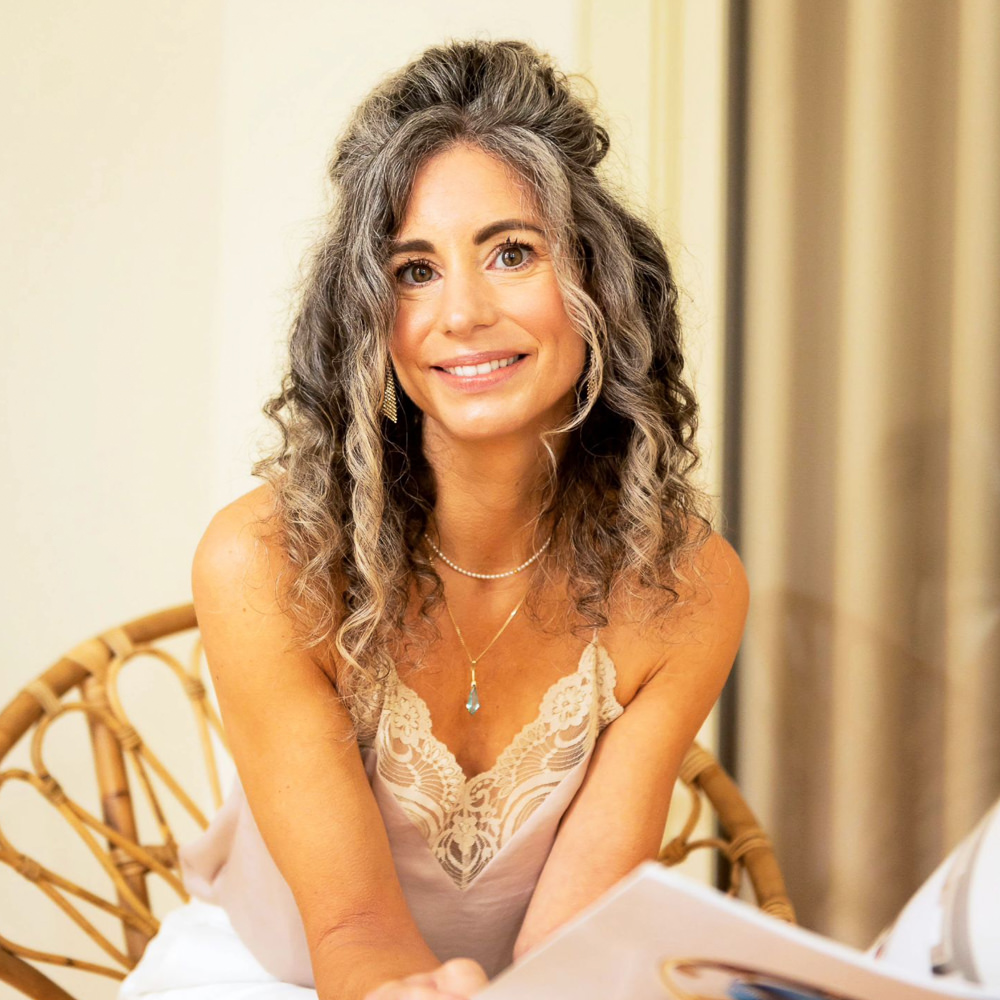
Episode 11 · Season 1
O papel dos Pioneiros
Marleen Vrensen PlanningHello Portugal Events
summary
Marleen Vrensen arrives in Portugal as an outsider with decades of wedding industry experience, and what she finds is both familiar and surprising. In this conversation, she unpacks the peculiar position Portugal occupies in the destination wedding market—expensive enough to intimidate budget-conscious couples, yet not established enough to command the premium pricing of more traditional European hotspots. But Marleen's real insight cuts deeper: Portugal's value isn't in being easier or cheaper. It's in the authenticity and attention that local professionals bring when they're not yet jaded by volume. She describes the early days of her journey, the friction of introducing new ideas to a market still finding its rhythm, and the profound responsibility of being a bridge between international expectations and local realities. What emerges is a portrait of the pioneer's paradox—you're valued for your expertise, yet you're constantly having to prove why things should work a certain way. The episode reveals how destination weddings really work at the human level: it's about trust built slowly through consistency, through understanding why a couple chose this specific destination, and through the quiet knowledge that you're stewarding not just an event but a memory someone will carry for life. Marleen speaks candidly about the emotional weight of this work, the way perfectionism can become a trap, and how the real pioneers in this space—the ones building something sustainable—are those who've learned to mentor the next generation rather than hoard knowledge. She argues passionately that a community of excellent vendors creates more opportunity for everyone, and that the obsession with undercutting each other in pricing is ultimately self-destructive. What makes this episode resonate is how Marleen doesn't frame community-building as altruism but as enlightened self-interest: when you help others raise their standards, you raise the market itself.
key quotes
"When you're the pioneer, people look to you to solve things that haven't been solved yet, and you have to figure it out as you go."
"Portugal is not about being the cheapest destination. It's about being authentic, about offering something real that other places have lost."
"The moment you stop learning and mentoring others, you become irrelevant. Your value is in what you pass forward."
"I've seen couples choose destinations for the wrong reasons—Instagram-worthy places instead of places that actually feel right for their story."
"Community in this industry isn't just nice; it's necessary. We either rise together or we all sink."
"The biggest mistake new vendors make is competing on price instead of competing on quality. You can't win a race to the bottom."
"Destination weddings are about creating space for something intimate in a place that's foreign to everyone. That's the magic."
transcript + show
episode: 11 title: "Ep. 11 - O papel dos Pioneiros, com Marleen Vrensen" pub_date: "Mon, 10 Jun 2024 11:24:55 +0000" original_language: english source_audio: "53f7f751.mp3"
Hello, welcome. I'm Rui and this is the The Wack Podcast. This week I have with me Marlene Vrandsen, Wedding Planner and Founder of the Hello Portugal Events project. I met Marlene only a year ago, but she is one of those people who entered our life breaking and making it seem like we've known each other for years. She is of unparalleled sympathy and has a great admiration, perhaps even love, for our country, hence having created a project that aims to promote it abroad. I also want to take this opportunity to thank her for the effort she made in speaking Portuguese. I would suggest that she speak English, but she always wanted to pay homage to our country and our community by speaking our language, even if that is not particularly easy for her. So, from her experience and, in general, for her sympathy, I thank her very much. Follow me in the conversation with Marlene. Hello Marlene, good morning. Good morning, Rui. Are you okay? I'm fine. I have a very important question for you to start doing, which is, how do you pronounce your name? Well, in Dutch it's Marlene. And the last one? Ransen. Okay. Is it possible that later I try to do the introduction by saying Marlene Ransen? It can be like this ... Well, but it's all right. So, at least I already have the recording to learn and to train. All right, all right. Look, Marlene, it's curious. A few weeks ago, for those who were on the podcast, I had the opportunity to record with the first wedding planner I worked with 9 years ago. And today I record with you, you were the last wedding planner I worked with in the most incredible wedding of 2023. Thank you. And the truth is that a large part of the responsibility of that wedding, that was so incredible, was yours. The way you dealt with everything, with the whole process, the serene, positive way and always with a smile, was and is an inspiration. So, and since then, we have created a relationship that I like a lot and I appreciate a lot. And I still have the feeling that we are going to do a lot of cool things and a lot of interesting things together. So, and much more, I really want to thank you for being here today to talk to me. Thank you, Rui. I can say the same about you and Elsa. It was a spectacular experience. I really enjoyed it. And that's it. Also, this Weg Podcast channel, I think it's really congratulations. I really like the episodes that I was able to hear so far. They were a huge inspiration. So, thank you too. Thank you, me too. I'm glad you think that. And I think the feedback has been great. I think people in general are enjoying it. And for me, it has been extremely enriching to do this and talk to incredible people. I have talked, so it has been very interesting. Good, good. But now let's talk about you. About you and the Hello Portugal events. My first question is, how did you come to this world? How was your professional journey and how is this in the area of marriages? Good question. Well, of course I am from the Netherlands, from the Netherlands. I think it is officially the smallest country in Northern Europe. I graduated, I don't know if that's the right word, but I graduated from the University of Applied Science, of the discipline Economy, Business Economy. I worked for a few years in the area of accountancy. Accounting. Exactly, because I studied, but in the cooperative area. And I didn't like it very much. Then I had the opportunity to work for a mobile agency in the Netherlands, where we had several international brands, from Denmark, Italy, also from Portugal. And over the years I integrated more in the area of events, in the fashion area. And after 10 years of working in the Netherlands, I was promoted to Portugal, because in the meantime we had our own brands that were produced here in Portugal. And I was promoted here also to manage export and management and international business. So it was a great experience for me to open the horizon from the Netherlands to the rest of the world. Here in Portugal I met a wedding planner at that time and she asked for help because I was already working in the area of events, but more in the cooperative area, fashion events. I started to help and I opened the experience, the connection, much more ... Closer? Yes, closer. Closer, that personal connection. It is a completely different environment. The emotions, obviously, the fashion area, everything is very beautiful, but it is cold, it is really a mountain of emotions. And this was in what year, more or less? It was in 2014. Then, I helped and I liked it, I loved it from the beginning. And then she had the opportunity to go to Dubai, she went to Dubai and that's where I started the Hello Portugal events and I started organizing the events. It has its own name, let's say. So, how have you been doing this year? 10 years? For Hello Portugal, no, but the experience in the area of Destination Things, yes. Hello Portugal, I started in 2017. 2017, ok. And what did you bring from that experience you had before, both corporate events and fashion? What did you bring to weddings? I think, in relation to the experience of how to organize the most technical part of an event, it was an experience that I already gained over the years in the fashion area, but I think the most important experience was the contact, I don't want to say business, because I think it's always a strange word, but international business. So, making the connection between a multicultural and intercultural communication. That's really funny, because do you feel that the fact that you are not Portuguese also gives you an advantage in that connection, for other cultures and other couples to understand Portuguese culture a little better and vice versa? Yes, because I look at Portuguese culture also as a foreigner, right? So, my vision could be, although I already feel a little integrated in Portuguese culture and I'm enjoying it, I like it, but I also bring my own vision, the vision I gained over the years, but also a different perspective. And it's something I have in common with international couples who come here. Although I understand the challenges of interpreting our Portuguese culture, you see? I would also like to make a point, because many couples today are also multicultural. Many couples today, the world is getting smaller and smaller, let's put it that way. And it's true, because the younger generations, they work in France, they go to the United States, they go on an internship in Australia. And there they meet, they create bonds and relationships. And it's really funny, because two weeks ago I was at Disney, and then in Paris with my children. We were there the five of us. And one of the things I found curious, which on the one hand is obviously great for us, but on the other hand it makes me slightly sad, is that you are in Paris, we were there only two days, but I've been there a few years ago, and especially in these Western countries, you don't have a real difference. You are in Paris, as you are in Lisbon, as you are in London, as you even start to be in Porto, although not so big, you start to feel the same. And on the one hand that's what you say, the new generations are already going to any of these places, quietly, they don't feel big changes, but on the other hand we also lose the charm of going to a different city, to a different culture, and it's all the same. You have Starbucks everywhere, you have McDonald's everywhere, everyone does the same, in the same way. This is not a little bit, you always go from one side to the other. It's not a little bit, sometimes, you know, sad. Yes, I agree. I agree. I think the way I look at Portugal, Portugal is, on the one hand, sometimes it doesn't help, it doesn't help the changes, but on the other hand, Portugal is a country that likes traditions and values traditions. Therefore, Portugal, like me, for the country and the culture, is quite strong, it is quite authentic. And I think, in search of receiving international couples, and in search of aligning our service and our offer with the search that exists, we should not lose our authenticity. I think because, exactly for that reason, obviously the level of service, the quality, has to have a certain level, right? To train and continue to attract foreign couples to support tourism, to support the economy, but on the other hand, experience cannot be a Starbucks type, at least it has to be, it has to maintain the authentic part. In addition to places, obviously, if you go to Sintra, if you go to Lisbon, to Algarve, to Porto, to Douro, obviously it is already a specific image for Portugal, but experience is also very important. And do you think, by the way, I have this feeling, being Portuguese, sometimes there is a little bit of caricature, but I like it, I'm happy and I'm used to it, but do you think that Portugalness is in fashion? That is, the lace, the tiles, those things, the Portuguese sidewalk, there are a number of things that, for us, have become normal, and it is normal, because it is what we are and what we have, but suddenly it is out of fashion for those who come from abroad. Yes, I also think, because I think, especially the younger generations, they like the story behind things, it can be the story behind a brand, a product. For example, in the fashion area, we follow a lot nowadays, the story behind the brand, the story of who made your shoes, who made your blazer. I think the new generations are very wired to stories, and everything that has history, is something that they like, the laces, the traditions, everything that is authentic, more and more, not only to be beautiful, but also to have a meaning, I think. And do you think that in foreign couples, that this is felt when they come here? Do you think they are looking for that artistic part, that cultural part of Portugal? My work is very focused on that, creating meaningful events. Therefore, I think that by radiating this image, I also attract this type of clients, who really like it. I don't know if it represents well international couples in general, but in my opinion, I think it is also a more experience-focused, meaningful trend. And maybe this also touches a little bit on what I was saying, that when we walk through these Western countries, we all feel the same. Maybe if you decide to get married in a different country, you look for the experience that the other country will give you, unlike yours, right? For me, everything makes sense. I, as you said, even go on vacation. I don't think it's a joke to go on vacation and have coffee at Starbucks, and eat a lunch at another place, like... I don't even know the names, because I don't like fast food and all that, but we all know what we're talking about, right? I think that embracing culture, embracing difference, new experiences, makes us grow, makes us open our soul more, our public horizon. Without a doubt. Look, a question, a curiosity that I have. In terms of marriage, you essentially jump between Portugal and the Netherlands, right? It may be my ignorance, or it may be from my small eye, but I don't usually see a great international search for marriages in the Netherlands. Does it also exist, or is it really not a country where people, internationally, look a lot for marriages? Well, I'll try to answer that. I have some ideas, but just a small clarification, because in the Netherlands I never worked in the area of marriages. Ah, ok. Also now, because this year it is a little different, as you know, this year it is more in the cooperative area and in the fashion area again. So, my work there is more focused on those areas. But I have some knowledge, but I can't say so ... Yes, but in your perception, is it a country that is also looking for marriages? Yes, because the Netherlands is a country where we have many, but really many different cultures. The Netherlands is a country that attracts ... I think it was even last week that I saw a publication in which it says that in Amsterdam, I think like eighty-something percent is not Dutch. The inhabitants, even those who live there, in the capital, Amsterdam, Rotterdam, Ah yes, most of them are not naturally Dutch, they have no Dutch origin. Eighty percent? Yes, I can't say for sure, but it was a number that was even very high. Even more than half of the population there, in the larger cities, are foreigners. And they come from all over the world. So, that mixture already brings foreigners to the Netherlands, doesn't it? In addition to that, Amsterdam too, I think Europe, and we also always do that, about Portugal, the Lisbon airport, almost all destinations go there. But yes, and Europe, if possible, in the middle of the map, right? Portugal is always slightly more in the middle of the map than the Netherlands, because we are in the north and we don't have a big ... Well, we don't have a big summer or something like that, but I think that the south was the best. Yes, really, because we always put the two big destinations, it is the south of France, naturally, and the north of Italy. I am already quite happy to think that Portugal, Douro, Sintra, Algarve, are already starting to be a third big destination. Yes, yes. But I think we still have a little work to do to put ... Let's beat the Italians! Sorry, Jasmine! I think if we win, it's ... I'm kidding, because they are different countries, of different dimensions, it is not possible, in terms of dimension, to compete with these two countries. But in terms of quality, you can always, right? Yes, and I also think, well, it's something I learned in the fashion area, when we have a summer collection, from summer 2024, well, there is a range of colors, there is a theme, there are patterns, all that. But there are always things that everyone likes, it's a very, very cool dress. And on the other side of the collection, there is something, a very ugly piece, almost impossible. This works as a type of light, without darkness, we can't see the light. These are those clichés, but it's true. And it's to say, even in that one, between black and white, we have several shades of gray. And it's to serve the whole market, because not everyone has the same taste, not everyone wants to be brown or rustic, or want to be stupid, or want to be contemporary. or minimalist, or classic, we have to serve all things, and also between countries, France, Italy, Portugal, it is almost impossible. I understand what you are saying about the level, it is not the level of the service, and yes, they are countries that the market is already much older than Portugal. Portugal is a very, very ... Recent, very young. Exactly, and yes, we still have some evolution ahead. And that's why we're here, right? Tell me, in this transition, in this growth you have, in this construction of Hello Portugal Events, what was the main obstacle you had to overcome? Let me think. I think, curiously, it was also my way of making a bridge of myself, of my values, between the values here in Portugal. To understand and understand why we, when we go to another country, it is very easy to say to me, ah, but in Holland you don't do that, in Holland we do it that way, and that's it, but we can't send it to someone else's house, right? But sometimes we want to, we can send it. Why would I do that? It's like that internal conversation of, well, to bridge the differences. It's something I do for our couples, but it was also a path, and if there is a greater obstacle, for myself. But it really is quite funny, because we've had this conversation a few times, that there are very different points between weddings in Holland, in the Netherlands, and in Portugal. Even the invitations that are made, for what phase of the party they are made, and it is also very curious because I think that some ... There it is, it's what you were talking about. For culture, for us it is strange the idea of, I'm going to invite this group of friends just for the party. In Portugal this is a very strange thing. Of course. But I think it can really make sense, and these are the things we've already talked about, and even Jasmine herself, I've already talked to her about this, which is that not everyone needs to be in all phases of the party. But for us Portuguese it is very strange, because if you come in the morning or you come to the ceremony, you leave until the end. This was one of the struggles you had to face a few times, right? It is true that the concept of marriage itself is completely different, but the funny thing is that today I understand much more and have much more compassion for the Portuguese way than the Dutch way. Even today I find it very strange, for example, if we go to a restaurant in Holland, it is not very common to go with the whole family, I mean, with children or small children. The children don't go to the restaurants there. Really? Yes. Dinner outside the house is a kind of going out for adults, and the children stay with babysitter. That's how we do it. And in a wedding, for example, a child in that situation is something that I don't know if it is created. However, also because of these multicultural influences, it may be that today it is much more common. But the Dutch culture itself also has very strange things, and today I can see, from the perspective of here, from Portugal to Holland, I think... Yes, but this issue of children at weddings has also been... Well, I didn't know that in Holland either, but in the United States, England, it is already very unusual. In fact, I think it is really, really unusual at weddings for children to be invited. And you have in some places in Portugal that are already starting... I'm not going to say prohibit, but recommend very vehemently that children don't go. And there it is. On the one hand, it's a bit what you say, I understand, because I've been to weddings without my children, I've been with the children. In practical terms, it is obvious that it is easier, the logistics, you are at a wedding without the children. But at the same time, emotionally, if it's a friend, if it's someone who invites you, it makes sense to go to the family, you know? That's why sometimes I also... And even if it's already out, it doesn't matter. I like to go out with the kids, but it's a totally different experience when it's just me and Elsa, right? Or with friends, it's a completely different experience. But this mixture of cultures and traditions is one of those things that I think enriches us all. On the positive side. And then the sad part, which is that we all end up the same. Well, that's it. And it's a bit strange, isn't it? Yes, exactly. But that's what it is. Look, we're already on this subject, but let's focus a little more, which is one of your great focuses and one of your great goals, has been the promotion of Portugal as an international reference destination. And the defense of the quality of those who work here. What motivates you particularly to do it? When I moved to Portugal, it may be different for everyone, but when I moved, it was out of conflict, right? You're away from your family, your habits, friends, you don't have... Basically, you leave everything behind. Although 2,000 kilometers and two and a half hours away is not much, but your day-to-day is completely different. And it was an incredible experience, enriching, but it wasn't always easy. Portugal brought me a lot in my life. I can say that the feeling that is always more inside me is joy, happiness. I don't know, I got closer to myself, closer to my family, which is strange, but when we are away from the family, the heart grows. And that happiness is something that I am very grateful for. I sometimes speak of Portugal as if it were a person. It would be funny to mention here the name Hello Portugal, which didn't start initially as a wedding company. I started the name Hello Portugal for a blog, a website that I created in Dutch to share and spread my path here in Portugal. The changes, the culture, how I see the culture here, how I look at Dutch culture now, the curiosity, always with a touch of good humor, even in a funny way, to embrace the difficulties, embrace the challenges. And sometimes I say when I get upset or something, when I feel less good or sad because of the distance from the family, for example, I sometimes say to my daughter, look, now it's not Hello Portugal, it's Goodbye Portugal. I speak of Portugal as if it were a person for me. I am very grateful for Portugal in total, the 11 million inhabitants, that I had this experience and that Portugal brought that joy. And this joy I want to spread, I want to spread and share the joy that I feel about and with Portugal. And that's why I have that kind of mission to share this. It's extraordinary to hear you talk about my country in such an enthusiastic, emotional and beautiful way, when most of my life, all the Tugas I know, spend their lives saying bad things about the country. It's funny, isn't it? This, for me, is an unbelievable thing. I often have this conversation that the Portuguese, in a global way, are constantly complaining about what we have, but essentially about what we don't have. We lack this, we lack that. There's always something, there's always something missing. And the comparisons are always the same. Or with the Nordic countries, Sweden, Finland, Norway, Denmark, or even with Germany. Which is always curious, because these countries are unique in a series of things. It's not just us Portuguese who don't have the social openness that perhaps Denmark and Norway have. No other country has. And it's not just us Portuguese who don't have the financial capabilities and all that to do what Germany does. Most of them don't. But for many Portuguese, it seems that only Portugal doesn't have any of that. But what I also feel is, not only in the foreigners who live in Portugal, that I know, but in the Portuguese who regularly travel abroad, whenever you go abroad, you come back with a much higher appreciation of the country, because we really have a lot of amazing things. And I think this is common, and that everyone feels the same, which is our ability to receive our taste, and to receive those who visit us, and those who move here. And hearing you speak like this is exciting, and makes me happy. Because I really think that if people left more, if people knew more about living abroad, we would all give much more value to the country. Exactly. Because it changes our perspective. Without a doubt. I think you deal with that, you look at things, your house, the environment you have, you look at it in a different way. Because you already had a different experience, and that can be a better or worse experience, that doesn't matter. But you always look at your own environment in a different way. And that's why I think it's important to leave as well. It can be a holiday, it can be a walk, it can be to exchange places, inside the country, outside the country. Obviously outside the country, the advantage is to meet other cultures, other forms of life, other languages, other attitudes. Without a doubt. In these two days I've been in Paris, I was quite amazed to realize that the walkways for Parisians are optional. Stopping is a state of mind. It's not an obligation. Sometimes I want to stop, stop and let people pass. I had five minutes, I was waiting for Elsa to do something, and Beatriz and I were sitting next to her, waiting for her, and I saw two or three people running away from the walkway, because they saw cars and they wouldn't stop. Basically they walked and ran back, because otherwise they would take the cars. And I found that quite funny. So there it is. A positive thing is that in Portugal people usually stop at the walkway. Exactly. Now, going back to the issue of weddings, you really have this passion, this love for Portugal and you want to share it, but this also has a question and a motivation in relation to the sharing of what is done specifically in weddings. My question is, do you really see the Portuguese tradition of weddings and the Portuguese professionals working in Portugal, as they are all Portuguese, do you see it as an added value that should be shared? Yes and no. Because, on the one hand, that authenticity that we have here, I think, authenticity and also authentic hospitality, the way in which Portugal usually receives people from abroad is a very authentic way. It's not a fake smile. Hospitality in Portugal is very well known for this service, wanting to receive people well, even if you go to someone's house, they want that there is nothing missing, that they put the table more than full, it's impossible. But this authenticity, I think, yes, it's something we should promote and honesty at work too. I think the quality, because I think I understand where you want to get with that question and for me it doesn't have a single answer. Because promoting Portugal also means that we have to work, we have to work to reach a level of service, a level of quality to continue attracting and that's the goal, isn't it? To grow. A while ago you made a publication that became, I won't say viral, but in the whole community it shared a lot. It had a number of things, but in general it said Portugal is not cheap. And really, although your publication was written for abroad, for newlyweds, for clients, I think, I don't know if it was your intention or not, but it had that result, that we, the professional community, should also hear that it's not our job to make Portugal cheap. It's supposed to be us who charge for the value of the service we are doing. And of course, as you say, globally, I think the quality of our professionals is good, but obviously when you have an American, French, Italian and others who are at this level for years, have more experience, we are still making our way, but the goal has to be to improve. We have to improve and always follow the values and the quality with the service. So, I don't know if it was your intention to talk a little bit inside, but that resulted and that happened, didn't it? Yes. This thought had two sides. On the one hand, I feel, and I don't know if it's a coincidence, I saw some publications from the Wellingtonians, not all of them national, but also some who are abroad and Portugal has an option beyond the European countries. But Portugal is known to be affordable, an affordable destination. And I think in the area of marriage, what I feel about couples who want to get married in Portugal comes with this idea, Portugal is affordable. And we cannot say that, the prices here, on the other hand, also in the area of marriage, are different than, for example, New York. You go to New York, that's it, it's another world, isn't it? We can say that the value of a couple's budget can extend or stretch slightly more here in Portugal than, for example, in France or Italy. But at the same time, this image also deceives a little, because the work of a Wellingtonian, the first job, and I know it's the most challenging job, is to align expectations of a couple with the budget they have. And that's a... When couples come with the idea that Portugal is affordable, they say, oh, it's cheap, it's all cheap. Look, have some coffee for €1.20. And look, it's a wonder, it's a daily meal, the daily meal is like, I don't know, €10, something like that. And evidently, we know that a daily meal, in a cup, is a completely different thing than a wedding. And especially a wedding that most foreign couples want because these expectations are foreign. Yes. The level, they already come with a completely different lifestyle. And aligning these expectations with the budget is difficult when they come with this idea. So, one side of this picture was that. The other side is... And, evidently, if we are talking about luxury weddings, high-end weddings, top-notch vendors, evidently this has a price, also here in Portugal, and if I'm being honest, I have the feeling that, because there is still little offer in that very high level, these suppliers, evidently, have almost a monopoly. I also think that one of our most collective work should be to align our value proposition with the image that Portugal has. Because this image, for being affordable, when the couple comes abroad, imagine that they live in Amsterdam. Around Amsterdam, I know everything, I know the places for weddings, I know that this lounge bar is extremely expensive, I know that there is a kind of backyard that is very cheap, I have an idea, I have an idea of the values, I have an idea of the levels they have. Here, the couples come here and ask, for example, to have a wedding for R$20,000, they also don't tell me anything, because if they have 5 guests, R$20,000 is not so good. R$20,000 is never good, but for a few guests, an allotment for R$20,000 is not so bad. But if they have 80 guests, R$20,000 will never arrive and we will be sad, but then they say, look, we love the wet afternoon, or the nephew behaves, that will not arrive, these are places that are already at a much higher level, and that's it, but they come up with this idea. Then doing this work and saying, look, but your expectations are not aligned with what you currently have, it is difficult. So, I think this transparency is important, that we are going to work for foreign couples to be able to orient themselves much better, and also because if a couple has very high expectations and then working to lower expectations, it is almost like a disappointment. Without a doubt. And then you lose the opportunity to work, but I usually talk about this, because then comes, for example, who wants a client who has a limited budget, who will work with this client? These are the questions. Yes, really what you say makes a lot of sense, and that there is a difference between the nature of the countries we are talking about, which is in everything, which is in life, which is in the orders, which is in the price of a Big Mac, a price of a Starbucks, or anything is different in Portugal, is different in France, in the United States, there is a difference in the standard of living that has nothing to do with what we can do in weddings, it is part of the country, it is a global thing, and this will always happen, we are a small country, it will always have an economy, in principle, an economy a little lower than others, but then there is that question, which we can do, which is the perception of what we are out there, which is, it is natural that a marriage with the same budget can do more and better than it will be able to do in the south of France. Exactly. And that's right, and I think it's right, and it's good for us, because it's a way for us to be able to compete with those countries. Exactly. But then there is a difference between, ok, the fact of being, as you said, your budget is worth more in Portugal than it is in France, it doesn't mean that your average budget in France will make a 3-day wedding in a palace in Portugal. Exactly. There is a difference in perception, and in your opinion, it is this difference of perception that we have to work on, that is, to get foreigners out there to look at Portugal and say, Ok, I'm going to get a little better, I'm going to have a more interesting wedding for less, but not much less. And that's our job, right? Exactly. How do you think we can do that? First of all, I think it is important that there is transparency. Transparency and visibility, the way I see it, looking, for example, at the competitions, France, Italy, Greece, Spain, maybe, are very well represented online. Nowadays, I still have couples who ask me, look, are there other types of places for weddings? Because the visibility of Portugal in the online landscape is almost nothing. Everyone has their own website and, fortunately, many sponsors and many places already have an English version, because when there is an English version in Portuguese, a foreign couple who does not speak Portuguese will not go to the website, but they do not have something collective, such as, for example, if you do a search on Google, Destination Wedding Front, there is a type of 10 platforms that show everything that France has, by district, look, do you want to go to Paris or do you want to go to Côte d'Azur? But it is very difficult for foreigners to have an idea of the offer of Portugal, but the offer, I am really from Portugal, complete. And obviously, whoever is looking for a castle, obviously, will not be interested in a ... In a normal backyard, yes. It is also something that I think the national backyards, for example, here in Portugal, often do not go to the meeting of international couples looking for, right? But that's another thing. But it's almost like shopping in an empty store, because Portugal does not have visibility outside. Inside, yes, there are platforms that work in the national market, this one for Brazilians also works because they speak Portuguese, right? Now, it also has to do with the transfer. How am I going to understand something interesting, for example, and sometimes even because we work, the generation, now we have the last Millennials who are getting married, right? We have to orient ourselves in the Gen Z. And what a beautiful challenge, right? Yes, but they are digital natives. They are people who have, ready, they have so much autonomy in researching things and this often happens. We guide the couples, but the couples also come up with their own ideas and do their research and then, how do I, for example, it was last year, I had a Belgian couple with a good budget, but they did their own research and they came to me, look, what do you think about it? And can we do this? But they were looking for services and places completely outside of their budget. It's not their fault either, because how are they going to understand that a Fondação 2X is considered expensive or cheap or medium-high or high segmentation is a context in which we can position our service and our offer. And when that is missing, for example, it is a stupid example, but for example, in the area of cars, we do not know that anyone goes to a Tesla showroom with, like, 20,000 euros to order the new model, right? No one does that because everyone knows, look, the proposition of a brand X is expensive or cheap. We have a context and when there is no transfer, the context is also completely missing and it is very difficult, also to work on that bridge, or how do you say, the gap, it's not a bridge, it's really the gap between the image of Portugal and the offer. Yes. It is, as you say, really the lack of global transparency, which is really noticeable internally. We don't talk to each other about prices, which I think is absurd. And I, within my bubble, within my group of colleagues and closest friends, we talked about it many times, but I think that as a market, it doesn't happen. And now I make a bridge to another question about that in the wedding planner community. Do you feel that there is a community? Do you feel that there is a group that can share that kind of thing? Because if a few years ago the first door to international couples were the threes and the spaces, today it's you. Yes. And do you think there is some kind of community or common opinions in relation to that? That transparency, the values? No, I don't feel it, but also, if there is, in my opinion, if there is, it's a little out of focus, because I... And if there is, it's really my own thing, because I, although I feel very well integrated, I also sometimes feel like a foreigner and behave like a foreigner. If there is, I don't know, as much as I want, I have to be honest, I also feel that a little bit in Portuguese culture. Portuguese culture is very, ready, with a lot of hospitality, they know how to receive people, but everything is superficial. You will not enter my life. People always have a little, a barrier, for example, in my Dutch culture, we ask questions, look, how are you? It was an experience, ready, it was years ago, but I, with our neighbor, at that time, I, ready, I could show up and say, look, how are your daughters? Are they doing well at school? Do they do sports? And she herself says, so many questions! I felt bad and then, reflecting, I also spoke to my husband, who is Portuguese, so he always has that feedback, and to understand better, also, how it is, ready, why a person can feel that, but even entering or making that connection, and for people to feel confident and trust, to open, ready, and also talk about our doubts, weaknesses. I feel here, sometimes, some difficulties, but also, I'm not saying it's the fault of Portugal, there it is, it's also about Portugal, it can also be my perspective that is influencing, but, for example, in the area of wedding planners, I don't really feel that desire to join forces, because I sometimes feel that I'm very afraid of losing my job, but the search is so wide, there is so much search, so many, there are clients for everyone, right? And if we can promote and join our qualities, I think it's good for everyone. It's funny, you're talking to me and I'm thinking, in terms of photographers, a few years ago, the feeling was the same. Today, no. Fortunately, I started this project because I think the community has softened a little bit, but I think the pandemic must have also helped, separated us all a little bit, made us get too used to virtuality and those things, and I think we need to be together again. But, in terms of our part, photography, video too, I think that, despite everything, the community is a little more structured and has a different reality. But, looking at these last 10 years, for example, the number of wedding planners that entered the market was brutal, and even better, because, clearly, you became the gateway, and it's a much more interesting gateway than being, in global terms, a photographer or a fifth party, because you, from the start, will give a more global perspective, for the newlyweds that come, you will give a more global perspective. What I think maybe hasn't happened yet, and I've already talked to your colleagues who tell me something more or less the same, I think it's a matter of giving time, but also doing something, it's not just waiting for things to happen. Because I think that, 12, 13, 14 years ago, when I entered the world of weddings, I also felt that, and it was necessary for one or two things to happen, and, suddenly, we could say, during some good years, that we had a community of 30, 40, 50 people, in which it really was a community. It's good. And I think maybe that's the point I'm following for you, some initiatives, some things. Of course, we're not all going to be friends, we're not all going to have the same opinions, because that doesn't happen anywhere, but I think that, maybe, finding those common points, in which we can all say, ok, this is the minimum, I'm not just talking about money, but this is the minimum I accept about my work, this is the minimum I demand for my well-being throughout the day. These things, I think, maybe, are what's missing, or what can now come forward in your community, that can help, right? That is, to find excuses to get together, all of us, you too, maybe, at a more individual level, find excuses to get together, and talk, and discuss a lot, and all those things. Do you think it would be an interesting path, an interesting next step? I think so too. I think so too. I think it's the same, what I say, join forces. It's already in two words, right? To be even stronger. Without a doubt. And even sometimes it's really necessary, because, it's what I say, there's so much search, and we, because we have a job, and I speak for myself, but the absolute success of other wedding planners too, want to find that balance, because our capacity is not infinite, we are selling our hours, the service, and wedding planning is something that's ready, we don't do the service in the day, and that's it, it's done. No, it's really that preparation, it's this journey, for 10, 12, 14 months, that we work quite intensely, and quite involved in, well, it's not quite involved, it's really, that's it, it's us who guide the success, and we manage to accept a certain limit of the number of weddings per time, and sometimes, when our schedule is full, it's also necessary that I know, look, for example, the wedding planner X still has vacancies, but it's also important to know how they work, if I'm sure, to recommend that service. First of all, trust everyone, but I also always feel a little bad if things don't go as we want, right? It's funny, a few years ago, at the beginning of what I was telling you, we got to a point, we had a calendar on Google, with one, I don't remember the number, but we were 10 or 15 companies, with more people, we were 20 or so people, but we were around, that shared a calendar, and when they received a certain budget request from a couple, and they didn't have a vacancy, we went to the calendar, we saw who was available, and we sent it. Now, what you said, there was already a personal relationship, we all knew each other, although we had very different work styles, but we had that personal relationship of saying, I know that if you choose this colleague of mine, you will be well served, you will be well treated. There was that trust, right? And I think that brings us back to the same question, that is, we have to be together, we have to know each other personally. That's it. Look, one last question. The one you told me in one of the conversations we had, which is, what do you think that we, more professional... more experienced, older people, what can we do to... within this podcast theme of the Arising Thai Lift All Boats what can we more experienced and have more time in the market do to push the perception, the quality and the value of our market and our area and our country abroad? Yes, yes. It's a very interesting question. First of all, I loved this context of the Rising Thais. Fantastic! I liked all the episodes, but this one was really very strong. Now, I think the initiative of the WEC Podcast also offers that transparency and in this case the episodes that you already published were with suppliers I don't know if I'm saying right or wrong, but the pioneers of Destination Wedding Market here in Portugal basically were them. Thanks to these suppliers, the Destination Wedding Market was created. They brought the market abroad and created these standards, this image for Portugal to be a destination for weddings, for foreigners. I think they have a key role in the evolution also from here to the future. They are pioneers. They have a knowledge, an experience so profound. Don't worry, don't worry. Speak English, no problem. No problem. What I wanted to say, I see a key role for the established vendors here in Portugal and it's the ones actually that you have been interviewing and there are still missing the ones that you will still interview. But for those established, seasoned and very skilled vendors, I am seeing a role in driving, in guiding because they alone, they cannot, I mean it's a small group, so you need in order to create a market, you need to have offers, you need to have services, you need to have more vendors, you need to have also vendors in different levels, not only to cater to the high budgets, you need to have vendors who cater to mid high budgets and to mid budgets and perhaps also some to low because you have always couples, international couples that are not, they are budget conscious and you also, you need to be able to cater to several levels, you need to have different price segments and what I am seeing for those top notch, very seasoned, skilled vendors, it's like being the mentors for the younger generations of vendors who can create, they can set the standards, they can raise the bar, they are the tight, that's what I want to say, they are the tight, you are the tight boy, that's what I want to say, it's true and then the boats, it's all the other vendors, the young ones, the new ones, the unexperienced ones, there is place for everyone now, there is nothing wrong with a starter, there is nothing wrong with a young person who is passionate about photography, that has the ambition to serve the destination wedding market in Portugal, but they need to have guidance, they need to have standards and who better than those very seasoned and skilled fantastic vendors can guide them? Now you left me with no better way to finish this message and really you said everything that is really important and in this little bit I think I summarize all of this. There will always be, despite the idea that we are always talking about only money and only prices and only increasing and all that, there will always be the different levels of budgets, and everything is right, it has always existed, it will always exist and it is supposed to exist, but naturally, as you said, if those who are already more experienced, if they have already pulled the tide, if the tide is higher for them, it is always necessary to improve who is either starting or for some reason wants to be a supplier or a more local, everything is right, but if the tide rises, it will rise for everyone and that is something that sometimes some people in our community have difficulty understanding, if it goes up and if we talk about the white and silver of this country and Vanessa and Ivo, and so many guys, the wedding company, Jenny, some of whom I have already invited, if all of us and if these in particular who are clearly at the top, if they take more and more, all of us will succeed, right? And I think that all of us have the role, all of us have this role of growing, and if we grow, we all grow. Without a doubt, Rui. I think because it is also an interesting perspective to look at the corporate area and I think many of us already had this experience of working in an area like this, corporate, I'm not talking about corporate events, but even a company, an industrial entity, there too, there is a level, there is a junior, there is a senior, there is an executive, there are all these levels and I think even in our offer of services, let's talk first about the service, which has quality levels and quality price. Then there is the price level, the level of experience. We have to have everything, the whole range, because not everyone, not all foreign couples want the same. It's not like that, the market is multidimensional and we have to Portugal is not just affordable, Portugal is not just luxury, Portugal is not just Algarve, for many years, for many years, the destination was Algarve. Nowadays, fortunately, Lisbon already has a very important exorbitant sky and I think there is still a lot of work here in the north of Portugal, but that black rainbow of the market is important for the future of Portugal. Marlene, it was a great pleasure this conversation with you, it was a great pleasure. Thank you, it was a pleasure for me too. I'm glad. I think we have a lot of good things here to share and a lot to inspire. Thank you. Thank you. Kisses. Thank you. We have reached the end of this episode and if you liked it, I ask you to subscribe to the podcast and see you next week.
New episodes, twice a month. Be the first to hear them.