
Episode 12 · Season 1
"Odeio o mais ou menos"
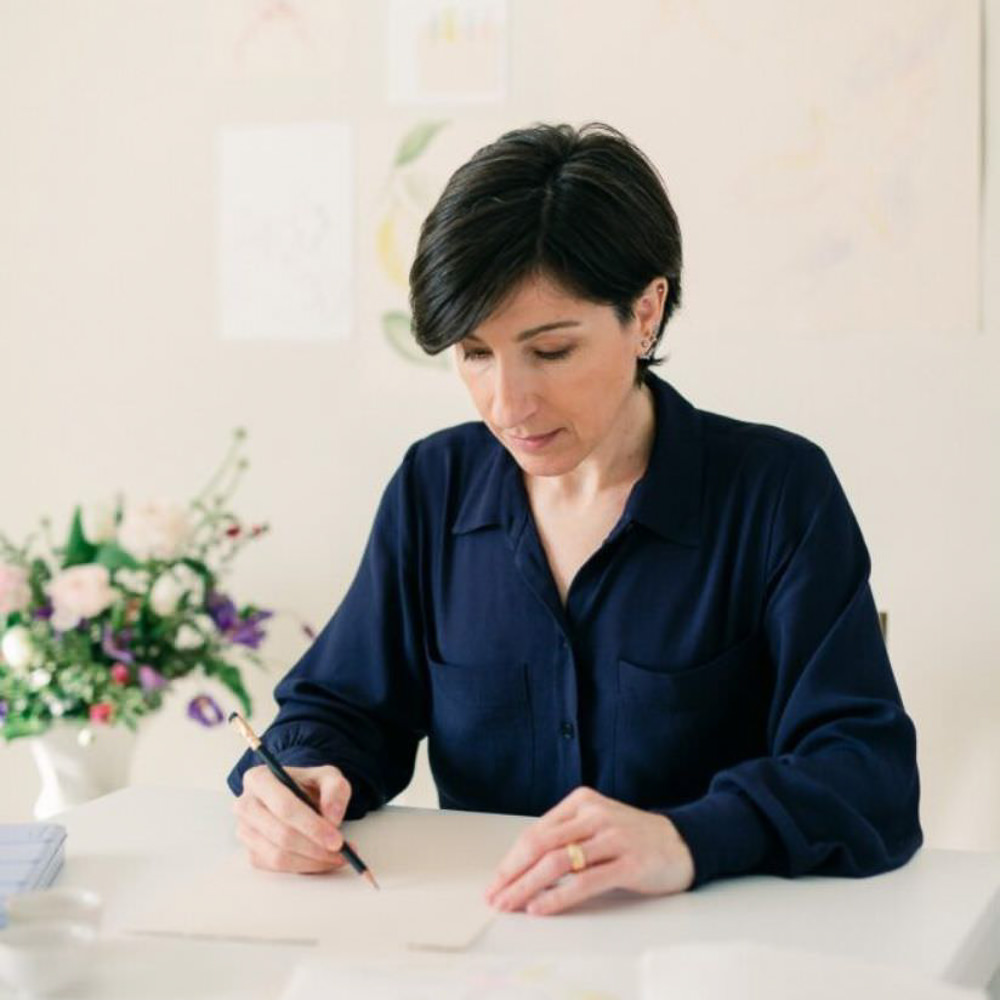
Alexandra Barbosa StationaryA Pajarita
summary
Alexandra Barbosa speaks with the precision of someone who has spent years learning to say no. As the creative force behind Pajarita, a stationery and design studio, she embodies a philosophy that has become increasingly rare in an industry obsessed with compromise: absolute clarity about what she will and won't do. The title itself—"Odeio o mais ou menos" (I hate the more or less)—captures the essence of her approach. She won't design something half-hearted. She won't create work she doesn't believe in. And she certainly won't pretend that digital solutions are adequate substitutes for the tactile, deliberate act of holding a beautifully crafted piece of paper. The episode traces her journey from childhood drawing through her evolution as an artist, revealing how she landed in the wedding industry not as a calculated business move but as a natural extension of her creative philosophy. What's striking is how she discusses the tension between her austere, minimalist exterior presentation and the richly detailed, almost maximalist work she creates. She talks about the importance of paper in a world increasingly convinced that pixels are enough, and about how her resistance to "more or less" solutions has actually become her strongest market position. Alexandra doesn't chase trends. She builds methodically, turning down work that doesn't align with her vision, and this selectivity has created a brand that resonates precisely because it refuses to compromise. The conversation reveals something crucial about creative sustainability: the businesses that thrive long-term aren't the ones willing to do anything for a client, but the ones brave enough to define what they actually stand for. Her perspective on the wedding industry is equally unforgiving—she sees too much production, too much theatre, and not enough genuine consideration for what makes a moment actually matter. For designers and artists in particular, this episode offers a masterclass in the economics of integrity.
key quotes
"I draw because I need to. It's not something I chose; it's something that chose me."
"Paper is still the most beautiful way to communicate something important. It's tactile. It's real. Pixels will never replace that."
"I refuse to do work that doesn't excite me. The moment you start compromising, you become invisible in your own business."
"There's a difference between simplicity and minimalism. One is lazy. The other is intentional."
"Most people want the more or less. I don't work that way. Either I go all in or I don't go at all."
"The wedding industry has become so obsessed with production that we've forgotten about meaning. We're building theatres instead of creating moments."
"My strength isn't that I can do everything. My strength is knowing exactly what I won't do."
transcript + show
episode: 12 title: "Ep. 12 - "Odeio o mais ou menos", com Alexandra Barbosa" pub_date: "Mon, 17 Jun 2024 05:00:00 +0000" original_language: english source_audio: "6b7d4b8d.mp3"
Hello, welcome. I'm Rui and this is the The Wack Podcast. This week I have with me Alexandra Barbosa da Pajarita, a design company and wedding guests. Alexandra's work is wonderful and of enormous serenity, a feature that contrasts intensely with the words she chooses to define herself. This would only be the reason for an interesting conversation, but there is much more. I also wanted to take the opportunity to apologize to Alexandra once again, for the kind of abrupt way I said goodbye and closed the episode. I was very clumsy with your last words and I didn't know how to deal with it, but I'm very grateful for the affection. Without further ado, here's my conversation with Alexandra. Hello, Alexandra. How are you? Hello, Rui. I'm fine. And you? I'm fine too. Thank you for being here. Look, I'm going to start by saying this. People have been very nice to me, they have praised me a lot when doing this podcast, but the truth is that I have simply taken refuge in the amount of wonderful people that I'm happy to meet. I've been friends for a long time and I've been talking to people about many of these subjects for a long time. But that's not really our case today. Although we have already crossed paths, we've never had the pleasure of having a long conversation about anything. And that made me a little apprehensive at first, until I read your essay. And if I was already completely fascinated by your work, from the moment I read that text I was super fascinated with you, with your story, with your life. That was a turning point that I thought, how am I going to be able to ask all the questions I would like to ask in just one episode? And that's my challenge here. But that's it. I want to thank you again for being here. I think it's going to be a very funny conversation. I'm sure it will. First of all, I would also like to thank you immensely for this opportunity. I really enjoyed the invitation. As I have also enjoyed the conversations you have had with your partners, who are excellent and who are obviously admirable people, just like you. That's why it's so good for me. And I thank you immensely for this opportunity. And if you feel like asking anything you want, because I find these conversations very interesting. That's why I support you. Look, for the part where you thank me, I don't know to what extent that will be a reality, but I'm grateful. I don't think so. I'm just going to say it, if you feel like it. I'm very honest. That's good. I'm happy. So let's start at the beginning. I'm currently reading a book called Pico. The subtitle is How to Become the Best in Your Area. And it's an interesting thing. They talk about musicians and a series of other areas. And this basically made me think that your art, the drawing, is one of those that I know. And correct me if I'm wrong, but the feeling I have is this. It's probably the one you get, that people, from an early age, show more abilities without being taught. That is, you can see that children start drawing and have a much higher ability than music. And my question is this. Do you draw since you remember? Yes, I think I spent all my childhood drawing. To the point of having a very funny story, is that after about a month, a maximum of two months of being in pre-school, I didn't miss it, I went to school, the teacher calls my mother because I exceeded the cost of the leaves I had in the environment. That is, my mother would buy more leaves, but I, in a month, gave up what I should have given in two months. So, yes, I think it was my biggest refuge. And that's where I felt complete happiness, was drawing. I think I never had much knowledge of words. Then, as a result, I tried and still try and practice to be able to express myself in another way. But I think drawing is the best way not to express yourself. And it's the oldest way we're going to express ourselves. Without a doubt. But that is, it's really since you were little. Because one of your phrases is, drawing was my childhood. Yes, yes, of course, of course. Do you remember drawing at that time? I remember. I remember, curiously, I remember, because I had to revisit my childhood a little bit when I was doing the postgraduate in Valencia, to understand to what extent the drawing appeared in my life. And really, I was raised at home, or I played with my mother or my father, I had my cousins at the weekend. Actually, my father always said I didn't know how to play. I never knew how to play. That is, I knew how to touch a pencil and draw. I loved drawing houses, which was something that fascinated me immensely. Also because my father is connected to a certain construction, maybe, maybe not. But I loved drawing, those normal things, like the sun, the flowers. But I loved houses, I just loved drawing houses. And it's something that fascinated me, and my father was very curious and prospective. It was a very funny situation. Do you still have any of these drawings? Do you have that legacy? No. When we moved house, unfortunately, some things were lost. But I have clear images of the house that I made, even because I was talking, to understand. And I had the defect of putting the windows glued to the side walls and putting the window tilted. But I thought that was the best. And I didn't know how to fix that. But my father always explained to me geometrically how things worked. It's funny, because I have three children. Pedrinho still doesn't draw, he's only 17 months old. But the other two were drawing, it's one of those activities that everyone gets excited about at school. And we have a series, we have a huge amount of things, but that's it, it's just that sentimental value, because clearly I don't have the drawing geniuses at home. You don't have them and you don't know. Maybe. It's possible that they have talents for other areas. Beatriz even draws decently, for a child, she draws a little bit. João, clearly, I don't think that's what he's after. But we have so many things. It's an emotional management, I don't have space for everything they do. And not everything they do is good, it deserves to be kept. I hope they don't watch this episode. But you know that it's also a mistake to think that drawing well is drawing what you see. And it's not like that. If not, we don't have Picasso, who photographed what he drew when he was a child, and then he got to the point of drawing what he saw. Sometimes the expression doesn't mean the representation of what you see. So if they can express themselves very well, they don't represent things as you see them, but as you feel them. So the value of things varies a little bit. I totally agree with you. But if João's drawings are really his expression, I start to get a little worried. Because really... I'm kidding. They have different expressions. Beatriz is very musical, and João is very physical, very sports. So... I think drawing, at least for now, doesn't... But it's really interesting, because I think it's one of those things, as I said at the beginning, because almost all the other arts, and the other talents, and the other capacities we develop, have a great growth after starting to work on them. But I really have some friends who always drew very well. I had a friend who studied with me, who drew in an incredible way, but it was really as a child. So it's one of those very interesting talents that really comes from us. At least a part of it. Yes, and it's also not difficult to find a pencil, a paper, or a pen, anywhere. While music, for example, needs instruments, which are not always available to the child. But we already have everything. A pencil, a pen, it's easy to find. A sheet of paper, a notebook. They are the best friends of a child. Can you remember a moment when you stopped being just a toy and became a life project, or a profession? I think, honestly, I've never been with a life project. That's the truth. When I was in high school, we had to move to high school, and we had to decide what the area was. My initial idea was always to follow architecture. First, because I love houses, I love the city, and I love everything that has to do with construction. And I thought it was a good way to do something that I liked. I think my priority was always to find a job, but something that I did with pleasure. Because you could say that you never worked in sports, so I wanted to follow that line. So architecture was the first point that I followed. Then I realized that creative geometry wasn't as fun as that. But did you study architecture? No, no, no. I did my second year in arts, I had a degree in creative geometry as a specific subject, and then I realized that it wasn't so fun. I had a lot more fun when I was painting, or when I was drawing. Of course, I had a lot more fun Of course, now, at 43 years old, I mean, I'm 43 years old, but 20 years ago, what I wanted, at least in my neighborhood, wasn't something very well seen, it wasn't a very safe future. But I decided to go, and luckily I had some parents who supported me unconditionally, and I found my true happiness and my true path. I was going to say exactly that, but today, although it's not what is most encouraged, arts, sports, but today I think it's a good time to try, but 20 years ago, or 22, or 23, or 25, but it's very interesting, because only in this number of people that I've talked to, we have a lot of cases of people who studied for something, graduated in that, by the way, I'm one of those examples, I studied for Economics, I didn't finish the course, I realized that it wasn't for me, but we have several cases of people who went that way, but sooner or later, life pushes you to what you have to be, and you find a way. When was that moment for you? I think it was there, in high school, because when you go, you always have the chance to take classes, it's a good option, I'm a bit of a schmuck, so I think taking classes wasn't the best option, but when I found out, however, in the last year, although my work, I dedicated it to engraving, which is something that is not always well seen, painting, sculpture, but it is attributed a much greater value than, for example, engraving in Portugal. But what is engraving? Engraving is a set of skills, which can be calligraphy, calligraphy, calligraphy, lithography. For example, in calligraphy, it's about wood, which is worked on and then printed, calligraphy through silk, if it was lithography from stone, or there is also a way to do it from metal, from stone, and some thickness from plate. And I really liked it, I knew the technique and I liked it a lot and I followed it. And then, although it's an almost secondary technique, for example, in Portugal it doesn't give much value, but I like it a lot. Meanwhile, I also met a professor from Valencia, from the University of Valencia, who was at the time doing a workshop and told me, I think you should follow this, since you are in the last year, think about following it. I really thought about following it, when I went to Spain, fortunately, and from there, I think it was at that moment, at that moment, the change, the defeat of being from Portugal, that everything started and then everything made sense and I didn't want to look back anymore. It was that path, it was the same, it was easy, it was difficult, what mattered was to move on, because, really, it was there that I was happy, it was there that I found myself, both as a person and as an artist, I don't know if you can say that, although I don't like to use that expression. But the podcast is called Sweating Artists Community and, clearly, you are one of those true examples of an artist that you are here in the community. You were talking a little bit about houses and words and I'm going to read this and I'm sure you'll recognize it. I may be just a girl, but I feel an austere house of granite, solid and dedicated, with a warm and cozy interior. I hate it more or less. This is one of your sentences about me and I was absolutely in love with the sentence itself, I think it's extraordinary. But you have here your art, your drawings, they are so soft and delicate, but then your words are always very contrasted and intense. How is life in these extremes, in this dichotomy? It's curious, you were talking about that and I always forget that sentence and when I wrote it I remembered a great man, the so-called father of contemporary engraving in Spain, who told me that I did extremely beautiful things. I think I'm like that, I like my interior a lot, my interior is sometimes more austere because I'm extremely shy and sometimes I get a bit petrified. But when I express myself, I express myself from the inside, from my interior, and then I think things come out softer in that sense. But then the words, they don't slide, like a brush slides so well, or a needle slides so well. Sometimes they are a little more raw, a little drier. But really, these are the most honest sentences and the most difficult to be said. Well, for me they were the most difficult to be said, but really it's the truth, pure and hard. I really, on the outside, I think I'm like that, extremely austere, but those who know me know that my interior is much richer and it's my interior that I want to give both to the grooms and to the buyers who will buy it. There's a note in this week's episode, talking about the way she delivered the cakes and how she felt she always delivered a little of hers. Do you feel that what you do, the invitations, the things you draw are really the fastest way, or at least the most honest, in what goes inside you, that you then deliver to your grooms, to your clients? Do you feel that this is really a piece of you that you deliver? Yes, of course I deliver a little of myself. In my work at Pajarita, my personal work is clearly a line that comes out of my brain, goes through my heart and out of my hand. While at Pajarita it's not quite like that. First I have to understand who the couple is, and then I interpret what they are together, and then I make that path and leave. While there is a truth that is mine in my work in the gallery, it is the truth that people tell me. Of course there is always an interpretation, and when I work, when the couple is really open to receive an interpretation from them, of course it is my vision, and it always comes out of me. That's why I sometimes thank just having grooms I really like, because it's very easy to express yourself when you like something. Of course sometimes I also feel a little bit of everything, and when it comes to expressing, there has to be ways of telling people, and these images are a reflection of that, of what they are to me, and how I interpret their story, because it's important to have space to interpret the story, because if there isn't, it's not such a rich work, in my opinion. And sometimes I get rid of many details, many subtleties, when the couples are open to that process. Yes, but it's interesting, you say you are very shy, and you are very closed to yourself, how do you manage to get that information, how do you make your clients open to you, so you can get the information you need? First of all, I'm always big. I'm always big. I have little space for them and for me, so the conversation is always in a very calm way. I always appreciate that they come with an hour or an hour and a half of availability, because I really like to talk, but I also go on the field, I don't like to be rude in contact, because otherwise I will be too austere, so I prefer that we create a healthy and pleasant environment, and there it is, that they also feel at ease to communicate and say everything, sometimes things that they want and don't want, both the good and the bad moments. I have had couples who shared good moments, good and bad moments, and that only shows who they really are, and what is the sum that comes out of that relationship. And that helps you a lot to be able to create something, even the bad moments can sometimes help the best, right? Without a doubt, as long as there is a genuine sharing, as long as there is a genuine sharing, it is always much richer, that is, much more interesting results are achieved. Of course, the opening has to be on my side, I have to receive everything from them, but I also have to give them what I have to say. And this, in a long conversation, you clearly understand what is genuine and what is filtered. When it's genuine, it's brutal, because a person ends up getting involved in a way a lot more intense with the couple, and maybe that's why I remember, I don't think there's any couple that I don't remember doing the job, that's why, because a person has to respect the relationships and we have to be available at that moment to exchange, both I give them and they give me. But then, I don't understand, don't you have a cover with 150 guests for people to choose from? No. I'm kidding, I remember a conversation I had with Susana about that, when she started it was like that, the guests were sold, and it was just a little joke. But look, let's take a step back, how did you go to Spain, right? Did you go to Spain to do your bachelor's degree or after your bachelor's degree here? No, I did my bachelor's degree in Plastics at the ESAB, I mean, before I was a student, then I went to the ESAB, then I applied to do a master's degree in Graphic Art at Curunha, at the CIEC Foundation, which I was fortunately called with a scholarship, and I was there for a year doing my master's degree. After that, however, there is a competition that I enter, I receive a scholarship, but the scholarship stays there for a few more months, and then I jump to Valencia to do my postgraduate, which was a master's degree with a bachelor's degree. But that jump was after my bachelor's degree. And then, how did you end up getting married? After getting married, I mean, after five years, more or less, working in Spain, after some psychological and physical exhaustion, I decided to return to Portugal. I worked for two years in a hotel, where I met a young teacher who came to the hotel and said that she was a little frustrated, that she was getting married, she sent me to a boarding school, but it was not good, she wanted more details, we wanted personalized things, it was always difficult, if I could help her. Well, my scope was not that good, I was there as a plastic surgery teacher, it was not appropriate to do that, but I accepted to do the project and it was really very gratifying, really very gratifying, her expression perfectly, we spoke to each other, and that was wonderful, a wonderful moment, I thought, this could be a good path for me. And that dream was born, and then, meanwhile, the contract was over, and when it was over, I remembered, okay, I'm going to present this to Ange, and maybe this is a good business model. And so it was, I presented it, I was called to their office, and there I was, and I founded Paharita. You started Paharita with that answer, but you didn't start Paharita right away, that was the first invitation, the first entry, to enter that world, right? But when did you decide to go deeper? Well, I mean, going back a little, I continued to work in that workshop, only when the contract was over, that I had to go back to look for a job. And then I thought that... You had already found one. I had already found one, I had already arrived, and I thought it was better to really bet, and I presented the proposal to Ange, she accepted it, and I went to Ecuador, and that's how it happened, in a very natural way, and I thought, why not? I think it was a very interesting moment, because until then I had always done things for myself, and why not for my own abilities, to expose myself to other people, and really, marriage was a very beautiful thing, and I had already worked in many marriages, in quotes, I had already served at the table of my grandfather, in my twelfth year, and although I think it was a very good decision to have a marriage in Ecuador, I served, it was really through the table, I was here, I don't know if it's a bad thing or not, it's like we say, I don't like this, I want those beautiful, wonderful marriages, they send me to do training for a year, and I went there, I did the classes, I had to go to PNTN at the time, to take me to training at that time, but I went, I did that, and then I had really beautiful marriages, and even very well-known people, and it was really very interesting. Yes, because in recent years we have attracted so many talented people to marriages, because it's a scenario, it's a context, that those who like beautiful things, those who like emotional and happy things, are usually right here. Yes, yes, without a doubt. Look, and a question that is a bit particular, how do you see, your work is mostly on paper, right? What do you do for the kids, do you do it on paper? Yes, yes, yes, I don't work with acrylic or synthetic paper. But my question was the other way around, how do you see the work on paper in this absolutely digital world? Okay, for me nothing makes sense without new paper, so I understand that new technologies have their value, but, fortunately, there are still people who value paper, and for me it doesn't make sense otherwise, that is, paper, for me, is where our first expression resists. And I honestly don't see myself doing it regularly, but I know that there are many couples who prefer the digital part, I have nothing against it, I don't do it, because it doesn't give me any pleasure, because I also have to enjoy it, because otherwise I would have to look for something else to do. And when, there it is, it's more of a job for a few, but people really value it, rather than having an open product just because it's fashionable, because people are not available to appreciate it. For me, feeling is very important, to touch a paper, to feel its texture, to feel its weight, to feel the softness of cotton, it has a lot of value, and it also creates, for me, when you are very happy with an object, it creates a synesthesia, which, for me, values this experience a lot more. But, of course, I understand that it doesn't please everyone, and, fortunately, it doesn't please, but, well, I don't see myself making another material, because I'm not very interested in chemical products, I'm not very interested in synthetic materials, I don't enjoy them, so I'm not contemplating my choices. So, you literally have to draw, you have to paint, you have to do calligraphy, you have to do all that process... You don't do a lot of calligraphy. I don't do a lot of calligraphy. I'm a very restless person, so I don't have a lot of control, I don't repeat that 20 times, or 30 times, or 100 times. Yes, but you have the paintings, the drawing of the invitations, it's all individual. Yes, that is, the client can opt for a printed invitation. I have a fine art print, but everything that is done is done internally, that is, I don't delay anything, it's not because I don't trust people, but it's because I like to have control and the pleasure of doing it. That is, it all starts with a manual drawing, with a painting, calligraphy doesn't have to be done one-to-one, but with a drawing, and painting always starts with an original. Then it can be printed digitally, if it's a fine art, if it's our print, we do it, if it's another, unfortunately, I don't do it. So basically, what you do is you take that part of your pleasure, of your talent, of what you specialize in, you start at that base and then you make the logistics possible to make it happen. Because if you really had to do it all by hand, without invitations, you would start doing it now, you do it now, but in three years, right? No, no, but of course, when they are painted one-to-one, which, fortunately, still has many needs, as far as you can think, but the truth is that we are already talking about a delivery period of three months, we are not talking about a month, and it's three months of execution, that is, you need to have a larger margin here. Yes, you put together your artistic life, your artistic part, in a way that is achievable and profitable and that makes sense for your daily life. And that's it. But you were just talking about the role, and you know that we, as photographers, also live a little bit of that part, when we started, in 2010, 2011, although there were already digital albums, but the vast majority of people had and made an effort and had the album. I see the amount, almost everyone, a good majority of the grooms, choose the album. Those who really then go to the work of reviewing, approving and all that, are less and less, and it's sad, they already paid us, everything is fine, but a good amount lets time pass and then, for us, it's sad, because I know perfectly well that the experience that people will have seeing the photos, seeing the story on an album, on paper, is completely different than looking at the cell phone or on a computer, and I know that it is much more practical, I have the photos, my photos of my children and everything, they are almost all on cell phones, and it is very practical, but it's a bit sadder, because we still have a series of them printed, and that connection that you have with paper, with that physical part, I think we are really losing that, as you say, I understand and everything is fine, and in terms of logistics and back-up, everything is much more practical, but it's a bit sad. But it ends up not materializing, I think it lacks that sense of materializing things, of touching, and I think that sometimes the touch is devalued, both in human contact and in memories, and that lack of materialization I think it impoverishes the human being, sincerely, but that's it, it's a step from opinions to options. But in terms of that connection, I think it's perfectly done, we get too used to the absence of touch, I've talked about this several times, because I started this project because of that, we get used to talking on WhatsApp, Instagram, on video calls, and we stop making the effort to get together in the same room, where you have a touch, you have a hug, you have a laugh, and in reality it's not just that, it's those little things that maybe lead to these big ones, you stop having the touch, suddenly it's all a screen, it's all artificial, and I think it impoverishes us, clearly. Ok, yes. Look, I'm going to change a bit here, because you have another sentence, which I basically managed to, I'm not kidding, I managed to make a series of questions about each of your sentences about me, and for those who are listening and don't have to see it, it's because I have an amazing voice, and it's funny, because in the last few, you also had the help of a person who doesn't write particularly well, which is Susana, Susana Esteves Pinto, and it's funny, in your last lines, I'm not going to tell people, but in your last lines, because you were born on April 25th, and in your last lines I thought, I'm a Susana, I don't know why, and then, considering that the holiday is her favorite, on April 25th, when you said you did the text with her help, it made perfect sense. But all the sentences, from beginning to end, are so short and so rich, that I managed to make a series of questions about each of them, but I had to focus on some of them to make it concrete. And I particularly loved this one, I've always been happier in battle than in victory. I think this, in itself, is already a life lesson, but I'd like to hear your explanation and your vision about this sentence. Well, that's a short and tough phase, isn't it? But the truth is, in everything I've done so far, I've always liked the path. In other words, concretization is not what I value the most. That, as a pasta artist, for example, sometimes we have goals, I want to be in this championship, I want to be in that one, when I'm there, I don't have any kind of problem. It doesn't warm me up, it doesn't cool me down. I didn't really suffer that moment. I suffered and it was the moment to get there. And so, it's all a little bit like that. In other words, I'm not interested in the result, it's always the path. For example, it's much more interesting for me the whole path, where I'm meeting a couple, than looking at the final invitation. The final invitation is nothing compared to the rest of the process. It's the result, we'll see, I hope they feel completely amazed. But for me, what was rich was all that process. And so, everything in life is a little bit like that. Anything that happens, I value a lot the process. I think it's much more interesting. And then, at the moment of receiving the product, we'll start another process to make it more interesting, because it's already there. But I think that's... We're not yet in the phase of life to be able to look back. When you reach 80, someone can look back and start saying these things. But I think this is the wisdom that everyone already knows. You have to take advantage of the journey. Yes, yes. Curiously, like Ana, I had a moment where I had to look back and take a step back. Maybe because I took that step back, maybe I have this phase more alive than I was supposed to have. Was there a change? Or did you accentuate what you already were? There's always a change. There's always a change. The only difference that there was was to look back and value what I had done. Both the journey, the thing I wanted, the thing I didn't even imagine I could do, in a very short time. And as I started to kill, I suffered a lot, I went through a lot, but I didn't suffer that much. So when I looked back, I thought, now I'm doing well, because I've done a lot. As I was told, I've done more than a lot of people because of this. And that's the truth. I think that from that moment on, I started to... I think I accentuated that idea that I really valued the process more, not the result. So all my life journeys are a bit like that. In everything I do, I want to benefit them. That's why I don't leave anything to command that journey, except for my will, except for the pleasure of achieving it. I don't like to interfere with money issues, I don't like to interfere with tax issues, I don't want to know anything, I want to enjoy it, someone takes care of the rest. What I really want is to make this journey good for me, happy, full of will to do it. That's what I want. Then, as a result, if I win, if I lose, it doesn't matter, I had fun until then. That has always been my way of living. And that sentence I think it sums up very well the ideas I had. Yes, I love the sentence. You need to live a little to understand. And sometimes when you live and you have to look back, you end up realizing where you were happy, where you were... I think it's always in the creation, you can be happier or not with the achievement, but I think we are all much happier in the search, in the process, in the battle, as you say, in the end, be it victory or defeat, we are always happier in the process. And the result... It's a result. And I saw... I saw the result to do, for example, a job because I wanted to, because I exceeded my physical abilities sometimes, because sometimes I have some ideas that I don't measure much, and then I saw the result and I said, ok, if I started now to do something different, you're never satisfied, so the result doesn't matter. For me, it doesn't matter because whenever I do something, I think I'll do it again, I'll do something different. And the fact that you're not satisfied is also good. But there it is. It's important to understand that the result is not the most important thing. For me, at least, it would create a certain frustration. How can that be my maximum exponence and it's not? It's simply the end of that process and the beginning of the other. Yes, it's the end of the cycle. And these creative processes that you have, what inspires you? Where do they start? Maybe I'm talking more about your personal life than about your work, because in your work, naturally, you start with the story of the couple. But the work that you do for yourself, where do you get the inspiration from? Where does it come from? Normally, Obviously, but normally I compare my work to a diary. Everything are moments, mine, good, bad, they are experiences, they are stillnesses. I know that people sometimes don't understand, because it's all very metaphorical, but it's clearly a diary. You draw your life. Yes, all my work is autobiographical. And sometimes it's strange that the great initial struggle was for people to understand that. Why? Because there were many people who said, I love this work, I wish it was smaller, or I love this work, but if it had more color, I thought, well, then I wouldn't follow my children's diaries. Because it's really a work about me, and that's why there's a big difference between Parita and me. I don't know if this is very pseudonymous. I do it for myself, never with the intention of wasting the final result. I don't do it to sell. They sell, fortunately, but I don't do it with that intention. Because I just want to get rid of feelings that sometimes, I can't put them into words, but I can translate them into images. There are people who think they are beautiful, fantastic, but they may not be so beautiful, or not so exhilarating, or not so positive. But really, the only way to destroy those states of the soul, so to speak, which is difficult to explain, and from a sheep and a wood, you can clearly transfer that energy from the body to the wood in a way that is easy. Because it comes out, it projects itself into that wood, and then it releases all that feeling, whether it's positive or negative, but there's a huge discharge from that wood. And then there's materialization and printing, but it's also very interesting to know. So, in your case, it's not so much an inspiration process, it's really an inspiration process. You're not looking for it, you're really bringing something out here. Exactly. Of course, as in everything, I like to empty everything I do. For example, when I'm at home, I study the house, the symbolic concepts of the house, to be able to express myself in a more honest way. But clearly, that's it. It's getting out of here. It has to come out. I have to prioritize everything. With color, without color, with detail, without detail. But everything has to come out of here. Otherwise, it's not worth doing it, because it's not very interesting. At some point, did you feel that things weren't coming out? Instead of being an inspiration, did you feel that you needed to look for inspiration somewhere, someone, at some stage? To be honest, no. I don't have... I get a lot of inspiration in small details. I don't have that artist that I'm crazy about, or I'm a fanatic about this or that. No, but I like to be inspired by the particularities. For example, it inspires me to walk down the street and see a spontaneous smile. I love looking at Yves Klein's blue, for example. To see a work by Yves Klein, look at his blue and be penetrated by that blue. It's curious because there are internal doors and things start to come out. Sometimes I look for inspiration there, in small clicks that open doors. Those clicks open doors, things start to come out of you very easily. Sometimes you need those clicks, sometimes you just need to stop and look at the sea. You need those little moments, but never... Sometimes reading helps a lot. I love to read, for example, everything that has to do with the symbology, with the philosophy of the house, for example. I don't know much about it. Or if it wasn't my book about space, I would prefer it to be about space. But I like to read things that talk about space. It helps me a lot to look for that space in each one I have. But I'm not the kind of person who goes to museums just to get ideas, or to awaken ideas. No, I go to enjoy and to find a detail in each work that interests me. Yes, I go because it enriches me, but not with inspiration. I don't have that habit. It's funny, I'm listening to you and you're clearly a deeply visual person. And I, relatively recently, maybe one or two years ago, I realized... Between me and Elsa, we have some differences, I realized that I'm a deeply auditory person. And I realized a series of things... Most people are able to say that they don't appreciate art, or paintings, or they don't understand us, or whatever. I was one of those people who couldn't... I don't have emotions when I see. But when we had that click in that conversation, Elsa and I, I realized all of that. For me, everything you were talking about, seeing that blue, or that little detail there, for me it happens with music and with the auditory part. And for me, realizing that was extraordinary. And I'm listening to you now, and it's exactly the other way around. And it's super interesting to think that each one of us will have that sense that involves us more. And I think that if we could find it, if we did that work to find it, we would be much happier people. Because when you talk about the sea, for me, the sea is the sound. The sound of the waves. And that's one of the things that calms me down, and that I really take away. And it's super interesting how we can take away these moments from such different places. There it is. When we met, you were happy to realize that from a very early age. It was something that came up. But sometimes we need to work a little more, and I think it makes sense to do that research. The way you talk about love, it's contagious. It's true. It's easier when we get to know each other. And the difficulty is sometimes getting to know each other. Yes, that's it. When we're happy to get to know each other, then we also understand each other better, and we can also look for the solution in ourselves. I don't know if you see the solution, but the best option for our own suffering. Because sometimes the difficulty is being able to suffer for ourselves. And we also mix a little bit of what others think, what others think, what others do. Yes, without a doubt. And I think it's very important. I like how you deal with people, because this little detail that I'm telling you about has improved and helped my relationship with Elsa a lot. To give you a practical example from day to day, it's funny, because if I'm writing an email, I can't listen to a podcast. Because I can't mix two words in my head. Either I'm listening to them or I'm writing them. So if I'm writing something with more text, something that I want to make it more interesting, I can do it with music, but it has to be classical music, or soundtracks from movies that don't have lyrics. Because if it has lyrics, I've already memorized it, because I memorize that a lot. But, for example, if we're listening to a podcast, Elsa puts a podcast, but I'm the axis here. Because Elsa is imitating the photos, and she's focused on the photos, she's focused on the visual part, on the image. And I can be doing the same, but I'm listening to a podcast, and she's not. And she has a memory with faces, which is an unbelievable thing. And that knowledge, which was completely by chance, it was a kind of by-chance conversation, where she said, look, you're super auditive, and we started talking about it, and the relationship itself became easier. Which is OK, I know it's not worth waiting for you to ace this or pay attention to that. And it makes a difference because there it is, when you know yourself, everything is easier. When you know who you're dealing with, everything becomes easier. But I think this was enough for two more hours of podcasting. But look, I would like to change a little more, to a much more pragmatic part, which is, you have this passion, this talent, and this enormous capacity, but you have a business. You have to manage things, you have to make money, you have to have time for all of that. And what I would like to ask you, before the logistics and workflow part, is what is your definition of success in this business perspective? Well, success is my personal relationship, above all. Getting up every day, I also think about how I'm working. When that doesn't happen... You don't have a job. I don't have a job. That's how I've done it a few times. And that's how I define success. But fortunately, at this moment, things are still going on, in the sense that I cut off the days I'm tired of working. Also because a few years ago, I was very clear about what I wanted to do. I have a great desire to say no. I have a great desire to accept self-destructive constructive criticism. That's why, at this moment, things are still on the right track. That's why they're still within what I consider success, that is, my well-being, and my achievement, that is, I do what I like. Of course, over the years, I've come closer to some positions so that I can keep the right course, because the market is changing, and I need a little bit of support to stay on track, sometimes. On track in the sense of success, of course. But I think that's above all. I have to be well with myself, I have to enjoy what I do, and I have to do it with enthusiasm. That's my definition of success. How do you take that to your daily management, your goals, expenses, recipes, everything? How do you take it to the real part of the numbers, to make everything work? Yes, of course. That's it. Things have also happened to me in a very positive way, I'm not very aware of what I do, but anyway, above all, it's always choosing not to give up. That is, this is my job, this is what I do, and this is how I do it. I don't work with graphics, so I don't have a panoply of techniques to use. I only do these. If I like it, it's the first step. I have a panoply of non-acidic papers. If I like it, we move on. It's all a little bit step by step. The client, if it's my client, that is, if the client really wants to, because they trust my work, they trust my options, excellent. If they don't trust me, we have a problem. We have a problem. I have everything set up to indicate other professionals who can do the job, without any kind of problem, because there are a lot of them in Portugal. But it's a little bit like that. That is, it's keeping your feet on the ground. I think that's the only strategy I have. Otherwise, I have everything set up for growth. I'm very lucky that I still have couples interested in paper. I still have... Most of the time, I come by word of mouth, because, look, I liked it. I have some good friends, I have my boyfriend who goes, I have... Friend, friend, friend, friend, people come like that, friends, friends, friends. And it's a little bit... There's not a great strategy. To be honest, I'm not going to be here setting up strategies when they don't exist in practice. But do you set goals? You say, they are more goals than dreams. I imagine you have both. Yes, yes, yes. You set goals, but do you set concrete goals, concrete goals, or are they more things related to your realization? No, for example, I set, a while ago, that I was going to start working, a while ago, that I was going to start working in a more relaxed way. That is, there is no such thing as giving five or six projects at the same date. No, that's out of the question. Each thing is done in time. And that was one of the goals that, initially, one side said, you're crazy, the other said, you can do it. So, there was a dialogue, and I, a little angel, there, gave it my all. But, really, it was the best decision I ever had, because projects started to appear, or I started to accept bigger projects, with a greater scope, but also much more open, that is, on a creative level, we could explore much more. And so, but that's always my norm, to have an agenda, not to have an overloaded agenda. I stopped working on weekends, until Saturday, but on Sundays I stopped working, for example. I have those goals. I'm not interested in having many. I'm interested in having the ideals. And that goal, and those choices, led me to be, at this moment, calmly working on a project, knowing I have another one to follow, to pay, but having time to do it, to enjoy its realization, to stop, or if I finish a day earlier, fantastic, I have that day, to, for example, plan the next month, in my social networks. A little bit, I work a little more, more with my mind. So, your goal was to take advantage of the battle again, right? Exactly. The moment when you're happiest. And look, your area, your part, in this case, the designer, the artist, the work you do, is not done on the wedding day, that is, you have some difficulty, I mean, you have less situations to share, to be with other colleagues in the area, and all that. Do you think that this is, that is, your area does not promote the integration with the community? Do you think that this is a negative point? Do you regret that it is so? In reality, you don't make much difference. Do you have other communities more in your area of plastic arts? How do you see that side of yours, that side of your profession in the community? It's always a disadvantage not to be up to date, right? Because we don't know people, we can't share at that moment. It's always a disadvantage. I always get lost in that sense. I get lost in that sense because I don't know people, I get lost in that sense because not everyone values the stationary, so I don't always have records of what I did. I can't enjoy that moment of necessity in the couple. There are many negative points, without a doubt, and there is a lot of loss of situations that I would like to enjoy. That, yes, is negative. The proximity with other professionals is sometimes difficult, but it's on my part, because I'm extremely open-minded and sometimes I'm a little ashamed. Sometimes I'm a little ashamed, when I get married and I want to know the photographer, I send him a message, but I'm ashamed, he's going to think, I don't know why he wants to be with me. But, well, sometimes I'm shy when I try to send. But, yes, it's a big disadvantage and although I'm always available to everyone, I don't accept all the proposals that are made to me, because if I'm not interested, I clearly say that I'm not interested. It's not for bad, but if it's not really positive for me, I say I'm not interested. But if I'm interested, I'm available to everyone. Now, that part of the community, honestly, I don't have it. Unfortunately, I don't have it. I don't have that direct contact with many professionals. But do you have with other professionals a similar... As a plastic artist, yes. No, not much. No, not much. Sometimes there are situations that we don't cross paths with, which I really like. So, if you'd like to talk, even better, because I really like to talk. And I like to share those moments. But it's not a common thing, it's obvious, because we're not in the moment where there are more professionals together. So, maybe it's a little forgotten in the community. It's normal, it's understandable. Yes, it's understandable. But really, I've been thinking, because of this project itself, I've been thinking in a very broad way about some areas that are... For example, also for me it's funny, the musicians, when it's in church, when it's in church. Because if it's all in the same place, if it's a civil ceremony, the musicians who are there during the ceremony and it's easier, we get along a little bit, but when it's a church wedding, you can't, and I'm there all day, during the wedding day, the professionals, the church musicians, I can't have a five-minute conversation. It's really an area that doesn't come together, because they're there. They're there at that time, but no one pays attention to them, because we have other things to do. And then, it's really some areas, a part of the industry, that I also feel is not very lucky to be able to integrate, because we can't get along during the day. And really, in your case, it's something that you're not even there, because a lot of people see the work and it's constantly there. We photograph and we often talk about the stationary part, but you don't have the person there to say, look, this is amazing. And then, as you don't know the person, when maybe there's a meeting to follow and there's something, there it is. Far from sight, far from heart. It's true, it's true. But we're going to work to change that too. Of course. For example, I always make an effort to be present at the workshops. That's why I have the opportunity to meet professionals that I like and follow, and that I admire. I can also meet them, because it's always interesting to meet them. And that's why I always make that effort. I always like to be present, that's why. To take advantage of that moment. Yes. The number of people I've had in the last few weeks saying to me, wow, Harita is amazing, Harita is amazing, Harita is amazing. Believe me, sometimes... And I've said it several times in some episodes about this, sometimes we're not very verbal, and sometimes we don't give ourselves this job of getting to the front and sending a message and saying, look, this is what you're doing here. But, in fact, in your specific case, in the last few weeks, the last two or three months, suddenly it seems like everyone had something to say to me about you. Even before I decided to invite you, before the alignment, everyone was getting together for that. Yes. It happened. Now, to finish, you have two lines that I really like, and I suspect you also like them, because you have these small lines, well defined, and you say, we go for the dream, moved and moved, we arrive, whether there is fruit or not, we go for the dream. And what about Parrarita, where is it going? Parrarita, Parrarita, I hope that in the next few years it focuses exclusively on hand-painted paintings, only, exclusively, and that it also involves other projects, this has been going on for 10 years, and it's time to... I mean, I already have a line built, and I clearly hope to follow it on other flights, in parallel, as is obvious, because it is very, very, very nice to have Parrarita. I still know people, and I know their stories, and curiously, these people stay, they end up staying, and end up knowing things about them, and end up telling their children, and making the communions, and all that. I love that part, it enriches me immensely, I love it, I love it, I love it, and I want to continue that, to have that privilege, but I hope that it opens wings, and that I go to other paths, that are being built here, that are booming, and I hope to talk more about it, but I hope it continues, for many more years, a little more specialized, a little more focused on what I want to do, and leave an impression, but I hope it continues. And it will happen, and I think the world is taking us to these special things. It's getting easier and easier to be general, and global, and I think that the world, and us, we ask for more specialized things, more particular, more peculiar, and I think that's clearly your path, let's say, that's what I see in my modest opinion. When you were talking, I realized something funny, that you really have the Parharita complementing you, that is, you tell your story, from inside to outside, your personal work, and then you pick up other people's stories to tell through the Parharita. So, really, when I hear you talk, I can see the complete form of your professional life, at least your drawing life, I can feel the passion you have, and you can see that in this complement. I think that one and the other complement each other very well. Yes, of course. By the way, I see the Parharita as a pseudonym, so there's something to be said, because it's really the communion of two worlds that are not so different, but they are two worlds that really solidify me in the process, which I think is very interesting. Alexandra, it was a great pleasure. How can I say? It's refreshing, it's exciting to hear someone speak passionately about your work. It's inspiring. So, thank you very much for being here. I thank you. I really appreciate this invitation. I really enjoyed it. We have to make a coffee to talk more. I really enjoyed it. I'm looking forward to the project. I think that the conversations are very honest and very unbiased, which is the thing that you do and the things that are heard the most and that interest you the least. That's why I really enjoyed everything you did so far. I hope it continues for many years and that I'll be here for the rest of the summer waiting to hear it, because it's already my routine. It's spontaneous. It's really very interesting and fascinating to see how someone who supposedly wasn't trained for this has so much gift for this. So, thank you very much for the invitation. Thank you very much for this initiative which is fascinating. And thank you very much to everyone who has already contributed because they gave a lot of themselves and I think they end up enriching both your work and all the people who listen to it. Thank you. I can't say more. Thank you very much. We have reached the end of this episode and if you liked it, I ask you to subscribe to the podcast and see you next week.
New episodes, twice a month. Be the first to hear them.