
Episode 21 · Season 1
"E se correr bem?"
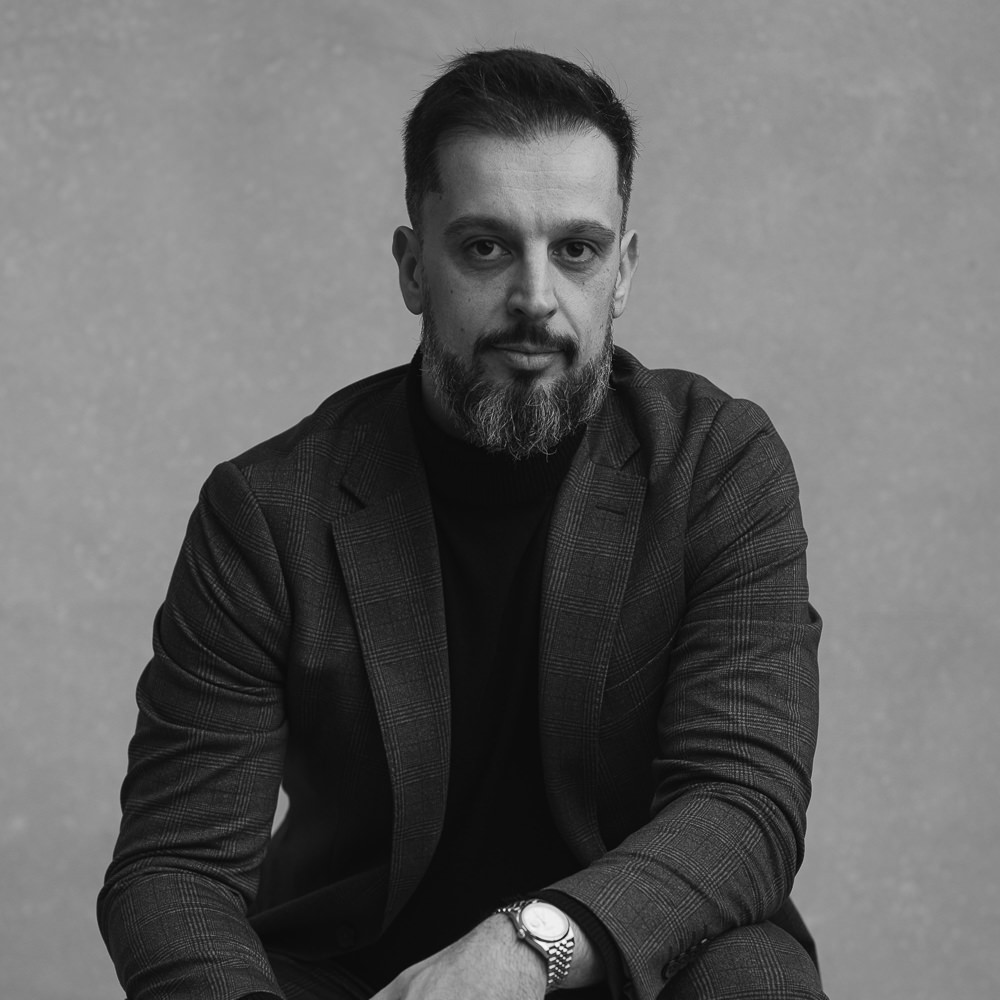
Rui Fernandes PodcastingThe WAC Podcast
summary
Episode 21 opens with a question that sounds simple until you really sit with it: what if things go well? It's Rui Fernandes asking himself out loud, exploring the particular anxieties that emerge when you're building something and success starts to feel like a real possibility.
There's a certain psychology to this. Many people are comfortable with struggle—they know how to navigate scarcity, how to push through difficulty, how to tell stories about their journey that involve hardship and perseverance. But what happens when the struggle begins to ease? When the thing you've been working toward starts to materialize? For some, this transition triggers unexpected anxiety.
Rui's exploration of this theme touches on something genuinely insightful about the stories we tell ourselves. If your identity is built around "the person who is fighting to make it," what happens to that identity when you actually make it? This isn't sophistry—it's a real psychological transition that many creators and entrepreneurs encounter and rarely discuss openly.
Throughout the episode, there's a thread about permission and entitlement. Rui seems to be asking himself whether he's allowed to want success, whether he's allowed to enjoy the fruits of his labor without guilt, whether aspiring to something more is somehow fundamentally at odds with gratitude for what he already has. The episode articulates, with surprising candor, how achievement can coexist with imposter syndrome, how progress can trigger self-doubt rather than confidence.
What emerges is a portrait of someone actively working to reframe his relationship with success. Not dismissing achievement or returning to self-sabotage, but rather genuinely interrogating what it means to move from struggle into stability. There's vulnerability in this conversation—a willingness to admit that success brings its own challenges, its own unexpected emotional territory.
The episode also touches on the question of what you do with expanded capacity. When life gets easier, you have more space. More time. More energy. What do you do with it? Do you fill it with new projects, climbing toward the next goal? Do you rest? Do you redirect toward things that matter to you? The way you answer this question reveals something fundamental about your values.
For creative professionals, this episode resonates because so much of the narrative around building a business involves scarcity, struggle, and hustle. The idea that success might trigger its own form of discomfort—that you might need to actively work through psychological resistance to actually claim what you've earned—is rarely discussed. Rui's willingness to name this, to sit with the question of "what if things go well," creates space for listeners to examine their own relationship with success and growth.
There's something deeply generous about this episode. By being honest about his own uncertainties, Rui gives listeners permission to feel uncertain too. To not automatically assume that reaching milestones will feel the way you thought they would. To recognize that psychological growth might be required alongside professional growth.
key quotes
"And that's it, I've been in this wedding life for about 12 years and today we're all here together, yay!"
"Speaking in Portuguese, I also thought this was important, because it exists in other languages, in English, and also in Brazilian."
"Or the person said this and I let it pass because I was reading or looking at the next question."
"That sometimes I like to hear, and I'm afraid to talk more, but I also feel I can have important tips to give to brides, and eventually to some suppliers, for the work of each other, because here I will be valuing the florist, for example."
"Just to make a parenthesis to that, I also think it's necessary, I think the whole industry needed to get to know the world."
"When we are just sending messages because we want it to come out of our heads, from then on, no."
"We are all on our own path, there are those who are ahead, there are those who are ahead, there are things to learn from everyone."
"In the same way that you are not going to hire a doctor who does not have the training and specialization, nor a lawyer who does not belong to the order, because he cannot exercise if he does not belong to the order, a psychiatrist or whatever, they should also not hire a matchmaker who has absolutely no validation, or any experience, or any real contact with what is the wedding industry."
transcript + show
episode: 21 title: "Ep. 21 - "E se correr bem?", com Rui Fernandes" pub_date: "Mon, 19 Aug 2024 05:00:00 +0000" original_language: english source_audio: "18e9f863.mp3"
Hello, welcome. I'm Rui and this is the The Wack Podcast. Before we move on to the episode, I would like to ask you for a little help. Now that we have completed 4 months of podcasting, I have thought a lot about the future of the project and what else I can do for the community. I have some ideas, but I would like to know your opinion. For that, I put online a small questionnaire that will occupy you about 3 minutes, but it will help me immensely. So, I ask you to go to thewack.pt, t-h-e-w-a-c.pt, and fill out the form. The community and I thank you. And now, let's move on to the episode. Hello, everyone. Welcome to the Wack Podcast. And today, as it has been recurring in the last episodes, we will have a slightly different episode. And today it's different as we're going around. I have with me, in front of me, Susana Esteves Pinto, who I already interviewed in episode 10. But, a few weeks ago, she suggested something funny, that we should do this again. So, today, I'm here as an interviewee, and Susana is going to ask me some questions. And it's very particular, because I don't do it with the idea of my own mouth. So, it has to be funny. Right, Susana? Welcome once again. Hello, Rui. Thank you. And it's, I'd say, a huge luxury to be here twice. I'm very honored by that. I hope I'm up to the expectation and the opportunity. And yes, I thought it was funny that we, all of us, who talked to you and who listened, get to know you in the same way that you got to know us. And understand a little better, when you look, what's going on in your head, what worries you, what interests you. Inside this very exquisite hat, which is the Wack. So, it's not so much about an instant career, but it's more about you, Rui, and this crazy idea, and very extraordinary. I think. I think you defined it quite well, the crazy part, the extraordinary part, which is also out of the ordinary. Now, if it's really going to be something... I've said this several times, and the feeling I have is constant. I think I started something... I think I opened a little Pandora's box. And I'm really in that situation, where there's so much potential, so much extraordinary and truly aggregating that can be done, that then I start to think, what now? But at the same time, that, as you said, worries me, but excites me, as I haven't felt like that for a long time. So, it's a mixture of chills in the stomach and a lot of enthusiasm. It's been funny, at the minute. Good. Not on purpose, because that's exactly why I start my first question. I'm interested, maybe because I'm already at this age, in the last, maybe four or five years, I've been thinking a lot about the future. And I think it's something we don't think about much, because we're so independent in this career, because it started in such an accidental way, because we've run so well most of the time, because we're at the beginning of adulthood, I think we don't have much of a future idea in front of us. I think it's a very relevant concept, and it deserves it. Because if you think about the future, maybe you better organize your present, in this world of the profession. So, my first question, Rui, is, do you think about the future? Look, I think a lot about the future. That's the quick and simple answer. I really think a lot about the future, and sometimes I feel... I won't say trapped, but sometimes I find it difficult to stay exactly here, now. And if you take it to the personal side, it's a brutal thing, because I think a lot in three years, in five years, in ten years, and when I do it in a professional perspective, whether it's photography, whether it's instant, whether it's WACK, it's always an exciting thing. But at the same time, when I bring this to the other side, which is, in ten years, my daughter will be 21, the oldest, the middle one will be 18, the youngest will be almost 12, and this scares me. It scares me deeply, because if all this enthusiasm for the things that still come is something that feeds me a lot, at the same time, seeing that time goes by, and not knowing how to enjoy the next day, it's something that scares me a lot. But apart from that, I think it's really this question of... I think you phrased the question very well. Because when you think about the future, you align your present better. And WACK, in part, came about because of that. And I was, a few months ago, a year ago, looking forward and I didn't see anything interesting in my profession, so much so that I've said it a few times, that I was a step, a step and a half, no, a foot and a half away from weddings. Because I didn't see anything interesting and I thought I needed to look outside to get that interest. And WACK showed me the complete opposite. It showed me that this is my place, this is what I like to do, this is where I like to be. And at the same time, when I think about the future of WACK, I feel this... once again, the dichotomy of... with what I'm starting today, with the seeds that I'm planting today, or sowing today, going through the redundancy, I know, I believe, I have a huge conviction that in the future, in a year, in two, in three, in five, spectacular things may be happening. But at the same time, I need to remember and say, OK, I have to take advantage of these conversations I'm having now. This is small and almost irrelevant now, but there is an enthusiasm that happens and there is a pleasure that I get in these conversations, that's why I started today. And... I think, in short, it's a bit like that, I think a lot about the future, I plan the future a lot and, in recent years, I forgot about, first, living the present, the middle ground between the two, which is knowing what to do next, both in practical things and in things... OK, I want to be there in some time, but the first thing I have to do is take the first step. It's one of those simple analogies, if I want to go on vacation to Algarve, the first thing I have to do is leave home. And sometimes I had this difficulty, I was already planning where I would park when I get there, but I forgot that I had to leave home first. And that has been the exercise that I have done. What do you see in that future? You already said some things, but with a little more clarity. And... What are you afraid of? Specifically in the WAC? Yes, I think it's... Yes, I would say that within the WAC, because I think it's more interesting to direct our conversation a little bit towards the WAC. Yes. But also, always from your professional point of view, of what you do as a professional, whether it's managing podcasts and creating podcasts, or taking photos, but within what is the professional noise. I think my fear is as simple and generic and broad as everyone else's. It's not being enough, it's not being capable. This is one of those struggles that I think we all live, in a simpler way, or less so. And recently I saw some clips from an interview with Jim Carrey, in which he... There was a context, where he spoke, he had launched the possibility of reforming himself, and some in the interview said, and now I'm going to say something that you probably will never hear any celebrity say again, which is, I am enough, I've done enough, I have enough. And... And in this perspective, the question of... Because we all think it's always necessary to do something more. In their case, it's necessary to make another movie, another album. And we feel this a lot. It's always necessary to do something more. I think that's great, and we have to have this enthusiasm. But, at the same time, to realize if you are enough, or if you are complete as you are. And that's my big fear. In the act, specifically, in life as well, but in the act specifically, which is what I said earlier, I really feel that creating... that... Creating is a word that I think is perhaps not correct. And I think I gave... I gave a space, I created a space where people can meet, where people can share a little bit of themselves, and where other people can receive this sharing. And I thought, as I've said several times, I had the feeling that people would like it, and it would be something super interesting, but I didn't think it would be that. It costs 5 against the word. Exactly. Exactly. I didn't think it would be something... And even in terms of numbers, it's much more than that, but it's not that big, but it's all right. It's a niche thing, it's a small thing. Having 100 or 150 subscribers on the podcast right now, for me, is something that I can't manage. If all the people who subscribed were in a room together, it would be a wedding. Yes, a big one. And for me, it's a strange thing to think about. It's a strange thing to think about. But... My big issue is a fear, which is that I like to gather people, I like to receive people at home, I like to book dinners, lunches, but suddenly, when you create something like this, which for me, as I've said several times, is that I need to talk to people, I need to get together with people, I need to get to know you better, those I don't know, I need to re-establish relations with those I've met. But suddenly, the project itself, the space, is being more. And a lot of people say, keep going, do it, cool, let's move forward. And then that question, but what is moving forward? What is moving forward for me? And moving forward in this phase can be anything. Literally, it can be anything I wanted or not. I mean, it's so big, if you go to a parking lot, you don't know where to park. If you have two places, you park here or there, and sometimes it's a bit like that. And my inner struggle has been what is the next step, what is the path? And speaking of the future, what can this be, from the perspective of what I think is important? Because, sorry, there are things that could be important, but have already been done. Do this wedding portal, that doesn't have, already exist, and I don't see myself doing that, it's not something that interests me much. But the idea is really ok, I want, in its main objective, I want this to be what? I want this to be a platform where the guys get together to discuss difficulties, solutions to problems, and where people simply don't feel alone, that's the point. And I know that many of my pains are very common to others who work like me. And that's the main objective. Of course, that's it, they're ours. Now, how do you achieve that? I don't know. I'm learning, I'm studying, I'm listening to opinions, and I have some ideas of my own, I think there are simple things, like adventures, small events, small meetings, small conferences, big conferences, small online trainings, things of the most varied that already exist in almost everything, and maybe make them become more focused on what we do. Do you feel that this holds you? Let me give you context. Do you feel that by creating this thing that is being, which is not a small thing, and probably has everything to be a big thing, at some point do you feel trapped? Do you feel that if you need to turn off the switch, you can't, you can't make decisions alone, you don't have the total freedom to understand, look, guys, this is mine, the command is mine, it goes where I want, how I want, etc. Do you feel that your audience, because I often felt this tension in Simplesmente Branco, which was that my client, not all of them, obviously, but there were some friction points where people wanted to command my thing. It wasn't just having a lot of opinion, it was almost as if being part of it allocated the power of decision and command to the others, when the others are just consumers, they don't have a will. They can get involved, they can say things, but do you feel this tension already? If you don't feel it, do you think you can feel it? I don't feel it right now, because it's very small. It's a little thing, as you're saying, and it has the potential to be a big thing. I think you can say it's a thing. Yes, ok, it's a thing. Yes, it's true. I don't feel trapped at all. I feel responsibility. Because when a little thing happens, there's a responsibility. I know that if tomorrow I said I'm full of this, it's tiring, I'm spending too much money, I'm wasting time, I would close, I would literally close the door and say guys, see you soon. And I wouldn't lose anything, because in reality it was just one thing that made it happen. I think the audience agrees. I believe, I don't know if at this point we'll be airing the episode, I don't know if it will still be online, but for those who are watching at this point, try it out and go to thewac.pt because I have a questionnaire there where literally everyone can fill it out. It's a series of questions, some closed, some open, but very interesting for me to know exactly and to shape this question of the future. But, I know people have been very kind to me and the different views people have have been very interesting. There are no extreme versions, there are no versions that are completely different from what people think this could be. There are always simple questions, like for example someone who shared in that questionnaire that he thinks the episodes are slightly long. And I can understand why, because we've already had episodes of an hour and a half, an hour and twenty. On the other hand, I thought I was going to make episodes of two hours and two hours and such, although there is one that was already the first of August, episode 19, which has two hours. At the time of this episode it will already have two weeks. And when I finished that episode of recording I said, wow, spectacular, we have to do more of these. So, it's obvious that there are different opinions and even in other things there are those who suggest more concrete themes, things like managing workflows, managing clients, very concrete things. As there are those who say that they just want to hear a beautiful story, even if it's about an old man that has nothing to do with marriage. Naturally, I agree with both. And my big doubt is how do I, because I'm interested in both and it's not just to satisfy, I'm happy that people think the same as me, in this sense, but I think how can I condition everything? Because, we have practical themes, concrete themes of my life. What pays my life is instant, it's the wedding photo. The act takes me at least, the day of recording or the afternoon of recording, or tomorrow, it always takes me 3 or 4 hours and then the editing, the extraction of clips, the publication and the scheduling with people, it takes me easily for each episode, it can take me 2 or 3 days. This is not something that I do with difficulty, that I do with cost. I like to do it, but it takes me time and I don't like it at all. So, naturally, my thought here is the podcast must always be a free thing, but I start to think, what can I create of value that makes people want to pay for something that will help me to maintain the project itself, make it grow and, more than anything, create value. In these things, these questionnaires are very interesting because we go back to the beginning of what is the future and what is the purpose of this, and one of the... I have, in a philosophical ideological way, if you want, I have one or two objectives. One of them is that simple one of elevating the industry, that all of us can be... that we can see ourselves better and bigger and that all of us start to look around and realize that we are all better. That's one. Very difficult, obviously, but that's the main thing that created this, in part. And then, there's the other one of how do I help? Because there's a very interesting thing, which is that you always have some generations and others, be they the oldest or the youngest, they always have a hard time finding a common ground. And the objective is something that we, a bit older or, at least, here there's more time they start... There's always a comment like now they come and do that, or this script works, here I am. Those things that so many times we say or hear and then, I believe, when you're on the other side of who's starting and they think, but no one taught me, no one guided me, no one told me what has already happened. That is, you have that connection, and another thing that is who arrives brings things. Naturally, a lot of them can be clumsy, obviously, but it's all right, that's how things move and learn. There are people who really need to hit their head and need to fail, really, and hit their head to understand. But if we make the connection between generations, we can bring all the enthusiasm and the good things and the interesting things that the most recent generation brings and they can also be guided in a more conscious way by the older ones. And all of this is extremely difficult to do. And what I think a lot is do I have the arcaboy? Do I have the ability to do it? Will you succeed? Maybe yes, maybe not. Maybe yes, maybe not. But there are a number of things that I... I really like quotes, I really like to listen to people who have already done things and there is a sentence in an interview, in Mark Zuckerberg's speech, it's not entirely that I like the person, but what he said was quite right, in one of those speeches that Americans do at the end of the graduation of universities, and he says something like, you don't know what's going to happen, you don't know how to do it, but let me tell you a secret, nobody knows, because when you have an idea, you do it and you will learn along the way, and that's a bit what I feel about this, I don't know how it's going to be, I don't know what it's going to be, I don't know what the problems are, what the challenges are, but it's good to be here and at this moment I have a very big stake to do something special, at the same time I need to grab, I don't like to say the idea of putting your feet on the ground, because a person needs to fly, and to fly you have to open your wings right away, but I like the idea of okay, let's take it easy, take a step at a time, let's do a few little things at a time, to get, going back to the beginning, this issue of, I want to create small training, small mentorships, in which I can answer the guy who is starting out, like, how do I configure a CRM? What is a CRM for, right? Simple things, but at the same time, talk to another guy who feels alone, to work alone. These are things that are sometimes very different, but I need time, I need availability, I need a team, I need people, I need this community, because I don't want to do this alone, that's one of the most important things of all. I ask this because it seems on purpose, it seems that we are rehearsing, and that I didn't think about these questions, in the 10 minutes I asked to take a deep breath and deal with this subject. Define community. What is community for you? Again, always in this bubble of ours, what is community for you? I'll start with the simple part and then the less simple part. Community is as simple as having things in common, and you can get that community for anything. For me, essentially, this is it, in terms of definition, but it is much more, obviously. In this context, what is community? I have always felt a community of photographers, this has been said many times, and by the most varied people, everyone felt it, everyone who is a photographer, everyone who is not a photographer, I clearly include videographers, everyone felt this, in relation to photographers and videographers, but they never feel it in relation to the rest. And for me, the logic of community is not... I stopped going to conferences and events of that kind. Now I'm back, fortunately, and I think it's cool, for other reasons, but I stopped going 5 or 6 years ago, because the only thing I would go there to hear was the guy saying what camera he used, what lens it was, what the EFs were like, those things that don't interest anyone. Well, it interests you for a year or two of your career as a photographer, and then it stops interesting you. Or, what inspires me is music. These things are interesting and curious and weird to an extent, but they are useless, because if there is someone who is inspired, like, for example, Sofia, who can get inspiration from anywhere, from her day, she can get that inspiration, I can't. Also because what we do is different. As a photographer, I capture things, and I like that part, Sofia creates things. For example, Alexandra from Pajarita, Ana from Cake Shop, these are people who create things, but I don't create things in general. I always need someone who will do a certain thing that I then capture. So, listening to the inspiration of others is cool, but it doesn't add much from a certain moment. And what did I miss there? It was those things that, for me, started to be important. In a first phase, business, all those questions, and then in the other phase, how is it to work, and work as a couple, and have children, how do you manage your life, and then, there it is, as you said earlier, the question of growing up, you start to think, and now, I'm turning 40, I mean, at the time of the episode I was already 40, everything went well, right? From the beginning, you expect that, and you start to think like this, I'm really, in fact, half of my life in terms of expectation, of average life expectancy, that's why. And now, these things are what I always missed. And for me, the logic of community is, although you have a great umbrella of the community of the marriage sector, that we have a lot in common, but then there are also small micro-communities, which I think are still super important. There are always many ways to compare this, and one of them I like, which is an orchestra, right? You have an orchestra, it will have to work as a whole. But, naturally, the violinists group will have particularities that the percussion group does not have, and vice versa. And I think it's important to see that union within the small groups. I think it happens exactly the same, and so many conversations we have, photographers constantly talking about why to photograph wedding tables, it's a recurring example, but we're always talking about the same thing, but why, when perhaps there was a more constant conversation with catering, you could understand the proximity of photography and video, if we talked more often, we would be able to better understand the space and the wedding planners, when there is a space coordinator and there is a wedding planner, so many things that we have to work together, that take years and years to be resolved, because a person does not talk, that perhaps if they talked, it was much faster to solve, and we go back to that beginning, which is to raise the issue of the industry, of the sector, if we sit down to solve the problems, with the desire to listen, with the desire to solve them, and not just to find us all artists, which is funny, because the name of the podcast is Wedding Artists, but if we don't have this... this mania that we are artists, in the bad sense of the word, and if we think we are more... that we are doing a service, that we are a team doing a service for a certain couple, things could be easier, and they could start happening in a faster way. And my intention is to do that. My intention is to do that, right? But you were talking about the issue of the definition of community, I think it's a bit... that definition for me is to find the common points, and I even say it in another way, you always have very different people, Alça and I are very different, we've been dating for 18 years, we've been married for 10, photography existed for us from the first moment, in the same way, none of us had a different background, we started in photography when we were dating, and we bought a camera, and we never had any kind of past with photography, and we are very different, so naturally the difference will always be part of it. But many times I see people, in general, including myself, talking about their differences, instead of finding their similarities. Because the differences will be there, it's part of it, it's what makes us special. But if we focus on creating a community through the things that unite us, building bridges instead of destroying them, or instead of building walls, I think we really have a chance to go further, and naturally it won't be for everyone, it's not for everyone, and it's ok, everyone does their own way, but I think there's really a lack of a place where people can say, ok, like a concert, you're not going to see the match, I mean, you can see it, but it's not very common to see in the same place, an orchestra that sees Metallica, people will gather those who make sense for each one, and it's all right, it has nothing to do with values, but you know that there, at the match, you will have this type of audience, and if you say, this is my audience, go ahead, let's go. And it's a little bit what I'm navigating, and for me it's the sense of community that I try to find in this guy who thinks in this perspective of building bridges and not walls. For me, community is essentially, the shortest explanation or denomination, it's a space of pairs, of similar minds, and taking that analogy you made about music, there are few things that compare to the experience, of course there are, but suddenly, as an illustration, the experience of you being in a concert, of an artist that you like a lot, the whole audience being like you, with an artist that you like a lot, and having the artist completely committed to his audience, because he himself is part of the process. And I can say that, for me, who does this in Topo de Gabi, if you've never had the opportunity to go through that, a concert by Nick Cave, is an experience, even if it's a movie in the cinema, a recording of a concert, I think it's a Copenhagen concert, it's still a lot, it's not the same thing, but still, you can perceive this absolute connection that there is between him and the audience, between him, his band, and the audience. And that, for me, is the ultimate expression of community, it's everyone, regardless of their differences, as you said, everyone is there for one single thing, and that thing circulates between each other in a completely free way, and it's the same. And without action, watching it, it's an experience, it's an absolute connection, it's a very interesting experience. Yes, and that's it, I liked the definition you gave, the question of the pairs, because that's it, at no time, I don't want to feel, it's very easy, you end up having some recognition, I have nothing against that, obviously, but I don't want, at any time, I don't want to feel that I'm carrying what's coming, or that I'm carrying the standard. I just want to create a platform that allows, because I'm literally one of us, you've used this expression a lot, and I'm one of us, I don't want to be anything different, because I have my experience of this, of 14, 15 years working on this, I have my life experience, and I'm willing and happy to share it, but I want to hear from others, and I've heard so much, as I've shared several times, that this is the same question, let's sit down, and there's no one... I have another funny analogy, which is how I see this, I would like to create a locomotive, you have a convoy that is pulled by a locomotive, you can have countless carriages of people that only go to a certain place, those people are fine, they just get in there, they don't want to be drivers, because being a driver is hard work, there are people that like to go from Porto to Lisbon, and they like to go to the side, I don't, I get confused, I'd rather be driving a car, because I'd be bored to death in other places, and it's a bit like this, I want to create this community, whether it's 10, 20, 100, I think it can be this locomotive that will pull, the rest of the group will follow, spectacular, if you want to come, a locomotive that creates this situation, this experience, this feeling that I'm not alone, there are other people I can turn to, there are people I can share with, there are people I can sit with, and in a very common way, say, I have this problem, how do I solve it? And the people next to me will share, it's almost a kind of anonymous alcoholics for the wedding guys, you sit down, there's no one better than me, you sit down and say, we're all on the same path, how did you solve it? Go on, and let's talk. That's a bit what I see. This is me, I'm a bit confused. A little bit, I think it has its charm. What do you want to give? You've already touched on two or three things. No, but in a slightly more vague way, or maybe even the opposite, more practical, but, what do you want to give to the community? Because the one who drives the bus is the leader, we don't call them the bus driver because it's not, it's the leader, and there's no problem with that. There are people who like to go ahead, and there are people who like to be told what the path is. I'm part of the group of people who don't like to be told the path, because I'm very curious about a lot of things, and I'll always ask, so, I think you should call the right name to the right things, and there's value in that. You don't need a certain sense of humility, because it's not about that. You had an idea, you had the ambition and the ability to stand up, and you have a group of people who have more, who should thank someone for doing the work, and someone who has put that context, that scenario on the table, that everyone can enjoy. And you know what? That place is yours, you put your flag there, and we're fine like that. What do you want to give as the leader of the group, leader, bus driver, I'm the president of the board, I'm the president of the board, what do you want to give to the community? I don't know. I'll try not to be too philosophical about these things, because sometimes it's a bit... It can be like that, at a more abstract, imaginary level, or at a very concrete, small and trivial level, like, look, I want to do five trainings per year, or I want in five years, the most relevant market in Europe. Well, I'll go from the outside to the inside, from the abstract and philosophical part to the concrete part. The philosophical part, was what I said at the beginning, I want this to rise, and I want this to rise in various ways, because what I feel, and despite everything, I've been in the market for 14 years, because there's a lot more, and curiously, the first message, the first message of congratulations and of the kind, this is what you created, the first episode had only come out, which was me, for five minutes, telling what was going to happen. And the first message I received, was from José Raposo, who is a man, 30 and a half years old, I never asked him, but I think by the rhythm of his weddings, if I'm not mistaken, he's had many hundreds of weddings, so he's someone who's been through a lot, and some of the things he's been through weren't as easy as that. But what I mean by this is, my experience, made me meet people, made me go through some challenges, and what I think, which is a bit of a waste of time, is repeating the mistakes. I think it's great to make mistakes, but I think it's great to make mistakes when you try to do something new. And to make a mistake, to try to do the same thing that someone else did, seems a bit boring to me. In general, it seems boring to me. It doesn't mean that, it can be the same thing that someone else tried to do, but turn around and try to solve it. But the same mistake, I know that if I hit my head against the wall, it's going to hurt, I don't need to try, nothing against it, but I think that if we can learn from the mistakes of others, I think we can gain a lot from that. And what do I intend to give? I want people to have a place where they can drink information, where they can drink inspiration. This is a bit, I never thought of it that way, and I'm trying to align my ideas to give a more concise answer, as if you joined, I don't know, a psychiatry cabinet, a bar, and a laboratory, all together, where at one moment you can be doing a creative experience, but on the other side you're talking to someone because something very difficult happens in your life, or the next day you're just drinking a glass. It's a bit that sense of we're here, we're all together, and we're in this sense of we're all in the same boat, we're all in the same boat, keeping the analogy. But what I personally want to give, I think it's literally to open doors. Because, speaking of more concrete things, I don't see myself giving you a photography workshop. I don't see myself, because if it's in the community, what do I see myself doing? Sir André, I'm going to do a photography workshop, do you want to come? Okay. It doesn't mean I don't have to share, I have my experience, I have my quality, I have the talent I have, I have the work I have, and I believe that a lot of people will see a lot of value there. But it's not what I see myself doing, because I see myself opening doors so that it's a big thing, in the same way that if I go to training, I call Ana to do a cake design training. In practical terms, I see myself giving this, opening doors, creating the platform, and opening the doors, and giving the ideas, and planting seeds, which is something that amuses me a lot, it's starting things. I love starting, and I get bored to death from a certain point, I'm always the same. In these 14 years, the number of projects that Elsa and I started in the low season is stagnant, because none of them gave anything, because they were not to be given, they were not things that had to happen, that if they had, they would have happened. But I really like to start, I really like to renew, and I think that's my principle, to start, that's why I also start to think about a question of being able to bring together a team of people that help me at that point, because I'm not operational, I'm literally the person that... There's an author that I know, that I like a lot, that is Donald Miller, who defines a CEO, or a company, as needing three people, the artist, who is the person who creates the ideas, the person, the operational, who is the one who puts them into practice, The entrepreneur is the one who turns one into money. Because only with these three is a company working. If you have an artist and an operational, how do you make money? If you only have an entrepreneur and an operational, you will have a boring product. If you only have the artist and the entrepreneur, no one does things. That is, when you have these three, things happen in a way. And I'm somewhere between the artist and the entrepreneur. I like to have ideas, I like to make them profitable, but I'm bored to death in the matter of operationality, having to do the same thing over and over again. That's what I see myself. To sum up a little more, to see if this is more concise. First of all, I imagine creating a team that allows me to do this project, to make it what I think it can and should be. Because I'm not going anywhere alone, and with a bad team I can't do it either. So, in the next step, I think that's exactly what I see. To create a truly special team that helps me, that does this project and where it can go. That's basically it. But let me ask you something. No, but let me just ask this question here. You in Simplesmente Branco, although the objective and the project were completely different, one of the things, we talked about this in your episode, one of the things that created the most success in it, was really a sense of community. As you said at the time, it was neither thought nor ignored. It was simply something that happened organically. The thing is... I know it's too early, but that was 10 years. How do you define that? What do you think, in your view, what happened? What was that sense of community during those 10 years when it was yours and you were part of it? How was it? Look, I think that the sense of community was due, more than anything, to the timing. The timing was everything. It was the right moment. It was the right idea at the right time. And that, both in the digital context, and in what was happening outside, and that we began to access, to see, to desire and to ambition, essentially, it was timing. Then, it was generational. That is, it wasn't just the moment of time, but it was also people's age, the ease with which people had the availability and the interest to get to know each other, we also talked about this, there was an interest in getting to know other people, there was, in fact, an interest in that, there were no addictions about it, there were no prejudices, perceptions, there was none of that, because we were all arriving at the same place, at the same time. And, therefore, everything that was pernicious or that could be attributed to this generation, to this generation of a community, didn't exist. Therefore, in many ways, there was a set of conditions, like a perfect weather. Then, there was the fact of being niche, and of having a healing, and also, in a more or less organic way, being a tribe. And that tribe believed in the same things, it was interested in the same things, it wanted to do the same things, and it was... I think we were all like sponges, and we just needed a little bit of water, and all of this was that water, so that everyone could be what they wanted to be. Your ten-year lifespan also explains that communities also die, and that interests change, and that people change and I felt that shift a lot, which was one of the reasons that made me say I'm saturated with this, I'm fed up with people. Literally, the main reason was, first of all, I'm fed up with people, I'm fed up with these relationships with these people, and then, as little as you, this doesn't bring me anything new. There's no freshness, my work is done, I don't feel like it on Mondays, and I'm not excited about it after the holidays. So, I really need to find something else to do. I felt that, at the beginning, everything was new, and there was almost a youthful energy, because everything was new. It always makes me think of that movie, Call Me By Your Name, you know? No? It's a movie that... it's the story of a guy who falls in love with an older guy, on a vacation in Italy, and you always feel in the movie this youthful tension on his side, a total attraction to the unknown, and the disarray in front of this unknown, that you're a bit afraid of, but at the same time you exert a power of attraction over yourself, and this tension of, I don't know anything about this, I want to know everything about this. So, the beginning was very much around that, this youthful energy of, this is new. We were all in our late twenties, early thirties, so we had nothing youthful, but the vibe of this was youthful. And then it stopped being, and started being... I'm going to use a less appropriate word, but it started being pretty stupid. And that stopped interesting me. It was as soon as a certain guy grew up a bit, he grew up in quality, in ability to execute, in knowing how to do, I don't mean maturity, but in knowing how to execute his task in a more substantial way, invariably, he became a very unpleasant person, with an ego climbing over everything, with conversations that were full of a certain unjustified arrogance, and so on, and that makes communities break up, because people's personalities change. And then, again, if in the beginning the timing was perfect, in the last third, the timing and the context became profoundly challenging, which had a lot to do with digital changes, the work as it was stopped being as it was, and it had to be something else. And there were people who adapted very well to that other thing, that way of being, of communicating the places where I should be, where I didn't need to be, the way it was cool to interact with others, or it stopped being necessary to interact with others, because I don't need you anymore to do what I want, so I'm not interested in you anymore. I'm probably bringing less food. And when you bring less food, well, you don't care too much either. It becomes uninteresting, boring, this is not what I want. And so I think there's always this risk of communities, which has to do with there's a timing, which is clearly the right timing, and you're feeling that with absolute certainty. It's a big component, you put that out there at a time when people are, again, sponged up. And so, this is the rain. But this is something that is very elastic. There are times when... And then there's this very strange thing, which is, there's a moment when things change and you can't put your finger on the wound and understand what happened, even to be able to decide, let's go there. No, there's a moment when there's a shift, but you don't see it. This, from my experience of this wonderful decade and full of strange things. Yes, but I... Yes, but I feel exactly that. I think it's those things... I felt that in the matter of photography. I can now go back to 2017, 2018, to some things that were taking away my interest, taking away my enthusiasm. Now, I look back, I analyze and I realize, ok, this could have had a big role and that. But at the time, it didn't. At the time, you don't realize. There are literally things that you only realize a few years later, a few times later. And there it is. Things have to happen. I really believe this. Things happen when they have to happen and the right moment will make them happen. I think it's a bit what you said about the white moment in 2010 and 2011. That's exactly what I felt. Still in a seed format, that's what I feel now about this. I think there's this will. Everyone tells me, in that questionnaire, there were 4 or 5 things that said we're thinking about doing all this, but what are the priorities? And invariably, 80% of people have already answered, they say face-to-face meetings. Or small face-to-face meetings. Why? Because that's what we need. I think the big conferences have a huge place. I always remember a phrase I think it was the call of the Nordics who organized the Way Up North where he said, change happens in numbers. And it's true. Change happens in numbers. The big things, the quantity, is what makes the change happen. But what people need at this moment, before anything else big, is small things. It's sitting in a room with 20 or 30 people and talking. And everyone, or almost everyone, answered that. I think that's really the point. We need proximity, humanity, relationship. Because we're all, I'm clearly tired of quick relationships, fast food relationships, I'm not from Twitter or TikTok, but I'm tired of Instagram and fast food relationships. And you can only have a relationship of fine dining when you sit at the table for 3 hours. So I think that's the shift you're talking about. And I think that shift is happening. Or maybe people are realizing that that's what they were missing. And that's the exciting part. What do you want the community to ask? You've already said a few things. You can ask. You can ask. And you're going to ask for whatever you want? Yes, of course. Yes. Yes. I'm sure you want things. Even if it's a challenge. Yes, I want things. But yes, I'm going to start with a very simple one. I want that I want that I want that they respect me. I'm not just talking about the obvious part, of respecting other human beings. I want that they respect me in the sense that I'm always going to give the best I can and that I know. And naturally, I'm not going to give what everyone needs. This is not going to be what everyone needs. Obviously. But I don't want anyone to come and think that it's always like this, or it's only like this, or it's only for this, or it's only for that. I'd really like that, in general, people always knew and could because that's the point at which I do literally everything. I'm doing the best that I know and that I can. And that, regardless of the degree, people realize, even if they don't like something, or even if they don't agree with something, that this can happen. Because right now it's just a podcast and people don't like an episode, it's all right, if they don't like the person, or if they don't like the conversation, they turn it off and move on. There's nothing like that. But thinking about everything that can happen in the future, there are two things that I fight for right now. Will this be more open or more exclusive? There are advantages on both sides, there are challenges on both sides. Will this be for everyone, or just for some? Will this be more this or more that? I fight for all of this. Especially in such a young phase of things. But what I'd like for the community to give me, for people to listen to me, for people to interact with me in some way, is for them to realize that even if I fail, and I'm going to fail, I'm doing everything with a very positive intention. What I want to do is the goal of helping someone, myself included, so that we can all move forward. This, in a very general way, is the only thing that I want and that I ask for. And then the rest is up to you. I'm not going to... I'm not going to... I don't have any goal of making schemes, of... Just trust that my intention is better, because it will be. When I... You said a bit about the weekends and the afternoons. When I get to the end of my day, I've been working on this for a long time, and editing, and programming, and scheduling, and all those things, and soon I'll have to make websites, and all those things. But, when I get to the end of my day, and it's still fire, it's over. Now I have to get the kids, I have to do the rest of my life, and sometimes I feel like getting up at 5 in the morning to come and do it, or sometimes I feel like dropping the kids and coming downstairs to do it. This is the point I'm at now. And... I only do this because the intention is still good, and the goal is still very positive. When it ceases to be, it's the end of my life. Talking now about more concrete things, if I can, with this, create enough value to create wealth for people, and at the same time I have another source of income, spectacular. Let's demystify the question of money. I work and I want to make money. Exactly. It's like this. I'm going to do weddings that I really like, but if they don't pay me, I'm not going. That's why I'm making a time investment, I'm spending a lot of money on technical issues and softwares and learning and all that, and I hope with some brevity, to be able to have some of that investment again. But right now I'm still in a phase that is secondary. I'm going to keep investing, I'm going to keep putting money in, I'm going to keep buying things, until I feel that I really need to go get it. I think it's a goal, and I think one is linked to the other. From the moment that people feel and trust that what I'm doing is for the purpose of creating value, whoever sees that value will pay the price of what I'm suggesting, or of what is part of it, it's normal. These are the two, the most abstract part is that. Trust, respect the feeling that I'm going to do the best I can, and then, if I really manage to create value for those who are starting, or for those who are alone, or for those who need help at some point, and think that what I suggested, the training, the courses, the mentorships, the email, showing up, if it makes sense, I think it's positive. And I think essentially it's those two things. My last question. I'm going to buy a Rolls Royce, I also want that part. It's hard for me to keep it. Look, my last question comes from the Sportinguista manual, which is Is everything going well? Totally. Are you a Sportinguista? Of course. I didn't know. It's not a relevant topic. And what about Rubén Amorim's quote? I've been interested in it for a long time. Really? I think it's a great question. Everyone asks if it went wrong. So I think if the question was if everything went well, it was. If everything went well. If everything went well, I'm going to be a very happy individual. I can say that because I'm really going to be a very happy individual. And this... Once again I'm going to my esoterias or esoterias, I don't know how to pronounce it. I don't know if you know what the Enneagram is, if you've heard of it. The Enneagram, for those who haven't heard of it, is a tool to, in a way, divide the world population, personalities, into nine types of personalities. And I appreciate the importance it gave to this, but there's one thing that I did a test and it was very interesting for me. And it gave me a type 2, which is the helper. And I wasn't expecting it, because I thought it was going to give me entrepreneur, creative, psychopath, something like that. With more flesh. But it was something I thought it was. I thought it was an extremely entrepreneur, creative, and all those things. And that gave me helper. And I didn't like it. I was surprised by that. And I started to analyze, I started to think. And really, the moment, or the moments that I realize the most, as far as I remember, is when, in some way, whatever it is, I feel like I'm helping someone. The simplest things, like cooking for someone, or pulling a chair, or carrying a table. The simplest things. And I feel like I'm helping someone. I feel like I'm being liberated in my brain when something was well done, when someone helped someone. I really feel that. And two or three years ago, I was in a publishing house with a couple of videographers, that I love. But they were still relatively young. At the time, more so. But both in their profession and age. And that was in a publishing house. It was two days. We had to stay in a space. And, as is obvious, at dinner, there is a conversation until 1 or 2 in the morning. You have a few drinks and people call, connect, talk, give each other. And in that conversation, I was talking to a girl, and, to be very honest, I don't remember the time, but I know that she and they were not getting married, but they were both going through some emotional difficulties at the same time. And, based on my little experience, I said what I had to say. And I felt... I felt good. I hope I helped. And it wasn't anything substantial. It was just a reinforcement. You are enough. You are amazing. You are spectacular in all the ways I know you. What is your doubt? Everything is fine. You are a whole person. Complete. And, in that specific case, you are an extraordinary person. Everything was normal, it was something similar to what you told me about the catafalque, about the work, about the dispossession, but here it was a simple, emotional question of life. Months later, months after that, she said to me, Rui, I thought a lot about the conversation we had and you have no idea how that helped me. You know when suddenly your heart is full and you say, man, this is what I like, this is what makes me happy. So, this story to tell, to say what it is, and if it goes well, if it goes well, it means that the two questions I asked, the two things I asked, were given to me. It means that I will have a group of people, I will have a team, I will have an extraordinary group of people, extraordinary, who will give a lot of themselves to the community, who will teach what they have to teach, who will share and learn what they have to learn together. And if that happens, it means that our sector, that our people, that our industry will work more and better, but will earn more, will have a greater ease of paying their bills, which is something that we sometimes forget, because many of them, you look at them, fortunately I never went through anything like it, I always earned enough, I always earned well above enough to keep my family well, but I have colleagues who work in Lisbon, and live in Lisbon, and live in Porto, and suddenly you can get a marriage for 2 or 3 or 4 thousand euros, but if you have 2,500 euros to pay in income or credit, your life is not that easy. And people also have no idea how many times you have colleagues in our sector who have to go to other jobs, leave this because they love it, because of all these issues, and not to mention literally the end of the career of the guy who works in catering, who literally has a day of 12, 13, 14, 15 hours working for 50 or 60 euros, which is absurd. In other words, if it goes well, it means that we will all be better, we will all be more complete in our lives, we will all make more money, we will all have a more peaceful life. And this issue, I think, clearly it was not planned an hour later, but by saying this, and if everything goes well, I think that, not only for me, but globally, there is a sentence, which was even the title of episode 16, with Sofia, Rocha and Silva, which she says, the title is the luxury of thinking in the long run. And I don't even have to ask you, you don't have to tell me about the future. And I think that, fortunately, I can think about the future, and most of my friends and close colleagues, we can think about the future because we were lucky, things went well, we worked, and we had income, and we made enough money to have a peaceful life, and we can think about the next 3 years. But that's it, not everyone has that luxury, and very well. And my question is, if everything goes well, what will happen? You will have a brutal amount, a much larger amount of people and colleagues and professionals who will have that luxury of thinking about the future. So, if everything goes well, what will happen? This will happen. It will be a sector of more complete people, more complete, happier, more fulfilled. We will be, as you said in one of the exams, we will be competing with Italy, France and Spain, because we have all the potential, we have all the talent, we have everything we need, we just need to get together and learn. And I will be calm, and I will have my Rolls Royce, and I will be thinking about buying a jet, and I will live in the Maldives. Something like that. I think if everything goes well, we'll be like this. I'm kidding, but this last part was clearly something I didn't do. I think just the idea of spending my life on the beach, every day, is a death's boredom. That is, I have the goal of going to the Maldives, I really want to go to the Maldives, spend a few holidays, 7, 10, 20 days in the madness. But then I have to go away and sit at the computer or talk to people, because that is really a death's boredom. In short, if everything goes well, I think we'll all be more complete, more whole. I think we'll all be happier. I would add, richer. Richer in knowledge. In every way. And especially at the level of... I think there are few places, opportunities, spaces, supports, collectives, for us to seek knowledge. And I'm not talking about the knowledge of formation, I'm talking about this human component of experience, of someone who has done things before you, who already knows more. Especially someone who knows more. And to be able to seek, to have a resource of a transversal knowledge, broader, less specific. Because specific is easy. This one, of the experience of each one, and the experience of each one, and the point of view of each one. For me, it's the most valuable thing. Especially because all the others, we can go to another place. Those places exist, and we know what they are. And that, for me, is the cherry. If you ask yourself, for me, it's the coolest thing about your project. For me, the cherry I see in your project is this opportunity to seek value and knowledge between people, from the experience of people. Between those who are available to give, to share, and those who are interested in absorbing, seeing and knowing. Because it's very easy to turn our backs and say, I don't want to know that. I get there through my means. And it's very easy to say, nobody wants to know anything. And if there's a space where that conversation doesn't enter, what does enter is the opening of the spirit to give and to receive. I'm with you. Fan number one. Partner number zero. Yes. That's it. That's it. Now you defined that very well. A place where those who want to learn and those who are available to teach can get together. That's it. And something so simple... And so complicated and complex. ...changes the world. Yes, yes, yes. Yes, yes, yes. Look, do you want to close? Yes. Since you and I are here... Yes, I've finished my five questions that I had here lined up. I think it was quite interesting. I hope you really felt it. That you said what you felt you needed to say. Yes. Yes, yes. Yes, you know... I hope you didn't feel uncomfortable or horrible. I'm going to click... No, no, no, no, no. Sorry, what I was going to say. Instead of loading in stop, we have this conversation. Then, without being recorded, we have the boss conversation, still in recording, which is always funny. What I was... I knew you had asked me about the future. That was obvious. We had already talked more or less about it. And you didn't have the slightest idea. And you didn't have the slightest idea that you were going to ask questions that were open. And what's interesting about these open questions is that they make you think. And the fact that you have to verbalize the answers forces you to organize your thinking. And what happens? It happens that I may have defined you, defined you by answering and having to force myself to think about them. I think I defined some things, organized, structured in my head things that maybe I hadn't structured yet. And now it will be much easier when I start to make a kind of business plan, but a future plan, a plan of operations and all that. This conversation, the obligation I had to organize and structure the answers, will greatly facilitate the process of saying, OK, now I'm going to write the project mission. Maybe now I know more than I knew an hour ago. And that part was very interesting. It was... It was funny. I have a dry mouth. I don't know if that's what happens to most people who talk to me for an hour, but I believe so. And then, I think that in everything, when you need to go to the other side to understand a little bit, to empathize, you have to go to the other side, you have to understand what people go through to achieve more easily. And it was interesting, it was interesting for me. This, man, I don't know if it's going to be very interesting for those who listen, but look, it is what it is, it's part of it. But I enjoyed sharing, you know? I enjoyed sharing because I'm going to have this conversation with the people I'm meeting in my day-to-day, week-to-week, that I have forced myself to be with more people more often, and it has been spectacular. But in essence, there are very few. So, for those and those who don't have the opportunity and have some curiosity to understand what my vision is about this, I think that, really, the episode may have... It may be a curiosity, it may be an interest, it may be something that... And I think that, as in everything, the filters are great. And I don't believe it's the case, but if someone hears and says, well, it's very beautiful, but it's not for me. It's all right. You know? Change the channel. I have nothing against anyone, I'm absolutely willing to listen and receive whoever wants to come. For those who don't want to, it's all right, there's no problem. But I hope that, more than going to the negative side, going to the positive side, if someone could be a little bit, OK, where is this going? Who can think, OK, I like the place. We're here to go together. And I hope that this has... That it has focused. I hope that that... The nonsense I've been saying all this time, that it has focused a little bit of what's going on in my head, and that it can be interesting for those who want to continue, for those who are here. But I liked it. It was funny. I think I'll keep doing this. Good, good. And this is one of those processes of finding the clarity of ideas and communication. Precisely that. This thing of, you said that, thinking and having to verbalize to put it out there, is a great engine and a great tool to give body to things. And I think that if people thought that this was just a chat, or if they thought that this was just a chat with the usual people, or if they thought that it was just a chat with the usual people, in this case, the friends we meet on the weekends at work on Sundays, I think it was more or less drawn in a space that, no, it is also, but it doesn't end there. It's about... It started like that. How is it natural? I think it was already... Yes, because it was... I think I already said this somewhere, but it started like that because I have a notion of my fragility as an interviewer. I know I have no way to do this. You're wrong. I like to learn, I like the idea, I like to talk, I like to learn. I like to talk, Susana, so, as I like to talk, I like to speak, I like to listen, naturally, this format works. But, I don't have... I hope and I think that I'm improving in that sense, but because of that, I started with my friends, with those people that I really missed talking to. And I started taking the next steps. I already have a series of people, when this episode came out, I already have a series of people behind me that I didn't know, at all, and I had some that I knew that I only knew virtually and that was to create that relationship. And now, I continue to take the next steps of someone, of Malta, I already have a series of lists of international people, things that no longer make sense who is my person, that can take this difficulty and this challenge for a whole new path. But that's part of my enthusiasm. As I said before, whenever I start to record, I have, a minute before, or an hour before, I start to have those butterflies in my stomach. Always. There hasn't been a single episode that I've recorded until now that hasn't happened. And I don't trust that when that stops happening, it will be when I start to have less interest. That's why, although it's uncomfortable, I like to have those butterflies, that nervousness, it's uncomfortable, but I've learned, or I've tried to learn, to enjoy it, and it's fun. That's what I say to my boyfriends, when they say that they are nervous in the morning. I say, enjoy that nervousness because tomorrow you will miss him. And that's what I'm trying to do. Enjoy this nervousness, this thing of, will this go well? Will I say something that should be silent? I don't know. It's an advantage of being recorded, I can cut later. But yes, I enjoyed it a lot. I enjoyed it a lot and you know that your opinion is always a... It's always... That's what I said these days in an email. Your opinions always make me think. Whether I agree with you or not, whether you disagree with me or not, they always make me think in some way. And I think that's a thing, that antagonistic thing that I think is very rich. Because if you just want to hear those people who tell you exactly what goes in your head, from there you don't evolve much. So, thank you for the suggestion, thank you for the time you took for this and I think... For the self-invite. Let's keep doing fun things like this in the future. Yes, but it was a good suggestion. It was a good suggestion because also many people could have done that interview and said but I think your suggestion and there's this issue of you being a little bit away from my intentions because we're not talking daily, give you that freshness of ideas, your experience as a white person is always a very interesting thing and I think it's very interesting for someone who finishes a cycle, for me it's super interesting to think how it was to navigate that cycle when I'm starting one that can be the same, it can be similar, it can be totally different, it can be one year or two, it can be 20, we don't know, but that experience that you have, there it is, I don't want to hit you with my head when you hit and realized it hurts. Of course, I didn't mean to hurt anyone. Even if they're different subjects and people. Of course. Of course, but the fact that you learned that it works, it's amazing, so it's always a very rich thing. So, once again, and to finish, it was a pleasure to talk to you, always a pleasure and see you soon. We have reached the end of this episode and if you liked it, please subscribe to the podcast and see you next week.
New episodes, twice a month. Be the first to hear them.