
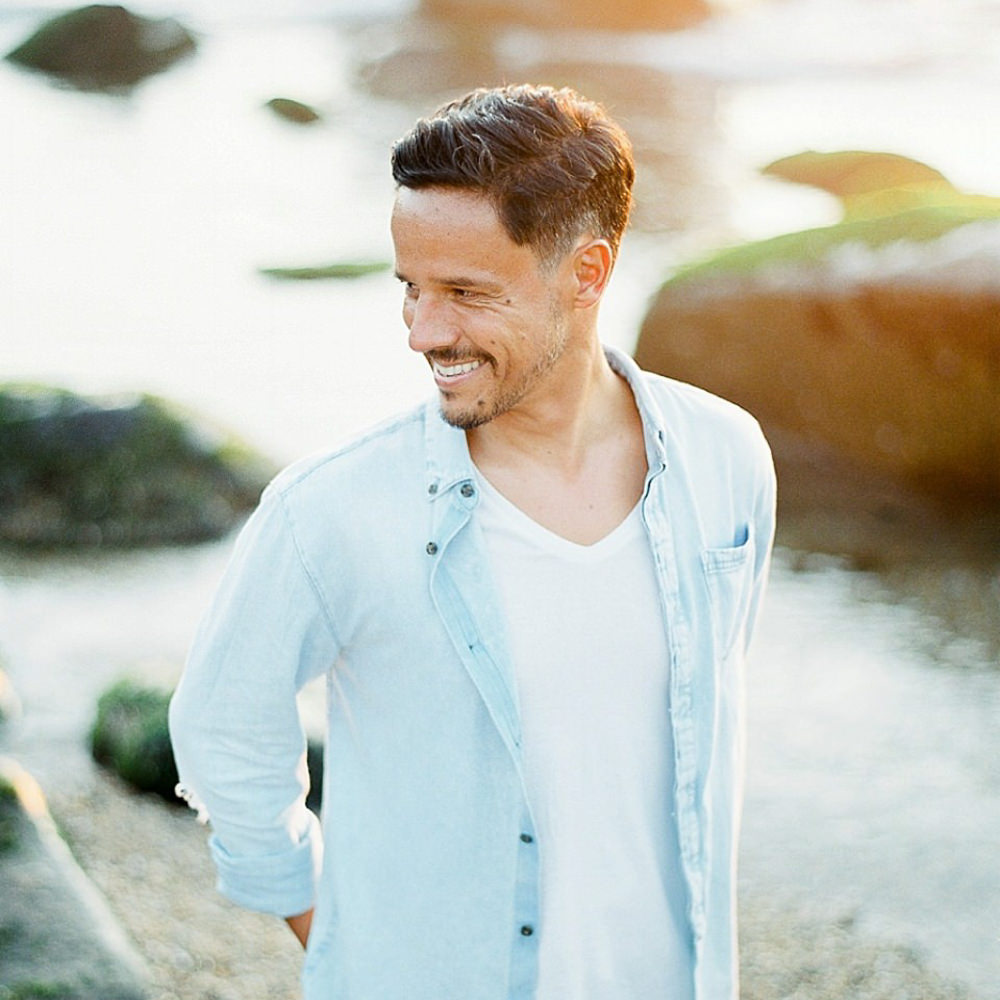
Episode 24 · Season 1
"Sonhei ter a vida que tenho hoje"
Rui Vaz Franco PhotographyLove is my Favorite Color
summary
"Sonhei ter a vida que tenho hoje"—I dreamed of having the life I have today. Rui Vaz Franco sits down with Rui to talk about a journey that, by his own account, feels almost improbable. The episode becomes a meditation on aspiration, intentionality, and the relationship between the life you imagine and the one you actually build.
What makes Vaz Franco's perspective compelling is his willingness to take seriously the power of vision and intention without slipping into magical thinking. He's not suggesting that dreams automatically manifest or that visualizing success somehow bypasses the need for hard work. Rather, he's describing something more concrete: the way that maintaining a clear sense of what you want shapes the thousands of small decisions that eventually accumulate into a life.
The conversation explores the specific challenges of the creative industries, where financial stability and personal fulfillment don't always align naturally. How do you build a creative practice that sustains you? How do you maintain your integrity and your vision while also paying bills and supporting yourself? Vaz Franco's experience suggests that there's no single answer, but that clarity about what you actually want becomes the foundation for everything else.
One of the episode's strengths is its refusal to present success as a clean narrative arc. There are setbacks, redirections, moments of doubt. Vaz Franco talks about adapting, about learning, about sometimes pursuing opportunities that weren't part of the original vision because they moved him toward something meaningful. This is more honest than many success stories, which tend to present progress as a straight line.
The episode also touches on the question of what "the life you dreamed of" actually means. For some, it might be primarily about financial security. For others, it's about creative freedom, flexibility, the ability to choose your projects and your pace. For others still, it's about impact—knowing that your work matters and is recognized. Vaz Franco invites listeners to get specific about what they actually want, rather than adopting generic definitions of success.
There's also an interesting thread about community and mentorship that emerges. Vaz Franco didn't build alone. He learned from others, collaborated, said yes to opportunities that involved people he respected even when the financial terms weren't ideal. The life he dreamed of was partly enabled by a network of relationships and generosity from people further along the path.
For creative professionals particularly, this episode offers something valuable: a realistic portrait of someone who maintained a vision without being rigid about how that vision manifested. Who worked hard and was also willing to receive help. Who succeeded, by his own measure, without sacrificing the values that mattered to him along the way.
key quotes
"And that's it, I've been in this wedding life for about 12 years and today we're all here together, yay!"
"Speaking in Portuguese, I also thought this was important, because it exists in other languages, in English, and also in Brazilian."
"Or the person said this and I let it pass because I was reading or looking at the next question."
"That sometimes I like to hear, and I'm afraid to talk more, but I also feel I can have important tips to give to brides, and eventually to some suppliers, for the work of each other, because here I will be valuing the florist, for example."
"Just to make a parenthesis to that, I also think it's necessary, I think the whole industry needed to get to know the world."
"When we are just sending messages because we want it to come out of our heads, from then on, no."
"We are all on our own path, there are those who are ahead, there are those who are ahead, there are things to learn from everyone."
"In the same way that you are not going to hire a doctor who does not have the training and specialization, nor a lawyer who does not belong to the order, because he cannot exercise if he does not belong to the order, a psychiatrist or whatever, they should also not hire a matchmaker who has absolutely no validation, or any experience, or any real contact with what is the wedding industry."
transcript + show
episode: 24 title: "Ep. 24 - "Sonhei ter a vida que tenho hoje", com Rui Vaz Franco" pub_date: "Mon, 09 Sep 2024 05:00:00 +0000" original_language: english source_audio: "f694e829.mp3"
Hello, welcome. I'm Rui and this is The Wack Podcast. Welcome to The Wack Podcast. Today I have the enormous pleasure of having with me a guy who is a good guy, but he's not, because his name is also Rui. And just because of that I think he generates... And being a guy is already spectacular. Exactly. Some people can... He's not a man, he's a guy. Exactly, a guy. Men are a problem, guys are not. So it's all good. Not yet. But... Who is Rui Vaz Franco. Who is a young man I've known for... 13 years, maybe. But we never had the opportunity to have a cool conversation, without limitations, deep. And that's the part that excites me in all of this. So, Rui, welcome. Rui Vaz Franco, for those who haven't realized it yet. Welcome. Thank you for the invitation. Very happy to be here, very happy, I already told you. Very happy to have created this podcast. And you're finally creating the community again. That started many years ago, in a way. But then with family, covid, work... We all went through it, didn't we? Life. But things, life happens, exactly. But luckily there was space and someone who made this happen. And I'm really happy. For the part that concerns me, thank you. And I think we're going to... I really hope this will continue to be cool. And we're going to bring the people together. Nothing matters more than that. All the rest is landscape. As long as we get together and talk and share good things and share the bad things. I think we can all do it. I think it's cool. Look, for those who already know you, a long time ago, at the photographic level, you told me some things, that you probably don't remember, naturally, but that stayed with me all these years. One or two sentences that we talked about in the middle of glasses and meals and things like that, that stayed with me. And in a little while I'll talk about them. But before that, I really wanted to talk about the beginning. I'm from a time when your images had nothing to do with what they are today. I remember when you had an extremely funny watermark. Your legs were jumping. I remember this very well. And the truth is that... I don't know exactly when, but you make me say it. But there was a huge change. You stopped being a scene. You stopped making a type of photography. And you focused on something else. And probably the people I know, it's likely that you were the one who made the most significant change in style and aesthetics. And my question is, what made you change? What caused that radical change in that phase? I don't know, two or three years ago, I guess. Man, what a question. Well, when I started getting married, I wasn't a professional photographer. And I think the phase you're referring to was a phase of transformation in which I became someone who knew what he was doing. At first, I didn't know what I was doing. I was learning as things were happening. I had a dream, which was to have the life I have today. And I gave it my all to make it happen. And fortunately, it was pretty quick. And little by little, I started photographing a lot of weddings. And when you're drawn to do something in which there are expectations, people are paying for it, you give it your all to learn and you give it your all to do your best and to make people happy. And I think that's what you do. There was a phase in which, OK, I've grown enough to know what I'm doing. And maybe that's what you're talking about. Suddenly, I need to change my brand. I don't identify with what I used to do. It wasn't right. Now, I do a much better job. So, the brand has to keep up. Basically, the brand grew. It was very childish. It went through a phase of adolescence, which was also a second soon. And seven years ago, we went back to rebranding with the brand we have today and which also went through a new rebranding, probably this winter. But that more dramatic phase, I think that's what happened. And at the same time, I got to know you, right? I got to know the community and we got inspired with what we have around us. I think that's what happened. Did you have any general inspiration? Someone who really got you going and said, I'd really like to do something like that. Yes. Look, I had, and at the time, they were all film photographers. All of them, or almost all of them. The main one, although his best work, for me, not even at weddings, was Jonathan Canlas. Then, at the same time, José Vila, at the time, right? I loved his work and still do. Now, I don't follow him, right? I'm not as close as I was at the time. I don't really know what he was doing. Elisabeth Messina. That guy, at that time, I think Elisabeth Messina was still photographing. I have no idea, I don't follow her, but... She doesn't photograph weddings. No? I don't think she photographs weddings. But, actually, what inspired me the most about her work wasn't even weddings. I don't remember seeing weddings. It was more the portraits she made. Yes. And it was that guy. And here in Portugal, when I really started, I only knew... I don't think she photographs anymore. She doesn't photograph Matilde Berck, who was photographing at the time. Yes. Catarina Zimbarra. I wasn't even photographing yet. That was when I was looking for suppliers for my wedding. Then there was Eduardo too, who I thought was really cool. Eduardo Oliveira. Yes, I think so. He was also a great friend of Matilde's, I think. But then, when I started photographing, when I got in the middle and met you, or maybe even before, André Teixeira's work was... What? I said the inevitable, because... Of course, his work... Of course, of course. His work was like, wait a minute, this guy is Tuga? There are guys doing this here in Portugal. It was always an inspiration. It still is for everyone, right? Yes, yes, yes. They continue, both him and Sofia, they continue to dig up the ground. They're up there digging up the ground and saying, guys, this is cool. Of course. In a way, right? Yes. We continue, but everyone follows their own path, right? Naturally, it's been many years, but... I think so. I think they were my main inspirations. It's so good, you said all my names. Really? All of them, all of them. I have Zé Vila's book, I have Elisabeth Messina's book. For a long time, I followed Jonathan Canelas, because, mainly, I've always liked Elsa and I continue to do a lot of families, and Jonathan Canelas, in terms of families, has always been his main area, and it was awesome. And then, before, exactly like you, before we had this community, that we met, some in 2011, I met three people. I met two, actually, I only met Catarina later, and personally, I only met her later. Personally, I mean, the first time I had a conversation with her was this year, curiously, but I already met Catarina Zimbardo a little later, but it was Eduardo Oliveira and Matheus Huerta. Basically, they were my names. Well, in the meantime, we met more people, and André started to be, not only a great friend, but the main reference, and that's exactly why you said it, but it's super curious that they're the same names. Yes. There weren't many either. There weren't many, that's true. I mean, in Portugal, there were more. In that wave. Right? People are photographing the film, André, at the time I met his work, he was also, I wouldn't say starting, but he didn't just have a job, he started a phase that was almost just film. That look, right? The Fuji 400H, with two tops, that the guy fell in love with. It was behind that look, I went after it, because I couldn't, I couldn't have in my work that look with the digital, until the poster fell. Wait a minute, this guy doesn't photograph in digital. That's what I have to do. And since Jonathan Canlas, at the time, had the Film Is Not Dead workshop, he was all over the world doing workshops, he came to England, to Norfolk, in 2012 or 2013, and I went. At the time I was still an engineer, I was a mechanical engineer, in another life. I went, and it was my first steps, besides his book, and this one is here, besides his book, where I learned the basics, then the workshop is what made me catapult to start using AK film, and since there weren't many people using AK film, I fortunately had the possibility to invest well in film, and be able to photograph at will, because I was an engineer, and I had an order, you know, what I earned from photography, I could perfectly buy rolls, and spend it, and send it to the US, and send it to other places. Fortunately, I had this opportunity, and I grew fast, I learned fast, to photograph film in many conditions, and that was it, that was the start. Not the start, it wasn't quite like that, but I'd say it was when I found what perhaps still exists today. Yes. That's where I was going to get to, because one of the things I remember talking about, several years ago, I don't know when, but many years ago, probably 10 or more, was, you were saying something like, I know my path is that way, that's why I don't care if there's money to be made here. I don't want to know, the money is there, the path is there, and if the path is there, the money will come, and everything will be fine. Funny. And it was not just thinking about these two sentences that accompanied me throughout all these years, but mainly taking these sentences, that focus, that change you had at that time, that we accompanied and that I saw, and looking now at your work, and what you have, and then there's something that I think of you, I think of two words, essentially, in this first part of the focus, if it's that way, it's that way, I'm not going to be focused on other places, and consistency, which is something that is deeply irritating when you go to your site or your Instagram, it's, how does this guy manage to get all the images to come out as if they were from the same place, from the same wedding, from the same environment, it's all, it's different enough and new and fresh, but it's all consistent to a level that I can't understand. And transforming this into a question, how do you work that curation, that consistency? Well, first of all, it's the way I photograph that hasn't changed much over the years. From that phase, I started photographing in film, which took off, which I feel was my biggest evolution, which made me learn the basics of photography, which I didn't know, which forced me to photograph with a lot more intention, because film is expensive, and every time you want to take a picture you have to pay attention to what you're doing, otherwise you're always doing the same thing. I came from digital in a very amateur way, from here to there, there's the person I'm photographing, or the people, or whatever, and I'm loading and waiting for those to come that I'm going to photograph, that some of them are special for some reason. And film made me not do that and take a lot more attention to what I was doing. Then, and I still do that today, I learned from film and today I still photograph practically exclusively digitally. It was something that started at the end of 2019, when I discovered a way, that everyone knows now, some color profiles that help to have very similar colors, with the digital very similar to the analog. And the way I edit and the way I photograph is very similar to the digital. So, the way I edit always goes behind that look that's recorded in my head, that I fell in love with the film, it always goes behind since I photograph in film. So, I consistently maintain that search for the same tones, I consistently photograph against the light, whenever possible. Of course, it's more important to catch the moment even if the light is bad, isn't it? And then, of course, there are moments when we think that we'll be able to take a good photo and we can't, then someone gets in the way, the light is bad, you made a bad decision and went to the wrong place, a lot of things can happen, right? Then, the choice of images, for me, is almost as important as your ability to create those images, exactly, the way you present them. It's not a secret, maybe it's what I like to show, it's what I want to show. I have zillions of track photos in all galleries, but I don't want to sell track photos, I don't want people to hire me because of that. When that time comes, I want to go home. It was different in the past, you know? And it's not just a matter of the past, it's also a matter of focus and taste, because our companion, Vilela, loves that part, he's anxious that that part comes, to have that amount and all those crazy things that he has so many times, I'm with you. I've been very creative, I get to a point where I'm very tired, it depends on the weddings, the weddings you really want to go to, and you had an amazing day, you're with an amazing team, and you're in celebration mode, of the work you did, of what you went through, which is often spectacular, it's one of the good things we do. But I'd say 80% of what I do by the time I get to the track I'm already very tired. I'd say 97%, I'd say 97%. The 3% is when I meet Carlos. Yes, I can see that. When I meet Carlos. And I imagine when you meet André as well, because I never worked with him. My André is Carlos, you know? It's like me. Because I don't get Carlos, André, unfortunately, but it's a bit like that, it's a bit like that, because you really have that, it's a big difference, you may be doing an amazing job, you're enjoying what you're doing, but when you have people watching you, it's a special day, you have to stay. One of the most epic weddings I've had in my life, and very sadly for me, that couple broke up a year or two ago, it was really one of the only ones I knew, because they were friends, I was really sad, and because it was the most amazing wedding I've had in my life. I packed my bags for the photoshoot at 1am, I left there at 3am, because Sónia who was with me and she had to leave, had to do I don't know what, let's go, it's time, we have to leave. It was me, Carlos, the grooms, I said goodbye to the grooms five times, so every time I was going to say goodbye they would grab me and say Rui, just one more! That whole madness was brutal. But this happens three times over ten years or less, and it's special. But going back to that part you were talking about the curatorship, but you, because really I don't forget, I notice that that part of the focus you had that is, your taste, your aesthetic, you never felt that you needed to go around and drink a little more from any scene that was different. Or you do the same, you go for your creative taste, but what you show to the world is here and this so there's no confusion. There are things that appear that interest me, the so-called trends, right? Every year or every two years there are new trends and there are new looks and there are new things that I like. Most of the trends that appear when they're well done always have beautiful things. But in a way I feel that that's not mine. I'm not at home when I'm doing it. There are things that I do because, for example, black and white is now in fashion, black and white, straight hair, that look. Old Hollywood, right? That vogue look that's now in fashion. I find it very interesting, but I'm aware that it's just a trend. So I don't want to base my work on that trend because I know that in 10 years, 20 years, 30 years, whatever, when people look back at my work they'll think it's a shame this wasn't colored, sir. I mean, I'm not sure but I have this feeling that simpler is better. I mean, if the images were elegant, classic, in line with the most beautiful photographs I've ever seen, which are old-fashioned, if they were like that they would go beyond time. The films with the kids, the grandkids, when they see the images you created they'll really like them. They'll be like, oh mom, what were you doing here? Why is this all yellow? Or whatever. It was used at the time, you know? I don't want that to happen. I'm married and I don't want that to happen. So, I keep that consistency because, in fact, when I'm photographing, when I'm looking for the emotions, the beauty, the way I see it is the way I photograph it. You see? So, I like to do something, that thing I saw on Instagram, I want to see if I can go after that style and do something similar. You see? Maybe that's how it all started, right? I like to have that look that I see from those photographs, the same. Which is that, in a way, I feel like I'm still doing a relevant job. You know? It's honest, it's a job, I don't know how to describe it, but I feel like it's relevant and that it's still the way I would like my wedding to be photographed. You see? But, nonetheless, there are a lot of trends that come up, and I like it. Do you remember the style shift, which is now having a comeback, more or less? I think it's amazing. Who knows how to do that well? I think it's amazing, I think it's spectacular, but it's like, that's not me. You see? I like to experiment, and there are things that I experiment, but I don't make it my job. And the curatorship is only for that place that I really like, that people don't hire me for. Do you really feel that you found your creative self in an initial phase, in the first two, three years, maybe? No. Were you quick to find that? No, I think in the beginning I was just replicating or trying to be what I liked to be. You see? Trying to create what I saw others create. You see? And then, over the years, it transformed into me creating my own language, in a way. The way I direct people, my decisions during the day, the way I do my shots, the lenses I use, and so on. It turned out to be more influenced by me, naturally, because of how I learned. But do you feel that you're really at that point? Yes, completely. Completely. Now I have... Sometimes I even feel that it's a little bit... And you feel it, for sure, because it's been many years. It feels like you're doing portraits, or when you're doing what you've done so many times, you know, you look at a place and you know the image you want and need very easily. You already know how to direct very easily. Sometimes I feel that it's like, this is going to be so easy. There are things that are so easy and it's like, people are paying me to do this. I'm going to do this, I'm going to do I like it a lot. They're so happy. I'm already happy to make them happy and they're still going to pay me. This is crazy. This is happiness. Aren't you afraid of that comfort? I am, I am. Even because I've felt it several times, as I usually say, with my ass on the couch. And sometimes we need to get up and say wait a minute, I'm leaning here. But I do, of course I do. I'll give you an example. My brand and website has been around for 7 years. It's always here. We need to update it. The brand can even stay. The logo, not the brand, but the logo. But there has to be a rebranding. We have to create a new website. We have to refresh this. In comparison to what I sometimes see from my colleagues. And maybe I should go further back to wake up. I feel like my work is impeccable. I'm very proud of my work. But the brand is also stupidly important. And that's it. Sometimes I feel that. There's no cost. In terms of photography, I've included, since Covid, more and more artificial lighting in my work. And one of the things that excites me in photography is artificial lighting. When you talk about artificial lighting, you can talk about flash. Flash, LEDs. Especially... Go ahead. My question is not... How can I say? It's not by chance. I feel that I'm getting out of that comfort. So good, isn't it? This morning, when I was recording with Edgar, I said to him, I feel happy to be able to tell you that everything that happened in the last few years, even the bad, I'm proud of it. Because I'm getting out of it. But because everything you're saying, it seems that you're in my head, saying more or less the same thing. I started with that goal, I wanted to make those images. Years go by, it seemed like it was suddenly. And I thought, I can already do this. I already know the light, I know where it is. I have the grooms, I have the brides. I have everything I need. I have the material, everything is perfect. I get there with two tickles, I say, and they don't pay me in the end. Spectacular. And suddenly, four or five years of that feeling go by, and I say, I don't want to shoot weddings. I'm full of it. And I just realized, after all that time, it was an impressive thing. And you say, but then what happens? And you enter another spiral, and now I'm coming out on the other side, saying, spectacular. Now I feel like I'm starting. And that's why I asked you that, even though I was comfortable, and now I look back and that comfort was what scared me. That's why I ask. But did you have a moment slightly similar to this? Or, for now, are you careful enough not to let that point pass? I hope I'm careful enough not to let that point pass. Maybe I lean a little to know that when I have the camera in my hand, I give it all. Let's see. The fact that I'm not dedicating myself to rebranding doesn't mean I don't give it all when I'm shooting. Let's see. I take that a little bit, but I've gone through, in a way, before this last rebranding, which is already 7 years old. Before that, yes. And that's what made the boost. I felt, wait, things aren't going as well as I thought. I think I leaned. Why? Just going back. I became a photographer because I wanted freedom. I was a mechanical engineer. I lived as a character. I had 22 days of vacation or whatever it was at the time. And I felt trapped in a place that wasn't mine. I felt like I didn't belong to that role. Like I felt in a lot of things in my life before that. And with photography, when I was looking for something to change, when I discovered photography, my focus was never I want to be a great photographer. Of course we all want that, but that wasn't my focus. A great photographer. I want to make money, I don't know how much per year. That wasn't my focus. My focus was, I want freedom to choose. Tomorrow morning, I'm going surfing. Tomorrow afternoon, I'm going to do whatever I want. I'm going on vacation as long as I want. I'm going to sell the weddings as long as I want. I went after that freedom. So, in a way, after having it, I jumped into freedom. It was one of the best years of my life. Right after that, I gave up engineering. I lived in a constant ecstasy of lightness that I didn't know what it was before. I'm not believing that I made this decision. I discovered this, I made this decision, I made it happen, and now it happened. I'm here on my own, now I'm going to the beach. I'm here on my own, I'm going to do whatever I want. Soon after, I said, tomorrow, whatever it is, I'm going to do whatever I want. So, I jumped in such a way that there was a time when I was leaning, I felt like I was sitting on the couch. So I woke up, wait, we need a rebranding here, I have to change a few things here. And then COVID happened. I can't tell you how hard it was for me. It wasn't, it was what it was. But it was a big blow for everyone, as you know. Unfortunately, COVID was extremely difficult for us. We went through bad things. And we were really down there. It was a very dark place and we finally got back up here. It was a similar process and now you're finally in a place with more lightness and everything else. So, I took the plunge in COVID. It was the most difficult, especially, no, also in financial terms. It was a wake up call, wait, but I don't take care of my personal finances. But why didn't I take care of doing this, because we only learn later, right? Exactly. What I really had was sitting on the couch and thinking everything would always go well, and when it didn't, I wasn't prepared. Now I'm prepared in a different way. But tell me something, you only have one daughter, don't you? Yes. How old is she? Six and a half. So, you had COVID and she had both. She was two years old when COVID started. She had COVID and I was two years old. It was also mixed with this theme. I had many themes at that time. Parentalism was a challenge for me, the start, precisely because of the need I have, it's not worth exploring here now, but the need I have for freedom, and when I managed to conquer freedom, I was a father. And I knew that this was going to happen, that there were going to be big changes. So, it was very, very challenging. And right after COVID started, we had two very close deaths. This was traumatic. But maybe parentalism started before COVID. Parentalism was also a challenge for me. How did that change you? Man, it keeps changing, and more and more. But there's a big change, from zero to one. So many things happened. I changed... The first one, right at the start, when Maria was born, the first one was a dramatic change in my relationship with my father. It was essential. It was very hard, and it changed the whole family dynamic. So, it was all at the same time, me being a father, me imposing myself as an adult in my family. As a father, exactly. Right after that, this is what happened, right after the COVID issue, as it all happened, and how I wanted to protect my daughter, I wanted to provide for her, but I wasn't able to. At the same time, we had already bought a house, we put everything in the house, and everything was going well. Everything was going well every year, we kept building. Now we're going to put all the money there, the little we had at the time, we had invested, without the slightest idea of how long this was going to last, and when we were going to start selling again. And I was feeling this weight, as a father, of wanting to provide and not being able to. And I felt very alone, because Cristiana was in a deep mourning, because her father died, and she wasn't the right person to be there. So, let's roll up our sleeves, let's try to get around this. I was alone, let's try to get around this. It was very difficult. Maria too, and you know better than me, you've been doing this longer than me, and you have more children, is constantly demonstrating where I have to improve, through our triggers. Where do we have to improve? And at the time of COVID, the deepest personal development that I've ever had. Which is getting bigger, and deeper, and more interesting, through, perhaps, the first, through Maria, not so much through COVID, but it was with Maria that it all started. At the time, still debating a lot with what made me feel, and then accepting that she's just showing me the way to my healing. She's just showing me what I have to see. It's very beautiful, but I think... I don't know if you want to get into this, because it never ends. No, because I understand you, because for me COVID, 2020, for me it was a dream. I loved it, apart from those parts of confinement. Only four weddings that year. I didn't make money, but I didn't spend it either, you couldn't do anything, the little that came in was enough, I had already bought a house, and I was already at peace three years ago, when COVID happened. So, Elsa got sick, she wanted to work for Lidl, and I said, it's okay, things will work out, and they did, fortunately. But then came a process that followed, a complete personal development, I had never used the term personal development before 2020. And I feel that that's it, you just get into a journey, and that journey has a lot of things, but you get into a journey and you know that it's never going to end. Now it's forever, there's a growth, it's always been, you don't have to be aware of it. You grow, you move forward, you evolve, you don't have to be aware of it, and for me it was brutal. But what I wanted to ask you, it was an interesting thing, because I remember a story of yours, I think it was before, no, it was before for sure, because I think Maria was a baby, so she was a year old, and you shared a story where you were playing for her, and you put a text, I don't know exactly the words, but it was something like, it's fascinating to understand, or try to understand if one day she will have the same interests or what will be her interests, and if somehow what is important for me and for us parents, will be passed on to her. I think it's fascinating, because I also have a band, and I always found it funny. But my question is, have you ever realized and felt that the children are not yours, they are from the world, and we are only here to carry them? Absolutely. And for me it becomes a little easier because she is just like her mother. She is her mother's face, her mother's personality, fortunately. So, as much as I want to, for example, I love doing sports, and I love doing my own things, I used to love that now, now that the punk is doing mountain biking, BTT, I used to love that now, if I had the enthusiasm for that, we would both go to the mountains, it would be spectacular. She's not even there, and I don't even force her, because I know it's not worth it, she is what she is, she has the interests she has, so she is what she is, and in fact they are not ours, we are here to take care of them, and give them the freedom and security and all those things they need, to try to give them as few traumas as possible. It's interesting, our generation, us millennials, it's a generation that aims to give as few traumas as possible to their children, and what has happened is the worst, and a psychologist I heard say in an interview, our job is to give them some traumas, in a controlled way, because it's in the traumas that you grow up, right? I wouldn't say it's in the traumas, it's in the diversity. It's a bit lighter, even if it's medical, if you hit a leg, there was a trauma there, traumatizing them, because I think you don't earn much. I mean, sometimes you can earn, but that's another story. But I think that's the definition you give, our role is to take care of them, to make them, so now with the third one, my role with the third one is to give them a home, food, and make sure they survive. Because who creates them are their siblings. Beatriz and João are the ones who create them. But... Yes, but it's a significant change, you realize that my role has changed, and that changes you a lot. Do you know what other role you play, that I know is a fundamental role for the way they grow up? It's you doing your evolution work. You go after your wounds, and it's theirs. The best way you have of not having to be them later, exactly, not having to be them later, is to do the work you didn't do. Because you come with all your luggage, and if you don't take care of it, you're carrying it on your back. Do you think that's what happened with you and your father, the relationship you had? I'm sure, and with everyone, and with all the relationships as they grew up. I'm absolutely sure, and I can identify a lot of them. I have to do this work, I've done a lot in this area of personal development, I've done a lot, I do therapy consistently, even when I'm well, which is the case, I keep doing it, I do a lot, and I fall in love with this theme. So, I go after knowing how I can be better, how I can evolve. And this evolution, for me, is connected, or is it really, to healing. Yes. From our traumas, from the things that we're not well with, in our opinion. So, the best thing we can do is, in fact, give ourselves to the work, go there to the little wounds, and free them, go there and move, clean that, or lay out what's there, understand, assimilate, and undo that. And from there, with those wounds, you won't have the same reaction you had when your children were triggered. You won't have the same reaction, or it will start to diminish, that's what I notice. I don't feel a dramatic change in a lot of things, but I feel several that I don't react the same way anymore, that I understand differently, that it's no longer so difficult for me to deal with. That has to do with my personal work, but it also has to do with the work, the photography, the way I deal with the problems on a daily basis, working from home, the way I deal with the problems that arise at weddings, the lightness that I bring to work, the way I want to be there to be happy, and try to have the best energy possible for the people around me, and to absorb good energy from the people around me, and get to the end and say, I had a great day, I like this, I really like my life. You see? It's in a positive place. Our healing also leads us to that, to do a better job. One day we're going to do a little workshop, this guy is interested in personal development, where we can bring together the theme of photography and the evolution of photography with personal development, because it's all connected. It's all connected. If you develop yourself, if you become a better person, or a lighter person, we're not going to use the best because it's qualitative, but a lighter person, you're going to take that. One of the things I learned a lot during this period, this is not a matter of learning, I was aware. There are people, and I'm sure you'll feel the same, because no one goes through this, I think no one goes through a period like this without doing this. But I have a huge conviction, that I'm sure, in this case, when I realized the relationship I had with certain people, my friends, and what I had with certain people, when I realized that, wait a minute, there's a person here who I like, but who doesn't do me good. Or at least in a certain amount. That is, there are people with whom I am, and I can be all day and say, I like this person, but being with these people, the kind of topics they have, the little comments, those little things that for years went unnoticed, and that you might get to the end of the day exhausted, but you didn't really understand why. And then you have the other people who do the complete opposite, in which you liked them in the same way as the others, but there are some people who seem to recharge you. And this was a notion I had at the time of COVID, after the process of personal development. And I had a series of old friends that I, in an abstract and conscious way, like, but I don't do any kind of forcing, because I know they don't do me good on a daily basis. And there are those people who maybe weren't such close friends, but I say, no, you do me good, you are a person who makes me feel good, so let's make an effort to be together more, let's meet more often. Did you feel that too? Absolutely. The exact same thing happened to me. Leaving COVID, leaving the hole we were in, on the way out, I got up here, looked around, and my relationships were no longer the same. Love was there, and it is, for the people that I don't spend much time with now. Love is still there, I love them the same way. But we don't vibrate in the same place anymore. Yes. Maybe we don't have the same interests. I evolved to another place, they evolved to another, or not. And I just stopped changing, in a way. The relationships ended up changing. With several people, the same thing happened to me. And it's very nice to see that, because when that happens, it means you're evolving. That you're in a different place, right? That your relationships, the way you live with people, it's no longer the same, right? You have more interesting, deeper conversations. You learn things that are actually useful for life. You learn from other people's experiences. And people who want to do what I feel we're here to do, which is to evolve. Yes, I share the same thing. And we have a common friend, who for me, Indestusias, Carlos, Indestusias sent me a message and said the same thing. I'm very sorry we're so far apart. Because that person was one of the people I wanted to have 10 minutes away from me. And it's curious how the universe, whatever it is, always brought Carlos, in some way, when I needed him. Both in personal and work terms. And it's super funny. At least a funny story, an interesting micro-story. Last year, the coolest marriage I've had, not only in terms of good vibes, good energy, but also in terms of a portfolio of amazing brides, an extraordinary team, in a spectacular place, the Vintage House in Douro, with Carlos, came about because the brides contacted me. Or was it... I don't know. The brides contacted me. I know they already had a wedding planner, which was a wedding planner I didn't know, which was Marlene. Marlene and the brides must have talked about who could be the photographer and such. Carlos, as the wedding planner, suggested that it was us. And at that moment, not only the obvious, simple part of the portfolio, we had an amazing wedding, an amazing experience with an amazing couple, but that wedding planner, Marlene, is a person that I suddenly, in a year, adore. She's an extraordinary person, a dear one, an excellent wedding planner too. In other words, only good things came out of that. Simply because Carlos said, look, those guys are cool. And it's impressive. I think Carlos has no idea, although I keep telling him, I think he also has no idea how much, at certain moments in these 14 years that I've known him, he put his foot there to say, whether with his experience, what he went through, which I learned a lot, for better or for worse, how small things, as soon as he appears, he says, hey, well, the badge is there. Okay? It's there. And he's one of those people that, I feel sorry for him, I'm with him once a year, on average, maybe, but he's always there, and he's extraordinary. But that cool part is the awareness, because suddenly you have the awareness that these people, certain people, do you good, there are other people that maybe don't do you so good, they're not in your frequency, and you can like them just as much. And this, for me, was the big surprise. You can like them in the same way. Exactly, exactly. Maybe it's not just people you're with all day. Exactly. And it's very... But that's it, I think it's an excellent idea, I don't say we're going to put together a guy that has a kind of photographic retreat, kind of hippie, a cool scene to talk about. I don't have to be hippie. Personal development, I don't have to be hippie. No, but we do it all together. But I would like to make this bridge, you know? I have Cristiana, and not just her, but Cristiana mainly, since I did the first workshop, I don't know, anything I had to teach people, she tells me that this is... it's obvious that this is a path for you, you're going to teach, you're a person who gets very excited about things, you have a very good ability to explain things, insist on me doing it, and to do it, and to do it, and even today, I only do it when I'm invited to do it with other people. But what I've always felt, sorry, it's not always, since I started this path, is that in doing it, it makes sense to not just be full of, look, you put this light, you put this exhibition, the tree is beautiful, and now you make them laugh, you can say this, the pose is this, it's a lot by the book, it's the same. It's a lot by the book, but to make the people who go to that workshop leave there excited about their own evolution, and how that can explode, it's not a job, enough personal development to help them take a leap quickly, in a year or whatever. Not just go get a portfolio or create something nice for them to take home, you know? I say this as a joke, but it's not really a joke, which is, for me, to be a wedding photographer, 70% or 80% is psychology. To take pictures, all you need is a guy who takes good pictures, that's all right, you don't even have to put that in AV, if you have good material, they can be where they appear. Now, your ability to get to a place where you're going to be close to those two people for 10 or 12 hours, your presence has to mean something, and sometimes we don't really understand that. And if your presence for those people, I'm sure you've had this case, and I hope that all photographers and videographers, especially us, because our work comes later, it's normal for a wedding planner to have that big hug at the end of the day, but her work was done there. Ours, no. But I'm sure it's already happened to you, at the end of the day, you have a couple hugging you, saying, you're the best, we love you, you're spectacular, and you ask them, but they haven't seen a single photo. And it's cool, but you think, why? It wasn't my job as a photographer that they haven't seen anything yet. What you did for those people that day was much more important. It's very easy, it's very recurring to overvalue this. And I think that big leap you're talking about, and even bringing you a little more pragmatically to the work we live, with your colleagues, with videographers, in our case, with wedding planners, even with DJs, the guys that work with you during the day, if you're that person that I'm here to help, I say, do you need help carrying a table? Let's go, I have nothing better to do, keep going. If we come up with this approach of I'm here to help, all around you will work better, you will grow, and in the end, everyone will feel a cool energy and you'll leave saying, this was shit, but you can come home and the photos are shit, but I think the first point of this growth is that. Without a doubt, the energy you bring, the security you bring, the intention you bring. Service. I do a lot of this mental thing, before I start photographing, let's go, I'm here to serve this guy, to make this guy happy. Sometimes, as you know, there's a lot of stress around, some family problems, with your presence, security, good exposure, you're able, if you have your best, to transform a room, where people are, many times you go to the session and they're both stressed about something that happened in the family, and you, if you have that security and the right energy, you're able to transform that, to create the images you need, and that they'll be so happy to see later. Although it's often been a stress, from time to time, I agree with you 100%. It's also very nice to see that Imagine you've already done a DNA test. I did, a long time ago, I don't even remember. You don't know what your type is? Man, I don't even remember. Is it type 2? I don't know, I don't remember. I don't remember. It had something to do with control, something like that. But it was a long time ago. I'm terrible, I forget everything. I ask because it's interesting. I changed my life, I could say my life, but I was aware of some things when I did the test. I was hoping that this would be something super interesting, like a creative, and I don't know how many, and they gave me type 2, which was the helper. Me, what do you mean? Something uninteresting. And then I thought about my life and, well, it makes sense, I'm happy. For example, this community story. I feel super fulfilled and happy to realize that something is happening. It's cool, I'm helping someone. And I realized, I was hoping it would be something much sexier, but no, it's just a helper. And I get... That's why sometimes... You're the type that likes something and you feel that the thing you discovered can make other people happy. So you go there, pay attention to this thing that you discovered, it's cool. Be happy. It's instant. It exists because Elsa wanted to photograph weddings. Yes, ok. Elsa liked it. We started photographing and Elsa loved weddings. And she said, 15 years ago, she liked weddings. Who's the judge? Who's in charge? Who's in charge, first of all. But then, basically, what happens and what I feel happened throughout my life is I feel extremely happy to create or make other people's dreams come true. Dreams or just things. Small or big. But that was great for me because I didn't have that awareness. I thought I needed to create things for myself. Whenever I tried to create things for myself, they wouldn't start. And although this is a project of mine, it's not a project for me. That's why I was able to... Imagine, we're recording now, your episode will be the 24th, which I think will be the second week of September. When will this come out? We'll be with 6 months of... 5 and a half months of podcasting. When did I, in the middle of the wedding season, give myself the availability, the work, the investment, to do something for 6 months? It didn't happen. Why did it happen? Because I felt I was serving and I was... I was happy with that. And when I started to approach weddings in that way, for me it was completely incredible. I'm here to serve. In the most beautiful, most interesting, most creative, most aesthetic way. I have to have a part of me. I have to feel that I'm here. But that knowledge, for me, clearly changed my life. My way of being, my tranquility, my lightness, as you mentioned earlier, was from water to wine. Or rather, from wine to water, in this case. It was worse. But from water to wine was more interesting. Thank you. It was more interesting, but I'm not particularly in love with wine. I turned more to water. It was all right. But you see, it was a matter of knowledge. I think it's really necessary. And there's one thing that's common. The stigma of when you talk about this subject. The stigma is really... That's also why I played with a part of the hippie. That's the stigma. You say, let's get a group together and let's talk about us. About the energy of a room. Everyone has felt it. The most blocked person in what concerns energies and the world has already felt it. And just enter a football stadium where you have the most radicalized people some of the smallest but if there's a goal or something you have a common energy. Your energy is altered by the energy of the people around you. I'm in a stadium. Why so many people? That's it. Everyone has already experienced the difference that you have a good energy or how many times do you get angry because the people around you are so angry and you don't really know why. People's energy changes with companies. If we know this, we can control ours. At least we say, this is mine, I'm going to pass this and let's try to contaminate the people with good energy. Exactly. Or at least when you realize that these guys are not in a good mood let me stay here in mine because otherwise it won't work. You're turning things around, no doubt. But I'm also monopolizing this a bit. I came here to hear you. Of course. But let's bring this back to more practical parts. You're a long way behind. You touched on something that I've always been curious about but that I hadn't realized I know exactly what you're talking about. First, the question of when you changed from film to digital and then the question of the profiles. Let me see if I understood the thing. First, what material do you use? Is it Fuji? No, it's Nikon. Nikon? But mirrorless or not? Now, yes. Since October last year. When did you finally change? A comfort. It's like driving a car with automatic gear changes. It's easier. I completely forgot. I stopped photographing 6 or 7 years ago. When the first Fujifilm Xistia came out which was a little machine but I said, we bought that to be a home machine I said, no, I bought another and this is what I do at weddings. 2 or 3 years ago, yes. Then Canon threw me the Rs and I went that way because it was more practical because Alessandra never left Canon she's extremely faithful and I like that part about her but then we came back and it ended up being cool. The other part of the question was about the profile. Are you talking about the profile or are you talking about the more technical part where you have a profile that you put in the camera that will emulate that in a closer way? So it's not a Lightroom preset it's in Lightroom but it's a color profile just like you have the RGB or sRGB or those things there are profiles to replace those profiles like in the camera to put in Lightroom. There was a guy, I don't remember his name but he used to photograph maybe not anymore he used to photograph in film and felt the need to create a tool to photograph digitally that created this color profile that I don't understand I know I tried it and it was like I can't believe it I'm going to save €1000 per wedding this is really going to happen and you change the profile it goes to the point where you can use the type of film you want if you want it zoomed in if you want it photographed with one or two overexposure with overexposure it goes to that detail and specifically for the film that I have here I don't think it exists anymore it ended up in Covid Fuji 400H for the shadows specifically for the one I use most of the time it's really good you can't emulate the slow motion and the way the film renders the difference between light and shadow it's really close when I first tried in a wedding the only wedding I photographed in 2020 it was in January I tried and I did in that wedding I did only 10 rolls and I was like this is going to work I have spectacular results in my personal work I'm going to try the result I had was practically no analog images so little by little I stopped photographing in analog because my best results this with the D750 until last year and it was like this is magical I don't have to walk in a ceremony with 2 cameras a 35mm to the chest the photometer, the used rolls the new rolls that whole mess that tires a lot and I only had one camera the cards don't run out and it was a lightness I was good at photographing I don't know if this answers your question I don't think so Yes, because in the last few years we renovated the aesthetics of our post-production images and we bought some color profiles from Katy Mary you know her I did a workshop with her in Italy in 2013 or 2014 she is amazing a lot of things and she really when you buy the preset you have two parts the preset and the profile and I really noticed that when you install the profile it's cool because your potentiometers the scenes are all the same you change the profile but you already saw that change and you say it's cool in reality if you applied the preset it was the same without a doubt the shadows 100 or more scenes the shadow goes from 100 to 100 and if you apply the preset it goes from 80 to 30 you only go up to 100 while the profile changed you still have 100 it doesn't change anything for me it was amazing I was confirming if it was what I was perceiving or if it could be that profile in the camera unfortunately for me technology exists it's just someone imagine Nikon that I loved doing a partnership with Archetype I think it's called Archetype Process doing a partnership and putting the profile in the camera it's magic Fujifilm does that? it does but not with Archetype and I don't love Fujifilm's profiles I think they exaggerate I think it was so easy because the role is theirs it's not the same what they do it's not the same but if they wanted they could have in medium format 4 or 5 thousand euros it's not medium format technically it's medium format but it's not the 645 it's a 436 it's basically the double of the full frame but still half it's the so called half house it's half house but for example André I know he has that Fujifilm camera he likes it a lot I don't know if it's what he does in weddings I'm not sure but I know he has that Fujifilm medium format I think if they wanted they could put the profile the same I wouldn't say the same because they didn't create it who created these profiles to use they even had to change the name it used to be Fuji and now it has to be Green because Fuji is greener and colder so they had to change it If you created that, it doesn't work for them. You have to buy it. I probably tried to get into that. Because, in reality, the movie that's in fashion right now isn't the movie that's in my work. What's in fashion right now is point and shoot, bad photos, a bit blurry... I don't get all the photos. Exactly. There are a lot of funny things, it's like I said, it's another trend. In fact, there are a lot of funny things. No, but there are a lot of funny things. At least it's a subject. At least it's a subject and we have to have fun talking about it. Because there are a lot of those, what we talked about a while ago, black and white, I love that. It's spectacular and it's a scene that I like, I have to try to do it and it's tough. Taking a picture of a half-eaten cake on a plate, all stretched out... It's not my scene, but... Everyone has their own. We're all here to do the same, clearly. Of course, we don't always dress the same, at first. 10 years ago I dressed differently, did you see it now? It's all right. We grew up... I mean, I actually dressed the same. Not at weddings. At weddings I grew up a bit, but... I mean... Yeah. Maybe... Maybe I could have... A guy in a shirt! A guy came and dressed in a shirt just for you. He was leaving you naked. But you're going to show up, you see? You're going to show up in clips. And I realized at the end of 20 episodes that I don't make my own clips. It's not worth it. I have some episodes that I shot with a shirt, with long sleeves, I even shot with high heels, just because it was pretty. And we were already entering the summer. And I thought, it's not worth it. I'm not going to make my own clips, this is extremely egocentric. It's not, it's not. It's not, it's not. I don't agree with you. It's weird. It's weird, yes. But if it's value content, you're just depriving people, you're just depriving people of eventually learning, of winning something, if they laugh, whatever, with what you have to say. Yes, but my investment is in you, you see? I put your clip, and if I choose the clips well, people will see the episode, it's interesting that he said it all right. But basically, it's a bit like that. Look, talking now about what we had started at the beginning, the community part, how do you think we are, in a global way, let's not just talk about photographers, or about our good little community that started and then disappeared, but when you look around, at your experience that you have now, with a large number of new professionals, with wedding planners growing, how do you see this whole community, at this moment? Look, maybe I'm not the best person to answer this question, because I feel a bit isolated, or distant. It seems to me that I just started doing this, and I had a dream, and suddenly I'm from the old guard. I've been doing this for 14 years, and you see, I have a brand that's been doing this for a long time. But at this moment, I don't have, in my personal life, contact with the topics that are around weddings. I meet people who are also in the wedding area, but at this moment we don't talk much about weddings. We are neutral, we are together, neutral. So I'm a bit disconnected from how things are. The idea I have is that people are more each one for themselves than what I felt when I started. I have the feeling that's what happens to those who start in this field, now. But I'm not sure, because I don't have the contact. And since I also don't have an online presence, I don't follow what people are doing, or I give a glance sometimes, I'm not very present, so I don't have a clear perception of what's going on. What's your perception? My perception is similar to yours, because I've also been very distant. I've turned my fingers a lot, especially in the years post-Covid, I was able to survive. Then, in 2022, a third child is born and it's like... It's not until tomorrow, it's until the year. Exactly. In a decade. I have the same feeling as you. My big question was, when I left TOCA, I thought, I'm isolated now, there's a world ahead of me, and I'm not in it. What I was realizing, and it's not a certainty, it's just the feeling I'm getting during these months, that I was more active, was that the world didn't continue to move forward. I mean, naturally, the world moved forward, but there was no group, I think we feel isolated because it doesn't exist. We're not isolated out here. We're all, at this moment, every man and woman is an island. I think we have many islands and there's no common ground. That's the feeling I've had. I'm guilty, because most of the conversations I have are about Malta, essentially our generation, a little bit, slightly younger, but I don't have contact with almost anyone under 30 in the marriage world, if I have contact with anyone, I have contact with two or three people in their thirties, but the feeling I get is that there really isn't a common path. We weren't put aside, nor were we put aside. There was something in common. Yes, it makes sense. That's what surprised me, and that's what made me think, if there's no one else, I'll be me, and we'll get together, we'll find a place to keep this Malta here and we'll talk about these things again. But... For example, this morning, I talked to Edgar, he's one of the few people I know and I really like, he's younger, he's 32, but he's not really a child, he's been doing this for 10 years, and the experience he gave me wasn't very different. And I'm talking to you as if I were already talking to you. And... Basically, the experience he gave me was something like that, even though he's younger, he doesn't feel there's a community. I've aligned myself to talk and invite even younger Malta, who's been doing this for 2, 3, 4 years, to try and understand that part. Because, on the one hand, I hope they tell me the opposite, that Malta even gets together, something happens, people get old and nobody wants to know about them. And I think I'd be happier if I saw that, but I doubt that's the case. I think there really was... It's a shame, because our generation, at least our group, there are many more people in the market, but that group of this Malta that really wanted to be together, we learned a lot from each other. And I learned... I joined at about the same time as you. Every time I was with Malta I came home super inspired. I always changed something in my work. Because I always learned things and I didn't feel isolated in the growth, in the battles from day to day, of setting up this kind of business and improving in my work, photographing. I didn't feel isolated. Sharing the pain. That's what we have, right? Even though we're often together. The open-mindedness. I do it this way, there are no secrets. We're here to help each other. In the same way it's important to have a community when there's a health problem so we can help each other. Which over the years has happened with several people, with me, with colleagues of mine. We're here to help each other. And it's so important. But above all, for me, personally, I miss being with people. A community. Being. Living together. I miss it. Because life took us to a place where you have less time for that. And there's another thing that complements what you're saying, which is that life happened to us. How old are you? 44. You're great. Thank you. I didn't imagine you were in your forties. I was going to ask you if you were already in your forties. But you're great. Life goes on. Things change. You get married. You have children. Your parents get old. Some disappear. Life happens. And what usually happens when we leave the community is that we don't have anyone to talk to. You have your friends and we all have our friends, I hope. But there's a difference between me talking to a friend who works at a bank or a company about my pain, or me talking to you who is a father, or Cristiana, who lost her father in 2019. She also lost her father. There's a difference between me sharing these problems with you, whether it's about parenting or other issues, working at weddings. Because it's no longer... There are two direct things. Two direct things that I see right away. First, logistics. How do you have children when your job is on the weekend and can be in another country? And if you work as a couple, how do things happen? And then the other thing, how do you lose a father? How do you have a sick relative? How do you suffer and go to a party? How do you deal with... I can't, I don't have the right to bring these people to my energy. I don't have the right. Of course you have the right to do it, but it's not cool. And how do you talk to someone who doesn't have the same experience as you? It's hard. And I think that's the main problem because there's what you went through in 2020, what I went through. If we had kept a greater proximity, even if it was virtual, I think we would all have had a better time. It would have helped, without a doubt. As you know, I have the privilege of having Carlos Ferreira as a brother. He was one of the people, apart from the circle we have here, but Carlos Ferreira is that person at weddings, who I've known since the beginning because he filmed my wedding, and that's how I met him, who has accompanied me all these years. He was perhaps, now looking back, that person when everything was black, that I shared my pain the most. And since he also works in the wedding area, it seems like there's a different understanding than someone who is in, what do you call it? Homeworking, how do you say? Working from home. It's completely different. It's a different understanding. The person hears you in a different way and feels your pain in a different way. One more reason to be here, especially when things don't go well, and unfortunately we didn't have that ability, or we were all suffering in a way, trying to get around this, and we didn't have the opportunity to say, look, this is not going well, let's just talk, let's be together on the phone. To understand if there are more people in shit like me. Just to understand. And if someone is, maybe we can get out of there. I get, on the one hand, sad for what happened the way it happened, but I'm happy to see a lot of people feeling that it's over, let's do something different going forward. Because even the issue you were talking about, the difficulties of managing money. Because we make a lot of money working on weddings, but we work on very few dates. It can give us a very wrong idea, if we don't know what we're doing, and that you only learn to do, or if you're an extremely organized person with money, but at the beginning you hardly are. But it can give us a very wrong idea, it's very easy, a guy starts working and receives 30 or 40 thousand euros in a year. It's very easy, you don't need a lot of money, and on weddings you don't need to charge a lot. It's very easy to receive. But the fact that it's so easy to receive values like that, can make you think that it's always easy, and that he will always come in, and that you don't have to do anything with him after he comes in. I have friends who I know came in in the pandemic with 8,000 euros in savings. If it was me, fortunately it wasn't, I was much safer, I was financially calm, but if I were to get into a situation, I would erase everything, I guarantee you that. It's not easy to manage money on weddings. There's a lot of guilt. We're always like that, aren't we? The whole year, two months you don't receive anything, then there's a month that you receive a lot, you don't know what next year will be like, last year for me was the best year financially, this year it returned to normal again, what will next year be like? I have no idea. It will be worse, it will be better. Exactly. Wars. Now we're all a little bit behind, we've learned a little bit, at least I've learned a little bit of the lesson of COVID, a pandemic, just like this was once, a possibility or a reason for me to manage my finances in a different way. It was necessary to suffer with that, to suffer the consequences of not being well prepared for something like this, to do things differently and face things in a different way. So it's the good side of it all. The good side is all the suffering brought evolution. We're fortunately, just the two of us here, we're fortunately in a better place, lighter, but in a much more evolved place, with much more awareness of who we are, of our work, of our life around us, of our children. We're in a much more beautiful place, I would say. And if it wasn't for what we went through, the pain, the deaths, the problems at work, all of those things, we probably wouldn't have the capacity to do the evolution that was done. In all of this negative stuff, on the other hand, there's evolution. It's a place I'm in today that's completely different, and I'm glad I am. And there's an interesting point in that, when you say I agree 100% with you, and I would add this, the fact that you think, I'm in a much better place, I'm lighter, but at the same time you think, it's not the work done, but that's the happy part. At least, I look ahead, and you probably think the same, which is, I did this path, but now I only have a better idea of how imperfect I am, and how much more there is to improve. But instead of thinking like, man, I'm a shitty person, you think, I have my questions, I have my challenges, I have my defects, I've improved a lot of things, but now I know what the path is. And this lightness, we say, ok, it's this path, let's walk it. Self-knowledge, knowing what your defects are, I think it's something extraordinary. I think it's really extraordinary. It's beautiful. To have the ability to learn, to dive in, and to know yourself, to understand where things come from, that ability is fascinating. From the moment you enter a personal development path, I think it's very difficult, unless you have back problems, you're going to stop doing it. You can do it more or less quickly, I also have phases, there are phases where I go in, look, now I'm going to have I don't know how many months of a lot of work, and I'm going to leave this development that I've dedicated a little bit, and I'm just going to enjoy the present. I'm going to do my best job, I'm going to enjoy the time I have with my family, and I'm going to shit on the subject of evolution and healing and everything. I need just to be present. But sooner or later, I'm invited again to read the book, to take a break, to look inside in some way. And I'm again immersed in seeing what's in here, which is a phase I'm in right now. I'm again going down, buried, to see what's going on here, and it's super interesting, and I'm loving it. But then I always go like this, I get to a phase where I need to take a break from this. I stay a little more present, I turn off a little bit of these themes for a few months, and then I come back through the load. So I feel that whenever someone starts this search for evolution, for healing, it's a path that doesn't end. It's like you open a door and the current of air is coming. You're going to see a few cracks, and you're going to evolve little by little. And it's very beautiful. It's great, it's great. It's tiring, but it's great. Yes. My dear, this was... I loved it. It's a conversation that we have to have many times. We're going to do that, we're going to find a way to organize what you wanted to talk about. But I wanted to finish with a micro-story, a very small thing. It doesn't necessarily have to do with this last piece, but it has to do with a part you talked about earlier. And I want a little thing about how I think we can all win by being more open, talking more and sharing similar things. This is not for those who already know what happened, it's for those who are listening to us. And why do I think this is important? Transparency and the real help in all of this. And what happened was a simple thing, 15 days ago or so. I've been thinking, I've been planning a series of renovations, of brands, etc. And since it's no longer new at this time of the podcast, I've been charging very little for a long time because I was stuck in my shell and I didn't realize what was happening. And at the end of last year, the beginning of this, I changed brutally, I almost doubled the prices and it has been ... I was talking to some people and more recently I thought but there is a guy here that I am very curious about so let me talk to him. And you were one of the people that I ... We postponed the recording of the podcast, of the episode, and you said I'm on vacation and such, it was a little bit a little bit of a quick decision and such, so maybe schedule a week and quiet. And a few hours later I sent you a message saying, look, meanwhile I remembered, you don't mind sending me your pdf, what are the prices and such, I'm curious to see. And I closed, big hug. Just think, this was half vacation, when he remembers, he sees the message. It's been an hour, an hour and a little. Of course, you sent me the table. And this would have absolutely nothing extraordinary in a more transparent and more normal world. And why do I think it makes sense? Because I know how this works, I know how this world works. And we all have the habit of saying, guys, whoever wants to know, send me a message, I'll share it, it's all open. But then there's always a fear of saying, I'm not going to send the message, maybe he doesn't know what. Or he'll think I want to copy, I don't know, and then you have a double problem. There is no opening to ask questions. And then things go down the road and you need to send a fake email to say that you are the groom of I don't know how many. In other words, this is the world, it is a market as it is. And I'm not going to change anything. But I wanted to share this with you because I sent it to you, I sent it to two or three more people, our colleagues. That everyone sent, quietly. And this is what I want with this. Let's bring transparency, so that everyone can hear. Let's bring transparency. Let's lose the fear of asking. Sofia, Sofia Nascimento, in an episode of hers, said that she never had, never felt, a lot of opening of the elders to questions. Whether it was a question of her shyness, whether it was a question of really opening the elders. These are all another question. But what I liked was, let's ask the questions. Let's share. Let's grow together. Because, man, I liked to be able to ask for what you are. I loved it. I know it's going to happen, but sooner or later. We'll be there. But I still can't. But at least I look at your table, super beautiful, super organized. And I think, I have to take my game. And I think that when we have this sharing, when we have this exchange of scenes, we all grow. I would like to invite people to do the same. When you have questions, send messages. Because, in general, whoever is on the other side is a cool guy. And if they don't answer, don't share, the attitudes are with whoever they take. Without a doubt. I think it's much easier for this to happen in person. And I hope it happens. Because, in the same way, when we all got together, when we talked a lot about work. It was a normal conversation. It was a normal conversation. And those themes of how much you charge and how you charge, how you build your table. But why don't you do it like this before? Do it before Saturday and stuff. But do it by phone, do it by email, right? But how do you build your packages? No, I don't make packages, I don't think it makes sense. No, but I think it does because of this and that. So, this discussion, for me, is even more... And this openness, this clarity, is even better in person. So, I think the best way to promote... I think that even if you have your will, guys, let's be more open. And I agree with you. Feel free to ask. I, personally, am an open book. Whenever someone... People, even... They get fed up with my ears because I start talking about photography and enthusiasm. It's a bit too quiet, isn't it? But I genuinely think that people will continue without asking and without... Look, I have this doubt. How do you do this? How do you do that? And so, if there are face-to-face events, it doesn't have to be anything special, but... Relatively... Regularly... For the guys to get together and for us all to feel comfortable to get to know each other. Break the ice. And help each other. I think that's the best way. Because I think it's very difficult for someone to do what you did. To ask. Look, I'm interested in knowing. And I, of course, I'm here. As is obvious. As you showed us, we were live, right? But live is different. Face-to-face, the conversations come up, right? When we have an interest, the conversation will come up. And that happened a lot when we were together. I knew it. It's the guys' price. I didn't ask anyone by email or anything. But everyone knew how we were doing, how we weren't doing. And it's also good to verbalize, to understand. That's it. I mean, I could value myself more and I don't have that notion. I can take more risks. It's super interesting. Thank you. Thank you. It was great, wasn't it? I loved it. I loved talking to you. I don't know exactly why, but there's a series... Actually, now that we've been talking for an hour and a half, which in 13 years that we've known each other, we've never talked for an hour and a half, just the two of us. I already said it a while ago, before we started recording, the thing that makes me the happiest right now, is this issue of finding a king of a project. I still haven't found anyone, but it will happen. But talking to a guy for 30 hours and a half, intentionally, in a close way, in an intimate way, I love it. When I can do this in person, I think it will be a dream come true. It will also happen. But even with the conditions we have right now, I love it. It really makes me very happy. I hope it makes those who come to talk to me, and I hope it also makes those who listen to us. Because I think this is something for us. It's not for me, it's for us. These little things change. You bring something... Sorry to interrupt. Thank you, but you bring something that seems relatively common to me in the podcasts. I haven't listened to all of them yet, but in the podcasts you've recorded, which is the openness to vulnerability. Yes. And I think it's a signature that you're creating in your podcast, of people being more vulnerable and not just a business thing. And now I use this f-top and this lens, which is very good. There is an openness to vulnerability here, which is very beautiful and that I love to share. I also like to be vulnerable. And I think you also learn a lot there. Even if it's like, this guy is talking to me about this topic, I also feel this pain. I'm not alone here, am I? That's it. Congratulations. This was the part. Thank you. And you're enjoying the path you're taking. It's been very good. A lot of inspiring conversations. Let's do it together. Let's do it together. Let's go. Rui, thank you very much. See you soon. Thank you, Rui, a hug. See you soon. We have reached the end of this episode. And if you liked it, I ask you to subscribe to the podcast. And see you next week.
New episodes, twice a month. Be the first to hear them.