
Episode 27 · Season 1
"Não planeio. Deixo que a vida me surpreenda"
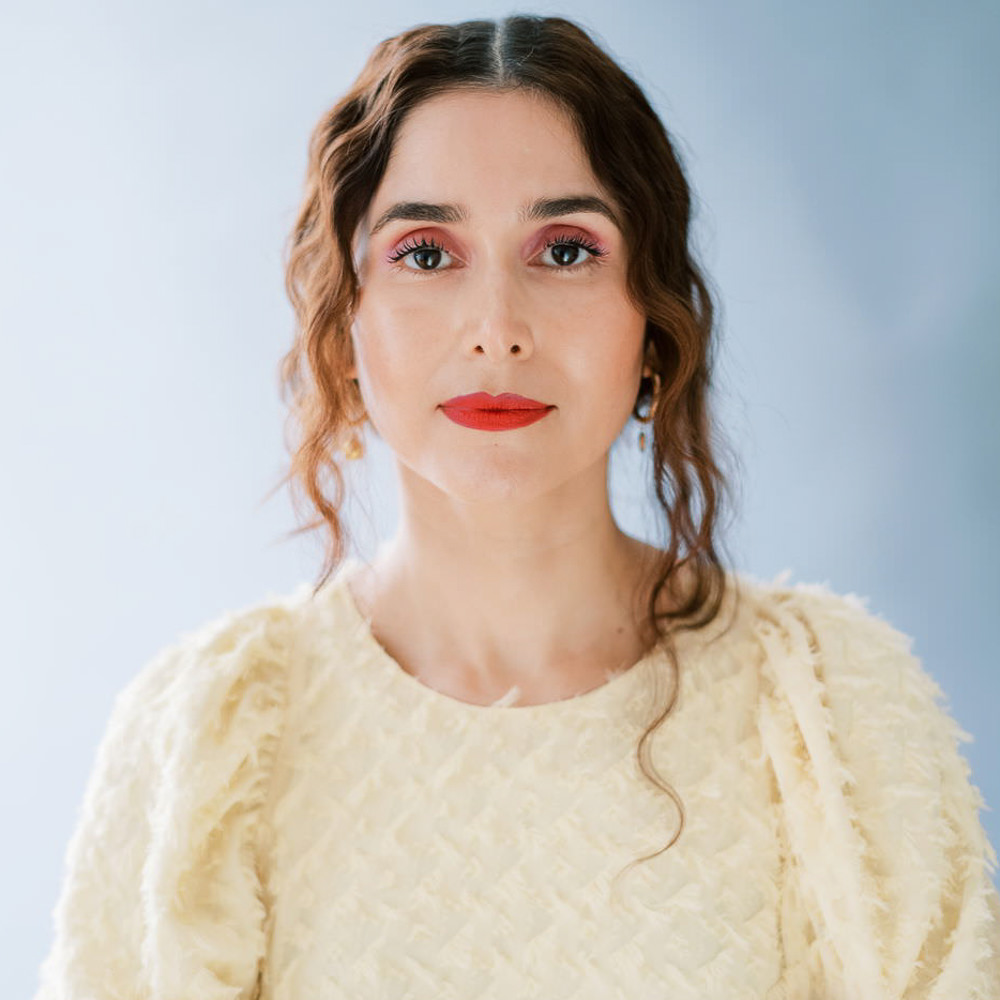
Marlene Vinha Hair & MakeupPretty Exquisite
summary
The conversation with Marlene Vinha opens a window into a philosophy that stands in sharp contrast to the meticulous planning most wedding professionals advocate for. Her approach is rooted in spontaneity, trust, and an almost spiritual openness to life's surprises—yet it works, and it works beautifully. What emerges from her story is not chaos, but rather a deep confidence in her own ability to navigate whatever comes.
Marlene speaks about ditching timelines and detailed spreadsheets, and instead moving through her work and her personal life with a kind of fluid attention. She notices what wants to happen, responds to opportunities as they arise, and builds her business and brand through genuine encounters and collaborations rather than aggressive marketing strategies. This isn't laziness or avoidance—it's a deliberate choice to stay present rather than locked into predetermined outcomes.
What's striking is how this philosophy has attracted exactly the right kind of clients to her. By not chasing a particular market segment or forcing herself into a specific niche, she's ended up working with people who resonate with her values and her way of being. There's a resonance here with the broader conversation about authenticity in wedding work: when you stop performing the role of who you think you should be, and instead show up as yourself, the right people find you.
The conversation touches on the vulnerability this approach requires. Not planning means tolerating uncertainty. It means trusting yourself in real time. For many people, this feels reckless. But Marlene's lived experience suggests it's a form of wisdom—the wisdom of knowing what you can handle, of staying rooted in your own capabilities, and of believing that life will provide what you need if you're paying attention.
There's also a generational or cultural element to her perspective. She speaks to the pressure, particularly on women, to have it all figured out before you start. To have the perfect plan, the perfect image, the perfect trajectory. Her refusal to do this, and her success anyway, becomes a quiet challenge to those assumptions. It invites listeners to ask: What would I do differently if I gave myself permission to not know everything in advance?
key quotes
"I don't plan. I let life surprise me."
"When you're not forcing yourself into a box, people who resonate with your values naturally find you."
"There's a difference between being unprepared and being present. I choose presence."
"I've learned more from the unexpected collaborations than from any strategy I could have written down."
"Planning can become a prison if you're not careful. I prefer to stay free."
"The clients who stay with me are the ones who appreciate that I'm real with them, messy and all."
"Trust in yourself is not the same as trust in certainty. I trust myself to figure it out as it comes."
"Every time I've tried to force something, it hasn't worked. Every time I've let things unfold, they have."
transcript + show
episode: 27 title: "Ep. 27 - "Não planeio. Deixo que a vida me surpreenda", com Marlene Vinha" pub_date: "Mon, 30 Sep 2024 05:00:00 +0000" original_language: english source_audio: "45c61031.mp3"
Hello, welcome. I'm Rui and this is the The Wack Podcast. Welcome to another episode of The Wack. And today I have, as usual, an extraordinary person, wonderful, that I like a lot, that I've known for a long time, and that I have the pleasure of sitting down to talk to today, in a way that we never did, as has been the habit, I say this almost always, because it's really sad, because we've known each other for many years and we never had the opportunity to have a decent chat and in a while, right? And without further ado, let me introduce you to Marlene Vinha, make-up artist at Pretty Exquisite. Hello Marlene, nice to meet you. Hello, thank you very much. First of all, thank you for the invitation and for making this little bit possible, to really bring to light what we've never seen and studied together. You want to talk, talk about the work context, right? But we'll talk about work, possibly, but we'll talk about the work context. We'll talk about my sister's work, right? Yes, yes, yes, yes. But there you go, I won't repeat myself, but it's true that this game has made it possible for me to talk to so many amazing people and to spend this time with them, and it's really super interesting. Without a doubt. And now, to start, I have a small, simple question, and a quick answer, in principle, which is, what is the context of your life that made you who you are today? Thank you and good morning. Thank you and good morning. The context of my life, well... I don't think there was, probably, any moment that made me who I am today. There were several moments, several moments in our lives in which we have two or three options, and we follow one of them, and it takes us back and forth to show us where we are today, right? And I think that's what happened to me, in the sense that I never wanted... By the way, when I was a child, and I wondered what I wanted to be, I didn't know. I never realized what I wanted to be in the future. And that's why my path has always been made up of experiences that I had, things that I knew, and options that I made, and that brought me to where I am today. That's why I started by studying at the Bellas Artes, right? And then, this question of cosmetics and makeup has always been the same, as a hobby, as a hobby in parallel. But you always liked it. You always liked it. Because, for example, I have Beatriz, Beatriz is my daughter, she is now 11 years old, but she started to be interested in these little things from a very early age. Maybe at 6 or 7 years old she already thought it was a joke to play with this. Did you also start watching, or not? No, no. My mother says that when I was 2 or 3 years old she would give me alcohol and I would go to her lips and take off the lipstick and put it on my lips, you know, that child thing. But I think that my parents are also exposed to this type of more concrete stimuli, right? And that, perhaps, from an early age, they can understand things they like. When I was a child, I didn't really have this notion of makeup, it wasn't even a profession that I found out to be something like the future, or that I wanted to be. But it was always something that was parallel to everything I was studying and doing. Namely, I had some skin problems when I was a teenager, so that forced me to pay some attention to that, to be getting to know, to want to know more. And then it was like a chain of situations that brought me here. So, my sister is also from the area, not of singing, but from the fashion area. She created the Pretty Exquisite project, and I also helped her and started with her. But it wasn't even supposed to me to dedicate myself to this all the time. She has some jobs, and I also started working with her in the area of weddings, because she also does the consulting of grooms, if necessary. And then, one thing led to another, right? And I started having more work, and I think it was this option, at a certain point, joining her, that brought me here. If I was told this 20 years ago, I would say that I would be doing what I am doing today, right? I wouldn't even know what I wanted to do, but I wouldn't be here, for sure. So, it was these options that brought me here. I think it's an interesting thing, that maybe we... You spoke 20 years ago. I think that maybe in the past, and I'm talking a little bit about horns, I think that maybe in the past people, or children, or young people, or whatever, knew a little bit more what they wanted to be, and the theoretical options were a little bit smaller. And today, you know that the world is so rich, and the possibilities are so many, that I think it's a little bit limiting. I mean, when you can find that vocation, and you go there, it's spectacular. But I think it's normal, at least I see it, it's a little bit normal. Like, we go one way, and then you go the other, and... No, but I mean, my sister, she's here, my sister, she's the guest here, but she ends up, because we work together, she ends up with 4 or 5 years choosing the clothes. So, we already foresaw that, very possibly, her future career, and her professional achievement, would go through the clothes thing. And that's how it was. In my case, it wasn't that I liked it, I wanted it, etc. But it wasn't anything that was good. That's why it's funny to realize, like you said, there are professions that arise today, that for some years didn't even make sense, or didn't exist, so that also opened up many possibilities here, without a doubt. I want to talk to you about this guest of yours, but I'm very curious about your sister, that you just mentioned. I've heard this story, and I think I've already talked to you about her. Your sister, a few years ago, quite a while ago, 10 years ago, they told me she had a shoe collection at the time of the 200 pairs, or something like that. I imagine she already has more, I say. Yes. Some. But at the time, I don't know where I heard it, I don't know if it was you who told me, or someone who told me that this came up, because there was a time when she, I don't know if it was her or you, went to a school that had a skirt, a school skirt, and the only way she could wear it was the shoes, that was how it started. Yes, without a doubt. She wore a skirt, so the clothes were never a way for her to distinguish herself from the other kids, so it was like the shoes, it was something she could show off. And so it ended up starting this passion that she has, and at the moment she already has around 400 pairs. That's why. But I think that's wonderful, because it's one of those things, I think that collecting, whatever it is, is something that enriches us in some way, and in her case, it's so connected to what she does. Yes, it's something that makes us happy, and it's something that, not doing harm to anyone, sometimes it does to our bank account, but it's something that gives us some kind of pleasure, and we value those objects, no matter which family they belong to, but in this case, she has them there, like an exhibition, and it's funny. It must be an interesting exhibition, at least. And you, do you have any collectivism, any peculiarity in that sense, associated with your work, with your passions? Look, I have a cosmetic collection, I even have a wardrobe to hang them, and have everything organized the way I like, and I have one thing, that really, since I was a child, I started maybe at 10, 11 years old, I make collections of miniature perfumes, so I already have a collection relatively... Nowadays it's a little more difficult to find and sell, but at the time, in airports, in those types of stores, there was always, or they offered a miniature, and I have around 150, almost 200 bottles, I have this collection. It's also related to... It's the only thing I have in my collection, the rest I don't have anything else. You started before you started your profession? Yes, yes, yes, I had... No, no, no, no, yes, yes, I had... I remember I was on a cycle, so I was 10, 11 years old, and I started this collection. It was something I already liked at that time. Imagine, I had perfumes that weren't even suitable for my age, super heavy perfumes, and I already loved collecting those things that supposedly weren't for my age, and they weren't, but I thought those miniatures were funny, and I started collecting. I have a collection there, things that don't even exist anymore, even some relics, but it's the only thing I collect, but I have them there, and it's funny. Going back a little bit, you didn't have a defined path, or if you looked ahead at that time, at that age, you wouldn't be doing what you do today. No. But you're telling me that around that age you started doing something that has everything to do with what you do today. I doubt it. How would you try to define these two paths in which it's not this path you're going to do, but you already have that little bug there, and you end up there. How do you go about thinking you're going to do something else, and you end up doing what you already have a passion for? I think we always end up, if life gives us the opportunity, and I'm glad it did, because I always say that, and you know, our work is a work, like everyone else's, that has happier phases, others are more difficult. But, at that time, it's like I said, there were those good ones, those obvious parallels, as I can only say, and when we talk about professional options, I always studied in the area of numbers, and also mathematics, but the art part was always parallel, because I enrolled in many activities with painting, ballet, dance, music, and the interesting thing is that one never chose the other, so we have a more rational side, more organized, more mathematical, I'm also like that, I have a rational side, and I feel great, but on the other hand, if you don't have the creative side, sometimes disorganized, of life and the unforeseen, not having a routine, I also miss that, and our work, what we don't have is a routine, and I like that a lot, because you meet different people, if not every day, every week, we work in completely different contexts, sometimes I saw myself working in the office, in a place from 9 to 6, it was that organized schedule, always the same people, so this is one of the things I like about our work, we work in different contexts, we meet different people, different environments, different rhythms, sometimes we have more work, we work 12 hours, other days we are more relaxed, so this duality that ends up in the work fits me well, because it also fits my personality, my way of being, of having these daily challenges, of planning work, sometimes we have to do some homework, I'm talking about fashion, some things we have to prepare, it's not just getting there, these things don't show up like that, so it fits me well, it fits my way of being, so even as a child, and if it wasn't a perspective, I ended up finding here this way of working and of being, that at this moment, I sometimes say, I don't have much patience for certain things, to walk with my bags, back and forth, so if you tell me, in 20 years, if I'm going to do that, maybe, I don't know, it ends up working well for me, for now. I had this question before, but I do it now, but do you think about the future? I don't think about it much, because I never thought about it before, and life brought me here, I don't think about it much in 20 years, because I don't know how life will take me there, I don't even know the opportunities that will open or close, because sometimes we end up going in a different direction, and so, maybe, in the area of make-up, I don't see myself working in 20 years, because I think, sometimes I have to talk about this with some colleagues, I think it's an area that is a bit cyclic, a bit by fashion, and a bit circular, so possibly in 20 years, I won't have anything to add, or anything new, or anything interesting to do, but honestly, I don't know what the path will be, there are some possibilities, but I also have to work for it, if I want to make it happen, so, we'll see. Also, when you talk about 20 years, it really is a very long time horizon, and you have no chance of predicting what it will be, but do you think about a closer future? Do you think, I don't know, 3 years? 5 years? No, I never think about it. Don't you do projects? Don't you have that goal? No, I don't. I remember that a few years ago, I was studying for a few months in New York, and in one of my first classes, the teacher said, he started asking questions, we were all colleagues, he started asking questions, so we knew, in 5 years, it's my turn, and I can't really do that kind of project, I can't project, I know that on the one hand it's good, because if you have a goal, you work to get there, on the other hand, I always see this as avoiding a frustration that can come up, because we have a very closed goal, very objective, and we work, and we can't reach it, and that also leaves us without ground, without possibilities, sometimes to resort to other things that appear along the way. So I try not to think about it, I don't really think about it, I don't think about it, I don't make plans. In 5 years, I want to be doing that. No, it's genuine, you talk to whoever you want, and no one, I never commented, don't put me making these plans. I understand, but is it something you prevent yourself from doing, or when they ask you to do it, you have to think a lot and you end up, I mean, naturally, I don't think about it, no. No further dream? No, not at all. And it has worked well, because it just came up here, and life surprised me with things that, as I said, I didn't expect to do, and it just works nicely, so I don't think about it at all. We're talking about 20 years, and 20 years goes by in a flash, it's a long time. And currently, the only thing I have, that I think won't really happen, is to continue working in the area of make-up on its own, because I also work in the cosmetic and facial part, so, possibly, it could be out there more, the future will be more out there, I've also been doing some training and I've been investing a little more in that area, because I think it's an area that doesn't have time, it doesn't have this fashion context that I think make-up has, but to continue working in make-up, I don't say no, I also say no, from now on I'm not going to do this anymore. Yes, but let me ask you this question, at the level of my ignorance, when you talk about cosmetics, you're referring more to skin treatment, things that have to do with that base, less to the aesthetic part of the thing, right? Yes, I have a more cosmetic finish. In that part, in what sense? Research and things like that? Yes, I've been doing training related to that area and I've had some search and, in fact, sometimes I don't even disclose the time, because I also don't have much time to be investing seriously and only, less in that area, in the days with it and I also don't see myself being in a office tomorrow night, serving people, for now it doesn't work, everything is fine, because I love doing that job too, but at this moment I like it and I'm fine with having some work in the office and tomorrow I'm going to my studio and I'm going to be there almost all day, but then I have a wedding and on Saturday I'm also going to so, for now, I like that balance, the work from the inside to the outside, I like to have that dynamic. In the future, maybe I won't have to pay in suitcases and certain things that nowadays the work of a make-up artist implies, right? And so, possibly I'll have to rethink that question, because the work of a make-up artist is physically also very tiring when you have to walk behind the work, right? So, from now on, on Saturday I went to Lourdes, I stayed there until 4 in the morning and then you get there and you have to give your best, you know, be impeccable, you can't go there and sleep at work, you have to do the work back. So, physically it's a tiring job, walking with make-up on, back and forth, so it's physically hard, right? It's such an interesting part, because I would say it's the overwhelming part of ordinary people, and even among us different disciplines of marriage, you don't look at marriage in general as a physically demanding area, outside of that, no one thinks about it, and even those who are inside sometimes have a hard time thinking outside of their own. But when you're there, and in all the years we've been in this, I've witnessed a lot of these things, and the truth is that we all have a very demanding job, not only the hours you have to wake up, the simple fact that maybe you're at a wedding and you have 10 people to make-up, or 7, or 8, or whatever, and suddenly you're there 4 or 5 hours standing, without stopping for a second, without being able to sit, it's demanding, and the weight of your bags, right? Yes, yes, without a doubt, and if you allow me, it's not only the weight of the bag, but notice, something that a lot of times people tell me, and I don't have a lot of this notion, but even photographers and clients tell me, is that I'm always very calm, I'm always serene, I can be at home, I don't go late, I'm always there, and this comes out of me. It comes out of me. It comes out of me because you're there, you're not a sponge, you're there observing those energies, more stress, more negativity, more anxiety, and you can't get into that spiral of panic, because if you don't, it's total chaos. And this comes out of me in the sense that sometimes I get home, I go to the sofa, and this is true, during the day I'm focused on work, I do my best, I try to spend that calm, that serenity with you, but when I get home, my body hurts, everything, everything. You know, it's like going to the gym, it's arms, it's legs, it's really stifling. Mentally, you have to have that capacity of concentration, of working in panic, and you try to do your job, which is a job that I take a lot of responsibility for, right? In this case, literally. But you can't get into that spiral of panic and say, I can't do this, I can't do this, I can't do this, I can't do this, And you, for sure, we've been married together, when the time comes, everything is fine, and then all of a sudden, all of a sudden, and you can't get into it, because otherwise you can't work. And that, physically and psychologically, is also very tiring. I don't know if people have that notion, which I don't think so either. But I believe, I believe, and those who work have this notion, right? And then when you wake up early, and you're there, and then you can't be there, and you're tired, you just wait a little bit and you go to rest. Or you may have problems at home, but you don't go for a happy day, like a wedding, with a closed face and a bad response, right? It's a day, for you it may be a bad day, but for that person, it's a day that will stay in your memory and it will be a good day, I hope so. And so, you're going to contribute with your best, and sometimes that costs us dearly. No doubt. You spoke at that point of the sponge, and curiously I had already been told that, when you did, you spoke at the Say Wow! And at the time, you spoke about that, and I hadn't made that connection, I hadn't put it in those words, but that's really what I feel, that's part of our job. I joke, I say many times that, I joke, I'm not joking, but it's also serious, that being a wedding photographer is almost more psychology than taking pictures. And, in the end, your part, too, in a way, all the professionals involved have that part, but we, who are in certain moments, or along certain phases, end up feeling more. And you live this part, which is the most stressful part, which is before the ceremony, and you have to do, sometimes sponge, other times, just a wall of protection, whatever it has to be, to keep some calm in that person. And we, too, we follow along the day, all those... People! Yes, that's it. It's everyone. That's it. Normally, the main stress comes from those people who are supposed to be helping. Yes. And it's difficult, sometimes, for a bride to need, or have, or be able to put her mother out of the room. And, many times, it's us who have to make that little bridge, or wall, whatever you want to call it, to create that. And it's totally what you say, not only in physical terms, but in emotional terms, you reach the end of a day completely... Very tired. There are easier days than others, of course, but some of them are really tiring, really exhausting. A lot. And, look, we do this, right? Sometimes we have weddings on Thursdays, Fridays and Saturdays. I think I had six weddings over the weekend, and, obviously, not all of them present these challenges. But there's always a challenge, no matter how small it is, there's always that anxiety, that nervousness, which is perfectly normal. But you deal with this, two, three, four days in a row, week, challenge, month, challenge, right? I really feel that, in the middle of the season, I have to stop for a few days, because, at a certain point, you can't help but be patient, you're available. And I think that's an important thing, not only on the day of the wedding, but also on the day of the competition. The day of the competition is a day that, usually, the brides anticipate with a lot of anxiety, right? With a lot of enthusiasm and a lot of expectation. And, well, you can't go there, desperate, sleeping, without being nice, without trying to do everything you can to get to what she wants. They're people you've never seen in your life, most of the time. So, you don't know what's going to happen to you there. You don't know if she already knows what she wants, if she doesn't know, if she has a lot of... Well, if she has a lot of things, sometimes, of an image that she doesn't like, and that we have to try to turn around, to give her confidence, so that, on the day, everything goes well. So, it's all a job that's not just on the day, it comes a few months, a few weeks before, and that, on the day, culminates in what is the bride's preparation. And it has all these physical and psychological issues that, I think, people sometimes don't think about. And that's good, because if that never happens, it's a sign that we're doing our job well. Because we start doing everything very easily, right? It seems that everything is very easy. Have you ever felt close to the limit? During a wedding, a bride, or before? Not necessarily during a wedding, but in a certain phase of the work, of the wedding season, whatever it is, where you say, this doesn't bring me any kind of enthusiasm, I'm already at the limit. No, I've never felt close to that. There are times when I say, I don't want to see people so early, I really feel that it drains me, you know? My energy, being more positive, it drains me. But I've never reached that point of being something so horrible that I say, I don't want to do this anymore. So far, it's never happened to me, and it hasn't happened to me yet. But I don't know if, eventually, this will happen in life. But that's what I say, this is also up to us. We have to find some balance here, and also try to get out of these stressful days. We also have our moments, right? And give ourselves, as I said, a few years ago, I did the whole season without breaks, right? I only took vacations there for November, December. And now, for July, beginning of August, I've been feeling there for a few days, and I feel like I'm doing well, and I miss it. To avoid exactly reaching that point of saying, enough, I'm fed up with this, it doesn't work. That's why I think it's also up to us to protect ourselves, and also, we try to sleep well, those things, right? The daily hygiene, which also makes us face these challenges, which are part of the job, right? It's a job with its good and bad things, like Elvis. Trying to learn from the mistakes of those around us, from those who came before us, from those who did more. From our own mistakes. From our own mistakes, but in this perspective of not letting it be an exaggeration, to realize that there are people around us who made us exaggerate. Without a doubt. Realizing that it's not necessary, and that we don't really gain anything from that, we only lose. Also, taking a little bit from there, how do you manage to maintain your mental freshness, but at the same time also your creative freshness, throughout a long season, of several months, of many weddings, a lot of work, work outside of weddings as well. How do you do that creative cleanliness throughout your year? I have to say that this has nothing to do with make-up, but with a question of maintaining it. I adopted some things, I've been doing this for 14 years, and I learned a lot from my mistakes. One of them, very simple things. I used to go to a wedding, I didn't eat, I didn't drink, I didn't go to the bathroom, things like that, basic essentials, and now that's over. I organize myself to try to eat well, even on that day, because sometimes, even on Saturdays, I started working at 4.30, I started working at 6.30, I went home at 4 in the afternoon. You don't have an organization to eat, to drink, to rest, you do all this three times, and at a certain age, you don't do it anymore. And then it's a loss, even on Saturdays. Your life is like that, you go to drive, it's the end of the night, so it's very dangerous. And so, those basic things, eating well, writing in the gym, having days where you have the luxury of having a morning where you don't do anything, washing your brushes. One thing that also feeds me very creatively is organizing my material, my makeup, cleaning, taking out, doing that natural product sorting. Sometimes going out and seeing, I don't know, going to perfumeries, going to places related to makeup and seeing new products. Going to the museum, reading books, which is something that I don't have time for during the year. Books that have nothing to do with makeup, technical books, nothing very specific, but more, that you end up feeding. The other part is also important, right? That allows you to be in that balance. Spending time with family, doing those things that I think, at a certain point, we can forget. And I think, at a certain point, I forgot that there are really very good things from the essentials that we can take out. And that's it. You know, you give yourself a little smile, look, today I'm going to do something. I started. I started to force myself and force myself to stop and say no. Look, I'm working two weeks every day. Something is going to come up, but I'm going to say no. Okay, it's going to cost me, it's going to. And you think that thing of, ah, I'm going to lose my job, it's going to. And you keep thinking. But I had to start saying no. And one thing I didn't do either, initially, was to close the schedule for holidays. I accepted work. Always, always. And at a certain point, I had like 60, look, in 2016, I had like 60 weddings. And I didn't have, I couldn't go on vacation. Because, at a certain point, I stayed with the schedule all Friday, Saturday, Friday, Saturday and Sunday, right? And I looked at the schedule and I couldn't go. And so, even if it's to stay at home. Close the schedule and have those days to do anything. I don't know, whatever you feel like doing or not doing anything. And I think that's important. And I think that's not a science that we don't know about. Sometimes we don't give ourselves that courage and that strength to do it. Exactly. I think that's the word. Courage. It seems that we lack, that we lack. I think that in our case, I never got to that point of not doing it. Because, also, the fact that, well, Beatriz is 11 years old. So, 11 years ago, when we have a child at home, she already remembers that there are holidays and that there are vacations. And you end up having to force yourself to do something. But, for example, this year, specifically, we did a 5-day vacation. Only, well, under the micro, almost under nothing. Then, adding the tiredness of being on vacation with three children. Because we didn't have the courage to do things on time. And to say, no, this is important. This is important, we have to do it. And... We did it. But we didn't do it as we should have. And I think that, really, it's something... Especially when you're at the beginning, which is understandable. But then, I think you can get into a spiral of... You think it's always like this, and it has to be like this. And you need to have the courage to say, no. This is cool. I like this job, I like doing this. And then, because there it is, what I've said several times, you get to a point where you say, if you don't do this creative cleaning, you get to a point where you say, I don't want to do this anymore. And what you liked, and what you really loved, becomes a weight in your life. And I think it's not cool. When you like what you do, I think it's sad when you get to that point. And I was very close to that. But because of external factors, or internal factors? Because of this type of issues we were talking about, people reach their limits. People reach their limits. You stop doing exactly what you want to do. Maybe you don't do what you want to do regularly. You get into a spiral. And then, when you give up, you think, I don't like this anymore. Fortunately, I got out of that spiral. I went back to a spiral, and now I'm more excited than I was maybe 10 years ago. And that's cool. But I know that several colleagues stopped photographing. I know that many of them did, for various reasons. But I think it was for many reasons. I was talking to a few of them, but it was for many reasons. But one of them is the issue of not being able to find a way to clean my creativity and my state of mind in relation to this. Not doing things that would compensate. Not creating those routines, or those situations that would create lightness, or remove the weight of work. And I think it was... You work... You also do things besides weddings, right? And we, in these 14 years, only do weddings. All the little jobs that we do, in terms of revenue, mean nothing, or very little. So, the weight was the same. There was nothing that would take me away, that would be interesting, and that I could balance. And that's why you talk about that courage. I think it's important. Because I like this. And because I need this, and I want this, I have to have the courage to say that it can't be true. You can like chocolate a lot, but if you spend a week eating chocolate every hour, you'll stop liking it. But it will make you suffer a lot. And I think it's a bit like that. But now, let me ask you this more technical question, going back just a little bit. From what I understood, you had your studies, and then, as your sister started Exquisite, you were at the beginning of the process, and it made sense for you to be part of it. But what did you do before? I taught classes, and very few people know that I still teach classes. Because it's something that I like a lot. I teach classes at Minho University. I teach design classes. There's a fashion design course. And so, it's something that very few people knew. So, I didn't know what I was going to say. People ask me sometimes in conversations, that I used to work with Vanessa, and she also didn't know. Almost no one knew. And it was in conversation that it worked out. And so, I used to teach. So, I left Exquisite, I started teaching classes, and at the time, I did the makeup course at a time when I was doing a professional internship. I was unemployed. And, on the one hand, it was great, because when you start working in makeup, it's a bit like a vicious cycle of you don't have work, you don't have money to buy material, you don't have material, you don't have work. Because, you know, one thing needs the other. And at the time, it was good that I was teaching classes, because I ended up spending money. I was teaching classes on material and I invested in makeup training, and facials, and everything I wanted, and that I've been doing. And so, it was good in that sense. I had that autonomy and that possibility of doing my own work kit, which is something that, for photographers, is also important. In makeup, you also have the material that allows you to also reach clients, and that also ends up interfering in the type of work you do, in the quality you do, right? And so, I was teaching classes, and at the time, I didn't have a lot of work in makeup, right? I don't know, I did a wedding per month, two or three per summer, it was like that in the beginning. It was something that also completed beautifully, I was teaching classes all year long, and then, only in the summer, I had the brides. And that's what I did. I worked in the arts, teaching, visual arts, and in the meantime, I was invited to teach classes at the University of Domingo, as an assistant guest, in the fashion area, which also makes some sense, right? It's related to the parallel area that I worked in weddings, fashion as well. And that's it. So, it's a scenario that, at the moment, I like to approach, right? Because I feel good doing this type of things that are different, even if it's within a common area. But, at the moment, weddings are your main source of income, or is the work extra-wedding? No, until relatively recently, I worked a lot, and I'm working, but not so much, opening up a bit of work in fashion. So, my main source of income was doing e-commerce fashion. So, hair styling for e-commerce was what I did the most. In the meantime, this area softened a bit, as we are also in the summer, it's always the time of weddings, so between May and October, November, it's always a time when I'm quite busy, because I have weddings on the weekend, and on the week, I have to write the agenda to do the tests, right? So, all this preparation of the days of work, of the wedding, and that's why at the moment, maybe, this year, it's been more weddings than the fashion area itself, although it's also a bit seasonal, uncertain, right? Those who work know that you can't really do many plans for the future. We can do here an analysis of the past, and so far, that's how I've been managing my time. And, well, the classes also happen during the school year, weddings are more in the summer, fashion is more during the week, so that's why the schedule, as you can see, is a bit chaotic. I have to manage this work outside the studio, in the studio, because there are people wanting to schedule, and sometimes I have to wait for a month or two or three weeks to be in attendance in the studio, and that's it. But, for now, I have managed to organize myself, and it makes sense to be like this. Do you like this part of the work, the management, the numbers, the recipe, the organization, do you like that, or is it just unnecessary? It's unnecessary. I don't dislike it, I don't dislike it, because I'm a very organized person, I like to have things minimally controlled, but that more analysis work, finances, I hate it, I hate doing it, but it's unnecessary. I think there's no way, not even to sell my business, not even to analyze my business, because, as I said earlier, when I started working, I spent almost all the money I earned on material, which, you know, that's it, isn't it? I wasn't a person who needed a lot of money, but I hadn't done that. That's common, Amazon spent more than what it received for years. It was a bit like that. And then we also have here a question about make-up, which I think that sometimes, here in Portugal, it's important for people to have this notion, which is, the make-up material is very expensive. It's a material that has a relatively short duration, either because you spend it, or because it gets spoiled. And here we don't have, there's no professional make-up artist, not even recognized in finances, right? So, there's no professional recognized. So, we're there between the image services, between the hairdresser and the manicurist. So, it's not even a very clear thing, it's a gray area, but it's a profession that is not properly recognized with all its specificities. It's a profession that is often not recognized by the public in terms of investment and what it is to be a make-up artist, as we've all said so far. And even in technical terms, right? I go to a store to buy make-up material and I pay the same as if I went to a make-up store to buy make-up. We don't have any regalia, obviously very punctually, there's another brand, seriously, there's another brand that, for example, I took the Make-up Forever course, it had a discount on the brand. Curiously, in foreign brands, You send your portfolio, your website, a call sheet, your name, your diploma, and most of the time they recognize you and you can buy it. Here in Portugal, no. You go to any physical store and there is no discount for anyone. This leads me to the point that it is a profession that in terms of expenses, we are also talking about finances and management of all this, it is difficult because, for example, I look at my kit, I know how much money is there, sometimes I don't even know well, but I have an idea of how much is invested there, and you charge X for a make-up, and I follow American make-up artists from other countries where make-up is really a valued luxury, they have the same products, but they charge and receive 10 times more or 20 times more than what we have here, which leads us to a question of analysis, we have the same work kit, we do the same type of work for years, brides, whatever, but he receives X and I receive Y much lower, and therefore in terms of profitability, being an area where this aspect is sometimes taken into account, I think people don't have a notion of that. In addition to that, here you also have to buy everything, right? There are many countries where brands make releases and send the material for make-up artists to know, use and work, but here there is not much of that type of work, which often makes our profession difficult, at that level of investment and financially, right? Because sometimes the taxes to pay, all the material to buy, it's very difficult. It's very difficult if you can do it, if you have a good life above the normal, I think we are all looking for a little above the average, but it's really difficult just as a make-up artist, right? Yes, I think so, in my experience, if you actually value it, right? I'm always looking for the materials, the waterproofing, right? That the bride can stand, right? That she can withstand the day of immersion, and that costs a lot, because sometimes you buy two or three products and you only take advantage of it, right? But you have to experiment, and you say, look, does it work to be in the kit? Does it not work to be in the kit? And so, that's a job that I have a closet at home with so many things that sometimes don't work. You buy it, you promise that it will do a skin, I don't know what, that it will last a week, and it doesn't happen, right? And that's why it's an investment that, in addition to what you really use, it's an extra instrument that costs money. And, of course, it's not valued, it's not supported, and it's not easy to balance sometimes. I really didn't know that part, because I think it's super common for you to be able to have resale prices, right? We, as photographers, have a number of stores that sometimes make you a different price for being professional, or because you don't pay VIVA, or things like that. I go to the same perfumeries that any client goes to. That's it. I didn't know that, and it's really a huge disadvantage. But it's not... Of course, you get contracted. And since it's also not a very valued profession in the public square, because anyone thinks they do it, or anyone thinks it's all the same, it also becomes more difficult for you to take that step, right? And to be able to have a well-paid job, or a truly well-paid job. Going back a little bit, here's the question, I mean, related to this part, but a little further on, which is how do you put yourself in the market with all these difficulties? Look, you're talking to the worst person in the world, and around, to talk about it. Because, perhaps, Sofia, Branco Pará and André and even Vanessa, sometimes told me that I'm terrible, and I assume that I'm terrible. So, when we started this project, we invested at the time in a website, which is a more or less static thing, right? It doesn't have much... We're talking about the primordial of social networks, which nowadays, most people move out, create their own business, and spread their business around. So, when we started, there was none of this. On the one hand, for better or for worse, it's easier or harder to start. I don't know, maybe it's harder. And so, initially, our marketing, non-existent, started with, you meet someone, you start doing a job, the person likes it, and, in fact, that's the thing that's been maintained a lot until today. So, most of my work in the area of weddings is for recommendation, most of it. Brides who recommend brides, brides who recommend brides, relatives, people who liked me, my work, and that ends up being good. If someone recommends me, the best way for me to get to that person is to go, endorsed by someone who saw something good in me. So, in terms of marketing and dissemination, it's a lot out there. I'm terrible at social media, I'm a noob, I use it a lot, more in the sense of sharing the day-to-day of the professional collab. Until recently, I already worked in the area of facial cosmetics, and until recently, almost no one knew I did that. So, it's a sign that I'm not reaching the right people, because I don't disclose. Not necessarily, because the work is there. People go, and I get work, it's a fact. But I don't have much, so I would like to have here a spectacular strategy to share, who is starting, or who is in this work, but I really don't have it. But there are values that I think I would like to improve, that's a fact, but there are values that I always kept and that I will have to keep, whatever path I follow. Honesty, transparency, spontaneity, there are things that not everyone went out to make videos, to dance, and we have to accept that. And there are these values that sometimes are complicated and that you end up, at a certain point, being able to cross your path. Because I know, for example, the fact that I am very honest when I talk about products, tells me what I think, already brought me here, and my partner says, look, I'm just saying if that's true. Of course, sometimes they don't want to, and so, in terms of strategy, of positioning, there are things that I will never compact and that will not work. And those values that I told you, that was always part of my way of working. There are things that I was improving, that I was polishing, there are things that didn't work, but those things are basic, and I will never be able to get over them, for better or for worse. That's your share. I think it's one of the most important things. Anyone can be listening. Because, in reality, what happens? You're just saying that you don't have a promotion, you don't have a digital existence, structured, focused, and all that, right? But your work is good, and the people who know you, who work with you, like you. You are deeply known within the area, within the industry, within the market, by any kind of professional. And it raises a question that, curiously, in the episode, in the conversation I had with Betita, about Parque da Penha. Parque da Penha exists for over 20 years and doesn't even have a website. I think they don't have problems at the level of success, nor the quality of their work. And these examples, like Odela and like OTU, I think they also make us think, there isn't just one way. We don't all need to dance on TikTok. I don't even have TikTok. I don't have TikTok, and neither does my daughter, because, well, I know about existence, but, in reality, there isn't just one way. There are several ways, and I think we should be honest, first with ourselves, and say, ok, this doesn't work for me, this works for me. Of course, there is a growth perspective, and I think we have to learn to grow and do more, always, but we don't need to devirtuate what we are, what is comfortable, to a certain point with our identity or with the one we want to be. And your contribution is saying exactly this. Stick to what is important to you, the values that are important to you. Well, and the rest, things appear, you do your job well, you are a person, you particularly are a super beloved person, that anyone who is with you will like you, the work is great, and you expect these things that you sow in life to bring you the rest. I think we don't need to reinvent the wheel. Yes, it is what makes sense, obviously, but when I say this, I don't mean that digital is something I hate, no, I even like it, I would like to be better, in fact, because it gives me some pleasure, I love to photograph products and share my experience and make small videos, but I don't have that strategy aligned to the point of having here all my business based on that, because sometimes I think, I mean, I'm working, I'm doing make-up, I'm making videos and dances and things, sometimes I don't even have time for that. Look, these photos that I have, several times I say, I was wondering, why did you show me this photo? I've been doing this for 14 years and I've never asked for a photo of a bride. I don't remember, I'm so focused there, sometimes when I go with colleagues, other make-up colleagues or hairdressers, sometimes they make videos and send me photos. I say, look, I'm going to hire you because it's spectacular. I genuinely don't remember, I'm there so focused on the person, on the work, on the time I have to not be late, on the make-up process I have to do to ensure that everything goes well and that the make-up, all those more technical things, it's not like when a photographer is photographing, you have to see the speed of the opening, you don't have to shoot, unlike what people think. There's a technical job that the person has to know what they're doing and in make-up and other areas, it's the same. And so, this is an extra that I would have to worry about and honestly, it doesn't fit in my worries, because I'm already worried, I can't forget the brushes, the fixer and the bride's kit and the extra brushes, I have to take this with me. I'm focused on that, I'm not focused on taking the ring light to make videos and at the moment, I don't have time to go, I don't have the mental capacity to be still thinking about it. And look, until today, I've never forgotten the material, I've never forgotten anything, I've never had a bride say look, it was nothing of this, we did it at the wedding, you got the lipstick wrong, you got the number of eyelashes wrong, yes, because it gets to that point. I count the number of eyelashes I put on my eyes in the middle, I just want to finish. I have to be focused on that, I can't be focused on making videos. Obviously, if I made more videos, maybe I would have more work, but at the limit, my goal, my concern is to fulfill what the client paid me and made a point of me being there. And I know that this is still part of it today. And I would like to be better, I swear I would like it, because I think it's important, I'm not here to neglect these tools, I learn a lot on Instagram, I love it, it's a source of inspiration for me too, not only makeup, but culinary, several things that I like, and so I think it's an amazing tool, and others that people use, but I'm really not good at it, and so what I'm doing is always spontaneous, I don't have that strategy, I don't have a schedule, I'm a novice, not long ago in a collaborative post, that now there are such collaborative posts, I didn't even know that existed, I went there, shared, look, I'm terrible, but I'm not that old man, that everything that used to be good, not at all. But there are things that I can do and that I feel good about, others that I can't. I think everything is a balance, you realize that suddenly everything that is new is not good, in the same way that everything that is old is not good, there are things that are great in evolution, there are things that are bad, there are simply things that don't work for you, or for me, or for whoever, and I think we learn what works for us, the strategies that make sense, and the ones that don't, and don't have the fear of saying this doesn't work for me, I don't want to know, close the door. And other windows will open in other ways. I think it's a matter of not having too much pressure on the sense, because what I feel is that you have too many chains, in the Instagrams of this life, of people that tell you this is how it works, it's this time, it's that, it's that structure that suddenly is supposed to work for everyone. And we feel anxious, we feel worried, because we are not doing that. And what I have seen over the years, and more recently with these conversations, is that things continue to work differently, and there are things that will work, there are strategies that will work great for some people, but they don't work for others. I think it's simply in certain areas, I think your area, and maybe mine as well, wins, maybe not, certainly, it also wins a lot with this sharing of behind the scenes, and all those things, but I also feel that we are reaching an exaggeration, where suddenly I see the 1000 reels that appear on Instagram, and it's all about photographers being filmed. And I, well, one or two are joking from time to time, but suddenly others do the same, others have to do the same thing, etc. That sense of being in the limelight confuses me a lot. Me too. And it's good to realize and feel that we have cases of success, we have people who are working very well, with excellent work and excellent clients, that didn't follow that path. And I think it's healthy for me, personally, and I think it's for everyone. There are many paths. No doubt. And now, more or less, in a straight line, I have two or three very funny questions. One is about the part of the community, and I will ask you this question in an open way, for both senses. When I spoke with Gery at the beginning of the season, she told me that there was no community of makeup artists, or if there was, she didn't know. She doesn't have that feeling of community among makeup artists, and it has been an opinion, more or less, that in general, there isn't much. I would like to know what is your opinion about, first, that micro community of makeup artists, and then also, what do you feel about the other disciplines? I agree. I agree that there isn't that notion, that concept of group, not only in terms of makeup, but in a general way. People, for better or for worse, work in a very individualized way, very focused on their own world, and I notice that in my area. I know, not so much now, there have been a lot of people working in the area of makeup, some better, some worse, it's part of it. But when I started, there were much fewer people working in this area, so I can say that when I started, I knew practically everyone here in the area, but I think that this notion of community is born when people want to break it with this individuality, and I think that there isn't that desire to transfer people, they understand their work, they are happy with what they are doing, and, therefore, it ends up not going to the outside many times, to also look for other people to do the same and to be aligned. I have two colleagues who have worked in this almost at the same time, they are people with whom I work in the sense that when I need something, to set up a team, they are my right arm, as I usually say, and they are people who, in a function, on the contrary, they also come to help me. But I wouldn't say that I don't, I would like that, in fact, there were more people in this group and sharing this notion of, this concept of family, wherever it is. Curiously, I feel this more, me, seeing this notion of community with people, I don't know, with photographers, with people from Cake Design, flowers, than properly with make-up artists. And I think that sometimes it can also have to do a little with the aesthetics that each one follows, because normally we tend to get closer and like things that are aligned with what are our values and what we like to do, and we tend to repel things that are not in that, that don't meet those requirements. It's a stupidity, because I know a lot of people that I don't like the work, the aesthetic part, but technically what is well done. Personally, the person is also, I have nothing to say, why not, because we all do the same, everyone photographing in the same way, the same style, everyone doing the same make-up style. And so, I've already done several jobs, the colleague I don't even know, but I know the job, because a certain client comes with a profile that I think I'm not going to take into account, because I don't have any problem to send it to other professionals, but I think it's necessary to have these meetings, these conversations, I myself, as I told you with these colleagues, I've already joined to give them information of what I know, they give me information of what they know, share materials, we have a group, we are saying, look, I've seen this fixer, I know, what do you think of this, look at this material, I think it's super important. But I also understand, we are such a small country, that there is always that cloud of competition, if that person is going to take me to work, is going to take me to clients, the country is small, as I said, we end up getting to know everyone, and maybe there is that fear, but it's what I say, look, work generates work, and this year I had a very, very big job, I had to gather a team of 14 people to go and do hair and make-up. Look, I met amazing people, and I was sorry that it didn't happen more often, and I think, if I had this job, and I gave work to 14 people besides me, if the opposite happened, all these people would have work, and when they need it, call me, other people, it would be just amazing, because everyone would have a lot more work to do. And so we need to be open to that too, and I don't object to all that, but unfortunately I agree with that opinion. Because I feel that there is more community, sometimes in different areas, and then niches are created, right? You have a family of photographers, makeup artists, stylists, and I'm also talking about fashion, which is also very much like that. And they have that group and work there with two or three variants, in the same way. And I think that sometimes you only gain in having that rotation, that experience and contact with people. But that's my opinion, and I don't know if sometimes the wheel doesn't turn because of me, or because of everyone, actually. I think it's like that, I think it's everyone's fault, and I think that maybe using the word fault can be too much, I think it's simply the situation of things. What I think is most common, and I think it's the main change we should make, is to stop thinking about things that distinguish us, and start thinking about things that connect us. And that's exactly what you were saying, I'm a friend and I really like people who photograph in a completely different way from me. There are always things that connect us, there are things that we have in common, and even with other areas, there are things that connect us, there are things... It's a matter of, instead of looking at each other and saying, but you don't have a time limit, speaking in our case, you don't have a time limit in your service, it doesn't make sense to me anymore. Why? Or you send someone to your place and they're not... Why? These are things that can distinguish us, because each of us will have a certain type of service, the way it works for us. But if we connect, first in the things that connect us, in the things we have in common, we create a community, we don't have to be all robots and all the same, that's all changed in this story, right? But if we connect, we have this in common, and we talk about it, and then we share, because over 14 years we've changed a lot of things, a lot of ways to work, a lot of ways to organize, because, really, in conversations we say, oh, you really do it like that? That makes perfect sense. So I'll stop doing it, because your way is cooler. And the opposite also happens, they do it like that, but I still think mine is cooler. This is that question, let's get together for what we have in common, and let what distinguishes us be what distinguishes us. And I think that, really, if we change that little point, everything gets more interesting, everything gets fresher, everything gets lighter, I think. But I think things will start to change. I really think things will start to change a little bit. I don't believe in revolutions, but I think... Because I've felt a lot this message, I've felt a lot this notion of people saying, we have to be, we have to talk, we have to talk about things, and I think it can be very interesting. To finish, before finishing, because I have here my... Throughout these episodes, my version of what your eyes say has been becoming, but before that, I wanted to ask you a very curious thing, which is, how is it to work with family? That is, how is it to work with your sister? Because we already have many cases of people who work as a couple, but working with siblings, I know you get along very well, but you are sisters. We are sisters, we get along well, but we have our differences, right? But in what is our work, and in the work there are many values of aesthetics, of the way of working, in that aspect we are very aligned. So, in terms of work, it has already happened, she does the styling, does the makeup, and we almost need to talk, because we already have that common background, right? When they approach us, we can't even agree that things flow, and so far it has always gone very well. My older sister, who works full-time in a company, also in terms of study, ends up not working as much, like me, and in terms of fashion too, because initially we worked a lot more together, in that area, and now it is more difficult for her to get space for those jobs. But it's like that, it always goes super well, we are aligned in terms of values, in terms of the way of working, she has more business skills than me, so she is great, so we complement each other very well, because she is very good at putting limits on customers, on prices, on questions of receiving and such, in that aspect I am nothing, I am nothing, right? So when we work together, we end up not working as much as I would like to, because I really enjoy working with her, but it is a joy. But it is curious that over 14 years, I don't know if Pre-Exquisite will have those 14 years, or is it you as a make-up artist who has those 14 years? No, because I started with Pre-Exquisite, it is now in December, yes. 14 or 15, but I think it is 14. It is curious that over those 14, 15 years, the evolution of aesthetics has been common to both, right? Yes, without a doubt, it is interesting, but I don't even know how to explore the subject, because it is all so fluid. Organic and natural. Yes, you don't even ask yourself this question, as I said, we are different, but in what is work, that is what we are talking about here, we always work very well, so it flows well. But I believe that when there are obstacles and other issues that arise, it can be more complicated, right? But in this case, look, so far, it has gone well. And now, this last question, what is your definition of success? Definition of success? It has changed in recent years, that, maturity and life, sometimes bring us situations that make us value what is most important. And for me, success is having time for three things in this order. Family, health and knowledge. That is, we have time to accommodate in our lives these three things that I think are fundamental. Family, health and knowledge. And that's what I've been working on with that awareness in recent years. And that's good, because it gives me the feeling that I'm taking advantage of what I value, and that one day, in the future, it will be important to look back and say, this is what I did, I valued these three things, and if I did that, I will be successful, or I was successful in life. Marlene, thank you very much. Thank you, me too. We were here for another two or three hours, right? Easy, easy. We should have done it in other formats. I hope so. But it was really a great pleasure to have you here. And now, you didn't know this, but this episode of yours will be the last of this season. That is, I will close with you. For now, I'm closing with you. This definition of yours was... I think... It couldn't have been better. I don't believe it could have been better after these 27 episodes. To finish by saying, success is to look at your family, at yours, you included yourself in those of yours, in health, because without it, no matter how cliché it is, you don't do anything, you're nobody, you don't exist. And knowledge, which is the joke we're making here. One day we'll know a little more than the day before, for things to continue to have some joke. So, thank you very much again. Thank you. And it was really a great pleasure to be able to finish this season with you. I think that's it. Good. I hope it ends well. I hope so. Big kiss. Big kiss.
New episodes, twice a month. Be the first to hear them.