
Episode 28 · Season 2
"Não estou em bicos de pés!"
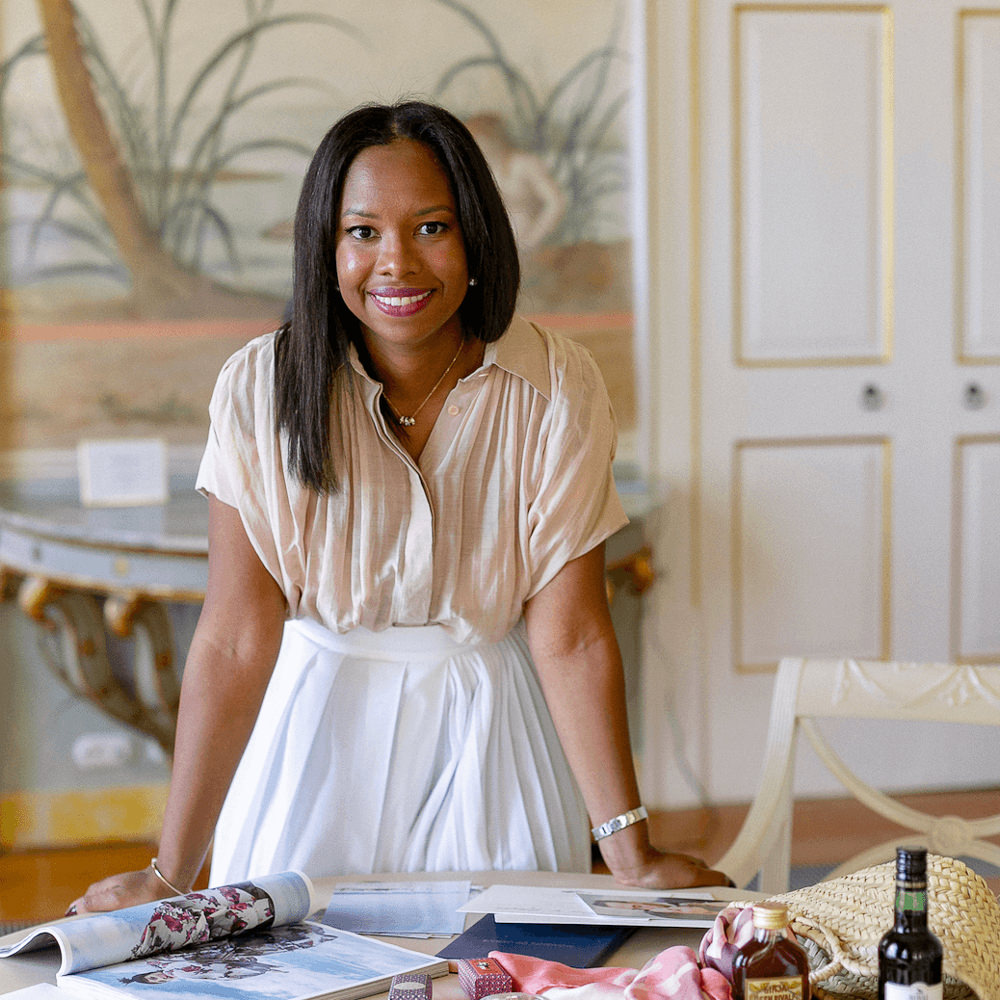
Ivnna Jahate PlanningThe Wedding Wonderland
summary
Ivnna Jahate arrives in the conversation with a declaration: she's done tiptoeing. There's an immediacy to her energy, a willingness to occupy space without apology, that feels almost defiant in a profession often defined by accommodation and service. Her story is about reclaiming power—power over her time, her rates, her vision, and her emotional boundaries.
The central tension in her narrative is one many wedding professionals face but struggle to articulate. The industry rewards accommodation: being available, being flexible, being the person who solves problems and absorbs demands. Clients often come with high expectations and limited budgets, and photographers and planners are expected to bridge that gap through their own sacrifice. Ivnna has spent years in this position, and her realization—that she's been giving away her power—is both painful and liberating.
What stands out is her specificity about what "not tiptoeing" actually means. It's not rudeness or dismissiveness. It's clear pricing. It's boundaries around availability. It's saying no to projects that don't serve her vision or her values. It's deciding that her expertise has real monetary and creative value, and refusing to discount it just because a client asks nicely or claims financial hardship. These are not revolutionary ideas in principle, but in practice, especially for women in service professions, they require courage.
There's also a recovery narrative woven through her story. She speaks about burnout, about years of underbidding her work, about the emotional toll of constantly trying to be accommodating. The turning point came when she realized that protecting her own well-being wasn't selfish—it was necessary. And more than that, it actually made her better at her work because she came to each project from a place of genuine capacity rather than depleted obligation.
Ivnna's conversation becomes a masterclass in reframing. Instead of seeing clear boundaries as limiting, she frames them as clarifying. Instead of viewing her raised rates as greedy, she positions them as a reflection of real value. And instead of apologizing for the space she occupies, she invites other wedding professionals to do the same. The message beneath all of this is simple but profound: you deserve to be paid well for your work, and you deserve to enjoy the work you do.
key quotes
"I was tiptoeing my entire career. I didn't even realize how much space I wasn't taking up."
"When I started charging what I'm actually worth, the wrong clients disappeared and the right ones arrived."
"Burnout is a signal that something is fundamentally wrong with how you're running your business."
"I used to apologize for my rates. Now I own them completely."
"Setting boundaries doesn't make you difficult. It makes you sustainable."
"The clients who respect you are the ones who respect your value. Everyone else was never the right fit anyway."
"I won't do a job that doesn't excite me anymore. My peace is not for sale."
"It took me years to understand that protecting my energy is not selfish—it's professional."
transcript + show
episode: 28 title: "Ep. 28 - "Não estou em bicos de pés!", com Ivnna Jahate" pub_date: "Mon, 07 Apr 2025 05:00:00 +0000" original_language: english source_audio: "6c895902.mp3"
Hello, welcome. I'm Rui and this is the The Wack Podcast. Let's start? Let's go. And now, the most important question. How strange is it for you that we've been talking for two hours and now suddenly we're recording? It's weird. It's very weird. We don't even have a subject, do we? We don't have a subject, we don't have a video. Which is why I made an appointment. Good afternoon. Look, first of all, I really want to thank you for coming here. This is... I don't even know what you heard in the first season, how many episodes you heard, but it was one of the things I was constantly talking about, that for me, the idea of having someone in front of me, at the table, talking, is really spectacular. And one of the things that always attracted me to advance this is I don't want this to be a podcast with my friends who live here in Minha Beira. Exactly. That's why when I invited you more recently to schedule us, and I told you clearly, I opened all the doors, so if you don't want to come, everything is fine, we'll make the video the call, no problem, as usual, and you told me, no, don't worry, I'll stay, but it's kind of a good idea. It was spectacular. Now, some reservations in all of this, which is, as you already realized, everything that is happening here is the first time, the machines... we don't make the most valid idea of how they work in this part of the video, we've never recorded anything of what's here, the amount of things that can go wrong, technically, is fantastic, let's hope not. Yes, the probabilities are very low. But I'm really, really excited about this, because really, you were one of those people who appeared to us completely by chance, and it has always been a super interesting thing to meet you, and as I was saying at lunch, I was trying not to ask all the questions, which is to... To save some for here, right? To save some for here. So, maybe we can start there. Who is Ivna? First of all, thank you for the invitation. I think I saw almost all the episodes, or if not all, of the podcast, and I like it a lot, I feel like I learn a lot from all the people you interview, with you too, with the experiences. I really like it. And coming here, of course, it made sense, first of all, because I didn't know Guimarães, neither I nor my family, so it was fun to come here, to this little carnival escape, and come here to know the city, which is so beautiful. That's why the fairies are so cute. It's average. It really is. Well, who is Ivna? Easy question, just to start. So, I'm the founder and owner of Wedding Wonderland. We do destination wedding, as you know. We've been in the wedding industry for... I don't know, 9, 10 years. 9, 10 years. In my research, the first things you have on Instagram was in 2018. Did you start? No, no, no, I already did a curatorship. So, what you see from 2018 was already a rebranding, it was my first rebranding. So, I deleted everything that didn't identify me, and I already left the editorial that I had done with Caterina Biatto, and even so, I don't identify myself aesthetically with that line, so, potentially, I will do a cleaning here. It's all beautiful things, but there's really a difference in the first 2, 3 years you have on Instagram, compared to what you have now. Of course, of course. Although I don't identify myself aesthetically, I like to leave it for the story, not the path. And I like that people also understand the antiquity of Instagram, because if I delete it, there it is. I think the idea that existed since 2018, I imagine that couples, even though it's still a few years, come from behind, and if I now delete that story... Do you think someone goes to that point? Someone leaves so much? I don't know, people like me. I like to think that when couples hire us, they do that homework, I would say, but maybe not. Do you think they do it? I don't know, I have to say that I would like to think that what we do in terms of legacy is useful, but I think it's all so momentary. Yes, yes, I would say so. People come to me and I say, no, sometimes they even have interviews with us, in the first interview when they hire us, and they don't remember who we are, and I say, ah, you have a stick. But have they ever asked you that question directly? Sometimes by email. I see that there is some confusion, some things that they tell me that it was not me who they spoke to. But that happens when I send an email to a person and they get a little confused. We have already been asked for budgets for cakes and packages. And then, despite everything, and I get a compliment from Wedding Wonderland, you can understand that it can be a panoply of things, but this is so futuristic, and I don't know, you can't leave much room for it, can you? You are extremely attentive these days. Yes. But I was asking you, and you answered me from a work perspective. Yes. But before Wedding Wonderland, who are you? What did you come from there? What was your life before marriage? I worked in diplomacy. My first question was a little sensitive. I was a diplomat. I was a diplomat. My profession is international relations. Let me just make this parenthesis. One of the reasons I was trying to control myself is because, in fact, I didn't know you. Until you sent me that message that you sent me after the Jasmine episode. And I didn't know those things. Sometimes you don't really understand why. And then I realized, and in the meantime, I really enjoyed getting to know you here. And that's the cool part. But I worked as a diplomat. Yes. I enjoyed it a lot. And it wasn't easy. We ended up talking a little more about politics. Because I guess I'm not that good at it. No, but there's my area. Before, I was quite... What did you do? I worked for the European Commission. Cool. And when I started working on weddings, I started right away with my own company. I did it gradually. I gradually stopped working. Then I did part-time. I even had my own website. I had some weddings scheduled. Only later did I leave my job. But did you work there as a diplomat? Or did it have nothing to do with it? It had nothing to do with it. It was a completely different area. I was in a project about hate crimes. And did you think you needed a skin cleanser and you came to weddings to see happy people? No, I mean, I felt a little bit of diplomacy. Yes, diplomacy is necessary. As a wedding planner, it's necessary. Yes, a lot. There are many similarities. You talked about similarities between hate crimes and weddings. It's beautiful. So, you came to weddings. What was that thing that brought you there? I already had that thing. Even before working I already had that thing. But I didn't have that confidence if it was feasible, if it was profitable, financially, if I really had a vocation for that. And let's say that the course never attracted me much. Event management or something like that I never found it very stimulating. Not the chairs, not the program. I didn't find that. But did you think about doing it? I thought. But I thought the course was weak within what I liked. So I went for what I liked in terms of curriculum. I chose a course for the curriculum. I loved all my chairs. And I went. And I worked in the area. I was in the second year. The first semester of the second year I was already working. And I was very happy with what I was doing. But I always had these little events. And curiously And I already liked the Debating Call by Jasmine. What year were you in? What year? Maybe 2014? Possibly. When I started taking the first steps I was on my way I was in Brussels on my way to the European Commission I was on the train and I was talking to a colleague who was married that year and the wedding planner was Jasmine. Exactly. Probably. And I said, what do you think? And she said, it was worth every cent I paid. It was spectacular. I did a lot more than I ever dreamed of. Do you know how I am? I would never think of doing this or that. In terms of heart. In terms of entertainment. The whole concept of marriage. And I said, ok. Because culturally the figure of the wedding planner in Portugal is not very well known. You are starting to have it now and I would say that in the last few years only. With some exceptions. In the last 2 or 3 years the pandemic has accelerated a number of things. Maybe a little earlier. But the idea I have we have been working since 2010 we have been doing this for 15 years and the first 8 or 9 or 10 years the idea of the wedding planner was simply what Quinta did for you. Exactly. And you could have some people who would help you choose some sponsors. But it was all around. And what you have today you already have a good, excellent quantity, not only quantity but essentially the quality of that quantity is brutal. People who know what it is to be a wedding planner. It's a bit of art. I had those days, that wedding I told you about that I will do this year in Peru. In Portugal. I had a meeting with the grooms with Isabel with the DJ and I had a good part of those 2 hours quiet and I stop to think about the level of work the level of detail the workload you have. It's something that never until now in the last years you didn't have the notion. It was unimaginable. The destinations you had in Portugal in terms of quantity we always had exceptions, but in quantity were the grooms who were either Portuguese immigrants or families that already had some connection with Portugal. They needed, or maybe would give them a lot of right to have that support but they thought they didn't need it because they came to them when they met. If you have a huge quantity of a market that is growing in a brutal way, of people that don't have any kind of connection with the market it makes sense that you have someone to help you in the whole process. But you had this of that little thing you had for the weddings what was specifically? Did you like the idea of organizing events? Or the aesthetic question? The emotional question? I like a little bit of everything. I'm very oriented to the visual and to the aesthetic part, but I also like a lot of the experience. And maybe that's why I've positioned myself more in the Destination Wedding because I think that foreign couples look for more of this Portuguese experience not only the wedding, but the days around the wedding, this union all the events related to the celebration of their wedding. And I really like that part of creating all this concept. And already in the beginning even when I started, and I didn't plan to do Destination Wedding I just planned to do weddings I remember the first words I said I said it was a business plan and what I was creating was really around the experience delivering an experience, providing an experience both to the couple and to the guests. My biggest motivation was always to create an unforgettable experience. And maybe that's why I've started to work more in Destination Wedding and now we only do this type of weddings and it's very rare that we do Portuguese weddings even though we love it but it doesn't happen to us to be looked for. But do you do it or is it really a sporadic thing? It's very sporadic. And it's always friends. Is it a matter of budget or not? Well, we also receive requests from Portuguese couples but it's a much lower number. And then there's also a matter of budget they have no idea how much a wedding planner costs and they come completely in the dark and then when they realize the values are at stake there's a reluctance to hire us because they think I can't use this money to do anything else and I'm able to handle it. Although we've had Portuguese couples who value our work and understand the role of a wedding planner but it's not something that's so obvious for a Portuguese couple. I think it's one of those things that I understand and agree with and I can even understand why people think they don't need it. But there's no problem. It's almost like building a house. You do it once or twice in your life and you don't gain experience enough. But the parallelism that I can do for the first time in these 15 years in the last few months we did a brand renewal but we did it with a serious designer a competent person who knows what he's doing. And the difference if we knew today what we knew or rather, if we knew before what we know today is that you learn twice in your life. Because the amount of things when you have someone who knows what he's doing he thinks about things that you only know what you know and you don't know what you don't know. Right. And sometimes when you have for us it's easy to say we have experiences with wedding planners with many founders and we learn with the experience we have. Now a couple goes through this and thinks so much money, it's not worth it. And then you can have a great wedding without a doubt, but and then sometimes you have good professionals everywhere and everything is fine but only then do you realize if you really would have been better or not. Would have been useful or not. But I think it's very difficult the person to have that perception even after the wedding is over. You may think, if I had hired a wedding planner I would have had a better job I would have been much more relaxed but you don't have the perception of how different it could have been. So I think it's a very dubious question. It's the same question that sometimes couples don't hire them for this or that reason and often because of the budget they opt for a more economic option. And everything is fine. It's the wedding they'll have but they'll never know what wedding they could have with us and sometimes it's fine because we have a very good industry and we have very good professionals working in Portugal. But you'll never have a comparison. You'll never have a comparison. This applies to everything. If you had a comparison of what could have been better you'd be a little frustrated because we all want to get to the end and be happy with what we had. Congratulations to the market, whether it's with me or not. You know how much better it could have been because you live similar situations. This happens. There are some areas that are a bit peculiar in that sense and yours is one of them. You are not present in weddings without wedding plans. So it's almost like you think in your experience you have a wedding with or without a DJ. It's an unthinkable thing to have music, environment, animation and all that. And we sometimes live that with wedding plans. We have weddings with wedding plans and weddings without wedding plans and weddings with people more efficient than others. I think the wedding planner is a segment of the market that is still being found because you have a lot of people who still define themselves by their aesthetic sense and I think it's super interesting because also coming from this story what we have is the evolution was guys who had decoration companies and evolved for planning and organization and design. It is natural that some people still carry their very strong aesthetic burden but we also started to have some professionals and this promiscuity between doing one thing and another also confuses the client and they think it's all the same that organization or planning or design has to do with renting material or putting together some beautiful pieces and doing the wedding. How do you see that? That mix of things and doing more than one thing? It doesn't exist in our market. Yes, but how do you imagine? How do you see that? I'll explain to you because it's a good question because we, as photographers, are working the other way around. We emerged in a period when videographers were not working for photographers we came from a time of photography very traditional where you talked to the photographer and the videographer came to the PEC in that period you were moving away completely and you started to have in the beginning, when we started we had half a dozen videographers in that period the market and the quality was exponential the increase was incredible the amount of videographers you have today is really extraordinary but now we are almost doing the opposite way and you start to have a lot of videographers who also photograph and I have absolutely nothing against that some of them are very good friends of mine and not only film very well as they photograph very well but as a market sometimes it's weird when you have this turn and going back to what you were talking about maybe we came at the beginning we came from decoration and then we included planning but maybe every time now we are back to agglomerate more and more areas how do you see that? Personally, I like specialization I like that each person specializes in what they like more or what they do better but I don't care that there are professionals who do more than one thing and that they are good at doing it because I think there is a market for everything and those things honestly I think my client will find me and I don't care because I couldn't close this or that business even though I have It makes sense that there has been a chemistry with the couple and that we are the perfect match and they choose to go for another solution. It is not a small change, because we do the marketing that we want per year and we have our agenda quite composed. But I honestly preferred a market that was specialist for each in their own area. Because I think this brings more quality when we dedicate ourselves to do something. Specifically, it brings more quality to our work and thanks the market. I live in a complete dichotomy in relation to this because I agree with you, that's why we never wanted to make a video. But at the same time, I saw a sentence a few years ago that said, nothing kills innovation like a specialist. Because the specialist is something similar to the saying, for a man with a hammer, all problems are preys. And sometimes, although I agree that when you are a specialist in something, you will have an enormous probability of being better at that thing being a specialist. But sometimes, when you have a vision from outside for something else, maybe an innovation is created. That's why I agree with you about the specialization, but then this little thing is left aside. If people do more things, sometimes... But it can be a multidisciplinary team. In our case, for example, in my company, that's what happens. We do planning and design, but we have who does the planning and who does the design. Although the way The Wedding Wonderland works is that everything goes to me and the direction is all mine. We don't split the weddings and there's no wedding with this or that. So the direction comes from me and then to the areas where they should work. But yes, you can do photography and video, but you have a person who is better at video and another who is better at photography or even dedicated. That's the big difference. As I talk to colleagues with planners, I end up having that... I'm talking because I really have that doubt and I'm really curious about it. Because there are some people that I thought they did it from the heart, but they didn't. And there are some people that I thought they didn't do it, but they did. But then, in general, I think, from my perspective, the logic of a planner is really the master. Almost all masters know how to play an instrument, but they don't do it when they are in the role of a master. And it ends up being interesting because the goal is the global vision. Yes, I really like that analogy of the master and that's what I usually explain when we have the meeting. That there is this added value of us being able to do the planning and the design, but there is a direction that is cohesive. And that direction is made by me. And who executes it is my team. Because even when you include other areas. Even if you talk about things that are not made by your team, photography, videography, space. We talked a while ago that you wanted to do a wedding up here. Right. And my first thought is, well, but it really depends on the people. And then Elsa said, well, if you are a planner, you can direct with the logistical issues that may be associated. But it's really interesting because you can, and I think that's probably the great strength. That your role, much more interesting, before this market of planners in Portugal. Essentially, the couples chose first the fifth and then the photographer. Sometimes it was reversed, but it was very rare. Yes. The fact that you have someone who receives the first place. And first understands what those people are and want. And then builds an idea that makes sense to them. Right. For me it's something that I think is great. Yes. Because you have a lot more potential there, right? Of course, we were able to build a marriage that is the identity of the couple. It is very frequent, sometimes it happens, it is no longer so frequent. As you said, the couples usually hire us and then they hire all the producers. But sometimes it happens to come with the venue. And sometimes along the way, as we get to know each other better and explore other options. They think, I should have hired you before, because now I don't identify so much with the space. Or they come to our portfolio and think, I like this or that space. And I didn't show up in my research. And it has already happened, couples hire us to have a reserved space. And then hire us to move to another space. Not because we put that pressure. But because later, when they see our portfolio, when they see our work gallery. Then they ask, where was this space? And so on. And it happens to change, it has already happened to us three times. Blastup is not, we sometimes, as professionals, forget that the grooms are not professional grooms. Right. They fall from parachutes, especially in the world of 2, where the market for marriage is at a level. Outside in other places it has been for a long time, but in Portugal it is starting to get to an impressive level. And they fall from parachutes and it is not supposed to know everything. Of course. But I think that is exactly the reason why having someone, before making individual choices. And sometimes against me talking. But because it is something that I find very interesting. I was going to talk to you about this later. But you, as wedding planners, receive contacts from everything and everything else, from all areas, from other suppliers. In the perspective of being recommended and all that. And I think it's a normal thing. But more and more, I think, that idea is emerging, and it has happened to us, that you trust, I think the important thing, I was talking to Jasmine at the time, I think the important thing is this. When you start to meet people, you, when you start to meet other professionals, you start to feel what it is that can make all the sense. Yes, without a doubt. For some and for others. And I think more than just, I like that photographer, that's why he always comes. I think this would be really ideal for them, for their space. And I think that's super interesting, the idea of the couples falling into your contacts first. Yes, without getting caught up in that aspect. Yes, it's something that sometimes couples ask us, so what motivates you to hire this or that supplier? And I always say, anyway, just the portfolio of a certain supplier is not enough. Let's talk, for example, of photographers, to have a good portfolio, to have been published here or there, it is not enough for us to hire that photographer. We have to understand how that photographer is, how that team behaves during the day, if they are a perfect match in terms of personality with that couple, that is, what the couple intends, in terms of photography, fits into the profile of that team. So, when we select a supplier, we take that into account, we even take those little steps into account. And couples tend to do that just for the portfolio and go for Instagram. Instagram is not a portfolio. A real gallery is a portfolio. Instagram is not a portfolio. Do you have boyfriends who ask you for full galleries? They don't ask, but I suggest it. And there are couples, for example, I suggest this or that photographer and they say, but I didn't identify myself on Instagram. For example, I saw a lot of black and white photos, or I didn't see black and white photos, or there are no such photos in motion. Okay, we'll send you a gallery, see the gallery, and then you can have a more real perception of what the photographer's record is like. And even so, there is a margin, a creative margin, isn't there? Because often photographers don't have that freedom either. And when we give that freedom to the photographers, they can be themselves and can give us a whole different experience. And sometimes what happens with clients and couples is that they put the professionals in such a rigid box that they can't be themselves. I think that's a problem that we put ourselves in that box. We feel such a need to be easy to label. To literally put a label on the forehead saying, I'm a luxury photographer, I'm an editorial fashion photographer, I'm fine art, documentary, whatever. And I realize that we sometimes had to put ourselves in a small box so that the couples can put us in the box they want. And this is always imperfect, but it is. But maybe if we thought more about the work as a whole, in the complete gallery, what does this include, then it was easier to say, okay, this has changed, everything is fine, so here are these photos, it's all black and white, as you want, it's here. In a few years, Sepia will be back. Sepia will be back, it will be fun. It's here. What we also try to do on our Instagram is to show couples that I personally, aesthetically, feel attracted to something very eclectic, very colorful, full of textures and patterns, as for a more minimalist wedding, all white, so that our feed has this mix of influences, and that it is not a cute and very cohesive feed, very aesthetically decorated. It's on purpose. Do you really think that on purpose? I think. Because I had to see it. I can't fit in a little square. I did this work, it was necessary to do this inner work, so as not to try to fit in any little square. Because, being black, being African, when I started working, I really like colors, I like patterns, I like capellanas, I like vivid colors, it has nothing to do with what was the wedding industry at the time. I have this question in my head, I didn't even believe I was here, but you literally answered what I was going to ask you, continue, sorry. Yes, but I was trying to fit, 10 years ago, in what I thought was the wedding industry, and that's why I erased all those pictures, which were all very pastel, very clean, my logo was also pink, more pale, and it was a little bit Jasmine that pulled my personality out, and I said, no, you have to be yourself, forget what you think is right, show me who you really are, when I did the rebranding, at the time I did the training with Jasmine in the pandemic, and ok, who are you? What do you like? What moves you? And I was doing that work, trying to get to know myself, and trying to understand what moves me, and what aesthetically attracts me, and I started, ok, I don't want to know about trends, I don't want to know what the wedding industry likes, I don't want to be published in the Salmon Pretty, I had these goals, I want to be published in the Salmon Pretty, I want to be published in this or that blog, and ok, no, and I'm going to work, and I'm going to do amazing weddings, and if I'm going to be published, I will be, and there was a huge shift in what was my work, I mean, boom has nothing to do with it, we are, a year ago and then, surreal, and we were never as published as we are now, the places we reach have nothing to do with it, we are at a very good level, very comfortable, and I can be myself, and you can look at my son, and it's a mess, it's not beautiful, it's not cohesive, it doesn't have that pattern, that aesthetic, that beautiful grid, but I like that couples realize that, ok, Ivna can do something aesthetically more masculine, more decorated, but she can also do something more eclectic, we do a lot of multicultural weddings, and I like that couples realize that, I don't fit into a pattern, and I have many roots. Yes, and you spoke about the roots, what I was going to say was that, we live, in recent years, not only in weddings, but everywhere, everything pastel, everything minimalist, everything delicate, without shocking, everything very beige, and fortunately, I think I liked it a lot, and I really like the Scandinavian aesthetic, but I'm starting to get a little tired. What I was going to ask you, which seemed obvious to me, but you will tell me if it is or not, is your African side, because our Portuguese culture drank a lot of it, but the rest of Europe, maybe not so much, especially Northern Europe, but do you feel that, and people look for you, for an intense life, for more intense things, is it part of your roots? Did you come to Portugal? Were you born in Guinea? Yes, I was born in Guinea, but I came to Portugal when I was 3 years old, but I was going to spend my holidays in Bissau, and in Bissau I was not alone, I knew that we would walk a little through Africa during the holidays, and I always traveled a lot, my father likes to travel a lot, and I always included it in the family, and I always traveled a lot in the family too. But do you feel that those colors, the intensity, the intensity of the colors, the intensity of the colors, the intensity of the colors, the intensity of the colors, the intensity of the colors, the intensity of the African vibrancy, the intensity of the African vibrancy, do you feel that in what you have in your work? Yes, it is there, it is deeply rooted, my father's family is Arab, my father's family is Arab, I did not know exactly what it was, I did not know exactly what it was, but I did not know exactly how it worked. Yes, it is Arab, although I do not have connections to Saudi Arabia, because my grandfather emigrated to Guinea Bissau, because my grandfather emigrated to Guinea Bissau, and then we lost the complete connection, but the name is there, and there is also some genetic heritage. and there is also some genetic heritage. I imagine that it is eaten very well in your house. It is eaten very well, there is a great mix between tabouleh, muamba and bacalhau with cream. Do you feel that your heritage, Do you feel that your heritage, that your roots are manifested in other areas, that your roots are manifested in other areas, of your life here? Because you came very young, and one thing is to go on vacation, another thing is to live your life here, you are already many years from Portugal, how do you feel that this ... But my house, when I say my house, not my actual house, but the house where I grew up, was a very African house, and I was educated in a very African way. Even here in Portugal? Yes, my mother spoke Portuguese with me, so that I could learn Portuguese, so that I could learn Portuguese, and she was very careful not to have an accent, not to have an accent, not to lose our roots, but to be part of the society but to be part of the society where we were inserted. But we also had a lot, as if we were able to be anywhere. But they always spoke Creole at home, I had my grandmother, close to me, who also spoke Creole with us, sometimes Portuguese, sometimes Creole, but the community was also very African, so we always had a lot of access to a lot of cultural diversity. to a lot of cultural diversity. I'm here now, more or less, doing the math, not wanting to say exactly what age you are, because you look like you are less than 10, clearly, but I imagine you must have come to Portugal in the order of the 70s. No, no. I was born in 81, I am 43 years old. I came in 84. You came here when I was born. Exactly. Because the first big wave of immigrants to Portugal from the former colonies were exactly from Guinea. Because at that time, I imagine that the Guineans who came were very few. What we see today as normal, a lot of Brazilian people, there was nothing. There were no Brazilians, there was no one else with my skin tone. It must have been very few. As a child it must have been difficult, but you were very young. But for your parents, did your grandparents also come? My grandmother was already here, she was a nurse, she already had a house here, and she later ... I imagine it was a reality, you literally feel alone. Completely, and my grandmother, for better or worse, as she was already here and was a nurse, she already had a very comfortable life in Portugal. We did not go to a place where there was more immigration, so it was even less representative. It was right there. Where did you live? We lived in Sintra, but at the time in Sintra there was zero immigration. It was a very rural area. But now it does not seem to be very specific in Sintra. No, I still do not hear much, but there is much more. But it was a very rural area, it was really dull. It has nothing to do with the boom that exists now of buildings and development. But this is a general growth that occurs throughout the country. But at the time, no. When I came to Portugal, no. I did not fit in. And then you needed someone to take you the genie out of the bottle. Exactly. And you have a spectacular sentence in your thing that says Trust the magic of new beginnings. Was there anything that triggered that new beginning? The new beginning was happening, but maybe it had more impact after being a mother. You start to think what you want to leave, what are the marks you want to transmit to your children, how do you want them to see you, how do you want them to see your cultural heritage. And then there was that effort to bring our cultural heritage home. My cultural heritage home. So that my children know that this new beginning was a revolution at all levels. It was an internal revolution at the professional level but also at the personal level. my own roots, who I am, and to show the world with a lot of clarity and with a lot of pride this is who I am. So, going back to how many, you in more or less 2018 was when you did... The first rebranding. The first rebranding. And then we were there more or less 19, 20, that Engravidas and Alfonso, who is a dear... No, Alfonso was born in 2016. Ah, ok, it was Ema who was born in... In 20. In 20, ok. You already had the boy, right, 16, exactly the age of João. 2016, and then comes your second son, right, your daughter. In 2020. In 2020, and you have something that happened there in 2020, I don't remember exactly what, but anything that happens. And then you also do your second rebranding, it was here that you did the mentoring with Jasmine. It was in 2020. Little happened in that period, right? Exactly. Of course, of course, there was a rebranding. How do you define it? I don't know, I think there it is, motherhood once again, because it coincided with the birth of my Ema. It was also a rebranding, as a woman, being the mother of a girl, I also made a shift in my head, and I thought, ok, we have to turn this all around again. And it was when, in fact, I contacted Jasmine and we did the training, to give a boost to the brand, the mentoring, and it was ... When you sent me the message, you said a phrase that I still keep in my head today, it is a compression that is digested slowly. Clearly, but how was that for you? It was very pleasant for me. I am very chroma, in training, and I really like to study and learn, I love it. And I absorb every second of what is a training that is being done. I really like to learn. And it was not an exception with Jasmine, it was absorbing every minute of those moments, and being exposed to luxury, which was the first time, it was a back, because it was not a world where I had grown up, but the thing comes very naturally, as I said, it is a compression that is absorbed slowly, because it is not just at that moment, it happens, and it is a personal learning, you get to know and move in the middle of luxury, it does not happen instantly, it is a mindset, it is not knowing the brands, it is not knowing the places, it is not having money, it is really learning to navigate in luxury in an internal way, you understand? And feel that you belong to that place, and that you are not standing still. And do you feel that? Medium. I feel worthy of the place where I am, and I feel that I do not make an effort to be here, although our couples are at the stratospheric level of the distance from the place where we are, so let's not be naive, but I feel very good in the place where I am currently. You talked about luxury and it is very interesting, because it has been fashionable in the last 2 or 3 years to talk about luxury and to talk about luxury weddings, and I was and I am also guilty of that, and in a way I think that almost the market, the industry as a whole, thought that suddenly everyone wanted to work in luxury, but there are cases that do not, and as we were talking at lunch, there are people who can pay you whatever you want, whatever they want, but for you nothing justifies that. Do you think that the fact that so much money is being talked about, and I am completely in favor of talking about money, because very little is said, but do you think that the fact that there is talk of luxury, expensive weddings, and the fact that more and more money is funneling the market, I ask this because I feel that on the one hand we are doing the opposite way, because I think that some people do not know or think they want a certain thing, some professionals think they want a certain type of wedding, and this happened to me the opposite way, I thought I wanted quiet weddings, with super nice people, simple and warm weddings, and when I had them, I realized that it was not what people loved, it was a spectacular experience to get to a house and feel that people hugged you, almost as if they were family, and we have dozens and dozens of couples that we have a huge tenderness because of this, but as a photographer, creatively, that left me excited, and I realized that for me, castles, palaces, brides with wonderful dresses, brides full of paint, that for me attracted more than just the normal, but I feel that some photographers, specifically speaking, are being sent to this place of luxury, when they probably do not want to be there, and perhaps they would be much happier and fulfilled, in records of forests, of wild boars, of madness. Do you think that we, as a market, are doing a good job, or are we just learning to navigate? I think that in this moment the market is learning to navigate, I personally have some antibodies here in relation to the word luxury, we do not use the word luxury in our communication, we try to communicate luxury, even if it is obvious, I have some reluctance to use the word luxury, because I think it is used excessively, and often incorrectly, to try to reach that audience, and I think that the right audience will find us, and will be able to identify themselves. In relation to the question of people being positioned or not in their segment, I think that nowadays people face luxury weddings, possibly as a way to make more money, and have a higher income, but then with that comes a lot of responsibility, and sometimes people are not prepared to communicate with that client, with that high audience, because it is a very demanding audience, and luxury is not just the visible money, the police, the castles, the palaces. It is the verse, it is the family culture, sometimes the country itself, the luxury for a Briton will be different from the luxury for an Arab, a Moroccan. And it can be as simple as time, time dedicated to that client, time to have very few clients, and dedicate a lot more than we would normally do, if we had more clients. Now with the number of weddings we do, we can dedicate a lot more to each couple, than we could do in previous years, and for many couples that is luxury. I think that luxury is very relative, and varies from person to person. For us, luxury is to be able to give time to our couples, and be able to dedicate ourselves to those couples, and nowadays I think that the couples we have, don't even look for opulence. Yes, because there is an excellent word in Portuguese, that has nothing to do with it, luxury does not mean opulence. No, not at all. Our weddings are not even very opulent, and very luxurious. There is a whole series of experiences, that you realize that there is a high budget, and that it is a luxury wedding, but it is in the small things, and not in what is obvious. And this is sometimes difficult with our insecurities, the logic of belonging, of deserving, and the idea of fake it till you make it. There is a mixture, from my perspective, that makes sense, you have to force yourself to believe, even before you believe. Right. But there is a limit. Of course. You have to be at a point where you feel whole, and you have to feel worthy as a person, then as a professional, and feel respected in all areas, and then if you want to go to the client, he is willing to pay you more, spectacular, in the end it is what we all want. But sometimes that is the part, to realize the difference between luxury, opulence, and other similar words, it is a nuance that you have to live, and you have to go through, and you have to meet people. Right. If you do not feel like a fish, and you always feel, oh, how lucky I got this couple, and you feel like you do not belong there. Right. Anyway. If you go that way. Yes. If you go, I think ... You do not feel legitimized, do you? That's it. I love things. Yes. I am a consumerist person, I like beautiful things, and I like to spend money on things. My previous exercise is to try to spend a lot of money on the things I like a lot, and not spend any, as little as possible, on things that do not tell me anything. And sometimes, when we do this course, you sometimes, to feel that you are part of it, you need crutches. And I understand. And I think it has its place. Sometimes the car, or the watch, or the suitcase, or the clothes, all that, I think it's a crutch that can help. It can help you to climb that step. Right. But deep down, you have to get to a point where you have to realize, if the conversations, if the thoughts, if the people, if the emotions, if those important things, are the ones that make you stay. Right. Because those crutches, you go, you don't like it, and you come back. They serve, for those who think, maybe in the same way. Of course, exactly. Don't they? Because if you are trying to feed that client, who, in fact, gets into a luxury environment, for that client, maybe those crutches are not relevant, and maybe that client doesn't even use them. Or it's very difficult to realize that he uses them. Obviously, he's there, in the little things, but it's not obvious. So, if you go to that client and expose the best things, I'm not at that point, I've been there, and I feel that I shouldn't impress, try to impress, my couples that way, because the level they're at has nothing to do with the level in which I am, at least financially, talking to married couples, with magnanimous budgets. But I understand their lifestyle. I understand what they want from their marriage, and the experience they want to give to their guests, and the experience they want to have in Portugal. So, I try not to impress that way, by appearance, with this suitcase, or with that watch. I try not to do it that way, but to impress them that I understand their lifestyle. Because it's the nuances. Because when it's too much, people also realize. Yes, you're on tiptoe. Yes, that's it. But I think that's it. When you get to a certain point, of some people, that money is no longer relevant. You buy what you like, what you want, when you want, you don't think if it's expensive or not. While you have a lot of people who get together, because they want to have a certain thing, whatever it is. And it's a little bit of dress to impress, isn't it? That's it. The cultures, what people are used to, what is normal, what is luxury, for a person who grew up without a lot of money, and for a person who grew up with a lot of money, the subjects are different. Of course. What they look for is different. And sometimes that's what it means, to understand what they want. Understand why the couples want, and try to get to know the couple, so we can deliver that experience. Because it's obvious that we have couples who also want to show their status in terms of status to their guests. Okay? Let's not be naive. That exists. We have couples who want their marriage to be a demonstration of power. But we also have those couples who don't, who are super comfortable with their own status and don't want to impress anyone, they just want to deliver the experience within their standards of quality. We, at the moment, navigate more around those couples, and not necessarily for those who look for opulence, right? Even because aesthetically, we are both, we like everything, but I feel more connected by the simplicity of the little things, by the taste of the little things. Like, for example? And it's hard to find it in Portugal, right? We're talking about quality hotels, with a service that does justice to the stars it has. It's not easy. It's not easy to deliver that experience in the hotel, in all the services of the marriage itself. When we're talking about couples with very high budgets, they're waiting for a service quality that, for example, in Portugal is more difficult for us to find. It has to do with the professionalization of the market itself, and sometimes it becomes difficult to deliver, and we have to look for sponsors abroad, etc. But luxury is also that, it's the quality of what is delivered. But at that point, we also have a cultural problem, right? Five stars here is not five stars in Italy, right? It's not even five stars in France. And I think sometimes it's a bit... We don't have that notion, maybe, because our experience is different, being in the country, but maybe an American who is between France, Portugal or Italy, we're going to have trouble finding a service that they'll be used to, right? Yes, even with respect to hospitality, right? We have a couple this year who have a hotel chain in the United States, and this is very important for them. Hospitality, serving the guests and having a clean guest experience, without waiting times, with white gloves, right? It's harder to execute, although we had very good examples in Portugal too, but it has to be worked on, because it's not the standard. We have to educate, we have to do this work proactively, asking them to raise their level, especially for this client, even if they have a crash, whatever it has to be, but they have to meet that client's expectations. Our service is very good, compared to many countries, it's a fact, we don't have a bad service, but even at a certain level. Here's the question, if you're comparing with the lower ones above. Exactly. When you compare with the top. Yes. But this couple, hotel chain, money is not a problem, why did they choose Portugal? Do you have any idea? They love Portugal, they've been there many times on vacation, they have this passion for Portugal, but also, the 10th National Wedding, nowadays, is a demonstration of, there it is, to say, we are here, we have to do this, it's a couple that wants to offer this to the guests, and will support all costs, whether it's accommodation, relocation, etc. So, it's a couple, that for them, hospitality is everything, and to deliver an irrepressible marriage, it's crucial, it's not negotiable. Then we get stuck with small things, the services themselves, that can't deliver what they have in mind. But we have to make it happen, anyway. I think that's it, sometimes, as Portugal, our culture is very closed, closed in a perspective of our childhood, and sometimes we have, we stop in the perspective of, it can't get any better. Yes, and we always were like that. Yes, it's a fact, it's absolutely impossible, to have a Latin country, with 11 million people, compete with a German country, like Germany, with 60 or 70 million people, that has an industrial culture, economically, it's impossible to... Productivity. Productivity. But at the same time, it's also very difficult to compete with a country like Italy, that also has 40 million people, that has the same culture as us, but there are many more. Right. And although we have a very rich history, considering our size, and we have a number of wonderful places, Italy, I don't know how many times more than us, and France is the same, that is, it's very, it's practically impossible, in fact, to compete with certain markets, because of the size, because of the dimension, because of the country itself. And because of the antiquity, with which they already do Destination West. Exactly, and that point, that service, because, at the beginning, we talked about Wedding Planners, in Portugal, in fact, there is a market half a dozen years ago. In the United States, you have a professional Wedding Planners market for 30 years, in Korea too. Yes, of course. There is no possible comparison. Yes, yes, yes. And although in France and Italy, I'm not so much into the wedding market, but they already have a luxury hotel market for a number of decades, because Paris was the center of Europe. Yes, yes. And we are, we are on that path, but we are not at that level yet. I remember when, I don't know, when I was, I was 10 or 11 years old, I went to the United States to a wedding with some friends, and they already had a Wedding Planner at the time, and here in Portugal it was absolutely unthinkable. The fact that there are Wedding Planners in the market, and with quality, leads to a market, and helps Portugal to attract this type of customer, a customer with a higher level. We had no doubt about that, but it is a process that is still, it is a path that is being done, isn't it? Yes. In fact, it is a process that is still to be done, isn't it? Yes. Anyway, we are learning from our mistakes, and we are improving more and more, and we have here some fantastic Wedding Planners that can deliver a good service, although with some, with some direction. I think that what we have to do, in a general way, is to maintain and increase the demand. Yes. To know, to believe and to know that we are possible, that it is possible to do better, that we are able to do better, that we are capable of doing better, that we are capable of doing better, Accept what we have, there are things that we can't change, that's fine, but do our best with what we have and demand from everyone. Of course, demand from our producers. From us, from the whole market. Yes, and from us too, right? I'm talking about myself, as Eden Blander and my team, right? It is important that we demand that service and also do not deliver a mediocre service, right? Because when we are all at a good level, the market also grows with that. Quality ends up affecting the whole market. Yes, it affects us all, because from one area to another and between small disciplines, right? Between photographers, between planners, between videographers, we feel that if others are improving, you feel bad. If you feel bad, you feel that you are lagging behind, right? If others fly, you say, why can't I be me? And these are those things that, from one to the other, you share this reality with everyone. Yes. And you can get into a positive spiral. Yes, and I think the way I see the market is that when I see Eden Blander doing an incredible job, that's marketing for me. No doubt. It's marketing for Portugal. Yes, yes. And it's very rare to pick up the phone and call, who was this woman? How beautiful! Because these things thank Portugal and thank me, while Eden Blander helps me bring good work to Portugal, right? Yes, of course. And they work for ... For the country's portfolio. For the country's portfolio. And now I ask you this question, how do you see the community? I think my position is a little different from what you've heard, because I've heard your podcasts and I feel that I have a community. I have my network, guaranteed. And I have many Eden Blanders with whom I relate, whether for good things or for bad things. I'm a friend of Jasmine, Daniela, Unique, Luciana. We have a close relationship, Marta from Tales, Marta from Como Branco too, Isabel from Crachá. But do you have bilateral friendships or are you a group of friends? No, we are not a group of friends, although we occasionally meet together. But I have this individualized relationship with each of them. It was being built. And a relationship of trust, that I feel I can go and say, this didn't go well. Or then, this went wonderfully. So what do I do in this situation? I'm not afraid to expose my weaknesses or my victories. And I look for them. But don't you feel that it was necessary for these individualized relationships to become small communities, in groups where everyone had this relationship in conjunction? Yes, we are taking some steps in that direction. We have some informal WhatsApp groups that we are creating. When we have one or the other event and we have a connection there, a WhatsApp group is formed. There is supposed to be a support group among all the people in that group. I have two groups with Eden Blanders in that way. And it works. Where everyone goes and asks for help for one or the other. And they help. There is an interaction. And there is a very good mutual help. But individually, I feel more of a tendency to look for this or that. But I feel that we have a market here for everyone. And I don't feel minimally marginalized with the competition or with the work of this or that person. Or this or that wedding planner. On the contrary, I feel a lot of pride and I feel that it elevates me. Because I perform a lot of work. Yes, I agree with you. And Isabela has a wonderful phrase that I still remember today. Who is on the right path, supports himself. Exactly. I loved that and I think that's really it. When you are on the right path, but not for the right reasons, people support you. You said it all a while ago. It's marketing for all of us. And I don't want to call Jasmine Oberlin again. But literally... Be patient, Jasmine. She grabbed me here and put me up here. Without any fear of competition. Whatever it was. She gave me that support so that I could grow up without any fear of competition. Whatever it was. With altruism. And I also try to pass that on to those who communicate with me. If there is a new wedding planner on the market, contact me by message, by Instagram. It happens a lot. They say, I like your work. Can you help me with this or that? Of course. What do you need? I also try to pass it on. Pay it forward. Because, on my side, I never felt this attrition. I always felt a lot of help, a lot of support, a lot of solidarity. I think what we lack as a culture is the idea of mentoring. The idea of learning. It's completely lost. You have this a lot in the United States. There is no entrepreneur, there is no businessman, who doesn't tell you that he has two or three mentors. Older ones. And we don't have that. And I think it was something I really loved. I will try to do that. Because what you just described is exactly what we need. Because it's the only way to take the market. You see that a generation comes in. It has to break all the stone. Half the time you're just breaking stone. Yes, I think it doesn't make sense. If each generation builds a level, builds a floor, it doesn't take long. You have an excellent palace. But, honestly, I don't know if that's happening globally. Because I think we're still very broken in generations. I understand what you're saying. And I often hear that feedback from some professionals. My reality is completely different. But I also have a lot of room to confess. I have humility to accept that I am growing and asking for help. Whenever I feel that it is necessary, that it is important. And I also have that opening to give my own help. But I feel that people are actually segmenting. I have some fear of the unknown. And I'm afraid to see so many new professionals in their own area. And they get a little intimidated by this novelty. I'm not intimidated at all. I feel that my path is segmented. The path is through the community. Always. You need to have humility to accept that you also have what to teach. But do you think, as you know who has much more than you, at least in your head, you always think that what you have has no value. I think it's a bit sad because it was easy to do better in a few days. I also think it's a lack of time. We are all here in our living circle. And in our routines. I recently received a request from someone in the industry. To share some information. But at the time I felt it was very formal. I needed time to structure something. To be able to pass this information as it should be. One thing is an informal conversation. And call me and help me. Another thing is to give a training. It has to be structured. It has to be done with head, neck and limbs. And at this point in my life I don't have the capacity to give this training. I don't even want to, right now. But if I need help, I'm always available. If not, it will take me more than a quarter of an hour on the phone. But that's what I have most in the brigade. If we in the community are sharing things on a daily basis. That's already a big thing. I don't think it's a big thing. It's a huge thing. And now a more sensitive question. How do you feel being the only black wedding planner in Portugal? Has it ever been a problem for you? How do you see it? It has. In the past I felt some friction and friction. And I felt that people looked at me as surprised. As if I was not able to deliver that work. And it happens. People look at my work and say, Are you doing this? And I think it has to do with the fact of being black and not being respectable. Because culturally in Portugal, black people are immigrants. And they have to travel a long way to get to the right status. I think it's a bit like that. And people are not waiting. They are surprised. But today I feel 100% empowered and I don't want to know. There was a way. There was a way, but now I don't want to know. I don't want to know. It doesn't affect me minimally. But it used to affect me a bit. I used to think, Why do people treat us like that? Until recently people asked me, Is this really you? Where are you? Are you the grooms? No, not the grooms. Not the grooms. Professionals? Partners. Partners. In Portugal. Really? Yes. People ask me, Is this really you? Who is your boss? Or, Yes, but you hired a decoration company. No, but who was the decorator? It was us. I did the decoration. We did the wedding concept. And then they are not... I think that... Anyway. The Portuguese are not prepared to see their black people in local weddings. And not that they don't want to. They are prepared. But they are still strange. There is still some strangeness. Some surprise. Not necessarily negative. But some surprise. But, At the moment, It's like I said, I don't want to know. And I'm not in a hurry. I can understand from a numbers perspective. If you are in a country, Or in areas of the country. Because, of course, Lisbon is different. Porto is also very different. But, from a numbers perspective, Most of the people around you are white. Of course, When you have a black person, It's going to be strange. But, I can say that sometimes I like it. Because I'm guilty of this strangeness. But I try to, More and more, This period of strangeness, It's reduced. From passing seconds, To instantaneously. The big problem, Is the representativeness. Of course. I say this, for example, We had a couple, A short time ago, Americans. And, In social terms, The United States, In this racial issue, Is years away from us. Because the George Floyd issue, Also exacerbated many racial issues. And they are a little further ahead. Black couples, When they look for us, They are not waiting for us to be a little further. We met a couple who wanted Black professionals at their wedding. Because they were also black. For example, A string quartet. And I said, It's not going to happen. Okay? It's not going to happen. Because, if you think about it, The generation that is currently working, Is my generation, Of my age, Was born in the 80s. The Africans who came to Portugal, Of my age, At the time I saw, They are immigrants. Their parents, Possibly, They didn't have the possibility, Like mine, To give this type of extracurricular activity, Or to, Provide, for example, Musical education, To their children. Even more classic. Say? Even more classic. Even more classic. So, I never knew, Any string quartet, In Portugal, That was, Totally composed of black people. I never even knew any. Well, I think it's black. I'm trying to remember, I don't remember seeing any. It's black. So, I try here, At the time of this couple, I tried to equalize a little, The expectations, For them to understand that, Culturally, There is a path to take here, That hasn't been done yet. Which is happening right now. Right? Maybe my children, Yes. Will already have, This, We sometimes, We have a country, So long, So old, Almost 900 years, That sometimes we think, That it was always all the same. But the truth is, It wasn't. And, Let me say a little, The first big wave, Of African migration, To Portugal, Was in the 70's. From Guineans, Curiously. Then later, There were more, English, Mozambicans, From other parts. It was where, Generationally, You are the first, One of the first, Adult generations, In that age, In which you begin, The generation, The age in which you begin, To dominate the world, Right? The politicians, The big businessmen, They begin, More or less, In the age, In which we are now entering. So, It's the first. That is, In terms of representativeness, It's strange, Because you don't have it. I don't have it. And, In my case, There was, There was this possibility, To have access, To a little more, Because my grandmother, Came first, And was already working, And was able to provide us, Here, Some things, We were not immediately, Dragged to, To, To, Well, To slums, And to social neighborhoods, And to those neighborhoods, Where there was, A lot of immigration. We had, This social rise, Because my grandmother, Was already well positioned, Here, At the time. And we had that privilege, But, But not everyone had it, The vast majority, Didn't have it, And I myself, Having this, Small privilege, Of not having been, Dragged, To a more, Stigmatized area, I had to, Unleash a lot, A lot of path, And that path, Continues to be unleashed. The only difference, Is that, At this moment, The question of meritocracy, Is a very beautiful thing, Isn't it? Exactly. It's a very beautiful idea. It's a beautiful idea, But, It's not, It's not, It's not, It's not, I think that, Where you are born, How you are born, What appears to you, On the front, Things that you can't, Handle, That you can't handle, Condition, Somehow, It's interesting, To say it like that, It's very interesting, This doesn't take away, The merit people have, Yes, Yes, Yes, Yes, Yes, Yes, Yes, Of course not, But it's to understand, That not all of us, Start at the same starting point, Isn't it? It's as simple as that. One of the main reasons, One of the main points, Of the statistics, Was, Monoparental families, A family, Even more, If it's poor, Or close to that, Monoparental, The probability, Of the children having, Entering through, Crime, Gangs, All of that, Is brutal, And also replicate, The monoparentality, Yes, Yes, Exactly, Exactly, That is, It's even those things, That, The simple fact, That you have a normal family, With two parents, Healthy, Right, Both in health, As in mental health, As in financial health, Only this, Yes, Already gives you an advance, In those who didn't have, Which is something, Yes, Stratospheric, Then together, Area of the country, The country where you live, The continent where you were born, The country where you were born, The city where you were born, The school, The school where you went, The color of your skin, If you are a man, If you are a woman, Your sexual orientation, You start to add, And you start to take steps back, And you start to take steps back, And you start to take steps back, And you start to take steps back, And you start to take steps back, And you start to take steps back, To take ten hundred meters, But your hundred meters are one hundred and fifty. Of course, It's a reflection, That in my house, Is normal, And it's frequent, But I never bring, That discourse, To the table, And I find it curious, You approach that question, And leave your comfort, And bring this question, Because I would never do so, Because I don't like, The discourse of victimization, And I am quite, I am quite compassionate, And I find it curious, And I find it curious, That you approach the question, And leave your comfort, And bring this question, Because I wouldn't do so, Because I don't like, To be a negative, And I don't like to give, To be a weak part of anything, And I don't try to have, In any kind of, In any kind of, Kindness, Kindness, So to speak. So to speak. And I understand, That you do this And I think, And I think, Honestly, I think it's good, And I think it's one of those things, That, That we all are part of the solution, That we all are part of the solution, And that we can be part of the problem, If we want to. And sometimes, I can say it, For me sometimes, These subjects are difficult, For two reasons. First, Because I'm a white heterosexual man, Which at this moment, Is almost a villain on the one hand, Or the archetype of the privileged. And this sometimes, I understand why it is like this, And I understand all of this, Although even these ideas are completely wrong, Because all white heterosexual men, Have privilege in life, And have easy lives. But I understand perfectly, Why things are seen from a certain point, But I think it's exactly, The question of representativeness, The question of, These conversations have to be put, By those who have the privilege. Yes, I understand all of this, And I don't like to put people in boxes, And when I hear that, I don't like victimization, But I also don't like the constant blame, I hate it, And it gives me vertigo, I really don't like anything, Because I think, This generation, It's all because of what the previous generation did, And this generation doesn't have to pay, Because of others. But, Recognizing what was done, It's ok, It's all good, It's just that. And understand what can be done differently. Right. There is a phrase that I love, Which is, All generalizations are wrong, Including this one. And I think it's the same, From the moment you put it. There is one thing, That I sometimes hide, Which is funny, 11 years ago, I worked in a Chinese store, And I got to know that family very well, There were 7 or 8, The owners of the store, The 3 kids, I think there were 3, And they also had 2 parents, I think there were 7 or 8 in total, And we got along very well, And sometimes we went there to be with them, And my mom sometimes said, The Chinese are like that, And I, Let's go. It's like this, There are 1,500 million Chinese, And the Chinese are like that. 30 years ago that they first had been in Germany for 11 years and then they came to Portugal. So it makes no sense how the Chinese are, and more, are the Portuguese all the same? No. That is, sometimes when I was trying, one of the long conversations I had with Beatriz, I was trying to explain to her this logic of discrimination, of racism, and then I forget that I'm talking to a 11-year-old girl. She will entertain me, she will pretend to be listening, I think that's great. But I think that happens essentially when you have a situation, whether good or bad, but you have something that is happening to a person. What that person in front of you has different from you is what you will use. Of course. If I'm talking to another white man, but he's a Muslim, and he's a beast, then I'm a Muslim. They're all beasts, of course. If it's a woman, then all women are like that. That is, you're going to get that point, which is different. Right. Which in itself demonstrates ignorance and stupidity of the whole process. Right. I am many things, and you are many things. The color of our skin is just one of them. The country where you were born, the continent where you were born, is just one of them. And it is quite possible that I have much more in common with you than I have, for example, with neighbors. Of course, of course, of course. And this wealth, this normalization, is what I think was beautiful. And then, that point I was talking about, the question of representativeness, which I think, for me, honestly, is the right word, because you need models in your life, you need role models everywhere. You need culture, you need it in the cinema, you need it on television, you need it in your life, you need it in your neighbors, you need it everywhere. And there are things that were being done that didn't help. One of the ones that I'm running now is APU in the Simpsons. Exactly. And APU, basically, all the Indians worked there. But I think it's interesting that, at least, I feel that things are happening. There it is, it's generational, it's small. But, for example, I know that on television channels, for example, in the news, until half a dozen years ago, you had all the pivots, they were men. And whites. And whites, that part, all men. Then, Clara de Sousa and some other extraordinary journalists showed up, who got involved and said, I also dominate. And they continue to be white. And, fortunately, I know that there is at least one, in the news, a black boy. And, curiously, there is another girl, I think she was recently interviewed in... In the Correio da Manhã, was it? No, it's not black what I was going to say. She was interviewed, I think, in High Definition. And she suffers from another problem. The girl is extremely beautiful. Which, in fact, in the world of journalism, is also a problem. Because, really, the girl is really beautiful. The typical conversation is, you should be a model. Because it's the only thing a beautiful woman can do. And she should be smart, right? You're talking about war. Of course. And I think that's really extraordinary. Because, nothing changes now. But it's those little moments we're putting on, right? And, going back, the least a person can do is to make the way. Of course. But the issue of representativeness is quite important. And, once again, I think it's very curious if you notice that. Because, usually, non-racists see this as a non-problem. No, no. Damn! Be competent, what's the problem? Stop talking about the boy's race. I remember when they said that the guy from 5 News, I don't remember his name, the black journalist, there were huge comments. But why aren't they talking about it? They're always perpetuating the issue of racism, right? Stop talking about it. Because non-racists, white non-racists, don't like to talk about these issues because they think we're always talking about racism, right? But representativeness matters. It's important. Because, otherwise, we can't see ourselves in those positions and we think we'll never be able to reach this or that place. For example, in the case of my children. My children, we're in 2025, and my children go through situations in school that no one would imagine would happen, right? So, there's a long way to go. There's a long way to go. But the fact that they don't have that representativeness, especially since we live in a city that's not so diverse, I live in Santarém, right? We live in Santarém. At the moment, there's some diversity here, but in a way that people even face some negativity. But these are other issues. I could go on and on. But my children feel here... Anyway, there are also some antibodies to people, to their own skin tone, to their hair, anyway. It's possible to argue that if you're choosing by skin color, you're jumping above the meritocracy. It's a logical argument. But if you don't force it, if you don't change the reality, because it's like in other issues, if you have a university of engineers, where 90% are men, it's most likely that the result... You can even have excellent women, but if you have 90 to 10, it's most likely that the best are men. It's natural. In some cases, it's problematic, but I don't think it's as much as in other issues in society. If you don't put on TV, in positions, in situations, if you don't pay attention and say we have to have diversity, all the generations are growing up, they'll think that's not for them. That's the problem. We're denying the talent that comes. Because meritocracy is only beautiful when we all share the same point. And then, yes, the best for the positions. I think that... And here, bringing up the issue of marriages, for example, I remember when there was... After George Floyd, here in the United States, there was a big revolution in that sense. And I remember that some brands did a self-reflection exercise here, realizing what they were doing wrong to continue to perpetuate some stigmas. And I remember that Dona do Salma Puri, now I don't remember her name, she made a statement at the time that she did her own self-reflection and she saw that, she tended to feel more attracted to white people. Aesthetically, she tended to find them more beautiful. That is, she didn't publish marriages of black people, or of black brides, or of black grooms, because she didn't find them beautiful. And it was difficult for her to accept that, because when she saw the photos, when they sent her the wedding photos to evaluate what they published, she felt more attracted to those people. So, in the end, there were no black people. And she did that work, she recognized that she was not being partial, and that she should also do an active work of inserting black people, marriages of black people, in Salma Puri. But it was a work that she had to do, to get out of her comfort zone and have an active work in the opposite role. But it is necessary, it is necessary to have that notion and do that active work. What I would like is for people to choose these things with their eyes closed, with their skin exposed, and not to say, I have to choose. Of course, what she does now is, we have to choose 5 black marriages, 5 black people, 5 white people. But I would like it not to be that way, because I don't want them to choose my marriage, publish our marriage just because I am a black bride or because the couple is black. I would like them to publish it, because marriage is fantastic, but you can't do it with your eyes closed, so there has to be that active effort. There is a way. From now on, I think we would all like that to be the way, right? But there is a way. And that's it. Ivna, we are here at 1h30, 1h40. Ok. I think we stay 3 more hours, easy. But I don't think we could end better than with this conversation that I think is extremely important. And I think it's good to have it. And I would like to thank you very much for everything. Thank you. For coming here. I know that my city is a wonderful thing. It's beautiful. And I say this with more strength, because I think that the next people will do the same. It's beautiful, I have to say Guimarães, I'm in love. But I would like to thank you very much, because I think it was special, it was for me, and I hope it will be for more people. Thank you. Thank you. It was very good to be here with you. And also, to face our conversation with some vulnerability on my part. I really like to feel honest. Because on a daily basis we have a cover, don't we? And to see if it's good to take off the cover. And ok, I'm here. Let's talk. And how weird it is to be speaking to the microphone with three cameras around us. Let's see if they filmed everything. It's very weird. To the producer, everything is impeccable. They didn't run out of batteries. Everything is incredible. Spectacular. Thank you. Thank you.
New episodes, twice a month. Be the first to hear them.