
Episode 4 · Season 1
"A rising tide lifts all boats"
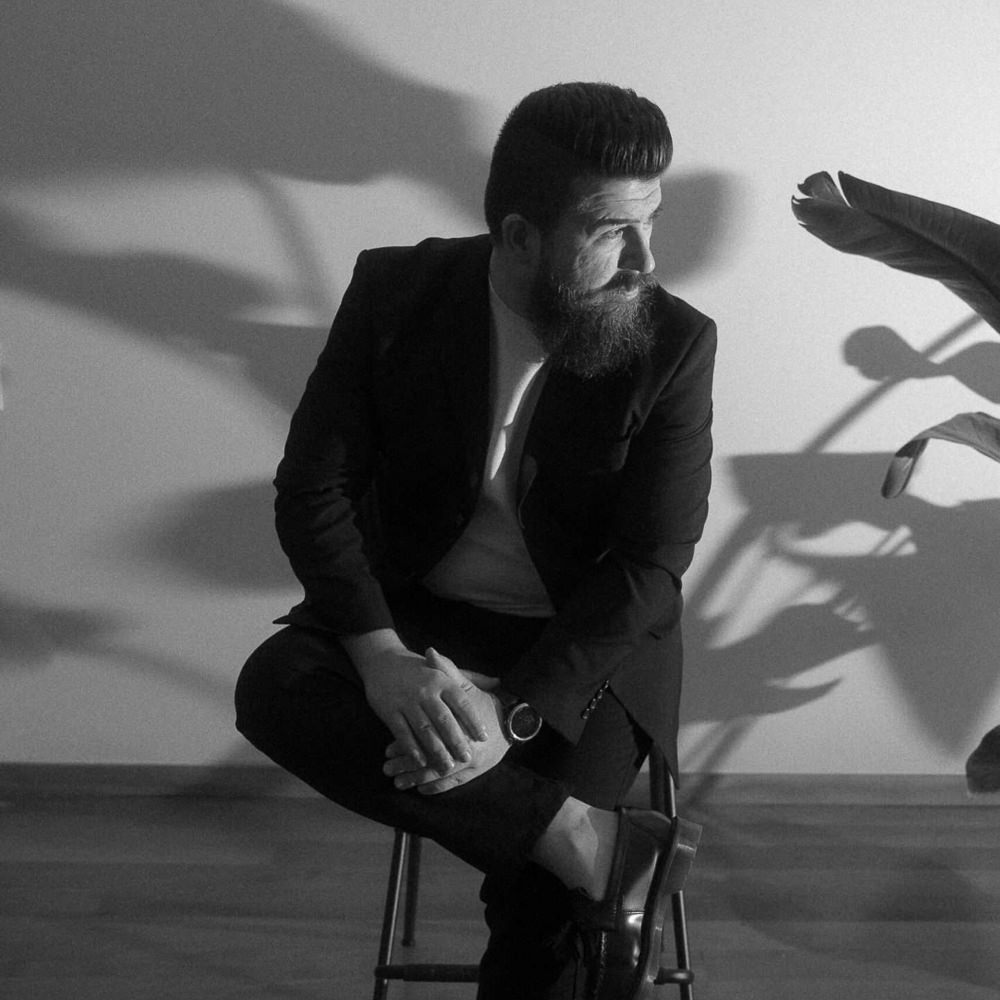
Ivo Silva VideographyVanessa & Ivo
summary
In this episode, Ivo Silva, videographer and co-founder of Vanessa and Ivo, explores one of the wedding industry's most enduring paradoxes: the tension between business acumen and artistic integrity. The conversation weaves through pricing psychology, community building, and the philosophy that underpins sustainable professional growth.
Ivo begins by examining the distinction between business and artistry—a conversation many creative professionals find uncomfortable. He argues that understanding business fundamentals isn't a betrayal of artistic values; it's the foundation that allows artists to sustain their practice and invest in their craft. This perspective reshapes how we think about pricing. It's not about greed or commercial compromise; it's about self-respect and the recognition that your labor and expertise have monetary value.
A thread running through the conversation is Ivo's philosophy of community and intentional mentorship. He's deeply committed to lifting others as he rises, embodied in the title itself: "a rising tide lifts all boats." This isn't naive optimism—it's a calculated bet that the health of the entire wedding ecosystem benefits everyone in it. When creators share knowledge, challenge each other, and set healthier industry standards together, the water rises for all.
The discussion also touches on portfolio curation as an act of brand clarification. What you choose to show is as important as what you create. Your portfolio is a filter—it attracts the right clients and repels the wrong ones. This requires clarity about who you are and what you stand for, even when it means excluding work that doesn't align with your vision.
Ivo's journey includes reckoning with privilege in professional work. He acknowledges that not everyone starts from the same place, and that access to networks, capital, and opportunity is unevenly distributed. This awareness informs his commitment to mentorship and his belief that those with privilege have a responsibility to create pathways for others.
Throughout, there's an underlying theme of growth through external perspective. Working with collaborators, mentors, and peers who challenge your assumptions is how you evolve. Ivo's willingness to sit with discomfort and question his own practices—even after years of success—is what keeps his work fresh and his philosophy grounded.
The episode ultimately argues for a more mature, ecosystem-conscious approach to the wedding industry: one where business thinking and artistic values coexist, where mentorship flows freely, where pricing reflects true worth, and where community health is understood as enlightened self-interest. It's a vision of professional life where ambition and generosity aren't contradictions, but partners.
key quotes
"I think there's a real distinction between business and artistry. You can understand business and still be artistic."
"The healthier we make our ecosystem, the better it is for everyone. If we all rise together, there's more room for everybody."
"Your portfolio is a statement of who you are. It's not just about what you've made—it's about what you're willing to claim."
"Pricing is where you stand up for yourself. It's where you say, 'This is what I'm worth.'"
"I want to help people get to a place where they're not struggling. That's not charity—that's building something sustainable."
"Growth happens when you surround yourself with people who think differently than you do."
"Privilege is real, and with it comes responsibility. If you have access, you have an obligation to create access for others."
transcript + show
episode: 4 title: "Ep. 4 - "A rising tide lifts all boats", com Ivo Silva" pub_date: "Mon, 22 Apr 2024 05:00:00 +0000" original_language: english source_audio: "e3895404.mp3"
Hello, welcome. I'm Rui and this is The Wack Podcast. This week I have with me Ivo Silva, videographer for Vanessa and Ivo. Both of them try to see things in a different and peculiar way, alerting to points of view that are not always the most obvious. This feature has been of great value to me because it enriches me to no end. In addition, Ivo in particular has a habit that I share and like a lot, which is the use of quotes. Throughout the conversation we talk about two that seem especially interesting to me. Without further delay, follow my conversation with Ivo. Hello my dear, welcome. Hello. How are you? I'm fine. Look, thank you for the invitation. I don't know if your listeners will have the patience to hear two guys who like to talk a lot. Yes, I don't think it will be a problem for seven people, you know? So I think it's fine. But look, I wanted to start by telling you one or two little things, which I think are important. I think you already have this notion, we've talked about it enough times, but you and Vanessa, you are a huge inspiration to us. Not only for the work you do, which is really amazing, but you have had a very big impact, not only in our personal life, but essentially for two reasons. And you, in a way, you know, we've already talked about it, but defining, clarifying, you have a capacity to perceive our dead angles and to wake us up for them. And in a super assertive way, but always incredibly friendly, affectionate, enthusiastic. And to be very honest, it will be something that we will never stop being grateful for. And secondly, for showing us that certain things are actually possible, even though we are in a completely, or everything less central area of our country. And your ability to make it happen, without asking for permission, without apologizing, is an instrument and is also an inspiration. So, on that part, in a very almost formal way, I wanted to thank you, and Vanessa too, but I wanted to thank you for all this, which was a great help and has been a great inspiration over the last few times. Wait, let me... Well... Thank you, obviously. You know that we, sometimes, maybe we don't realize what you're saying. And then, at the same time, maybe, being outside, we can better analyze other people than ourselves. Also... No doubt. No doubt. I think it's common. But thank you, thank you, thank you. But, you know, it's curious, and I already told you this story. I remember when we started, you were the level we wanted to reach. You and Elsa. And it's curious that you said, now that you talked to Sofia and André, if we're going to talk about them, it's a level that we all want to... It's very impressive, of course. But thank you. You don't have to thank me, because it's true, and it's a great pleasure. And on top of that, having you here, you're the third guest, and the capacity, the happiness I have to have such amazing people to start this project is something that gives me a little kick, a joy, something incredible. So let's move on to these... I was going to say, from now on, this is going to go up. Well... Let's wait and see. Also, of the five people you're hearing now, one of them is Elsa, the other is Vanessa, and then my parents, and someone else who got it wrong, I think we always have to go up in terms of the number of people. But look, in reality, and you know that, if we can help someone, whether it's a colleague, someone doing something, changing what you've already helped us, those little clicks that we sometimes have, if we can help someone, it's going to be a huge happiness. And now, because there's, as you said, I think it was before we started recording, it's easy for us to stay here for three hours and then we get to the level of Joe Rogan and no one listens to us. Not that people don't listen to Joe Rogan, but maybe three hours for us is a bit too much. So I'm going to start here with an almost introductory question for you, which is... Who knows you, or who has been in contact with you for one or two years, easily has the feeling that your career, your path, is a whole glamour, going through all that world, making the most incredible marriages, in the most incredible places, with the most incredible grooms. But the truth is that it wasn't always like that, right? It was an incredible path, in fact, but with a lot of work and some sacrifice. And my question, this is an introduction, but my question is this. What do you think were the main pillars of that path that has been going on for more than ten years? Well... You know that in this industry there are few cases of success from day to night. Every year we've been changing and improving some things, through influences and through help from people we've met, from the experience we've gained. So maybe I wouldn't be able to tell you... Pillars... But... Going back. Since this is a long podcast, I can go back and forth. Go ahead. I think that the pillars, in the first place, are the people we've met. Professionals. Those moments during dinner, or when you book a coffee or lunch, those conversations you have, for me, are better than many workshops. Then, another pillar, obviously, and I don't want to get into that politically correct scene, but another pillar, obviously, are the clients we've had over the years, which allowed us to go up little by little, because they trusted us, and they took us to more and more interesting places, with weddings that were more and more aligned with what we were looking for, and these little changes brought us from year to year, to where we are now. But if I had to identify a moment, I think the pandemic, with all the problems it brought, being the horrible thing it was, I think it allowed us to stop and rethink our business. And I think it was common to many people. For all intents and purposes, it was almost a zero-sum game, starting from the beginning. We didn't have any weddings in 2020. Absolutely none. And that allowed us to rethink our image, rethink our communication. We had more time to do that healing to our portfolio, which we often encourage other people to do. We changed our image, and, in a way, we also started to look at this industry more as the business it is. Because, many times, in the wedding industry, there's that message of the connection with the client. We have many colleagues who defend that they want to be friends with their clients, all those things. Which is perfectly valid. But I think this conversation sometimes makes us forget that this is a business, this is an industry. And the pandemic made us look at it in a very deep way. Yes. I think it's really a point you make there. I think everyone ends up... Not everyone, but I think a lot of people end up feeling and touching that point. At the end of some time, you get to a point where you realize how amazing it is to make friends with your clients. But this is our profession. This is our business. This is our bread and butter. And you have to get to the point where you're doing a service, you're doing something for someone, in exchange for a fair value. We'll get there. But that part, I think, is absolutely crucial. But tell me one thing. In each of those small steps you took or felt, did you feel that at some point you had to reinvent yourself? And I'm not talking specifically about any point, I'm not talking specifically about how you edit, how you film, how you present yourself, but did you feel that at certain points you had to reinvent yourself in some way or part of that way? We reinvent ourselves in various ways and in various different moments. Maybe now I'll make an introduction for those who don't know us. Before being Vanessa and Ivo, we were Something Blue. That was our first brand. And this was in 2012. Then, around 2014, maybe the first change happened when we thought we didn't want to be just another brand, we didn't want to be people that appeared on the day without any connection with that client or with those people. And we decided... The first big change was to switch to Vanessa and Ivo. Because we're... I'm Ivo. Vanessa is Vanessa. On the wedding day, we want people to know that it's Vanessa and Ivo. It's not Something Blue or Something Blue, as they sometimes called us. Maybe that was the first big change. Then we had some happiness because we started doing it very early or we found the type of client we liked, the type of wedding we liked, which, with a lot of luck, today is the type of wedding that is more in vogue. It's that wedding in the palace with the groom from Smoking, the American client, or with influences from American weddings, with the speeches and the first look, which were the influences we had when we started, of the work we saw being done, mainly in the United States. And we were lucky when the market, mainly the national market, was very focused on boho and that type of wedding. We were doing the classic weddings. And we were happy to establish a portfolio of that type of wedding. And around 2019, when there was the boom of that style, we already had that portfolio. And I think we were also lucky. And during the pandemic, coincidentally, at the end of 2019, we were reformulating our website for a more... In a way, you and Elsa, or Luís and Marta, Andreia and Sofia, who already had that type of client, which was called Fine Art at the time, those light photos, and everything very beautiful. And the video... There was a lot of search for a more alternative video, more edgy, something different. And we went in the direction of the classic. And we were lucky. And then, I was saying, in 2019 we started reformulating our website, and in 2020 the pandemic broke out. And we decided to focus on that type of client. And we did some things that we are constantly insisting on with other people, which is, you only show what you want to do. If you have some type of work that you don't want, that is not aligned with what you want to do, you don't show it. And it's that portfolio curatorship that we did. And it brought us... Fortunately, it brought us fruits. I think you were already doing that, but do you think it was that reinventing yourself, or was it a further refinement, a further focus on what you were doing little by little? Well, you know... I think the concept of reinventing yourself is a bit... It also has a very big external factor, which is the way people see you. That's why, even if we internally had that will and that preference, hence what you are saying, to funnel to that type of client that we wanted, for those who are outside, it seems like a reinvention. If you internally think, this is what I want to do, I've wanted to do this for a long time, and now I'm going to focus more on this, for the rest of the people who are not in your process, it may seem like a reinvention. So I think we can say that it's a bit of both. Because there's also the other side, which is things that for you were a profound reinvention, and went completely unnoticed out there. Probably, yes. Probably, yes. But still on this path, on this journey, on this climb to Olympus, where you are about to arrive... Sorry. I said this without joking, because I really think... You already talked to André, didn't you? Yes, yes. A while ago we had a conversation, a discussion, about this... this question of... You're talking about Olympus, arriving at Olympus, and the conversation we had at the time was about the concept of luxury marriage. You know, we have a lot of colleagues who identify themselves as photographers or videographers of luxury marriages. And I think, actually, we're not even there yet. It's all a matter of steps. Luxury, well, luxury is that marriage of 49 million... But there it is. André also said that. André said he's not in luxury marriages. I understand the argument. Now, when you include the whole range of marriages, from the lowest and simplest ones, to those of many millions, clearly André, and you too, are in the last 5 or 10%. You may not be in those 1% of the crazy millions, but we're talking about marriages in Europe, where really... And sometimes it's not just... I'm not just referring to the issue of money that is invested, but the care with which it is invested. Because the truth is that you can blow up... In the same way you can spend, I don't know, 30 million euros in a Rolls-Royce Quadrosa. You have the money. It doesn't mean you had the focus and the taste of what you were going to do. You can have much lower budgets. You can have much lower budgets, but you find that dedication in many of your couples and your marriages. And so, I also include myself in that part. I think we're still on our way. But... I think we're already at a certain point where people really dedicate themselves a lot to what they're doing to the marriage, and to the level, and to the taste, and all that. But going back to what I was going to ask, still on that path towards Olympus... And now that you mention it, I really think that this is... that the expression of Olympus was in my conversation with André. I think we talked about that. I think he talked about Olympus. But what I wanted to ask you is, at certain moments, did you decide and set specific goals? That's the first part of the question. And the second, how do you define success through those goals that you set? Be it short, medium, or long term? Well, I think that... Yes, we set goals. And those goals, many times, can be quite random and arbitrary. They can be more tangible, but they're not easy to measure. And then there are metric goals, which you know very well. You have the Excel table, and you can add those up and do your math. Well, yes... Of course that... Perhaps the initial goals were the most superficial ones. Like, we want more weddings of this style. We want to go abroad more. We want to charge more. Make more money. And then, as your business grows, that goal of having your head around the waterline, perhaps you surpass that and perhaps you start to see things more clearly. When you don't have that weight of survival, you can see things with different eyes. But yes, perhaps our first goal was... We started in Covilhã in 2012. And our first goal was to start weddings outside of Covilhã. When we moved to Guimarães, we started more weddings here in the region. Guimarães, Braga, Porto. And we defined as a goal to start more weddings in Lisbon. At the time we even moved to Aveiro. We were there for a year and a half because we thought that being closer to Lisbon would help us to do more work there. It didn't help. We went back to Guimarães. In Lisbon and in Sintra you had palaces, courtyards, venues, more interesting venues. Then the goal was to go more abroad. Then we realized that what we were doing abroad was not very different from what we were doing here. Because then you start to charge a little more. I'm sorry to interrupt you, but this is a very interesting principle, because most of the people, not only photographers and videographers, but most of the people who don't have the possibility to go abroad as easily as we do, because we take it from a backpack, you take the entries, that's right, but they're backpacks, and in the case of florists or DJs, going abroad to do work is more difficult. But did you really have that perception that it wasn't so different from what we do here? No, it's not. It's not, because of the difference in the markets. From the moment you start making a more external communication, the difference there is between the markets, you're going to end up getting stuck in... Let me try to rephrase it. That is, in Portugal, you start to charge a little more, and suddenly you start to get a little above the typical budget that a Portuguese couple can spend, and that the foreign customer who comes here to marry in Portugal is willing to spend. But then that budget, out there, is already a slightly lower budget. That is, at the beginning we were the choice, perhaps more accessible, because when you go to Spain, when you go to France, when you go to Italy, where the budgets are globally higher, we, in our budget, started to get marriages that were good, that were abroad, but they weren't much better than a marriage we would have in Lisbon, for example. We had a lot of marriages in France, a lot of marriages in Spain, that perhaps at the time we were a little disillusioned. Obviously, in terms of promotion, you put some images of abroad, and automatically you are more valued here. That, unfortunately, happens. It's tough. It's a bit of our culture. But, well, yes, we've always been aiming for different things at each phase, which is what I was saying at the beginning, sometimes they are small steps. You were talking about Olympus, but I feel that perhaps only since 2021, 2022, is that we started doing things abroad that perhaps are more aligned with the best we do here, which makes us very happy. Yes, the Olympus issue, although I'm not saying something that I don't believe, but it's always a matter of playing around, because you have a lot of situations where you see some of the people, when, I don't know, when you hear a Denzel Washington, or a Keanu Reeves, or something like that, or when you hear people who, in terms of their areas, have achieved absolutely amazing things, or Jim Carrey, people who have built absolutely extraordinary things, and you see them talking about them, and they manage to be completely normal people, and that makes you realize that, regardless of whether you are, in fact, in Olympus, for everyone around you, for you, Olympus is just a normal place where you wake up, you go to work, and at the end of the day you leave, and it's the rest that frames your life, and makes you happy as a whole. But it's always a funny thing to say, because I really think, from my perspective, when it comes to videographers that I know, you are, at least, in my Olympus. And I know I'm in the Olympus of a lot of people. I like... There's another metaphor, or comparison, that I like to use, which is the aquariums. You can be a little fish, bigger than that aquarium, but then they take you to the ocean, and you're small. And maybe the biggest fish there is, they release it in the ocean, and it's a little fish again. So you jump from aquarium to aquarium. But I think that, essentially, in that growth and evolution, our own humility comes in, and our feeling that, well, this is a job that we really like to do, we know and we have the notion of the importance that it has for those who receive it, but we are nothing more than a service provider in that balance. I think that, at the end of 20 or 30 years, someone who still remembers the name of the person who photographed or filmed their wedding, I don't think it will happen a lot, but at those points where it happens, someone who remembers the name, it's already something incredible that we will have achieved. That's why it's good that we have changed our brand to Vanessa and Ivo. Our name always appears at the end of the film. Exactly. I have to talk to Elsa about that, because I really had not thought about that perspective. We will have to change it too, for her to be bad. So now that you've touched a little bit there, I'm going to move on to that point, because you and Vanessa, together, but you are one of the people I know who have been more sensitive about the issue of values, of the values, of the prices we charge and all that. And you always have that perspective, making those who listen to you value themselves, charge more and make the effort they think is necessary to go to the next level. Why do you think this is so difficult? Why do you think there is so much reluctance? Is it because there are some cases of lack of knowledge of the market that exists, of the possibilities and the size that it exists, or do you think it is, or maybe both, largely personal insecurities, individual, brand, people? Ok. I think it's a little bit of column A, a little bit of column B and column C, D, E, F. Because it's a set of I think it's a set of factors and I think that with every different person you talk to, that person will have their own reason to think that they can't charge more. The impostor syndrome is a very strong thing in our industry and it's something that can't stop being equated. Then, the comparison, are you going to censor things if I say something like that? Say whatever you want. Comparison is a fucked up thing. Really. Not only when you compare your work but also when you compare what the other person is charging. Then you have those external factors that other people think you are charging more. That is, your colleagues think you are charging more instead of thinking if they are charging less. So there is a set of factors but maybe the main one obviously goes through our wedding industry in Portugal, through the purchasing power that we have in Portugal, maybe a little bit through I don't want to sound bad but I think it is what it is due to the lack of professionalism that exists in Portugal and I'm not saying that people are when I say professionalism I'm really talking about professionalism this is my profession I do this all the time and Vanessa and I have been doing this for more than 10 years but there are a lot of people that look at the wedding industry as a part time job or they have another job there are a lot of factors there is a phrase that I think in Portuguese it doesn't work very well but I will try to say it when the tide rises all the boats in the harbour rise and I think if we all pull each other to improve ourselves to have a better job and obviously to charge more I think for the whole industry it's a good thing at least I think it's a good thing without a doubt and there it is part of what I was saying you and Vanessa took away some of those limiting thoughts because there it is when you look from the outside sometimes it's easier to have those how can I explain and sometimes you need to touch the wound to understand that there is something there to solve and I totally agree with you we are very vocal in this matter mainly when we realize that the work of those people deserves to be rewarded in a better way that they charge more obviously not everyone can keep on raising prices and keep on having work but I think there are shouting situations of people that are influenced by the bubble that live in this reality that think they charge a fair price or that what they don't deserve anymore or because the neighbour is charging that price I can never charge the same as him or that he is better than me or things like that yes, no doubt this comparison doesn't only work here in our area and in our industry and you have this every day the amount of people that are frustrated and depressed and all that because they are always you have this thing that I love that sometimes we are talking and we get into a situation and sometimes I think there are people that don't take it seriously but I really like it and you once told me and I remember many times and I repeat it take care of your garden and the butterflies will come and I know it was special for you but I wonder what this thought meant to you this thought came up initially specifically in relation to that story of taking care of your image your portfolio your house your garden and your clients the butterflies will come but you can apply it to almost everything take care of your business and maybe you will be more successful take care of your education keep it up to date and maybe you will be more successful all these things more based on introspection less comparison with external factors I think it's important it's important to know what's happening outside because this is an industry and you have to know how is your competition how is the market you have to be able to look and feel the market but the changes come from the inside I look like Gustavo Santos but the changes come from the inside you change your processes and eventually you will improve and you will achieve better things that's what I say yes, because when you told me and in the context when you told me for me it was worth it because as you know the pandemic for us was something that suddenly 4 years passed but in my head it was like a year I can differentiate each of the 3 because for me they were different experiences but the time that seemed to last in those 4 years was maybe a little more than one and in that process of reacting to the 2020 pandemic after being completely overwhelmed by the amount of work that was delayed and all of that in 2021 and still in 2022 then in 2022 the lifeblood of our Pedrinho and it will be Pedrinho for the rest of the year I'm feeling a special treatment you know the older ones are old enough to call him Pedrinho and think that Pedro is weird but and then in 2023 he left on December 24th of 2022 but the first year of a baby is always very challenging it takes up a lot of space of time in your day to day but also in emotional terms and suddenly these 3 or 4 years made us feel like we were completely out of it we didn't have that time or energy to understand what was happening and in the meantime in a completely sporadic way we met, we went to lunch and our mind was blown that Tuesday it was literally and when I don't know if it was exactly at that lunch, I think so but I don't know if it was exactly there that you told me that question of taking care of your garden and the butterflies will come and what we feel and the way we apply it is that you give yourself a series of tendencies ideas and things and suddenly you look at yourself and you think, I'm getting old and you start to have all these comparisons and when you said that what we brought was no, calm down, let's look inside let's analyze, let's see what we like to do and in fact we continue to love what we do and the way we do it but it was also smart and interesting, we thought ok, but there are a series of interesting things happening that I would like to include but essentially, that's it you look at your garden and say ok, I only have grass, this has no interest maybe if I put some plants and trees here and that's how it comes to life and it was the way we were it's still a recent process we still have a lot of doubts sometimes we find ourselves in many opposite paths and we think, ok, let's go this way it's a path and a constant discussion between me and Elsa but I remember that phrase a lot and it has been an incredible focus of thought so, once again thank you for that for that thought but it's not from me I know, I remember the context in which you told me because maybe you wouldn't do with all your knowledge your vast knowledge of gardening maybe those were not the examples that you would use but that's it now, we are talking a little bit about past and present and now I want to ask you a question about the future which is, when you look forward to the future, what do you see? short, medium and long term well you know when I look to my future there are many versions inside of me fighting with each other there is the optimistic version that thinks maybe me and Vanessa can grow a little bit more maybe we can do more interesting things maybe we can make more money with our work maybe we can do really good things then there is a version a little bit more not pessimistic but maybe a little bit more withdrawn that thinks, I wish I had two more rings like this one then there is the pessimistic version that thinks, this year everything goes to hell and another pandemic comes or another war breaks out because you know that in the pandemic I realized the fragility of our industry that from one moment to the next you are out of work we had the year, it was not closed yet but it was a good year and from one moment to the next we were out of work for something that was totally out of our control that changed me a little bit so much so that when the war in Ukraine broke out it was around the same time of the year, February I panicked I thought, this is going to affect the whole Europe they are going to cut the trips again they are going to stop tourism so I think the pandemic made me realize that no matter how many plans you make it is very easy and everything goes to hell now, the optimistic person in me we are going to have a tough year I hope next year will be better we look at examples like Sofia and André when we met them they were already at an absurd level and they keep growing even though it is one of those huge injustices that in Portugal nobody values but what they do is at a stratospheric level but I think in their specific case and in general we work the Portuguese work like this I don't know if in other countries but here it is like this you are able to accept and understand the importance and the dimension that certain professionals have that certain people have but you have some reluctance to be vocal in relation to this and say, you are incredible and we have as a culture, I think we have some difficulty in doing it and in fact, when I look at them, to Branco Prata in particular I think, it's what you say I have known André S. Fried since 2011 and in all those 12, 13 years if there was a moment that I, by some mistake I thought, I'm really close and suddenly I looked better and I thought, no, they are already there and I don't know where and then there were years when this was a huge leap but it's really impressive how they manage this constant growth of course the logic of growth what metrics are you using what goals do you have and what you don't have but they actually grow and diversify for me and I know for you too yes, that's it yes, yes no, looking it makes me believe that Vanessa and I have more I'm more optimistic than Vanessa, and if you ask her the same question, she might give a different answer than mine, but I believe that we still have a long way to go, it's just a matter of having the capacity to grow. At the beginning I told you that you were not only a source of inspiration, which you still are, and it has been a constant process at this point, but that you also instigated us at certain times to make a difference, to start and go down other paths. Did you, as a company, have someone like that throughout your career, or was it more individual? No, we had several influences, obviously. Of course, as you go along your path, you go up the steps, and you look at who is immediately above you as your reference, because everything that is above that seems so disconnected from your reality, that it goes around and is no longer a reference. But we had several, obviously. I think that as we expanded our horizons and looked at things from a different perspective, we identified new references and defined new goals. And it goes from specific people, and it seems that we are hitting the nail on the head, like Sofia or André, obviously, because they are people who are very close to us, initially geographically. Now, fortunately, we are often with them, we work together, obviously they become a reference. People with whom we only meet once or twice can also be a reference. You know, what I was telling you about those moments of meals, weddings, and so on. When we started doing weddings abroad, suddenly we started meeting different people. I'm working here in Portugal, you have 20 weddings a year, or 15, or 25, or whatever. There is a circle of people you meet, which is a very small circle. And those people almost all know each other, and they end up belonging to the same bubble. When we started doing weddings abroad, we started meeting people outside that bubble. We started talking about different things, different realities. How was the business, how was the industry in that country, or in the country where people were. That also helped us see things differently. Obviously, going to workshops, going to conferences, even if it's to hear things you don't agree with. I think it's important to realize, at least you know, ok, I don't agree with that. It may not be an inspiring thing, but at least it helps you to deepen your path. But we had many, fortunately almost all positive. Obviously, we also had some negative influences. We gave a lot of space to the side, instead of giving space to the front. And then you have those cases that we have already talked about, and by cordiality we will not talk about the name here. But about a workshop we saw, where we left thinking, what is this guy saying? Can you say the name? Don't you want to say the name? We can say it. Everton Rosa. Try to tell the story as it is. It's been, I don't know, 6 or 7 years. More. Maybe more. I think it was in 2014. It must have been a long time ago. It was the first Vodafone in Portugal. Was it? So it was that one. And 10 years. I told you that 2020, 2024, for me it was a year. And we were in that first Vodafone, where the last speaker, was Everton Rosa, a Brazilian luxury marketer in Brazil, where he was telling us a series of things that, at the time, for us, were complete nonsense. The way to place yourself and the way to belong to certain areas. And he kept agreeing with a series of things. And regardless of that, we went out there and said, this guy is a pain in the ass. Sorry, Rui. The years go by. You're forgetting something very important. He made a point, during his presentation, to make a sacrilege to those people who were there, to say that he did that for money. That he charged more to be able to buy a boat, to go for a walk with his son, things like that. Of course, those people who went to see Sean Flanagan, and I imagine the Seraphim Castilles and the Beglas of this life, which was at a time when we were in the Boho phase, of love, of hipster, of all those things. A guy shows up and says he's doing that for money. How awful. How stupid. Without a doubt. And then it's funny, because in that period, we started with a year and a little difference, we started in 2010 to 2011, you're in 2012, but despite everything, we already got this change, that when we entered this market, you only had the question of money. They were factories of making photography and video. And then we entered armed with artists. Which was not a problem. I think that our whole generation, and even those who came after and continue to enter, what they brought of art and inspiration, and the way of being, was what made, in the last 10, 12 years, the wedding market a thing. You no longer have the shame of saying that this photographer was a wedding videographer, and suddenly you're proud to say it, because it's a place where you have amazing people, with amazing jobs, and it made that change. But then, as you said, we were listening to him speak, in that period, and we said, but what sacrilege, this guy is doing this to make money, but who is he? And we left there, and I think we spent a good time to give him in the head, and then what happens? 10 years pass, you realize that life is not just little hearts and butterflies, and you realize that things to work, you need to make money, and then, to make money, to do certain things, and certain weddings, you are in the events you want to be, you have to make some decisions, that for you were weird. I spoke in the episode with André, for example, about the matter of celebrating a fact. These are things as simple as that, and sometimes we forget these little points. I still agree that in some of the things he does, with what he said at the time, because I never heard him speak again, they were a bit exaggerated, but it was the way he was, and what I learned from this was, don't criticize without knowing, or at least wait a little longer to realize if that one day will make sense, and today, with my way of seeing it, it makes a lot more sense than what he did at the time. Rui, you know that, I now recognize that the method was not the best, but the message was there, and we at the time, we struggled with the messenger, and we didn't appreciate the message. No doubt. Nowadays, if you saw that conference today, maybe you would take it for something else, but I think it's irrefutable, even for those who don't have children, what he says, of course these are realities that are very disconnected from ours, but him saying, I want to make more money because I want to buy a boat to go with my son, is, in a way, what you were saying, this is money for diapers, on a different scale, but it is. This has to sustain your life first, and we have the happiness, we have the privilege, we have this luck, there it is, luck, you work and look for it, but the truth is that we have this luck, and this privilege of being able to make money to sustain our lives, doing something that we love, and being able, at certain times, to choose the type of marriage we do. But I think it would be a profound arrogance to say that, of course, if I needed to do whatever it was to sustain my house, my life, my three children, I would do it, whatever it was, wherever I had to go. Now, of course, when you have the possibility to do something that fills you more in emotional terms, in artistic terms, in relational terms, fantastic, right? And I think, I agree 100% with what you say, that we mess with the messenger, because really the way he sent the message, I remember, one of the things that came to my mind was that he, in one of the slides, had the white Audi, a new A7, and he says, here is my car, my new car. And you think, what do you get out of this? But the content, and what you take away today, after some time of sailing, I think it was an incredible message, that I think we continue, in the end, we are struggling a bit, which is, let's value ourselves, we are doing this to make money, and the fact that you charge more, you get a bit more, doesn't mean that you are selling yourself, you are not being a sellout, you are simply valuing yourself more, and the experience I have as a person, as a consumer, is that you value more what you pay more, what is given to you, normally, you don't value it. Look, we were talking about conferences, and so on, two weeks ago, two weeks ago today, we were in Barcelona, in Bodaf. And, almost at lunchtime, I don't know what time it is, but around lunchtime, we were listening to Ana and Pablo Begles, who had a slide that said, the best things in life are cheap, the second best, are very, very expensive. And Ana, Ana said that... Let me correct you, are you talking about Pablo Begles, or Pablo Laguia? Sorry, Laguia. Ana and Pablo Laguia. I said Begles. Yes, you said Begles. No, no, no. We can understand the idea, but yes, it's Laguia, Pablo Laguia. Yes, and Ana also said that, in all, throughout all their career years, that they never lowered the price, whenever they changed the price, it was to go up. Because, really, if you don't value yourself, your client won't value you. And the value you put in the PDF, or in the site, or whatever, will always serve as a reference. There's something at the subconscious level, that, if it's expensive, it's automatically better. This, well, it's not logical, it may not be, but at the subconscious level, at the subconscious level, at least they'll do, at least they'll make the client look at your work with a different look. Wait a minute, why are you charging a lot more than the others? Because in the same way that if your price were lower, they'd say, why do you want to be cheaper? Yeah, yeah. But, well, they were part of it. You and Vanessa, when I talk, I'm essentially talking about both of you, although, I think, knowing you, there's a very interesting difference in your division of work, and of competencies, but, you're one of the people I know who work more on this, the issue of community, the objective of community, both with your workshops, with small projects that you started, or intervened, and all that. My question is, do you do that because you believe that we could have a closer, more connected community, and with that, it would be better for everyone, or Vanessa is already fed up of torturing and you need new friends? No, we really believe, we really believe, and, well, not only do we really believe, but, well, we still keep in touch, daily, with people who participated in the workshop, that is, already, in a very cold way, well, there's no longer any performance to have, it's really for, community. Because what I told you, I think, I really believe that, if we all improve our level, we all have to win. Our industry as a whole, if it improves, we all have to win. Well, I've always been a person, more technical, than creative. I've always dealt a lot with, having tutorials, and gadgets, and things like that. Man, I have, a short past, but I taught for five years. So, that part of, education, and the transmission of technical knowledge, has always been something that, interested me. And maybe the workshop, started a little bit, when we looked at our work, as, with a very big technical side. Of course now, we've surpassed that part, and we look at our work, with other, with other eyes. Maybe at this moment, more focused, on business, and communication, etc. But, fortunately, we also had students, who went to the first workshop, and continue to go to our workshops, and are also growing, and doing, that path. But, we really like it. I know I talk too much, at this precise moment. I'm realizing, I'm talking too much. But... No, not at all. But I like it. This is to be long form. I like it. This is to be, to be calm. But look, and what do you feel, that you learned the most, in those workshops? Even considering, that they were workshops, that you gave, that you went, to teach. But, what did you, what changed the most, and what did you learn from them? Look, I learned, and I continue to learn, and I already talked about this, several times. The question of bubbles, is a truth, and you have to expose, to different things. Whenever we do a workshop, we meet people, and we talk to people, and we talk about things, even to the smallest detail, about their business, and we realize, and we keep realizing, and we also keep ourselves, updated. Not only, in relation to things, that we don't agree with, or that we think, that we should change, but also, in relation to things, that we don't agree with, or that we think, that we should change, but also, in relation to things, that we don't agree with, or that we think, that are outdated, but that are still being done, and we also learn, whenever we talk to someone, whenever we do a workshop, we ourselves learn, new things. I think it's a bit like that, I think that... But do you feel, that something changed, before doing it, and after? For you, for you, in your daily life. It changed, it changed. When you prepare, a workshop, you have, when you start, to put together, the ideas, you have, when you start, to put together, the ideas, of what you want to transmit, you have to look, at what you are doing. You have to look, at what you are doing, to try to explain, to other people, how you do it. And this introspection, is very useful, because it makes you see, your mechanisms, as if it were, someone from outside. And I went through the same, when we were looking, for someone to edit, for us, I had to do, a descriptive memory, about, what was a film, Vanessa Ivo. And by putting, those thoughts, in writing, made me, make me, understand things, in a different way. And in the workshop, it's the same. When we go, we try to communicate, something, we have to, put it in writing, and analyze, and rehearse, a presentation, and discuss, and vocalize, things, that we, maybe do, in a routine way, without thinking. And this exercise, I think, is incredibly useful. Very useful, really. And it also allows, maybe, to understand, that there are things, that maybe, you're not doing, so well. And by exposing, those thoughts, during the workshop, questions arise, questions arise. Look, but why don't you do it, like this before? Or what's the benefit, of doing it that way? That forces you, again, to think about, what you're doing. It's a, I mean, you vocalize, and you receive echoes, and you assimilate, and, I think it's a very, interesting exercise. I don't know if you've seen, a video, in which, Elon Musk, in SpaceX, was doing, a kind of tour, with journalists, and, I think, a few more people. And, he was explaining, what was happening. I'm not going to go into technicalities, like, well, I'm going to keep, my knowledge of, space science, for our private conversations. But, they were talking, about something, about, what I remember, about the use, of a certain, source of energy, that they had, to, for a part. And, the journalists ask him, well, but, you use it, only for that part. And, you see there's a pause, in his answer, and he says, yes, but, that's stupid. I'm going to have to talk, to the engineers, because it doesn't make sense. What does this mean? I mean, when someone asks you a question, the person doesn't know more, than you do. But, exactly, that lack of knowledge, of a certain area, perhaps, approaches you, and makes you, in a different way, you're going to learn something. There's a phrase, that I love, that says, nothing kills innovation, than a specialist. And, I think this is it, that is, when you have a specialist, doing a certain thing, you're not going to think, in the hypothesis, of doing it in another way, because you're the specialist. When someone, from outside, asks you a question, as you're referring to it, and you think, oh, I could be doing this, in a much smarter way. And, there it is, that's why, when you do that, when you give a workshop, you have the other side of the coin, that's amazing. Look, and now speaking, in this perspective, also of the community, we've been talking a little bit about this, but, how do you see the state, in which we are, in a global way, of these small bubbles, the feeling that I have, the perception that I have, is that there are many, many micro communities, bubbles, but that, in a more national way, that, we're really very weak, we have very little sense of community. Do you agree with me? And if so, what do you think we can do, to improve this? Man, if I agree with you, I'll give you a very particular example. We, we've had maybe five or six editions of the workshop, initially we had WhatsApp groups, and about two or three years ago, we made a Discord group, where we gathered all the people who participated in the workshops, where we encouraged sharing, and as we want it to be a safe space, once a year, we remove people who don't participate, because we don't want people who are only there to receive, and not giving anything in return, or people who are simply inactive. And I can say that right now, we have about 50 to 60 people in the group. And that, if you asked me to do a top, I'm talking about videographers, ok? Look, make me a top, which I'm not going to do here in public, but make me a top of, the best 10, the best 15, the best 20 videographers, in Portugal, maybe most of them would be there, in that group. So I think there is a community, when you want to take your business, later on, you always have to... 90% of the time you have to be a part of the community. Not just one island, but all those things. But I think it's an important step in the growth of your brand, in the growth of your business, is that you're involved in a community. So I think that, at a certain level, if you look at, I don't really want to say this, but if you look at the cream, you know? What comes on top, the bubbles that come on top of the aquarium. There's a community, everyone knows each other, everyone gets along. You see that in conferences, you see that in workshops, people invite each other to go to workshops, to go to a dinner party, just on a day, things like that. What I think, that maybe there's no community, is maybe in the lower levels, where there's still the mentality of competition over community, and not so much community over competition. Where there's still a lot of, like, no, I'm not going to share because I'm going to lose my business, I'm going to lose my client, I'm not going to be teaching someone, because then that person is going to use that and it's going to be better than me. Things like that. But I think that from the moment you want to elevate yourself a little bit more, you have to be involved in a community. But do you think that this community can be multidisciplinary? I mean, because it's easier for you to find the videographers, the photographers community, because you really have what the word tells you, you have a lot in common. But to what extent do we manage to create an industry community, in which you can have a semi-regular sharing between photographers, florists, videographers, DJs, venues managers, and all the disciplines that are involved? Do you think there's something that we can do more actively to nurture that? I think that the way our industry is, I think you can bring together things that are more or less similar, but then I think there are areas where things simply come in a different way and it's very difficult. Because of intrinsic issues to your business. I think they're just not very compatible. It's very common, for example, you're in a video photography group and you hear stories about wedding planners, or catering, certain practices that are not good for us specifically, but then maybe, for the DJ, it's all good. Maybe if you sit down with a wedding planner and talk about why she does things like that, she'll explain it to you, and you'll realize that she does things for her reasons, but they're not very compatible with you. So I think that on a large scale, it must be very difficult. On a small scale, I think so. I think photographers and videographers are highly compatible, I think entertainment is highly compatible, I think organization, maybe catering, decoration, are highly compatible. Even decoration, photography and video can be compatible, but then things happen, I'll give you an example, because this morning I saw a post, I'm in a facebook group, yeah, I still use facebook, I'm in a facebook group, an american videographers group, that were still discussing about this new fashion of wedding planners taking photographers and videographers to have their own content. And this already happened to me, being in weddings, and finding situations like that. For me, it's one of those things that I bring to the table and say, no, this can't happen, you're interfering with my work. But maybe I'm the first one to say, but you give content to the decorator or the wedding planner, maybe I think, no, I'm focused on the couple, if I can do that, I'll do it, if I can't, I won't do it, and then I have a lot of things to edit, and if I don't have time, I'll be editing something for each supplier. So we create that vacuum that those suppliers are trying to fill. But don't you think that if we worked on that, because that's really an amazing point, because even though it's already seen in Portugal, it's already been told in one or two stories, including the one you're talking about, but don't you think that, bringing people together to talk about these things, because even those small differences in work, between photographers and videographers, for a long time, it was a conversation, and then they ended up dissipating, and don't you think that if we were together more often, all of us, talking, it could be easier to solve those small problems, or differences to see. Ivo, the optimist, says that maybe yes, maybe we could improve something, it's true. But I don't know, we've been together in multidisciplinary events, a crossover of several industries, and then that actually becomes a superfluous thing, of exchanging cards, and I'll recommend you, and you recommend me, it's almost a marriage B&I. Yes, it's true. I don't know. We have to think about it. Rui, now imagine, you've been to, I think there was more than once, white weddings, and those conferences, I think there was a... Well, I wouldn't go either, Vanessa will, because Vanessa will do the RP, she will meet people and participate, not long ago she was in Lisbon, in a Cascais or Estoril, you have to show up, you have to do that RP, but then I also think, I don't know, I don't know. I understand, because I think there can be a lot of things to do, in fact, there are a lot of things to do, and I believe they can be done, and I'm with you in that perspective. I am, by nature, an optimist, and I believe in things, and in fact, things can always be done. Then comes the probability of them being done or not, and that they can be done, and that we can improve, and that we can add to those differences, I think it's an undeniable possibility. If it's going to happen, I think you need a stream of thought, a way of being common to a lot of people, and to a lot of disciplines, so that those things can be solved. Because, I think, if there really was a lot of interest from some of those industries, there would certainly be events between them. I don't know either. It's true, but I think what you said at the beginning, in relation to the professionalism of our areas in Portugal, I think it's one of the things that changes. Can you imagine two companies, or five catering companies, in the same room, helping each other? I can't. I can't imagine, but I can't say that I know a lot of people involved in that. I don't know. I know two or three people, I don't have a close relationship with any of them, I've never had a conversation with any of them, so I don't want to risk a conversation. I can't imagine, but I'm far from it. What you say in relation to the professionalism of the areas, you also know that we sometimes find spaces, venues, courtyards, hotels, palaces, whatever you want to call them, incredible, that give you an incredible potential for work, but that are managed by people that you say, you don't get the idea of what you're doing or the potential that this has. And it doesn't just happen with spaces, but it makes me feel strange when you have a certain palace or something that you think has a lot of care and thought behind it and you realize that whoever is managing that is managing it day by day, they don't have a thought, and it makes me feel strange. I think that if, as a whole, the industry, the areas, were to become more professional, I think that we would all be able to find a common ground. André told me that from the time he had, I think it was last year, it was a month and a half to Washington, to have three weddings there. And he said that the amount of small events that he had, he was really amazed, because he said, I was there and suddenly the wedding planner called me, let's go to an event, do you want to come? And that's it, they were there for two hours, and after a while there was another one, it's obvious that we're not going to talk about the size of the United States and all that, our reality is completely different. But still, I think there are a few, but it's not a question of the few, I think that we could find a way to do better, and I'm not saying that with this I have an answer, I have several questions, and I think that if we could create a feeling of community a little bigger and closer, to kill those differences, I think that could eventually be interesting. But, I'm like you, I don't know how much it will achieve. I don't know. Now, to enter this final stretch, I only have two questions, they may or may not be related to each other, but they are different questions, one, I would like you to tell me, this is a question that I have asked in all the episodes, What do your eyes say? No, no, no, it's a little more dramatic, which is not so romantic, but a little more dramatic, which is, whoever is from outside, whoever starts, whatever area, almost any area, I often think that this is a very easy job, that it's all wonderful, you're working in the middle of the holidays, you earn a lot of money, you don't do anything during the week, all those myths that are actually true, but let's pretend they're not. I like what people paint, and even what some young professionals paint, and what I liked was that you told me something, in a way, the two extremes, what do you remember being your worst day at work and your best, that day when you said, man, I couldn't, I don't want to, but it has to be, keep going, and on the other side, that day when you got home and said, man, this doesn't look like work. At weddings, right? I'll be honest, I think that at weddings I haven't had such a bad day as if it was marked. To begin with, we are very privileged, if I have a bad day at work, I can simply stop and open a computer game, go to the couch, watch a series, we have that privilege, that most people don't have. If you are at the office, at a company, and you have a bad day, you have to stay there until 6pm. But on the other hand, if you are sick and you have a wedding, you can't stop, right? Look, I'll tell you, the importance of the community. In 2022, in 2022, we had a completely crazy calendar moment. One of the weddings that we had, we had several, everywhere, everywhere, we went to the south of Spain, to Jerez, and I got sick. The night before the wedding, I woke up at night vomiting and there was no way to go to the wedding that day. At 9am, I said to Vanessa, I'm all fucked up, maybe I won't be able to go to the wedding, and she picks up the phone and sends a message to a friend of ours from Algarve, that basically said, because it was a weekday, I just have to take my son to school, I get in the car and go there. I get there, I went to the wedding with the grooms, they were getting ready in a house, I went there, I said hello, I took two pictures, I sat on the couch, I took two more pictures, he got there, I went to the Airbnb to rest, he got married, in the end he got in the car again and left. And then, if you try to get involved in a community, you will have a security network to help you in some moments. Maybe that was one of my worst days, it was really the day I couldn't work at all. But I think we are very privileged, I think there are phases when you are a little lower, the impostor syndrome is hitting harder and you think, that wedding didn't go so well and you're editing, but we have the privilege of being able to stop and do something else. Good days? We've had a lot. I think nothing beats that moment when you get an email saying they want to hire you for that amazing wedding that you make in your head and it will be amazing. I think that moment, that adrenaline you get, it's hard to beat. You don't have time to be good or bad. Now it's that, now it's that. Only at the end do you start thinking about it. But we have a big privilege. When we lived in Aveiro, we had the privilege to stop what we were doing and have surfing lessons because we were by the beach. It's something that few people have. Even in your business, if you're doing well you can do that. You can book an appointment one day in the afternoon. You can take an afternoon to record a podcast. You can... I think we had a lot of good days, some less good days, but fortunately I haven't had a bad day. Like, on Thursday I caught fire or I had an accident on my way home. We've heard stories. Yes, yes, yes. But I totally agree with you. I totally agree with you. I wouldn't trade for more difficulty than you go through certain phases. I've gone through many demotivated phases. But in reality I've never been able to see myself doing anything else because when you're surrounded by people who like to work and when you're doing beautiful weddings with incredible people it's really hard to have a worse context. My question and this question of mine goes more towards expectations because this is not just this day. No, it's not. But none of this changes the fact that we really have a privileged job and you're on people's happy days. Much better than a divorce lawyer. No, there's no comparison. There's no comparison. You're working so the wedding day is the day when the most willing people are... I mean, the grooms are on the happiest day of their lives. The people who are close to them... Everyone has a party atmosphere. Everyone is in a party mood. Stress here is stress there. Things always end up going well. But as you say, I think there are phases. We had a phase at the end of 2015 where I was super late with the editions. Like, really late. I couldn't concentrate on working and editing and stuff and that was one of the moments when I had to do that introspection I had to look for people to help us with the editions and it forced me to look at our work as if I was looking from the outside to the inside. But there you have it. There are phases. It's not a horrible day. It hasn't happened yet. Very well. Now, I'd like you to tell me an experience, a story that has changed your life. Man, I have no doubt. My life is a bore. Tell me about it. I'm going to give you a beautiful answer which was when I met Vanessa. Because it actually changed my life. To have met Vanessa at the moment I met her. At a phase of my life when I met her. We were in Covilhã. I was working at a production company. I was there almost starting to teach. It was a phase of a lot of change for me. Vanessa always even though I say I'm more optimistic than her she was never a person to withdraw and say no. She always aligned let's leave Covilhã and live in Guimarães. Let's leave Guimarães and live in Aveiro. Let's leave Aveiro and go back to Guimarães. I think there was no Vanessa Ives without Vanessa, obviously. So technically if I hadn't met Vanessa I would be making corporate videos and video clips and things like that. It's a beautiful way to end. I think so. But look to end I want to thank you once again. Our conversations are always like this, incredible. We always have a lot of things that help me to move forward. But I really wanted to thank you for the time you took to be here with me to talk. In a way I'm going to end with this little story with the end of the story we talked about a little while ago which is about half a year ago, in November in a completely fortuitous way because we met in the same barber when we weren't together. I don't know how long ago it was but we weren't together for many months. Maybe a year or two. I think the last time we were together was in the APPI qualifications. It's possible. 2022? The beginning of 2022. January 2022. Exactly. And in a completely fortunate way, we found you at Barbeiro in November. And just to screw up Barbeiro, who said we weren't going to have lunch, we went to have lunch. And it was really, as you know, I sent that message saying, just to screw you up. You have to thank Paulinho. Go Paulinho! By chance, when this episode went to the air, I will send him the message saying, this is all your fault. This episode had the sponsorship of Ovelha Negra. Exactly. Barbearia in Guimarães. And that's where it started. What I didn't know was going to start. I had no idea what was going to start. It was a complete revolution in my professional life. In the state of mind I was in. A lot of things happened. At the beginning, you were also talking about that moment, that story you told me, that we were at a wedding and we were talking about the price and I was charging a value significantly above yours for that reality at the time. Way above mine. At that moment, at that time. No, you're not seeing it well. For me, it seemed like a totally unattainable value. There it is. The reality of the past is impressive. And with this, what happens is, you tell me this story, a few years pass, a few brave years. I think it was 2014, at the wedding of Catarina and Gustavo, if I'm not mistaken. It must have been around. Ten years pass, we meet in a completely fortuitous way. Let's have lunch. At that lunch, you explode completely with our mind, with our self-imposed limitations. You almost take us out of that bubble that we were, we thought we were comfortably stuck. A complicated process began there for a few months, in which we changed a lot, including in a brutal way, the prices we were charging. And as you already know, a few weeks ago we had that external validation, to have someone reserve and hire us for a price that, 7 or 8 months ago, I would not imagine that I was doing everything. And with this, I already paid you a lunch with a huge taste. And what I want to say to finish is, I have a few more checkpoints scheduled, so get ready for a few more star lunches. And it's not about the stars I'm talking about, we have to get ready for the stars. That's it. So, thank you very much for being here. Thank you for preparing the wallet. That's what I've been trying to do. I've been trying to do that part, but each thing at its time. But thank you very much for all the small and big roles, and for all the great moments you had. It was always, in addition to being a great pleasure to be with you, and I've already talked to André and Sofia, we're going to have to start now, on Fridays, monthly, right? Cocktail. Oh man, everything seems fine to me. Especially the part that involves food. For food, you can always count on me. As for the rest, it's what I told you. We... do that a little bit in general, but mainly the people we recognize the value in. You can see it superficially, or literally, the price, but it's more like, value yourself. And that's it. If everyone around me is charging more, I think that's a great sign. It's for everyone, except for the grooms, but... I'm kidding, because the truth is that things that have value, have value, and when they don't, you realize they don't. Here's the thing. I realize that when we talk about raising prices, we're looking at things from our point of view. But the truth is that, if you think about it, the grooms have been for decades paying little, paying a value far below a value that was realistic. And they still pay. There are still many... For the grooms who don't want to spend so much money, there are still many options, quite affordable values, to raise the scandalous below. Now, it's not a... I won't have them that much. Price, price. You have to mentalize yourself. Exactly. They're lives, right? My dear, thank you very much. Thank you. See you soon. We've reached the end of episode 2, and if you liked it, I ask you to subscribe to the podcast, and I'll see you next week.
New episodes, twice a month. Be the first to hear them.