
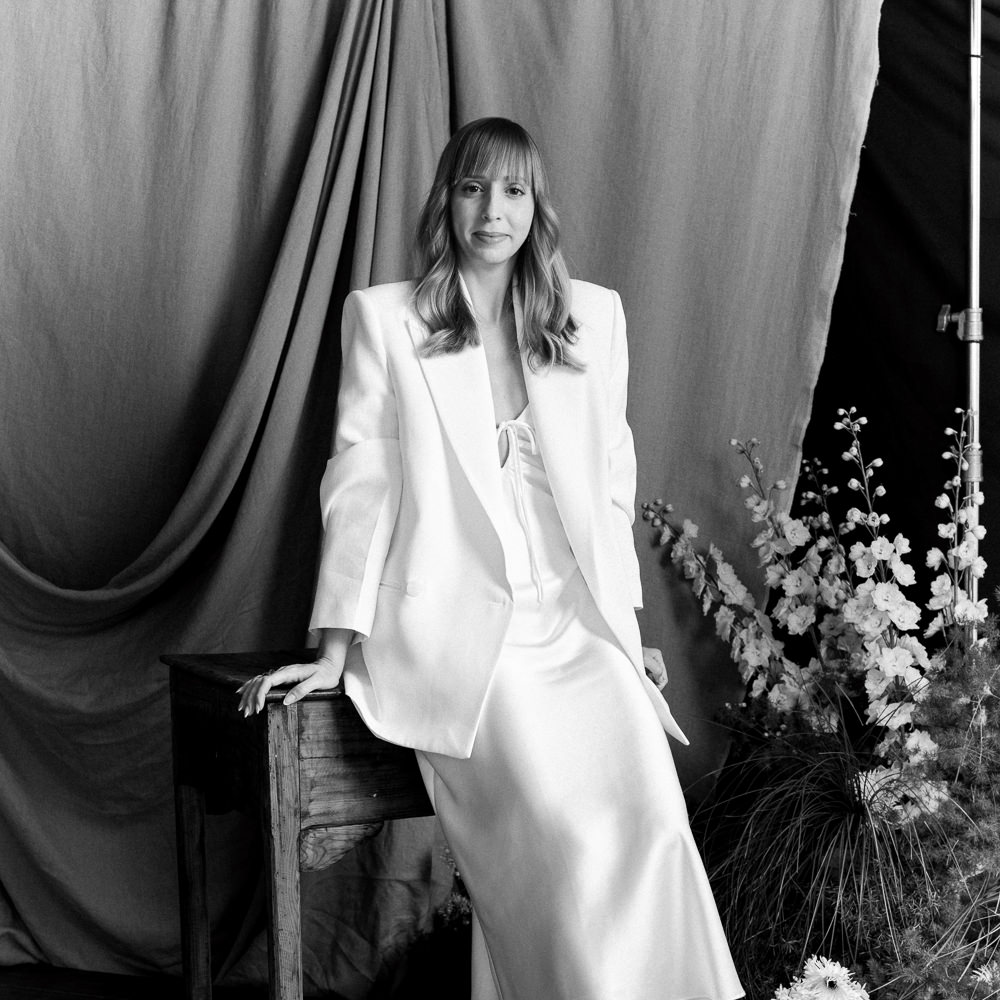
Episode 33 · Season 2
Os desafios de começar de novo
Rita Melo PlanningBlô Wedding Studio
summary
Rita Melo represents a particular kind of professional courage—the willingness to walk away from established success to start anew, to trust that her instincts about her own work matter more than the security of something that's already working. Her journey from graphic designer to co-founder of Musa to her current solo venture (Blo) traces a pattern of growth through strategic dissatisfaction, a refusal to settle into comfort zones. What strikes about Rita's story is not the fact of starting a wedding planning company at 25 (though that's remarkable), but the intentionality she brought to it even then. She understood that building something requires not just creativity but structure, not just vision but the unglamorous work of contracts, timelines, and client management. This is where design meets business, where aesthetic sensibility becomes operational discipline.
The conversation with Rita touches on something often unspoken in the creative professions: the imposter syndrome that arrives not when you're starting out but once you've achieved success. She articulates this precisely—it's not that she thinks she's bad at what she does, it's the fear that others will discover gaps in her practice, will judge her for mistakes she inevitably makes. This anxiety, paradoxically, is a sign of professionalism. It means she has internalized the standards she aspires to meet. Her transition from Musa to Blo carries echoes of that earlier leap, but with more self-awareness.
She now understands what works for her: creative control over the aesthetic direction, the ability to draw and sketch as part of her process, the intimacy of working with clients who value the artistic dimensions of planning, not just logistics. What's particularly interesting is her resistance to internationalization—not out of lack of ambition, but from clear-eyed assessment of what she values and what she can deliver excellently. She recognizes that the network of suppliers, the market knowledge, the relationships she's built in Portugal are genuine assets, not limitations to transcend.
Her honesty about money and pricing reflects a generational shift. She values being paid fairly without apology, she tracks her numbers seriously, and she's willing to discuss pricing with peers—conversations that remain taboo in much of the industry. This directness about financial sustainability is not unromantic; it's the foundation that allows her to remain in the work long-term, to continue investing in the creative exploration that animates her practice.
key quotes
I love it I realized you were stung by a bug at weddings you can complain about this world and the other yes the truth is that I always loved it of course it has its challenges but I always liked what I do because it has the design component the planning part the contact with the client.
I think that above all, it's important to have a critical spirit and understand what we can improve, and not get into that stagnation that leads us to be here just surviving, and not living, being happy, doing things we like.
Success is based a lot on happiness, once again. I think it's a lot of balance. For me, it's a lot of balance between professional life and personal life.
Consistency and persistence always bear fruit. This has been coming to my mind countless times.
The biggest goal I have right now is to make Blo grow, and that she can take me to good places, and that she can plan and create weddings, which I'm really proud of.
transcript + show
episode: 33 title: "Ep. 33 - Os desafios de começar de novo, com Rita Melo" pub_date: "Mon, 12 May 2025 05:00:00 +0000" original_language: english source_audio: "0d23b249.mp3"
Hi, welcome. I'm Rui and this is the The Wack Podcast. It's already recording. I know. We'll see soon what we can take advantage of this. But let's start. Rita, I have to start by saying that it's a pleasure to have you here. It was... We didn't know each other, we met 2 and a half hours ago. Exactly. We got the same messages. Exactly. And it was very cool because I've been following your previous project for some time. I already knew that I liked what you were doing. And now meeting you in this new process is cool. So, welcome to Guimarães. Thank you. Look, I was really surprised with this invitation, honestly. The other day I got that genuine message that the podcast had a very positive influence on me. But far from me thinking that one day you could think of inviting me, honestly. You know that this market and Malta... I don't know exactly why, but it happens a lot. I think we're all sometimes... I don't know if it's fear, but we think we have so little importance. And it's almost sad to see that in the amount of people I see. Everyone thinks they don't have to share and add. Almost the same way you said, you were afraid of having nothing to say, nothing to add. But almost everyone on that side thought the same. And there's always someone, no matter when, no matter where, that always absorbs something. And the cool part of all this, even me, there's always something that we have. Whether it's your life, your experience, your experience. And it's really special. And then I was telling you why I liked this part, preparing the questions and all that. And Elsa, these days, we were talking and she asked me... I don't know who we were talking to. And I said that, of all the people I have here, I always have a very personal reason. And that ends up being how I organize the questions. I think about the person and the brand, naturally. And then I think about two or three big topics. And then I ask some questions about each of those topics. Because, for me, there's always a point that that person has that's interesting. Like I said, last year we had 22 people here. And this year I think I'm going to walk to another 25, 26, we don't know. Or 30. We don't know how this is going to happen. And there's not a single person who is the same in anything, naturally. This is only obvious. When you talk about the different disciplines, the photographers, wedding planners, there's always something that is not in the specials, even in our work. That's cool. That's interesting. And that's why I'm really excited to have you here. And now we've been talking for two hours. We have a lot more to talk about. Yes, I believe so. And fortunately, I haven't asked you any of the questions I had for this. So let's go to the first one. I only have the beginning of the weddings here. How did this start for you? I came here from nowhere. And we didn't all go. It wasn't literally. But I came here from nowhere. Because I'm a graphic designer. I graduated many years ago. I worked as a graphic designer for three years in an agency where there were huge designers, there were also decorators, photographers, 3D guys. There were also designers who were not only graphic designers but also had a web background, etc. So it was a very cool start because I started there with a wide range of creative areas. And it was very good for my start as a designer. And I was there for three years and it was amazing. But at a certain point I felt that I was a little stagnant. I already had that thought, that I was a little stagnant. I wasn't feeling like I was evolving there. And there was a day, this was in 2017, it must have been around July or July, I remember perfectly. I was on vacation in Tenerife and I received a call from Bruna, who was a friend of mine at the time of college, who called me, she was already in Lisbon, I was still in the north because I am from the north, and she called me, she was already in the area, she was already doing some things related to weddings, not yet the planning, and she called me to challenge me to create a wedding planning company, from scratch. And she talked, talked, explained some things, and I heard, heard, heard. And it seems that I am still seeing the moment today, it's really funny. I remember being on the street, and being on the phone with her, and she was telling me that, talking, talking, talking, and in the end I said, ok, let's go. And that was when? That was in 2017. And that was in June or July, I don't remember which month it was. But basically, after that, we started preparing everything to create the project, which is Musa, which still exists, although I am no longer part of it. And basically we launched Musa in November, because it was crazy, from June to November, we thought, ok, how are we going to create this? We have to do a series of tutorials, because we never planned weddings. At the time I was still working in that agency, as a designer. I think I only delivered the letter to say that I was going to leave in October, which is when you have to stay at home for a month. So, in those months, we were organizing everything, thinking about the name, thinking about the logo, and then thinking about those editorials that we knew we would have to have a portfolio. So we thought about doing three different sessions, and we thought, we have to do this in interesting places, good places. At the time we did it in Torre de Palma, in Sublime Comporta, and in São Lourenço de Barrocal. You didn't choose badly, did you? I think I chose more at the time. We were lucky that we got it at the time that they accepted it. Bruna already knew some people in the area of weddings, photographers, and other guys. That difficult race. I'm not at all. She already had some contacts, and we were lucky that people believed in us and in our project, and we all went to do those editorials. Tell me something. You are very young, but at this time, doing the math, about 7 years ago, you were really very young. You think I'm doing math? No, but yes, imagine you were 24. I'm not that young. I was 25. Which is quite funny, because we also started a bit early. I was 25, 26. Yes, but I think it's a bit different as a photographer to do a job. You, as a planner, assume a position of leadership, coordination, and a number of things. Do you think that was ... I don't know what the word is, but how do you think it was at the age you were? Was it easy for you? I think it was. We started in a very natural way, and a bit unconscious, to be honest. We decided we were going to do that. Bruna had some experience, although she had never planned. I think it was all very innocent. We are young, let's try. If this doesn't work, I'll have to move to Lisbon. It only made sense in Lisbon, this type of service. But I thought, whatever happens, I can go back to my parents' house. I don't think it's serious, let's see how it goes. I had to change my life completely, buy a house, all that. I think at the time I didn't have the notion. Nowadays I have a completely different notion than at the time. The challenges we have, the client's demand, I didn't have that notion. That's it. I understand what you said, that story I told you a while ago, one of our first weddings, it was a huge budget, we had never photographed one. If it was today, I think it would shake you on all sides, because I think it's a very funny inconsequence. It will do, it will go well. And then when you spend a few years, you think, this could have gone wrong. And you don't notice that, as the years go by, you get more and more insecure? Yes. It's really strange, isn't it? But it's a foretaste of everything. You have more experience, you can anticipate things, you have more capacity, you have more everything. But maybe you also start to have more notion. I can say that we never had anything that went wrong. We never lost records, we never lost cards, but we saw colleagues going through things like that, that torment you and create the worst nightmares. I think, in a way, the fact of being in... I think it's that normal inconsequence, almost like your evolution as a person. When you're a child, you do everything and you only wake up with your head on the wall a couple of times and you realize that it can go wrong. At first you do it because it's funny. I have two children and one of them seems to always try to hurt himself. It seems to have that purpose of doing things It's that inconsequence, but I think it's... There's a phrase I love, and I've heard it before, it says that youth is a wonderful thing that is wasted on young people. It's really super funny because it's that inconsequence, that will of let's go and then we'll see. If you had that at my age, at 40, at 50, it's like super power because you put the two together. Or if you were young, it was another super power. But it doesn't happen, that's the fun part. At some point in that beginning, did you feel, suddenly you're growing up and if it goes wrong? If it goes wrong... Initially, I was with that mentality I think this is the same inconsequence mentality like, if others do it and it goes well we can do it too. It's not necessary, but it's not a lie. We can do it. I was with that mentality. Then we launched and obviously being a new project only having that initial portfolio obviously in the first or second month you're not there to receive orders, and then I remember that I shivered a little like, is this going to work? Is this going to be difficult? Is it going to be like I thought? I remember that I shivered a little during the first months but the truth is that we were very lucky because things were appearing. And now, chapter 2, let's call it that. You start now, you thought it was good to separate, you start a new project, and why? You asked easy questions. So, at the time we felt that it made sense to follow different paths at the end of last year and I left MUSE in November and then initially I was in doubt what to do next, if it made sense to create something in this area because I didn't do it because there are so many things, the market is already... When we started with MUSE there were wedding planners but we managed to appear in a way that I think we managed to appear with our own aesthetics and in some way to draw attention to stand out a little bit because of that. Nowadays there are a lot of professionals in the area so I was in doubt if it would make sense or not if the market would already be overloaded with wedding planners or not. You already told me no. I think we needed at least the triple of what we have now. Good and good wedding planners. Not just to make numbers but we needed a lot. That's good. There are thousands of photographers in this country more and more videographers wedding designers DJs there are a lot of them. Wedding planners started to appear in the last decade good and good half a dozen years maybe so we have a long way to go and as we said it's culture when people try friends will understand and the culture changes. Of course, they start to give a different value we were talking about that in Portugal it's not that culture I have always worked with Destination Weddings because they are the clients they look for but I went through that process of knowing very well and in the meantime I thought, I love it I realized you were stung by a bug at weddings you can complain about this world and the other yes the truth is that I always loved it of course it has its challenges but I always liked what I do because it has the design component the planning part the contact with the client that close contact because it's months and months of work so you create connections and then you like to be there in the day I like to be there in the day I feel sometimes it's very tiring do you think so? so for us, we are there you also arrive early but we are there at 9 in the morning setting up things sometimes under the sun I feel that I would like it to be less hours and sometimes there are moments in the day that I just want it to end I want to go home not because I don't like my job but because I feel that sometimes it's exhausting when you have 10 more years you start to feel the back pain in the last years I have tried not to be there until the end what do you imagine this new phase will be? I see it as a refreshing beginning and it has been very cool and very interesting for me to start something totally thought only by me even for what is my aesthetic what I like what is my aesthetic what I want to be the image of the brand how I want to communicate it this part has been cool to think from this perspective and it's cool to rethink things because I faced this challenge to get out of a comfortable situation and meanwhile create a new project this has a lot of challenges but at the same time it makes you rethink certain methodologies of work certain visions and it makes you get out of the bubble and try to see from the outside what can I improve how can I grow how can I get more and more to the level I want that actually I already achieved this with a lot of luck but more and more I want to get to those levels that value the aesthetic part obviously they also value the planning but they value a lot the design, the art the combination of various creative aspects that's really a very important point for you the artistic part since I was a kid when I saw your sketches on your website I thought you're great it's not that simple they are sketches what is normal for us we think it's normal for everyone but it's not if I did a sketch it wouldn't be that one and I would try to make that altar that appears in that video and that sketch that you have there that fascinates me a lot but that part is also important for you you really like this part the artistic part I like it a lot and more and more I have incorporated it in the projects I create for my fiancés it gives a personal touch and helps them to visualize the moments of the wedding that only through images or text is a bit more difficult and it allows me to create things let's say unique obviously it inspires me in various images various textures whatever but when I'm there with my pen and notebook I try to create something that is unique for that occasion and many times you are talking about that specific drawing of that ceremony many times a week ago I was drawing a ceremony for a wedding and I didn't know what to do so I started by drawing only the space the place and then as I started I felt that it started to build only with the process of drawing in my head it wasn't defined what I wanted for that ceremony but sometimes the act of drawing helps to materialize I don't know how to explain it's logical you start the path sometimes I already have but that creative side of drawing with the pen it helps me to unblock it's something I like what do you like the most? the design in all aspects Not only the design of the event, but also the parking lot, the invitations, all of that is done by me, in the weddings that are planned by me, and it's really the part that I love the most. And then you arrive at the day and see everything in the place. But the dream was, you arrive at the place and everything is wonderful, now thank you and see you soon. And that's the dream, right? Yes, it's true. But there's a whole other work behind it and a whole series of things. Does internationalization fascinate you? Look, honestly, I think it has already fascinated me more than now. In the sense that I feel that for a wedding planner, logistically, it is much more complex than for a photographer or videographer. I love to travel, it's one of the things I like the most and I love to visit new places. Romantically speaking, it fascinates me, but then when I think about what that implies, and the fact that you are here in Portugal, you know the market well, you know the suppliers, you know who works well, and that's something I really value. I really want to suggest to my fiancés, the best suppliers, and the experience you have helps a lot in that. So it scares me a little bit to go abroad, not having that base, which I think is very important, because the whole day team is super important, it's not enough for me to know that I'm doing a good job. It scares me a little bit, and I think it ends up being more demanding, in the sense that you have to spend a lot more time looking for the right sources, and then also the linguistic barriers, the differences in the way people work, which I think can be different. I believe that in other countries, people who work in the event area can have different ways of working from us, whether it's response time, or whatever, several things. And then that part leaves me a little bit in doubt if it's something I want. But you're looking at it only from the logistical side, that is, it's something you liked, but that doubt... Yes, yes, yes. But you liked it? I feel that romantically, thinking I liked it, I think it was very funny. But then when I think about the more practical part, because I also feel that I am an emotional person, and also a very rational person, I have both sides. So my rational side is thinking, ok, but maybe this will require a job, a team, a different machine behind it, and maybe you'll have to spend a lot more time at weddings you can have abroad, it will take a lot more time until you can guarantee that you're going to do a good job there. And then that part makes me a little more reluctant. At the moment, it's not a goal that I have. How do you see yourself in 10 years? Oh, those questions... You have no idea what I'm thinking about my dear wife, because I've been asking her these things for 3 years, 5 years. You already asked her here on the podcast, but I think I saw it. No, she's the one who asked me, she's the one who did that evil to me. She's the one who did that evil to me. At a time when I normally had these plans, these goals, but I got to a point where I thought, it's worth it, it's worth it. And then she also did that step-by-step entry together. Yes, exactly. Cold-blooded, isn't it, love? She's there looking. But how do you... And it's not a very specific perspective, it's not a... But how do you imagine your life, your professional part, but also... I usually don't make plans like that. I go a little bit by the book, with what life gives me, I grab the opportunities. And what I feel is a bit of that cliché. What I want is to be happy, that is, I want to continue. At the moment I am very happy with what I do, and from now on I hope to continue to be happy with what I do, even if it's not even in this area, which I think it will be, because I like it a lot. I know that whatever I do will always have to have the creative side, because for me that aspect is very important, it's very much in me. But honestly, I don't make plans for five or ten years from now. I'm trying to get better day by day, and I think it's important to have a critical spirit and understand what we can improve, and not get into that stagnation. At least I see life that way, not getting into a stagnation that leads us to be here just surviving, and not living, being happy, doing things we like, etc. But I don't feel like I have specific goals. But that stagnation point, you mentioned it at the beginning, when you were working at the design company, you said you were a bit stagnant, but at the time did you feel like you were? I felt like I was. In terms of salary, I started to realize that I wouldn't be able to get out of what I was earning at the time. And at the time, I was always a person who looked to value their own work, and I even asked for increases, and they gave me increases, etc. during that period I was there. I was also never a person who was just here waiting for someone to think about me. And it's true that I can't complain, because I was always lucky to have people who believed in me, who bet on me, etc. In professional terms. But there came a time when I felt that, knowing more or less what my colleagues at the time earned, who were already there for a long time, I wouldn't be able to get out of this. This was amazing in this beginning, it gave me huge bases, and it was very good. It was really good to have started there, in an agency, in a company with many creatives, and not just going to any company and being the only designer there. It was always a big goal of mine, to have more creatives for me to be able to learn. I really had that need to learn. By the way, now I'm even remembering that when I went there for the first time, I appeared there out of nowhere. At the time I even came to Porto to deliver resumes, etc. When I finished college, I made a resume, they were little cards, with a nice package, it was a way for me to show my skills as a designer. I remember that I did that very carefully, I produced a series of them, and I thought, I have to go to companies, or design studios, I won't just send an email with my resume, I have to differentiate myself in some way. So I came to Porto for two days, I spent the morning and afternoon delivering things in several places, and then I went to this company, which was even closer to my parents' house, and I got there, I introduced myself, I said I wanted to talk to the creative director, to a designer, and suddenly the creative director appears, we went to a room, and I remember telling him that I wanted an internship at the time, a professional internship. I remember telling him that what I really wanted was to learn, I had just finished college, I was very eager to learn, and to evolve, and to feel that I was with a team of people who had much more experience than me, and who could give me those tools. And meanwhile, everything went very well, he wasn't even waiting for me, he called me two or three hours later and told me I was there, and I was like, what? He wasn't even waiting for me! That was one of those people in my life, it was Vitor who believed in me, it's one of the things I cherish, because he's an amazing designer, he's really good. And I think, you've just finished college, but let me tell you what he also saw, which is, you were saying that and I was thinking, I really hope there are a lot of young people listening to what you're saying, because you just made the blueprint to get into a certain area, because nowadays it's so easy to distinguish yourself, at first, in that phase you're talking about, it's so easy, but it seems that the younger kids don't even want to do that job, and it's as simple as what you did, which is personalizing, giving yourself the job, talking to people, and saying what is obvious, I want to learn. And if you do these two or three things, anyone will say, this is the only thing that makes sense, because when you hire an intern, you won't give him a job, because you don't know what he knows how to do, but if you want someone who wants to do, who wants to learn, and you run normally, they will follow you, then you show what you can, you learn and then the snowball grows. But today you have so many young people who don't forget that job, I have already received many resumes without photos, we are photographers, at least you send me photos, and in your case, you did that a little bit, that's why we are here, to give these ideas and to help, because it may not be so obvious, but for a designer, I think it should be, let me present something, I have to stand out, because everyone is sending me emails, so I appear. That's what I thought, because they will receive hundreds of emails, including going to a place in Porto, I have closed the candidates, but as you appear here, let's consider, they had one of those challenges, I think it's normal in some companies, or design studios, they do a mini challenge, for you to choose, then they try to choose the person through that, and cool, then it was not selected, but they were also very surprised, by the way at the time they told me that there was another girl who also appeared there, they were also very surprised, but they had received hundreds of replies. Because now you go back to the other side, which is, now you also receive people contacting you, and you certainly feel the same, there are some people who clearly have that extra, or because they had a contact, it is not necessary to move the world, sometimes you just have to remember that there is a person on the other side, some level of education, and relationship creation, you don't have to be formal, you don't have to be, choose the tone you want to speak, but be respectful to the other person, and show that you are not sending the same thing to everyone, it's the minimum when you send an email, so it's easy, but it's really ... And that is also seen a lot, in this case, it is not that it is seen, but it is something that I value a lot, especially with clients who contact me too, that is, to be careful with them, make them feel that I am really answering the questions they are asking me, even if they are people who did not hire me, who did not pay me, who did not anything, but I really value these details, because I really think that, coldly thinking, I think we are always being evaluated, we are people, you have a relational life, you live with people, and you don't know where it comes from, not only in a professional way, you don't know who they are, one of the things I always force myself to do is the grooms who answer me saying that they don't choose us, I always answer with all the affection, genuinely wishing them the greatest happiness, not just because I don't have a wedding, I mean, we receive 200 requests per year, I want to do 10 or 12 weddings, most of them, even if they want to hire me all, I won't be able to, so I'm used to receive no, it's all right, it's part of it. I have no reason to be upset, obviously, but there is no reason to be upset, obviously, and I think it's normal, you create a good relationship, even with someone you may never have contact in life, but I've had one or two situations where I realized years later that it was a cool decision, when you do that, you realize that it's no longer for you, for the energies of the universe, whatever, if you feel good with yourself, but it's just a matter of good education, it's just a matter of relationship. Yes, exactly, and I honestly think that even these details make a lot of difference, and I think people notice that. I've had grooms, even recently, who thanked me, for being so communicative, and answering all our questions, we really felt that it stood out in some way, I don't know if they already could have contacted other people, I don't know, but somehow they felt that my openness, and being there for a long time, answering certain things, when we were in the first emails, those people hadn't contacted me, and I think that this human part is very important, both when you're looking for a job, as we were talking about, and when you already have your own business, the way you treat the people who contact you, and want to work with you, the people who contact you, and eventually want to hire you as a wedding planner, be it suppliers who contact you, as a wedding planner, it happens a lot, when people contact you, and present their services, I think it's important to have that. It's just good education. Yes, exactly. It's not much more than that, it's just good education. Obviously it's hard work, you have to dedicate time to that, but I think that it ends up bringing good results, it's what you were saying I know this is a bit more esoteric, but I think that if you're doing things in the right way, and launching the right things to the Universe, I think you'll succeed. Yes, no doubt. I don't believe it, but maybe. But coming back to you, you had never thought, you were telling your story at the beginning, in a more corporate world, but you had already imagined working for you, it's funny, now I feel it's what I want. Yes, I missed it. But at the time, when I graduated, I felt I wasn't interested in anything, I thought I was going to work for others, and I always thought I wasn't going to have a profile. From the moment I experienced it, I didn't want anything else. The freedom you have, and the opportunities you can go for, seem to be different. But especially the freedom, I think it's what I like at the moment. But was it an easy transition, or was there a struggle? It was very easy, it was all very sudden. We launched the museum in November, and then I said goodbye, in October, I don't know. I came to Lisbon, it was crazy, you always have that family network, you know, anything that happens, you have someone there to help you, that makes it a lot easier. That privilege, I know it's a privilege, but at the time it wasn't necessary, because things were going well, and at the time... It's a network, if you fall, the network is there for you. At the time, I used the money I had to invest in those studios, to buy things, my parents ended up not having to help me at all. But I feel like it was easy, I feel like things flowed, I feel like I was lucky. And now, this transition, you are a number person? Do you manage? Yes, I do. I'm not obstinate, but the numbers are important, I'm here for the passion, it's what moves me, it's what's most important to me, and I feel like I'm privileged to do what I like the most. And when they pay you well, do you feel good? But I feel like sometimes I feel like they don't pay me well yet. But that's good, when you think they pay you well, you don't start feeling bad. Exactly. I think that over the years, things have become more demanding, the market is more demanding, the grooms are more demanding, and effectively, what I receive for marriage has obviously accompanied this evolution. But still, there are many grooms who don't value it 100%. And that's normal, but it's something that can be contracted for everyone. And I hope that the right people are here to value us, and to hire us. But do you like the numbers? I like it. Do you like to talk about it with people so specifically artistic and creative? I like it. I'm not obsessed with that, but I like it, to be well paid and to have a sustainable business. I wouldn't want to be doing this if it wasn't for a sustainable perspective in terms of the financial return that I have, obviously. As you were saying, what moves me is passion, but I also want to be paid for that, and in a fair way. You know what? I sometimes talk about this because I think we don't talk much about money in Portugal. I agree. And it's not just about weddings. Exactly. You didn't know how much your colleagues earned, did you? I asked myself. Because I think there's no harm in knowing. And I think it's good to know how much others charge. Because I think it balances the market a bit more. Because sometimes you can be charging something completely unrealistic for what it should be. It doesn't make sense. And maybe if you have some conversations with other professionals in the field, you really open your eyes and think, ok, this really doesn't make sense. I think this has already happened to you. Yes, yes. You understand what I mean. And I think if we talked more and were more open, I think we would only win with that. Because we would all be valuing our work. And I think the market would be fairer. And there wouldn't be so much unfair competition. Or so many discrepancies. Although I understand that the experience also weighs here. A photographer or a wedding planner who has just started, probably won't charge the same as a person who has been here for 10 years. But still, I think... I agree with that argument. And I would have given it several times. But the question is, why not? If that person spent, he spent because he saw the value. And the question is sometimes that you are not afraid to say, I value this. Both when you sell yourself, in quotes, and when you buy something. It is very easy to argue with a photographer. I met a man 70 years ago who was photographing almost 50 years ago. He was in that year and had been photographing for 50 years. I don't think in that specific case. Because there are others who value it. But that man was a traditional street photographer. Without anything else. He didn't value it more for working for 50 years, than some kids I met, or who now photograph half a dozen months ago. Your work is worth what it is worth. It is obvious. In the case of a wedding, what we talked about at the beginning of the inconsistency, you have this issue. The experience is worth it. The fact that you can predict things, that things will not go wrong. In the case of photographers, you will lose images, backups, all those things. The experience brings you that and there is a value associated with it. But that's the value you're going to deliver. If you start two, you bring more value to those you hire. Who has been here for 30 years, charges more. Of course. But there it is. Sometimes you are afraid, you have insecurities. You know your mistakes. You know what you did wrong. A naturally modest person, will always think that what he did right, is not as good as what the other did more or less. And you always have these problems. It's an internal thing. That's why you need to go ahead. And say, ok, let's go. And then you run out of patience. But you try. Almost everyone I've talked to, who has had these experiences, almost always, because I don't have anyone who told me to go back because I didn't do well. Usually the market says you are worth much more than what you usually sell. Yes, if we don't risk it, and if we don't do it for ourselves, who else will do it for us? I've heard theories about the investor syndrome, which are completely contradictory and both logical. On the one hand you say, I feel I'm not as good as people think I am. But at the same time, this can be a modesty thing, as it may seem false modesty, I've never seen it, but it can be the other way around. But I'm presuming that other people think I'm really good. And I'm presuming that other people think I'm good, but I think I'm less good than they think. All this makes you argue both ways. But what I think, in most cases, people have no idea of the value they bring. Yes, you're talking about this issue of error, and I feel I'm a bit critical. When you like what you do, it's always. And you know it's funny, because I feel that my problem is not me thinking I'm bad, I'm a bad professional because I made that mistake, my problem is more that person will think I am. Yes. So it's not that investor syndrome, I'm a fraud and one day someone will find out. I know I'm not, because I'm careful, and I know I made this mistake, but I'm human. I can say this dialogue to myself, and be kind to myself in that sense, but then, I think the other person may not see me in this perspective, and may judge me, and I'm afraid of the mistake in that perspective. But we were also educated in that way. In school you spend 12, 13, 15, 20 years in a school, in which you do a test, the old one, and people won't sit with you to see why you answered that question right. They will look at you and say why you answered that wrong. And then you may have some people who do it in a more graceful way, in which you know you don't need to waste time on this, we will waste time on those you don't know, and this has all the logic, but we usually base everything on a punishment. And then you are trained not to make mistakes. If you make a mistake, you failed. And if you failed, it's your value that is associated. You are because you failed. You are weak because you failed. Instead of being... Look, I've learned something that... There was a funny sentence from Edison that said he needed 10,000 attempts to make a lamp, and he said, no, I learned 9,999 how not to do it. And this is the fact. You try something and it doesn't work. Of course, in our area you can't make mistakes this way, but you make mistakes in others. And the most important thing is to realize that you do your best. It won't always work. But having this grace with us that I tried, I did better than I know, and let's hope I do better next time. I agree. How do you define success? Wow, what a deep question. I'm just closing. For me, success is based a lot on happiness, once again. I think it's a lot of balance. For me, it's a lot of balance between professional life and personal life. I mean, being able to be fulfilled in what you do professionally, being well paid for it, I don't think it's defined as being ultra-millionaire, but being able to receive in a fair way, so that later you can enjoy life with your friends, with your family, being able to travel, having dinner, things you like, depending on what you like. In my case, I love traveling, I love walking, having dinner with friends, or whatever. For me, that's success, being able to have that balance of having a comfortable and happy life. I don't see it as super... I mean, I don't see it as extremely materialistic, like, I was able to earn thousands of euros, and I was able to earn millions a year, I don't know. I think it can come, and if it comes, cool, but I think everything goes through a balance, and in the end, what really matters are the relationships you create, and the moments you spend with the people you like the most. And there's a lot of that cliché that... You do what you like, you don't work... It's not that, it's not a specific sentence, but there's a lot of that cliché that I've never heard anyone at the end of their life ask me if they regret talking about work or something. I wish I had another meeting. Exactly! It's always the time you spend with people, so I think we're here because of those human relationships, and I value that a lot. So, obviously, success comes from professional success, but I think professional success will help personal success, and vice versa, I think it's all interconnected, and I think it's all a matter of balance. I feel that in my life everything is a matter of balance, and I feel that I need balance in my life. Do you have a specific goal? I know you don't do those plans a lot, but do you have a specific goal? I don't have a specific goal right now. The biggest goal I have right now is to make Blo grow, and that she can take me to good places, and that she can plan and create weddings, which I'm really proud of, and make this project grow, which I'm starting on my own, so it would be a huge pride to make that happen. That's the goal I have. It's not would be, it's will be. It's will be. That's the goal I have at the moment. Other than that, I don't have much. At this point, I feel very rested, and I'm giving my best. From the moment I'm giving my best, I hope things get better. The other day, my brother told me a phrase that stuck in my head for a long time, which is consistency and persistence always bear fruit. This has been coming to my mind countless times, I even told my brother. I already wrote this in my notebook. And I really feel that this has been a phrase that has had a positive influence on this phase in which I'm starting something new. I think that when we're focused and we go to the fight, I think that other things come along. At least I believe in that. And so far, it's been going well. The interesting thing is that sometimes... I say this against myself because sometimes I'm very specific about my goals, and some of them I think are supposed to be, but sometimes I go against myself. This podcast, ACO, worked because I went against my own pattern to do this. When you go without knowing specifically what you want, you end up being normally very surprised. Surprised on the positive side. When you want something very specific, sometimes you can get to that specific point and not feel as interesting as that. And sometimes, when you let the universe do a part of the work for you, you have your discipline, you do your work, you sow, you do what you like the best you know, sometimes it takes you to a path that you never imagined there and that is so much more interesting than you might have imagined. And I think that was one of the things I learned from this, that made me not be so specific about the big goals. The small ones are cool, but the big ones... Let's let some things come along that I don't know what they will be. And sometimes I feel that it also helps me not to define things that are extremely specific. It helps me because then I really get surprised. Normally on the positive side? Yes, yes, yes. I wanted to ask you the last two questions, but they are more or less mixed up. Let's talk a little bit about the community. How do you see, not only the community, what you experienced, not only with Eddie Plenas, but with the rest of the guys, and how do you see and deal with the different generations that you surely meet? How has your experience been working with a mix of generations? I think it has been very quiet. In terms of work, I think it has been very quiet. I haven't noticed any discrepancy or any issue because of age. What I feel is that at least in my perspective, Eddie Plenas doesn't have a community. There are, in fact, suppliers with whom I like to work a lot and I'm very good at weddings, which is very good, and there is a very good environment and a lot of help, etc. But then, apart from that, I feel that we don't promote moments to be together, apart from that. And between Eddie Plenas, at least with me, it has been non-existent. And obviously it's not anyone's fault, I'm also including the fault in myself. And I feel that nowadays I'm much more open to this idea of community than I was until now. That is, not that I thought that the community should not exist, I was just not seeing it as an important thing, I don't say priority, but an important thing. I wasn't putting the issue that way. And I feel that for a few months now I have realized that things could be different and that this could be beneficial for everyone. And I feel that your podcast, as I already told you, has been very good in that sense. And your own podcast helped me to think more about these issues, things that I had never thought about. And listening to your episodes helped me to realize that it really makes sense and we should all be more a community and we should all be more in contact. That is, I was never against it at all, but I feel that I had never thought about the importance of it, and I always had a lot in my head and focused on my work, on what I'm developing, and I never looked for that idea of community. It was a great pleasure to have you here. It was great to meet you since Album 5. It's really a pleasure to have you here. Well remembered. I just wanted to tell you something that I think is important. I've told you several times the fact of being young, and I mean that because you don't notice it in your work. That is, everything I saw of you, I didn't find anything in you that didn't make me feel ... She knows what she's doing. Extremely mature, a consistency too, that I loved. Congratulations to him. Thank you. I wasn't expecting those words and that this was something that could have gone through my head. I think things come out naturally. And that's it. Thank you. Thank you Rita for having you here. Give me a hug. I love hugs.
New episodes, twice a month. Be the first to hear them.