
Episode 34 · Season 2
"There's less competition at the top"
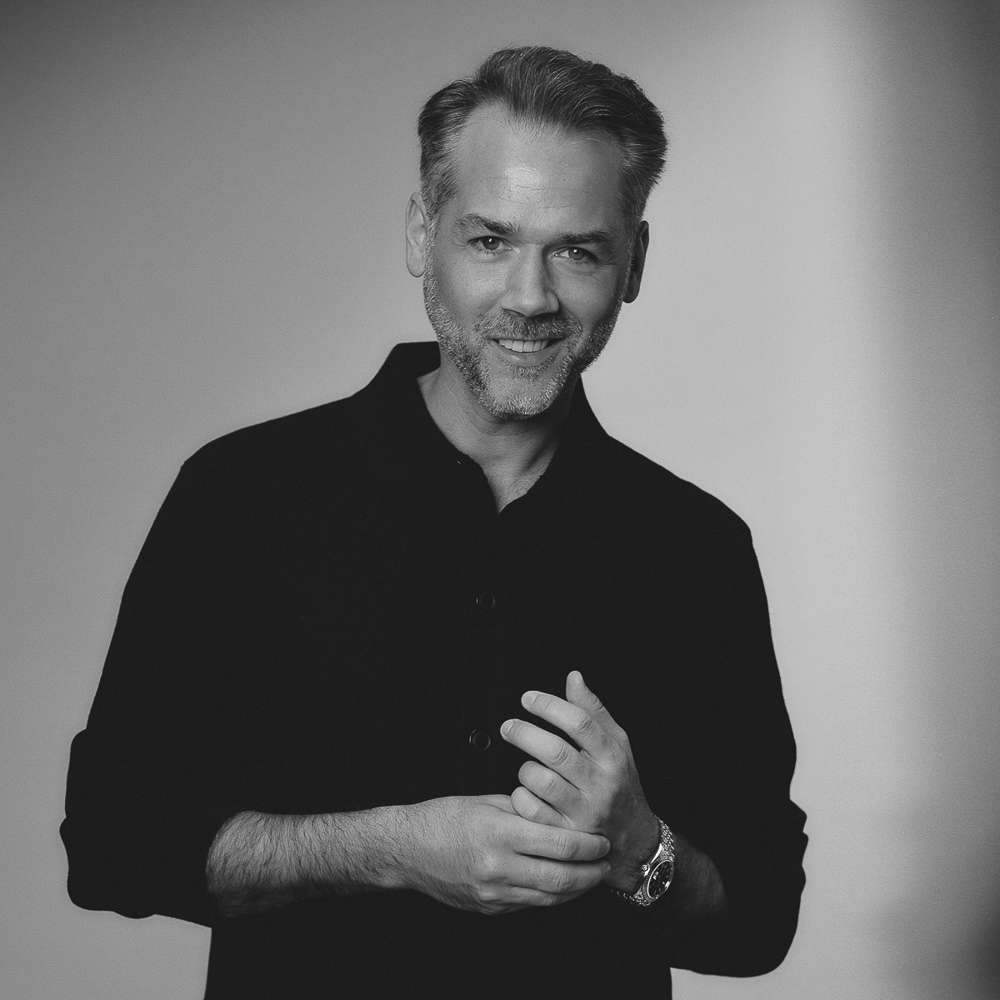
Greg Finck PhotographyGreg Finck
summary
Greg Finck's perspective on the photography market reveals something counterintuitive: the more crowded the field becomes, the more opportunity exists for those willing to pursue excellence with strategic intention. His observation that only two percent of photographers sustain their practice beyond ten years isn't meant as discouragement but as clarity about what actually sustains a business. The gap between entry-level and luxury photography is widening, not narrowing, because most photographers remain trapped at lower price points, unable to generate sufficient revenue to justify continuing.
Greg's journey from corporate marketing professional at Procter & Gamble to globally recognized luxury wedding photographer required translating business discipline into creative practice. His most significant insight is structural: the only viable path forward involves raising prices organically and intentionally, not jumping suddenly but demonstrating to the market, through service and communication, that higher price points are justified. His strategy of making the previous year's average your current minimum is elegant because it eliminates the psychological resistance many photographers face when increasing their rates. By the time they're ready to move to that price point, they've already proven the market will pay it.
What distinguishes Greg's competitors—the five or six photographers he consistently encounters—is not superior talent but superior business discipline and brand strategy. They've mastered the non-photographic dimensions: networking, service excellence, communication, understanding their clients' needs, building systems that scale without sacrificing quality. His resistance to location-based identity is particularly instructive. By refusing to be defined by geography, he's expanded his market from Paris-only work to a global practice. This requires confidence in one's work and willingness to absorb travel costs, but it fundamentally changes the economics.
key quotes
There's less competition at the top, the more you tend to luxury, the less people there are.
You need to have a business plan. You can't launch in this industry just because you love it without a plan.
My goal has always been to differentiate myself. I don't want to be mixed in everybody else. I want to be specific. I want to be singular.
What clients book me for is not the camera, not the lens, it's the style, it's the vision, it's the way I see things.
Mastering a system from A to Z is important. You can't afford on a wedding to be like, okay, I have four cameras. I cannot understand how they work.
When your kids or your grandkids look at your wedding photos, you don't want them to say, hey, this looks so like 2020.
transcript + show
episode: 34 title: "Ep. 34 - "There's less competition at the top", with Greg Finck" pub_date: "Mon, 19 May 2025 05:00:00 +0000" original_language: english source_audio: "97389ecd.mp3"
Hello, welcome. I'm Rui and this is the WEG Podcast. I have a question to you. You began shooting film once you dedicated yourself fully to your weddings, to the wedding photography around 2014. You started, but then you went to digital from a period. And once you dedicate yourself fully, you start shooting on film. Do you still do? First of all, thank you for having me. It's a real pleasure to be invited here. Thank you for what you do for the community. I really appreciate it. I've been a photographer for... I started shooting when I was actually a kid. I learned photography by my dad because he was a passionate photographer. We had a darkroom at home. So obviously when I started shooting, and this is like 35 years ago, when I was kind of 10, I started shooting with a film camera because digital didn't exist by then. So my first steps with photography was actually with film. So when I decided to become a wedding photographer, it was very natural for me to start with film again, because this is really the medium that I mastered. I shot my first wedding in 2009. So this is a little more than 15 years ago. And in 2009, it was only the first reflex digital cameras. So the cameras costed a lot of money. They were not as good as today. So starting with film, to me, was kind of obvious. So when I went full time, and as you mentioned, this is 2014, I was fully on film. And I communicated a lot on this because I felt like I was one of the first in Europe to do that. My friend Andre from Branco Prata, he was one of the other ones, but there was just a few there. There were a lot in the US, José Villa, Katy Mary, Elizabeth Messina, but there were not a lot in France or in Europe. So that's one of the reasons why I went with it. And to reply to your question today, I still shoot film. Definitely not as much as I used to do. The main reason is, first, I feel the events are much more dense and quick. I feel like to shoot film, you need to have a certain rhythm, a certain time to pose, to take your time. On the events that we do right now, the pace is so high that we're running everywhere. That's the first reason. The second reason is that most of my clients or planners right now, they want to see highlights delivered really quickly. And film requires a little bit of backlog after the wedding. I mean, the time for the films to be processed, it usually takes like 10 days, two weeks. And by then, usually the clients already want to see something. So it was very frustrating for me to only deliver highlights on digital. And two weeks after, you have these amazing film photos who come back. So I still shoot film, but it's actually more for myself or if I have some clients who are very much interested in it. But the ratio right now will be like maybe 20% film, 80% digital, when 10 years ago, it was the opposite. Yeah, it's interesting. I don't know if you know this, but Andrei shot our wedding in 2014. He started at that time really investing in our wedding. I think that year was one of the weddings he really invested in that. So I think it was, well, in all my perspective, I think it was maybe a golden year for weddings in film. And I kind of blew up in Europe, at least as you say, from that time. So, but this, it's interesting. Do you think that it's still a differential factor shooting on film right now? I feel it's coming back again. I think it has disappeared a little bit with COVID. I think some of the big names in the industry are very influential on the system that they shot. I get this question all the time, and I tend not to reply to them on Instagram. People are always like, okay, Greg, what camera did you use for this shot? What lens did you use for these shots? And I don't really reply to this question, not because I'm rude. Maybe I am actually, but more because I don't want the photographers to make a direct link between a photo and a system or a lens or a camera. And I tend to think the same about presets. I mean, I'm not supposed to say that, but I tend to think that presets need to be individual. There's no way you can buy a preset from someone and just click on a button. And as of a sudden, you're going to have the same type of photo or image than this person. So I don't really reply to photographers when they ask me, okay, what was this shot on? Because I think your objective is to find your own system and your own camera. For years, I've been shooting the Fujifilm GFX, and so many photographers were sure that it was film. They were like, oh my God, I love this look. The look of film is unbeatable. And I was like, man, this is digital. So to reply to your question, I think that a lot of photographers switching from film to systems like Sony, Fuji during COVID influenced a lot of people in the industry. And they were like, oh, it looks like film is not needed anymore. Because before it was like, oh, all the big names are shooting film. So maybe this is what I need to do to get access to the luxury markets. And out of a sudden, the same people are shooting Sony, they're shooting Canon mirrorless, they're shooting GFX, and all the photographers buy this new system. It's the same with Leica. I bought my Leica Q2 four years ago. I didn't really want to show it on Instagram, because I was like, the moment I'm going to show it, everybody's going to buy it. And four years after, I feel like now everybody's buying the Leica. So I think there's these things in the wedding industry where every photographer spends so much time analyzing the cameras, the system, the lenses, when I think they should just develop their own style and find a system that works for them. So I see that film's coming back right now. Because I get asked by planners or clients, like, can you confirm that you're still shooting film? And what is the percentage that you're going to include in your gallery? And I love that. And I think it's coming back under the influence of new photographers who are promoting it again. I don't feel like it's a contacts look so much anymore. Because I mean, 10 years ago, everybody was buying a contacts. But I see more people shooting with the contacts G2. It's more like 35 millimeter film, I feel. So I feel like it's a constant cycle. And fashion goes in and out. And I think what's important is that everybody thinks what works for them. And to me, it's really important that you master a system from A to Z. You can't afford on a wedding to be like, okay, I have four cameras. I cannot understand how they work. You need to understand deeply how they work. And I say that all the time, but I don't change my equipment a lot. I've had the same equipment for like, six, seven years now. I'm not looking to invest anything this year. I feel like I have everything that I need. For example, if I have the Leica Q2, it doesn't make any sense for me to upgrade to the Q3 because it's just like bigger files. And bigger files to me are a problem on weddings because I mean, you deal with so many files. I'm shooting the GFX 50R. My assistant once came with the 100. And I was like, get rid of it. I mean, the files are just too big. I can't deal with this shit. And I mean, we are not shooting like macro photos of diamonds where we need every single details to be spot on to be printed like in a building, you know, we're shooting like wedding photos. So I think it's important that everybody has a system and is not always looking to upgrade, to update, to buy the new last stuff. Yeah, that's kind of my opinion. Yeah, I agree. And as a photographer, well, usually we tend to be quite of, well, some of us tend to be quite geek and look at every aspect and this thing and that thing. And we've kind of forget to do the thing that put money in our hands, which is having the camera in our hands. And it's kind of weird, but it is what it is. So just to wrap up this part of your style and your way of shooting, what would you say it's your most distinctive characteristics that you can see in the world, in your work? And maybe if they don't sync up with other people seeing your work? It's a very interesting question. Since I've been in the business, my goal has always been to differentiate myself. I don't want to be mixed in everybody else. I want to be specific. I want to be singular. I think it should be the objective of every photographer is to develop their own style. So coming back to my style, I think that I've been in the industry for 15 years now. It's a decent amount of time. Some people have been for longer than me. My job is to keep on improving. I'm very excited to go to my next wedding because I want to deliver a better job than on the last one. So I feel that when I started, I was very strong on portraits because I learned photography with portraits. And I was just shooting a 50 millimeter. I love the 50 because it kind of gets rid of, it gives you like a clean backdrop. And if you're on a messy wedding, if you're in a messy room, it's really easy to find like a clean photo with a 50. At the beginning, I was even shooting at 85. I don't even do that anymore. I think 85 is too deep for me right now. So the deepest lens I take on a wedding right now is a 50. So I realized that with time, I tend to have like wider lenses. And I think it's a natural evolution. Because you want more information on your photos, you want your photos to be more complex than just like a very nice 50 millimeter portrait with a nice bokeh. So I felt like I've been shooting more and more 35 than 24. I have a 24 millimeter lens that I love on the Sony. And we talked about the Q2, the Q2 is a 28. And I love that lens. So coming back to the style, I felt like my style at the beginning was very fine art, even though I hate that word. So it was all about shooting with like a wide aperture, shooting everything at 2.0, getting these amazing depths of field. And the more it goes, the more I step back, the more I go wide, the more I have introduced like a more like fashion forward touch to my photos. And this has come with my evolution. I mean, when I started 15 years ago, I didn't shoot any fashion jobs. Since I've been shooting for my wife, Rima Roudaki, she's a wedding dress designer. So I do all of her campaigns. I shoot a lot for Elie Saab. I do all of their fashion shows in Paris. I've shot a campaign for Balenciaga. So all of these fashion jobs have made my eye evolve a bit. And I want to introduce that a little bit more into my wedding photography. It's good news because I think that the market is evolving right now to all of these Vogue publications. All Brides wants to be featured in Vogue, which obviously has a more fashion forward line. So that's how I see my style evolving in the past 15 years, going from a really fine art, backlit depths of film 2.0, very shallow images to something more sharp, more fashion forward. I use the flash much more. So yeah, that's kind of what I see. And just to close on this topic, I didn't do that because it's trendy. I feel like it's lucky that this is trendy. I'm on the right side of the story right now. But it has just come with my personal life. I mean, I met Rima 10 years ago. She asked me to shoot her campaigns. Because I shoot her campaigns, Elie Saab books me, Balenciaga books me. So I think it was my natural evolution. And I'm lucky that now this fashion style is popular because I was lucky enough to have these jobs that educated me over the past 10 years. Yeah, it's really interesting. And when I look at your work for the last couple of days, I was really into it. The thing is, I would describe it, what you do is, especially in weddings, you kind of feel that editorial style and that fashion style. But in a really subtle way, even with the colors and the editing and the posing, you kind of feel it's there. But it's really subtle. And it's not over the top. Because sometimes you see a wedding shoot really over the top, really editorial, really fashion forward. And maybe, I don't know, it's just speculation, maybe in a few years, that would probably not age that well. And I feel your work… Sorry. You're totally right. When I say that I'm editorial, when I say that I'm fashion forward, I'm not on the opposite side of the spectrum. And I feel like I will never be because that's not who I am as a person. That's not my aesthetic. So if you want a very alternative, indie, fashion forward, making these blurry shots, dirty film look, I'm not that person. I feel like I'm a nice mix between classical, timeless wedding photography. And I set a twist of fashion. I'm not on the other side of the spectrum. And some people do that very well. So I feel like my style has evolved a bit to the fashion forward slash editorial side. But I don't want to go all the way because that's not who I am. And as you mentioned, to me, it's really important that wedding photos remain coherent in 20 years from now, 50 years from now. And when your kids or your grandkids look at your wedding photos, you don't want them to say, hey, this looks so like 2020. So that's also what I love about film because you can't fake editing with film. And that's why I always try to be as precise as I can with color editing because film to me are the real colors. And with film, you can't really place the wedding photo on a date. You can't say, oh, it was a photo. I mean, obviously, if it was in the 50s, you can tell. But the aspect of film is supposed to take you through the years without identifying like a timeframe. And I love that. So yeah, you're right. And honestly, if your style is all the way editorial, go for it. And be specific with it, you will get clients with that. And it's totally fine. I'm just speaking about my own style here. Yeah, that's true. Whatever works, just go with it. Yeah. So let's talk business. But before, and it is business, you're regularly considered one of the best photographers in the world for many publications. What do these awards and recognitions mean to you? Actually, not much. I mean, it's always gratifying. Obviously, I'm not going to complain about it. Not much in the sense where what's really important for me, and I always say that is that clients book me for the season to come. I'm very, I'm always on the edge. I'm always like, oh, my God, you know what, maybe I won't book 2026. And honestly, I mean, you asked my wife, she will confirm. Some people call me pessimistic. I don't feel it is. I just keep myself on the edge because I feel the moment as an artist, the moment you start to rest, you're already going down. So all of these publications are very gratifying. It's very good for your ego. But what's important for me is that do I book clients at the end of the day? So obviously, I mean, when was it when Carrie Goldberg made that list for Harper's Bazaar? It was like six, seven years ago. I was in the first list. of our best wedding photographers in the world. That was a big thing. Because first, it was the first list. Second, it was a fashion publication. So it really helped me going into the right direction. So I'm very grateful still to this day to Carrie who made that list. But after that, I mean, you know what, it's just, I mean, as long as I book clients, I'm happy. So if this list helped me book clients, then that's good. If it's just to see my name up there, it's just my mom being happy. I don't really care. That's awesome, yeah. So for those who probably were living under the rock for the last few years, you mentioned this a few times, you have a marketing degree, you have worked on Procter & Gamble for 10 years. And my question is, what experiences and what tricks and what tools have you brought from these corporate experiences and jobs to your wedding photography business? Yeah, so yeah, I've had an interesting background because I was working in corporate for 10 years. Once again, I started shooting and I started using a camera when I was like 10 or 12. So I've been doing that all my life, but I never considered it for a job at the beginning. I was like, this is just a passion, this is what I do. My dad did that as a passion, so I was just like reproducing. I was like, I like taking photos for like family events, but it's gonna stop here. So I did this business school, I made an MBA in the States and then I worked 10 years in corporate. And I'm very grateful for that time because it taught me so many things that are useful right now in my own business. But I mean, back then I was really unhappy in my life because I was realizing that something was missing and that something was the artistic part of the job. Once again, I love working at Procter & Gamble, I still have great friends there, but I was missing something and I was really unhappy with my life. So I quit everything in 2014. It was a rough year because I got a divorce and two months after I quit my job, so during the same summer, I just pressed the reset button. Is that, that's kind of my personality, that's what I do. I mean, I take on things for like some time and when I'm done, I'm like, okay, let's press reset. You're all in and all out. Sorry? You're all in and then all out. I'm all in and then I'm all out, exactly. So even though I pressed that reset button, I had been shooting weddings for five years next to my job. So weddings were not new to me, I was doing that next to my job just for pocket money and I was doing that on the weekend and I was already shooting 20 weddings a year. So it was already a lot. It was already like, and I already had publication. They were not international, but I had publications in France. So I was already kind of established. So when I quit my job, my only goal for like two to three years were to establish a luxury brand because I was like, okay, you know how to use a camera because you've been doing that for 20 years. So there's nothing that you can, I mean, you can always learn new things, but I knew how to use a camera. I knew how to shoot weddings because when I quit, I had already shot like probably 80 to 100 weddings in five years. So I was like, my job right now is to establish a luxury brand because I can only make it full-time in this business if I go luxury and if I raise my pricing very quickly because back then I was charging, I always tell this anecdote, but when I quit the first wedding that I shot, I charged 4,000 euros and I was shooting all film. So I took my film to the lab and the invoice that I got from the lab was like 4,500 euros. So I shot 4,000 and I have 4,500 euros of film. And I was like, man, it was not really worth it to make a business school to come to that point. But the reason why I did that is that because I invested a lot of money and time during the first two to three years to say, okay, I need to have a luxury brand. And the good news is that I know how to build a brand because this was my job for 10 years. And building a luxury brand, to me it was not only the product that I delivered, my photos, it was also the service. It was also the network that I had. It was also my communication on social media, on blogs. It was my network. How can I network with the people that I consider to be my clients? These are the wedding planners. It was all of these things that I implemented for like two to three years at the beginning saying, I need people to identify a great thing as a luxury brand, just like they do with like Gucci, Louis Vuitton, or you name it. So I want to have the same type of service. So every touch points that I will have with my clients, whether it's when I deliver a box with prints, there needs to be these unwritten notes, very nice packaging, very high hand. My website needs to be very high hand. There can't be any mistakes in the writing on my website, in my emails, in my contracts. So everything needed to be like luxury. And I worked hard on that for like a couple of years. I still do. And then I implemented a trick in terms of pricing that has worked for me. And this was that the average price of one year becomes the lowest of the year after that. So let's say during year one, I'm charging an average of like 5,000 euros, but some job at 3,000, some other at seven. The average is 5,000. The year after, I'm not booking anything anymore below five because I want this average wedding from year one to become the lowest of year two. And that's how I organically increase my price and the quality of the wedding that I shot. That was, this is one of the coolest tricks, not tricks, but strategies that makes you really kind of grow more or less exponentially, but organically, as you say, it's really because- Organically, and I think what's interesting with that trick is that there's not so much risk involved with that. Because if your average is five, the question with photographers, and I've done a lot of workshops, I've done a lot of one-on-one for photographers, they're always scared of moving their prices up. But if this is your average, this is actually your value on the market. Yeah. But people are always scared to like leave the lowest package behind. And one trick to do that is that once I had a photographer coming to see me for one-on-one, he came from Italy and he had like 20 years of experience. He was already very established. And I was surprised that he came to me and I was like, is there a specific reason why you want to do a one-on-one with me? And he was like, you know what? We both shoot wedding on Lake Como, but for some reason I booked contracts worth 5,000 euros. And you book contracts for like 15,000 euros in Lake Como. Why do you book 15 when I book five? And I was like, do you even propose 15 in your pricing? And he's like, no. And I'm like, how do you want to book 15 if you don't impose 15? And I'm like, you know what? We're going to do something very simple. You keep your packages as they are right now, let's say you have three, and you just include like a fourth one where you propose everything you want. Engagement session, day before, day after, three photo offers, albums, prints, everything. We don't care what you propose in that, or if you make more margin. The only thing I want you to realize is that someone can actually pay 15,000 euros on your brand. We do that with that guy three months after he comes back to me and say, Greg, I booked this package twice, I can't deliver it. And all of a sudden at the end of the season, your average is so much bigger just because of these two packages. And then it's less scary for you to gradually increase like that every year. Instead of saying, I think in general photo offers, they don't have enough width, enough scope in their packages, it's like 4,000, 4,500, 5,000, give me more. I mean, starts at four, then have seven, then maybe 10, and then maybe 15. It gives a lot of room for negotiation for clients, gives a lot of room for like different products or service, and it gives a lot of room to create value. So that's kind of how I built my brand and that's how I raised my price organically. Yeah, and that's amazing because if that's your average, you're already booking higher than that. So it shouldn't be all that scary to put that as the lower point. So it's really an amazing tool. People think too much that it's like, okay, you know what, I'm charging 10 right now, next year I'm jumping to 20. No, it doesn't work like this. You can't jump to 20. You need to have the proof that some clients can invest 20 on your brand because maybe your brand is not strong enough for 20. But if some clients have already booked you for 20, it means that it is. So the way to test it is just to give some scope and some width in your pricing. Yeah, and that's exactly what I was going to talk about because do you think that when you jump to the luxury and the high-end weddings, do you think the portfolio is all that important or it's probably a given and everyone expects you to be a great photographer at that point and other things come into place to make the difference between five and 10 or 20? I'm gonna say yes and no. Yes, because the portfolio is always the most important. And I always push full galleries to clients when they inquire with me because I want them to see how I shoot a wedding from A to Z, from getting ready to the after party. And I'm very proud of my full galleries. So that's also one of the reasons why I send them because I know that with social media, with Instagram, clients can be very enthusiastic seeing like a very strong Instagrammable photo that made like 15,000 likes. But what's important for me in a wedding gallery is how the photographers cover the wedding from A to Z. And it's always like so strong when you have a client getting married in Lake Como, Portofino, Lisbon, you name it, if you already have a wedding in one of these locations. And if I have an inquiry for Lake Como, I'm gonna send full galleries from Lake Como. If I have a wedding in Majorca, I'm gonna send a full gallery from Majorca. And then the client's gonna be like, oh my God, he shot everywhere. So it speaks for himself. So that's first. Portfolio is important for the clients. If you look at this from a wedding planner aspect, because I consider the wedding planners to be my clients, I think the portfolio is a given. The wedding planners will, the high-end wedding planners will only action photographers that they know, that they are worked with, and that they know that they will be able to support the pressure, the pace of the high-end wedding. And in this case, the portfolio becomes second, or it's not second, it's number one, but it's a given. Because what the wedding planners expect is that you're gonna be luxury and you're gonna be top-notch on all the other aspects, meaning service, meaning expertise, meaning autonomy. You're not the star of the show. I see some photographers, they show up at weddings and they're like, hey, I'm here. No, you don't want to make a wedding planner lose time because you know what? The wedding planners, even though they're high-end, they are the ones who are under the client's pressure. So you want to be in full autonomy. You want to be as discreet as possible. You don't want to mess up with the timeline. You want to be super professional. And the wedding planners, they don't want to hear about you except the client saying at the end of the day, oh my God, the photographer was amazing. And it's funny how 99% of my clients, they come and see us at the end of the day and they're like, Greg, it happened. I had a wedding last weekend in Versailles and it happened again. The clients at the end of the day, they were like, Greg, we loved working with you and your team. And they have not seen one photo when they say that. So what I mean by that is that, yes, your portfolio is important because it speaks volumes for you, for your longevity on the market, your expertise, the fact that you've shot everywhere and you need to get better every weekend. If you're not good enough with a flash on the dance floor, you need to get better on this. But for the luxury business, when you work with planners, they also expect a lot of other things. Yeah, it makes total sense. And the images you posted on this last wedding, last week, the place was just absolutely beautiful. It was really amazing. Yeah. So I asked you before about the thoughts on being this crowded market. And you had a very interesting answer. You said that you don't think the market is crowded. Can you tell a little bit about that? Yeah, you know what I've been hearing since I've come on this business, I've been hearing like, oh, it's such a saturated market. And it's funny because, I mean, when I look at the names like 15 years ago, some of them have stopped being photographers, some new names have come. So there's a lot of people for sure. I don't believe that all of them are very good. And I'm not gonna make a lot of friends here, but I mean, that's only my opinion. I think that photographers, they don't work enough on their business. So I think that the very minimal amount of people work like in the right direction. And I'm not being mean here. I think like a lot of people, they don't have necessarily like the business skills. And I realized that when I was like giving workshops, because all of the photographers will be coming for like the business aspects of things. So first, I don't think it's saturated. Second, if there's a lot of people, I don't think there are like so many people who deliver an outstanding job. For example, I worked with my wife also in the wedding dress designing business. It's such a more difficult market. Because I mean, there's like so many more investments that are required. You have like production line, you have supply, you have marketing, you have retail, and you can't do this business if you're not super strong. I don't think it's the case for photography. And what I shared the last time we spoke, and that I wanna say here again, is that I feel like the more you tend to luxury, the less people there are. I think there's a lot of people and the market is so much more competitive at the entry level than it is when you go to the luxury market. I feel like on the inquiries that I reply to from planners, it's always the same four or five people in front of me, always the same names. And I'm not saying that it makes it easy, but first, I think that we all have like specificities. And for example, I mean, most of my competitors were in the States. So I mean, to me, it's a really big strength to be based in Europe, to be based in Paris. First for the fashion side. I mean, it gives me some kind of credibility to be in Paris because I shoot on all the fashion weeks here every two months. Second, because my main market is American clients getting married in Europe. So you know what? I'm already here. So if you don't wanna spend crazy money for travel costs with someone else coming from the States, I'm here. So when you compete with the same people, and I just gave you some of my strengths, but obviously I also have like cons where some of my competitors are much better than me. For example, I'm not, but for example, I'm not very big on celebrities. I've never had like a crazy celebrity. Some of my competitors, I mean, they're shooting celebrities every other weekend. So everybody's playing with these pros and cons. And I think it's much more easy to identify these pros and cons when the people you're competing with are only a handpicked, when you're like, oh my God, just like in the middle of like 200, 2000 photographers and the client is only here to shop based on a price. So I think the more you manage to raise your price really quick, the more you will be visible and the more you will differentiate yourself. Obviously, it sounds very easy to say like this. For me, it's been like an adventure like 15 years, but that's kind of what I tend to do because I tend to think it's easier where you get too close to the top. But it makes sense and you can relate in other markets. You talk about fashion and it's easier for Balenciaga and Louis Vuitton and Gucci and all the brands to coexist and not eat on each other's. Then probably not for certain the the cheaper brands. They are always compete fearlessly between them. So it makes sense. But do you think those five, six, ten photographers you always meet in the same competitors list, do you think there's a common mentality between you? I'm talking about business mainly or brand. Do you think there's a common trait that you have? Yes. People call me the business photographer for a long time because I come from business and everybody knows that I work for Procter & Gamble, etc. But I think that when you reach to the top, whatever that means, because I don't really like that word, you need to master the business aspects and it's easier you master it yourself. And I think some of my competitors, even though they come from artistic school, photography school, they learned to master these business aspects. Talking personally about my wife, she met at fashion school and at the beginning of her career, she said that in a podcast, she was only like the artistic side of things. She was only like, you know what, I'm just a designer. And year after year, she learned all of the business aspects of things. And now I think her profile is such a more complete profile between artistic and business. And I don't think that business comes at the expense of artistic. I think maybe this was a belief like 10 years ago, people were like, oh, you need to be one or the other. No, I think in the world we live in, which is very connected, you need to develop these skills. So it's easier you learn them year after year, you fail, you gain experience. Or you just hire people to help you on these matters. And we mentioned that you listen to Corbyn's podcast with Reem and that's what she says. I love Corbyn, she's such a great friend. And she's so artistic. I love this with her. I think her photos, make me so emotional sometimes. But she says how she gradually surrounded herself like a lawyer, and then an accountant, and then someone who manages a profit. Because at the end of the year, that's these aspects that are going to make that you're still here the year after. And I think in our business, we have so many photographers who stop because they just can't sustain the profit, we just can't make a good living out of it. So to me, it's either you just learn, or you just hire people to help you on this. Yeah, she used to talk about that. And I really that really resonate with me, because exactly what you said, if you don't make enough money to have a nice living, or even a decent living, you won't still be doing it. So the artistic side will be gone as well. So might as well have the business side. You also in previous interviews I've heard from you, you shared some statistics that were really interesting. You shared that 70% of photographers, 70% of photographers don't pass three years, and only 2% reach 10 years in this year. This is an issue close to me, I was a bit insecure a couple of years about becoming quite a bit older with clients, because you kind of, when we started, we were more or less the age slightly younger than our couples. But then time passed, we also started at 2010. So we also have 15 years in the business. And we were a bit insecure about becoming older. But what I'm starting to notice in becoming a bit older, is that I think there's a positive here. And I wanted to ask your opinion, because do you think that being a bit older and being a bit more experienced is a positive, especially in this high end market where people want responsibility? It's an interesting question. And to me, older is different than experience. Because for example, if you take Caleb, I was doing video, Caleb Jordan Lee is a good friend, we work a lot together. I think he started shooting wedding when he was 16. Or 17. I mean, don't quote me on the number, but he started very young. And it's funny, because this guy is still very young, but he already has like 20 years of experience. Obviously, I went full time when I was already 34. So I mean, it's not the same. And we were joking about that last weekend, because the clients last weekend, they were very young, probably like 25, 26. And the more it goes, the more I feel like I tend to be the age of the parents. And I see the parents and I'm like, Oh my God, this guy could be a friend, because it looks like we kind of the same age. And when I started, I was like kind of friends with the clients. And now I'm friends with the parents. Yeah. Andre told me exactly the same thing. So I don't think it's a problem. I don't think it's a problem. As long as you are healthy and fit, because I feel like weddings, they have a toll on our body. Yeah. I mean, I shot this wedding in Versailles last weekend. And what day is it today? It's Tuesday. So Monday, yesterday, the day after, I was like, I just want to be in my bed all day. So when I was shooting like weddings 10 years ago, it was not like this. But I don't think that the age is a problem. It's just that I realized that when it starts to be like 45, 50, 55, they think a lot about, okay, what's next? Because I don't want to be doing that all my life. And I don't want to be doing that when I'm 60. 60 to me is in 15 years, because I'm going to turn 45. I just love what I do. I don't really want to think about the end of it because it's only been like 15 years. And also because my weddings become more interesting every year. I mean, they're like so much more dense, so much more interesting. I mean, the people that I meet are amazing. I'm not like, you know what, I have another five years and then I'm going to do something else. There's nothing else I want to do. This is my passion. So maybe I'm dumb not to think about like a retirement plan. But it's just that I love it so much. For now, it's working very well. So I don't really see a reason to start focusing on some side business or thinking about like a retirement plan. Yeah, that's a great answer. But in terms of experience, I think the more experience you have, the better. And I think you can be very disappointed if you hire a photographer who only has a couple of years experience, and you've seen maybe a couple of amazing photos on Instagram, you might be disappointed once again by the full galleries. Because I think having a very, very strong gallery, wedding gallery from A to Z comes with experience. You can't be strong on all aspects of wedding photography with only two years experience. Maybe you're strong on candidates, maybe you're strong on emotions, maybe you're strong on portraits. But being super strong on every single aspect comes with experience. Yeah. And even more, if you add up the things that happen that you can control the problems, the stresses, sometimes the experience, the living things just helps you dealing with them. So just one last question about this. If you could give only one advice to young people, or not young people, but people who are trying to reach this level, what would it be? My only advice, and once again, we come back to business, but it is to have a business plan. You can't launch in this industry just because you love it without a plan. And I think one of the reasons why there's so many people starting in this industry, and why it's so crowded at the entry level, is that it's easy to get a first client. It's very easy. Everybody has a friend who's getting married, and we've all been exposed to a situation where the clients are like, oh, you know what? I have an uncle who's making photos. I'm going to hire this uncle. So I feel like at the beginning, it's very easy to shoot one wedding, two weddings, five weddings for friends. And all of a sudden, you're like, oh, I can have a business out of it because people booked me for that. It's not enough. You quickly need to have a plan to where you want to go to raise your price, because once again, I believe that the only way out in this business is luxury. I don't believe in any other model. That's my opinion. But let's say you're charging 2,000 euros per wedding, which is what a lot of people do at the entry level. You still only can shoot like 25 weddings a year. You can't do more than that. People don't get married in the winter. People don't get married on a Monday. So you shoot 25 weddings at 2,000 euros. It's 50,000 euros of revenue per year. You need to buy your equipment. You need to buy your website. You need to buy your camera. You need to pay for an insurance. You don't make a living out of it. So really quickly, you need to have a plan to say, okay, how do I go from 2,000 to 4,000 to 7,000 to 10,000? And the reason why people stop after three years is because they get stuck at 2,000. The reason why only 2% make it after 10 years is because 98% get stuck at 2,000. And they're like, you know what? I just can't make a good living out of it. So you need to have a plan and you need to have a business plan. And in business plan, there's plan, but there's also business. So it's not only about making better photos, switching from Sony to Canon, buying a Leica, buying a new lens. It's about who are the person who can bring me business? How do I network? How do I communicate? How do I get publications so that people can see my photos, et cetera, et cetera. Yeah. And work on your portfolio. I have heard you talk about editorials and and some people just want to do five or 10 a year and don't invest in a good one. So it's always a good idea. So we're kind of on the end of things, but I wanted to talk about one thing that missed the first time, which was not recorded. It was this podcast exists to talk about community. WAC means Wedding Artists Community. And I tend to talk about Portugal a lot. And I am very interested in to know your opinion, because as far as I know, south of France and Como are the most sought after luxury regions in Europe. However, Portugal is becoming quite an important player on this market. We don't have the quantity, the quality of things. It's a smaller country. It's not as economic strong country. But I wanted to know your opinion about what are your honest and really transparent opinions on what we have that strength and what are the things that maybe we can work around or just the limitations we have. I know you worked here a few times. So what are your opinions? It's a very interesting question. First of all, I believe that 95% of my clients are from the US. So American clients getting married in Europe, this is my main business. As you mentioned, in Europe, you find France and Italy as the top destinations. And I feel like right now for an American client, what is considered a high-end wedding is a destination wedding in France or Italy. Having said that, number two, I see Spain and Portugal. Over the past 10 years, I think I've shot like four or five jobs in Portugal, which is like a decent amount. And I think one of the reasons which is attractive for Spain or Portugal is that it's cheaper than France or Italy. But it still has a lot to offer in terms of venues, in terms of landscapes. I shot a beautiful wedding last year in the Douro Valley at the Six Senses, that's what it's called. These were clients from the States. And I don't know the budget of the wedding, but I pretend that one of the reasons was that it was so much cheaper. So I think that's really a strength for Portugal and Spain right now, the fact that there's so much to offer in terms of venue, in terms of service, in terms of experience. So such a smaller amount, knowing that France and Italy are already cheaper than actually having a wedding in the States. I mean, if you have a wedding in New York or California right now, I had a client two years ago telling me the price of the venue in France, and they got married in a chateau in the Douro Valley, she told me that the price of the venue was the same as just the price of the wine that they would have paid in California. So one of the reasons why people come to Europe is because it's amazing, we have a lot to offer, and it's cheap. So I think right now Portugal and Spain have so much more to offer than France and Italy for that. Second, that's what I always tell to photographers. Obviously, it doesn't apply to planners. But I think as photographers, it's a mistake to be linked to one country. Let me explain that. I feel the more you raise your price and the more you get to the luxury business, the smaller the market. There's not a lot of clients who invest $5 million in their wedding. My clients, they tend to invest an average between $2 million and $5 million. That's what they invest. There's a decent amount of these people, but they're not like millions. So I think if you say, I want to do $5 million wedding, but only in France, your market is very, very, very limited. As of a sudden, when you say, I want to do that, but not only in France, I want to do that in France, in Italy, in Spain, in Portugal. As of a sudden, the market's a little bit bigger. If you say, you know what? I speak very good English. I go to New York a lot. I have a visa to work in the States. So as of a sudden, I'm doing Europe, but I'm also doing the States. And I don't really need people to know that I'm based in Paris because I'm not. I spend one week a month in New York. Same with Asia. Two months ago, I shot a wedding in Thailand. So I think it's a mistake as a photographer to be too specialized on one location because people are not going to consider you in other locations. So right now on the market, I have some clients who think that I'm American. It's not the case. I'm French. Some people think I'm based in the south of France because we have a house in the south of France. It's not the case. I'm based in Paris. And we do have a secondary house in the south of France, but I'm based in Paris. And being based in Paris, I'm seven hours away from New York. I'm 10 hours away from Bangkok or Hong Kong. And I'm 10 hours away from Los Angeles. And that's also one of the reasons why I love being in Paris. I can go as easily as in Asia as I can go to the States. So I always stay very discreet on where I'm based because I don't want my clients to be like, well, you know what? We're getting married in California. Why should we hire this photographer from Paris? If I get an inquiry in California, I'm never going to mention that I'm based in Paris because you know what? I'm going to go in California. And if you're fine with my price, I will include the travel in my price. And if you're fine with that, I will be in California. So that's what I wanted to say about the markets. I think that we are lucky enough right now in Europe to be on very attractive markets. And I had this interesting discussion with another photographer who came with a one-on-one. He told me, Greg, it's easy for you because you're in Paris. And he was based in like Croatia. And I'm like, man, or you take like Peter and Veronica, for example, were based like in Church Republic. I'm like, you know what? Nobody needs to know that you're based in Church Republic because when you're in Prague, the flight to Paris is two hours. The flight to the south of France is two hours. The flight to Italy is two hours. And you know what? I'm based in Paris, but I maybe shoot like one wedding or two weddings a year in Paris. So shooting a wedding for me means taking the plane. So whether I take the plane for one hour to go to the south of France, two hours to go to Portugal or seven hours to go to New York, but I mean, I will take a plane anyway. So I think sometimes photographers, videographers, they're like two limited with the market that they want to address. Yeah, that makes complete sense. The world is small, you can go wherever you want. For me, I live in the north of Portugal, and if you don't include the time you spend on security and things like that, it's easier and I can go to Paris faster than I could go to Lisbon. I live three hours and a half by car to Lisbon and not two hours to Paris. So it's just how big or how small the world is to you, to your mentality. So just to wrap things up, two questions. Where do you see the industry going for the next five or 10 years? And where does Greg go for the next few years? It's an interesting question. Once again, I think the trend right now is really on destination weddings for American clients. I really hope this continues because I think that we've been such a great trend for the past 10 years. We've had George Clooney promoting Lake Como and John Legend getting married in Lake Como and all of these US celebrities coming to Europe. I really hope this continues and I really hope it remains the most high-end thing for Americans to get married in Europe. I'm still scared that there's a bubble in the luxury business because I see some photographers or videographers or planners raising their pricing so crazy that I respect that because I'm like, whoa, amazing. But I'm like, I hope it's not a bubble that's going to burst to her face one day. So that's why even though I raise my price organically, I'm always very cautious with the level I go to. So I hope this wedding bubble is not going to burst into her face and people are going to come back to more decent budgets. Even though I tend to think that very rich people, they will still invest a lot of money in their wedding. And for me personally, honestly, once again, my objective right now is only to book next year. So I'm always really cautious and I'm so happy with where I am right now. I think I have a podcast online that is from 10 years ago, where I say that if one day I charge like 10,000 euros, this will be a dream and this will be like my definitive target and I will be like done. People always joke with me on that because they're like, man, remember that you said that and now you charge like so much more. So I'm so happy with where I am right now. And if I keep adding these clients who trust me, I'm the most happy guy. And as long as my family is healthy and we find this like professional and personal balance, this is all I ask for. Yeah. It's weird how the dreams and the goals from the past, when we achieve them, kind of feels good for maybe a minute and then just... Greg, thank you so much for the second time. It was amazing. Thank you. Hopefully this time we are recording. Yeah. It looks like it's working. Yeah. Awesome. I will check once we're done and I'll send you just the thumbs up. But thank you so much. It was really a pleasure and I'm learning so much and kind of example in so many things. But thank you so much for your time. And I think this will be very valuable. Thank you. Thank you for having me. Yeah. Thank you for the invitation. It was a pleasure.
New episodes, twice a month. Be the first to hear them.