
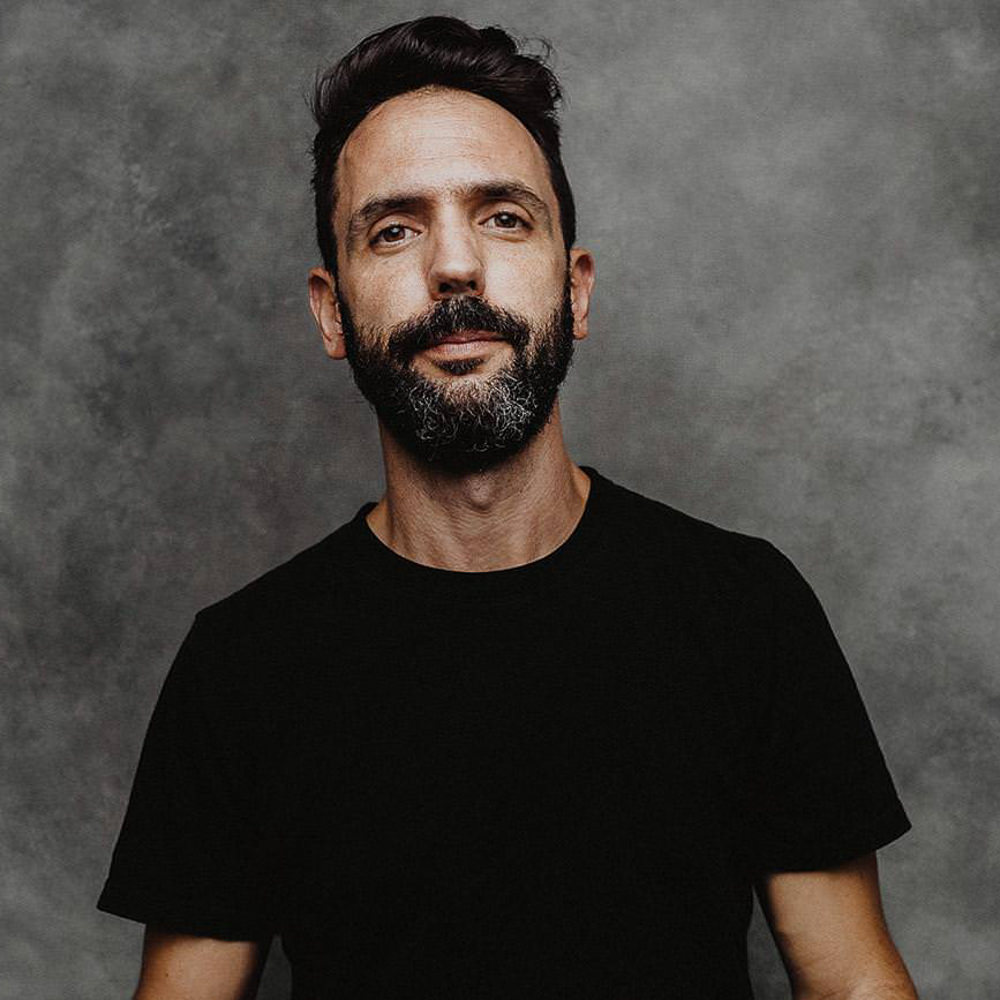
Episode 35 · Season 2
Un Alma Creativa
Fer Juaristi PhotographyFer Juaristi
summary
Fer Juaristi brings twenty years of wedding photography into this conversation with a perspective that refuses the luxury trap. A Mexican photographer working across Mexico and Europe, Fer has built a thriving practice by staying true to his artistic vision rather than chasing the high-end market positioning that has become standard in wedding photography. What emerges is a philosophy centered on separating the artist from the person, on keeping the work serious while refusing to take yourself too seriously. He speaks about the danger of ego in creative practice, how it grows alongside success and can ultimately destroy what made the work compelling in the first place. Fer's approach to income is deliberately diversified—photography is what he loves, but he's learned to build other revenue streams so that each single wedding doesn't carry the weight of financial desperation. He discusses the realities of mentorship, the importance of working with people you genuinely enjoy, and the way genuine artistic confidence allows you to turn down work that doesn't align with your vision. What's striking is how he frames success not as a destination but as an ongoing practice of mastery. He talks about building a life where work feeds you creatively and financially without consuming you entirely, a balance that most wedding professionals struggle to articulate. His insights about pricing, about the psychology of clients, and about the real cost of trying to be everything to everyone, land with the weight of hard-won experience. Throughout, there's a warmth to how he speaks about his craft and his team, a sense that longevity in this industry requires protecting something essential in yourself.
key quotes
"Take your art very seriously, but your person should be nothing serious. When the ego grows more than the work, it's over."
"Success is not a destination, it's a way of working and thinking."
"If you don't enjoy the wedding, don't do it. There are so many weddings out there, and so many photographers, that you have to work with people you enjoy."
"Diversify your income so that the wedding season doesn't carry the weight of your survival."
"The moment you start thinking about money instead of the images you're creating, you've lost something important."
"People buy your vision, not your price. When you're clear about what you do and why, the right clients find you."
"Mentorship is about teaching people to find their own voice, not to copy yours."
transcript + show
episode: 35 title: "Ep. 35 - Un Alma Creativa, con Fer Juaristi" pub_date: "Mon, 26 May 2025 05:00:00 +0000" original_language: english source_audio: "3c51cb83.mp3"
Hello, welcome. I'm Rui and this is the WEG Podcast. Thank you very much, Romano, at your service, here in my little house, in my bed, with our photos in the background. So, let's start from the very beginning. You are a photographer for, I believe, 20 years. What did inspire you to go to wedding photography, in particular? Yes, I went to a wedding on a TV channel and then in an advertising and marketing agency. I was very tired of that life. Everything was very, very plastic. And a good friend told me, hey, I'm going to get married. It's my wedding and I'm getting married in Monterrey, where I live. And my wedding gift to him was to take both the video and the photograph of his wedding. I had never done a wedding, Rui, never. So I went to Google, wedding photography. First I wrote in Spanish and I got very traditional, very conventional photography. And then I put wedding photography in English and I found what I wanted to do. I found the work of guys from England, Australia, Americans, and I saw that a wedding could be art and it could be a personal project, not just a record. And that motivated me to grab the camera and start creating. Who were the inspirations you had back then? I know that later you find Ben Crisman and others, but those first ones, do you remember? Yes, the first one that surprised me the most was Jeff Ascoff, he's from England and he brought his Leicas. He didn't direct, he didn't use flash, everything very minimalist. There was also Jerry Guionis, I remember, he was the complete opposite. A lot of lighting, everything directed, focused on fashion. There was also Joe Buzik, he started when he was 45 years old, and that motivated me. There were different styles and different ways of solving, and there are a few more that I don't remember the names. It's amazing, but you have 20 years of this and you have a really defined style. I think me, as a fan, and I think probably everyone who knows you, can with quite a curiosity define your images and really recognize them. How do you describe what you do and how do you describe how you do it? That's a difficult one. I think the easiest thing is to do the opposite. In wedding photography, in portraits, we usually tend to make them very romantic. My first tool is to try to take the romanticism out of the portrait. With that, it's very easy to give you the freedom to experiment and play. The other part would be to try to take photos that generate questions, that are not easy to consume. So, with those two parts, to say, I'm not a wedding photographer, doing weddings would be how I would define my style. And in the documentary part, what I try to do, which is not always possible, is to have a connection between the foreground and the background. That it's not something random, but that they tell a story together. I have a really interesting memory because back when we did the master class, you had a homepage image that you had for a few years, I think, the one with the dog. And it was a really interesting one and you wanted to... This is me, this is what I want to do, this is what defines me and if you don't want, just go elsewhere. And I thought that was really a very strong and interesting view of things. It would be very personal, but if I still try, I take romantic photos, but I don't show them that much. The style can be a box and you can be chained if you let yourself be defined by other photographers. In these 20 years, I've seen so many trends that come and go, and I think my style is the same. My style is a trend that can be fleeting. It has changed. After the pandemic, I think I've humanized it more. I try to look for these mini-stories, not that everything is like a photo of art, but I have focused a lot on the part of telling the stories of my partners. But in the portrait, I keep doing my experiments. That's the part where you just have fun, right? Correct. And it is also very important to recommend videographers with whom you work well. Because if you are the experimental photographer and the videographer is very romantic, he will struggle a little. Yeah, makes sense. So, you're a very creative and artistic photographer, and your style is really recognizable. But you're quite successful financially, as you say, being able to charge millions for parading, as you usually say. My question is, being so artistic, how do you manage the money side of the business? Is that something that comes naturally to you? It had to be learned really strongly. How do you manage things? Okay, so, when I started in my city, I was charging accordingly to… I answer in English, sorry, in Spanish, right? No worries. When I was a local photographer, my references were local photographers. The best photographer in my city charges this amount, so that's my ceiling. Many times we don't believe that we can overcome that ceiling and we make ourselves this padlock. It worked for me a lot to hire a foreign consultancy that told me, your work can cost so much. I think that as photographers, we don't believe so much in our ability to charge. And nowadays, I have it very clear. The photographers that charge the most are the ones that are doing the editorial style, the high-key style. I will never be one of the photographers that charges the most. I'm looking for couples that give me freedom, at the price I set, to have fun. But believe me, among my acquaintances and friends, I'm not the photographer that charges the most. To charge a lot has never been my intention. I had to lower my prices to have more creative freedom. In your particular style, to just go above and beyond. Let me turn into a question. Do you feel you really have to set yourself a ceiling, so you can maintain your creative vision and freedom? You have to know very well who are the people that want your style. Nowadays, high-end weddings are done through wedding planners. And these wedding planners, in order to offer a very expensive service, have to justify that cost. And it almost always goes to the editorial part, to the details. All of this that looks like luxury. If you analyze my work, it has never been seen as luxury. Because it's not my intention. My intention is to create art and tell small stories. If you want to be an expensive photographer, who charges a lot, you have to sacrifice the artistic part many times. And you have to know the work of Jose Villa, Katy Mary. All these people, if you analyze their style, their editorial line, it's similar. They have defined that. There are exceptions, like John Dolan. I don't know if you know John Dolan. He does what he wants and charges a lot of money. For me, he's a great example. I say, wow, he has managed to make that leap. But I feel very satisfied in my rank. I can tell you, last year I did weddings from $3,000 to $12,000. Working the same. But since I arrived with the special couples, I see that money can be a definitive factor, I say, don't go. I want to work with you. Because over the years I have managed to have income from weddings, workshops, online education, presets. So the money comes from different parts, not just weddings. If you have that range, most of your clients are international, right? Yes, correct. Americans or Canadians who come to marry in Mexico. Because in Portugal we are feeling the same. We have here some great weddings in terms of budget. But we are still a small country with a small economy. Most of the people that can afford those high budgets are international. Usually Americans, Canadians and Australians. But usually more than the others, Americans. Do you think it's weird? Or if you find a way to just be in peace with it? That in order to have that, you have to work with international, despite you like the... Well, Mexicans, I also like Portuguese. You have a mix of things that you work... It's cool to work with your countrymen, but in order to make more money, you have to work with international. Is it weird? No, not at all. We have to take advantage of the opportunities that each country has. Mexico is a place of a lot of tourism. I can't make them fuchi. I want to work with them. Advantages, in my case, of working with destiny weddings. They are weddings with less guests. Usually there are 40, 50 or 60 guests. Mexican weddings are 200 guests up. Almost always Mexican weddings are of one religion and have the same structure. And destiny weddings are often multicultural. You have Jewish weddings, you have Hindu weddings, you have weddings without religion, you have egalitarian weddings too. So I like that. I enjoy being a destiny wedding photographer because every weekend I'm in different locations. And that inspires me. A weekend at the beach, another weekend in the desert, another weekend in a big city. I need that to inspire me. If you tell me, OK, Fer, you can make more money, but only by doing weddings in your city, I wouldn't do it. I wouldn't do it. Because I've seen that frustration in friends and colleagues. When all the weddings are in the same city, creativity starts to decline. So yes, I need to travel. Well, we're also photographers for 15 years, so we have seen a few of them come and go. Do you think it's interesting, because 10 years ago your work was the kind of images that were in every major... Well, not major publications, because Martha Stewart and Stanley Pretty were always that particular style of fine art. But the other one, we had Fearless, who was a great major player. We had June Bugs, who were also major players. And your type of work, your type of photography was exactly what was always there in those publications. And then we are going to editorial and just luxury. How do you think these trends, or have these trends affected your business, your work, your way of doing things? Did you have to manage or change anything? Or just keep doing what you like, what you love, the way you love? Or did you have to change something? I'll give you an example with music. I don't know, Charlie XOXO, Dua Lipa, Lady Gaga. They are designing music for the masses to like. And then there are these independent musicians like Bon Iver, who are not for everyone. They are doing something special, something unique. They find them and maybe they won't fill stadiums, but they will fill small spaces with fans who are really there for their music. Not so much for their name or reputation. So who wants to be there? A pop artist or a singer or a jazz artist? That jazz is going to be something permanent, but on a low scale, but it's going to be permanent. Or do you want to be a pop artist? That you're going to have a big peak and then you fade away in this. I prefer to be a jazz artist. That sometimes your style goes into fashion, it disappears, but you still have work to do. And that happened to jazz. Jazz was once pop. It was once the music that everyone listened to, but then it just went to blues and every style, even metal in the 60s and 70s. It's great. But did you feel that you had to change anything or it just creatively or the creative part was always your main goal and fuck the rest? A little bit of both. I think that as photographers we have to know our number, our income per year. How many weddings do I have to do to reach that number? And in my case, I've been doing 15 to 20 weddings for 6 or 7 years. No more. That's enough for me. Because I have defined, with my wife's help, a very simple lifestyle. That we don't need to have a fancy car, we don't need to be in first class. No, it's enough. It's our salvation. I'll tell you, Rui, I always buy my cameras second-hand. I never buy a new camera. If the A9 Mark III comes out, I buy the Mark II. I don't need the newest and fanciest. That's it. We think we need everything and it's not like that. So it's worth saying, the lifestyle you want with your family and say, with this amount of money it's enough. For me it's been that. Finding that peace between numbers and art to feel satisfied. It's amazing. Towards the end of the episode, I'll share a small secret, but that's amazing what you just said. Do you have some tools that make you find that number? That make you try to find the right prices for your job? The price that pays what you want for your life? Do you have any? Or is it more instinctive? For me it's more instinctive, but also working with different wedding planners helps me a lot. Because you can ask them, what is the budget for this wedding? And based on that, they can tell you, this couple has a good budget or this couple doesn't have that much budget. So I handle a very dynamic price. And as I told you, if I don't have a lot of money, I can offer more education or I can have a workshop in another city. That has given me a lot of peace, that my income is diversified. And another thing that I like a lot, that a friend told me, how do you want to be remembered? And I don't want to be the photographer who died working. I want to be an excellent husband, an excellent father, an excellent friend, and I also took pictures. So my energy is not just deposited in generating money. I want to have a great life and not be worried about generating money. That's amazing. You have three kids and when you have kids and they grow, you kind of understand how quick life goes. And it always amazes me how people just take things for granted. Last year we were on a conference here in Portugal and I heard the story of one of the photographers that I believe he was not even 40 and he had a heart attack. A small one. He completely recovered. But that was obviously a wake-up call. But it's amazing how bad things have to go for you to understand how bad things can go. And I completely understand. We do the same. The more we had in 2021 because of the pandemic, we had 32 weddings, but we never did it back then. More than 25, 27. But curiously enough, at this time, for 2025, our goal is to have 10 or 12. We are trying to go to upper editorial style and really charge. But the idea of having 10 weddings we had last year, it was really amazing. We have 40 weekends at home with kids. We can go on vacation. We can plan things with friends. On the weekend, I don't know if you know this, but the WAC, the podcast, the WAC means Wedding Artists Community. And the goal of this is really to share what we feel in things. Not only photography. I had wedding planners. I have musicians. I have everyone I can get in the disciplines. Exactly for that. So those that are on the other side and the ones that are starting to just have the experiences and hearing someone like you, who is amazing, who has a 20-year career, who had a really financial cool life, but also knows that living is more important. So I think it's really cool that you shared that. And we all have a lot to learn. So thank you. We're not ending, but I'm just thanking you. No, I understand. It's amazing. When you start, you want to end the world. You want everyone to know you and be in the awards and in the top 10 and all this. And many times that's not enough. And you're going to want a little more. And if you don't win, you get mad. So you have to see what gives you energy and what takes away energy. And if you feel that certain things are taking away energy, jump. An example, the awards, what is Fearless and all this. I've seen that a lot of people are very depressed. It's just that I didn't win. And they start complaining about the judges. Anything that gives you bitterness and anger, take it away. The awards are rare, very rare that they give you weddings. That is more than anything the ego that is inflating. So play that game, but don't take it too seriously. Yeah, I lost you. You froze for a bit. I lost you. Okay, you're getting back. It's true, but it's difficult to keep our ego in control, right? At least sometimes. Then you kind of learn if you try, but it's difficult. So do you know Portugal? Have you ever been here? No. Have you ever worked around here? Never. You don't know where you're missing. Spain is cool, but Portugal is way cooler. Everyone says that. It's amazing. I still need to get to know it. All Portuguese. I'm not sure that our Spanish brothers will think the same. But I'm just joking. I really love Spain. But do you have an idea of how is the market in Europe? Do you have an understanding? Do you have an opinion on the destination that we are receiving and that we're having around here? Because all of a sudden, or maybe not all of a sudden, but in the last few years, we kind of became the center of the wedding world here in the south of Europe. Do you have an understanding or an opinion about that? No, to be honest, my recommendation is to take advantage of that boom. If there is that boom right now, you have to take advantage of it. For example, the language. If you want to attract foreigners, forget Portuguese and work in English. English is one of the barriers that many people face. So, yes, website in English, social media in English, so that they know that you can understand them. But there is this resistance, my nationalism, and I am this. I don't care about that. You have to work and find better partners and make sacrifices. That's true. But it just reminds me of a question. You said you studied marketing or worked in marketing and didn't understand. I studied. I worked in marketing. You worked. Do you feel that experience helped you in wedding photography or in the photography business? Well, above all, working on the TV channel. Because we didn't have a schedule. They were very long days. They were days from 16 to 18 hours. Sleep two hours, eat and keep working. So, at weddings, for me, an eight-hour wedding is nothing. It's like, I can go on and on and on. So, I feel very fortunate that my work ethic is not based on the contract. If it says, it's only eight hours, I'm going to work 10 or 12 hours. I don't have any problem with that. I'm going to get there before they wait for me and I'm going to go after they wait for me. Because everything is an opportunity to count and find better photos. Yeah. But I heard you talk about... Well, I think you can call it a marketing strategy. And I think it's a very interesting one. I heard you say in an interview that when you have your meeting, your call, your beginning call or consulting call with your eventual couples, you curse as much as you can and you really put yourself as much out there as you can and you try to make them ask if do you really want this guy or not trying to make them book you. This is a marketing strategy, a very bold one. Do you still have that approach? This is me. Do you really want me? Do you really still do like that? Yes. Let's see. We have to be consistent. Our personality can't be a surprise on the day of the wedding. So, yes. It's worth it to be very transparent, to be very direct, to teach full weddings and to be you. I don't want to change my way of dressing or my way of speaking to attract a market that pays me more. I want to feel like a guest with a camera on the day of the wedding. So, yes, I'm going to be myself from beginning to end. Yes, that's true. That's amazing. So, as you told just a minute ago, this is a platform to build community. And I wanted to ask you how did teaching and mentoring... I don't know if you have mentors in your life, in photography, other than inspirations, but how the teaching and how the mentoring change your perspective on your job, in your life and your approach to things? Well, when you are a teacher or when you share your knowledge, you have to land all your ideas. Many times we do it instinctively, without asking why or how. So, even if you don't give workshops, I recommend that you imagine that you are going to give a workshop and that they tell you, explain your style, explain how you solve a photograph. That helps a lot to put in order all your thoughts. And my education has always come from being very noble, not being a cruel person and telling the students that they can also have a good career. Maybe not exactly mine. My teachers were very hard on me and they sold themselves like, you will never be as good as me. I think that sucks and it's very toxic. I think that as teachers, we have to help people to get their potential and to come from that side, from that side of learning together. I'm not going to tell you exactly how to do things, but I do want people to take that, that if a fucking Mexican could do it, I can also do my own way. This hope, I think it's encouraging for everyone. And over the years, I've come across that. People who were my students, who have reached very high in the world of photography. It's something that gives you a lot of satisfaction. I think that's the big win for the mentor or the teacher is when your student becomes better than you or even better is always subjective in terms of photography, but if he succeeds, whatever that means, that is the win, right? Correct. It doesn't make sense. And that they find their style. They almost always start by imitating you and you tell them, hey, look for something else. Don't stay in copying Fer or copying Rui. Look for something else. And little by little you start to see that change and it's majestic. Really, in the beginning of the conversation, I don't realize if we were recording when I said that. I told you that on the masterclass that I went with you, at the end, it was the last conference I went for, I think, seven or eight years. That conference killed conferences for me. And the reason is more or less what you just said. When I was in your masterclass, I was completely blown because you really saw things on the small room that we were that I couldn't see. It was completely hidden from me. And at that moment, I realized that I'm chasing the wrong thing. I'm trying to learn how to do those things with these people. And that won't happen. I have to find what I want to do, what I can do, and whatever it may be. And it was really interesting. I also thought that the only conversation we were having back then was just inspiration and creativity. I think and I thought we were lacking the business part. We have a lot of freelancers. We had a lot of people that were trying to make a business, trying to make money so they can support themselves and maybe have families. And that information was not being shared. But one of the parts was that the creativity, I thought I'm looking in the wrong places. You probably won't remember, but it was really a small cafe. It was really a small place. I took the couple and made some things and I said, I can't. This is not me. It was really eye-opening because of that. I'm coming full circle now. But it was really, really important. That's the main reason. I love your photos. It's not really my thing. I'm more of the José Vila, the Katy Mary and the Blackpink style. But it's one of the reasons why I love your work. It's completely different than mine. And I thought in that moment I'm chasing the wrong things. But as a teacher, did something change for you when you were teaching, when you were mentoring? Did you change something in yourself? I see it as a challenge. Have you photographed weddings of other photographers? Yes. Do you feel more pressure when you photograph other photographers' weddings? Yes. You're like, holy shit, I cannot miss this one. For me, that's a workshop. For me, a workshop is a constant challenge. You have to keep trying and you can keep growing, even if it's within your style. And what you said about going to workshops to realize what you don't want is something we need. A month ago, I took a photography workshop in a studio. I hate the studio. I hate it with all my heart. Because what happens? Everything is controlled. You are responsible for everything. Where to put the light, what power, what angle, what modifier. It's very easy. And then tell the couple where to put their hands. For me, the studio photo is like going to a zoo. The panda. And you see the fucking panda there. That's it. There's no challenge. And it's like going to therapy. Because everything is like the connection you need to have with your subject. I learned that I don't like it, but I have to learn. It's another league. It's another language. Did I learn two or three things? Yes, but I struggled a lot in this workshop. And this week I'm going to a workshop about music videos. About creating music videos. If you've been a photographer for a year or 20 years, don't stop learning. And not necessarily about the type of photography you're doing, but open the horizon. Take a watercolor workshop, or painters, or linotypes, or videography. We need to keep learning to keep evolving. Yeah, that's completely true. Completely true. So, what do you think, or how do you think it's the community of wedding photographers? Well, you're kind of a world photographer, so do you think there's a sense of community, or not? It all depends. In my case, people from Poland, New Zealand, Canada, the United States, many Mexicans, have come to photograph with me. They send me a message, and I tell them, come, let's do a wedding together. So, why? Because I want them to see that possibility, and that camaraderie that can exist. When we see each other as a competition, it's going to be a very tedious and long journey. So, I prefer to be very innocent, and see all the people with eyes that won't hurt me. So, for me, there is a community, and a very beautiful community. Yeah, that's awesome. Really awesome. So, now for the last question. How do you see the future for, first, for wedding photography? How do you see it? And then, for FAIR? Where are FAIR going in a few years? Yeah. Look, I'm going to keep doing weddings until my phone stops ringing. Since last year and this one, I started shooting with a Super 8 camera. So, I also make videos in film, and I really like that, Rui. It's like my childish side. The imperfect part, without composition, everything like this, everything very, yes, very down to earth. I see myself learning, I see myself learning a lot still. I see myself challenging myself. Last week, I had dinner with a great friend and he stopped doing weddings. He told me, I lost my magic at weddings, so I switched to generating content. He's using artificial intelligence, and I liked that. I think we have to prepare for the big exit. I mean, for death, and to leave the industry. But yes, it all depends on that, how relevant your work is and also how much you take care of your body. You have to have a very active life, you have to take care of what we eat, you have to exercise if we want to reach 50 years with energy. And I see wedding photography as something magical, as something that has taken on a life of its own. I don't know, when I started being a wedding photographer, people looked down on me. What do you mean wedding photographer? That's not it. And now it's become something aspirational. And now we're wedding photographers slash influencers. So everything is changing. No one would have imagined that there would be wedding photography conferences. Only dentists and doctors go to conferences. I don't know if there's a DJ workshop. It would be cool if there was a DJ conference. But we have to take advantage of this community, that we are very curious and we want to keep learning. When curiosity runs out, we have to dedicate ourselves to something else. Yeah, that's true. So, you talked about that and I just wanted to ask you, do you feel... You're 46 years old, you just told me, and you don't look closer at all. You look at least 10 years less. But do you feel it's weird? Do you feel it's weird to gain a few years? And how do you manage the distance between your age and the couple's age? Increasing, increasing, increasing. How do you manage it? How does it feel to you? The truth is, I don't take it personally. I try to see the things my partners have in common. And I'm very clear about it. My partners enjoy art, not just photography. Years ago, a great friend told me, my partners are the people who go to museums when they travel. They don't necessarily go for drugs or spring break or to the party. And I see that commonality in my partners, Rui. So, as long as there is a human connection, not so much of an age one, we have something to contribute. And how are we going to do it? Well, keep educating each other. Have good conversations. Not necessarily hashtag trending topics, but a good chat among humans. Say, hey, leave your camera, open a beer, and let's talk about life, about death, about what it means to be a good human being. As long as we have those conversations, we will be able to connect with our grandparents, with our parents, or with our boyfriends. It depends on us. How much we educate ourselves and how much we read. That's very important. Being an interesting person, not just a great photographer. I can't think of any other best way to just finish this amazing conversation. I start by saying that, and I will finish saying that. I can't say how much I appreciate your time, how much I appreciate you. You're just an amazing energy. It's just fun to be with you. We are an ocean apart, but you really feel like you're in my living room, and it's an unbelievable pleasure. I really think we can do something, and I will try to have you here for something. I don't know. Let's see what the future holds. It would really be a pleasure, and thank you so much for everything. Thank you. You're welcome, Ruy. Take your art very seriously, but your person should be nothing serious. When the ego grows more than the work, it's over. It's over. That really stuck with me. It was amazing. That's why none of my friends are intellectuals. When people go to a museum and say, do you feel the work or not? The brain is something else. Do you feel it or not? Thank you so, so much. Bye, brother. Bye.
New episodes, twice a month. Be the first to hear them.