
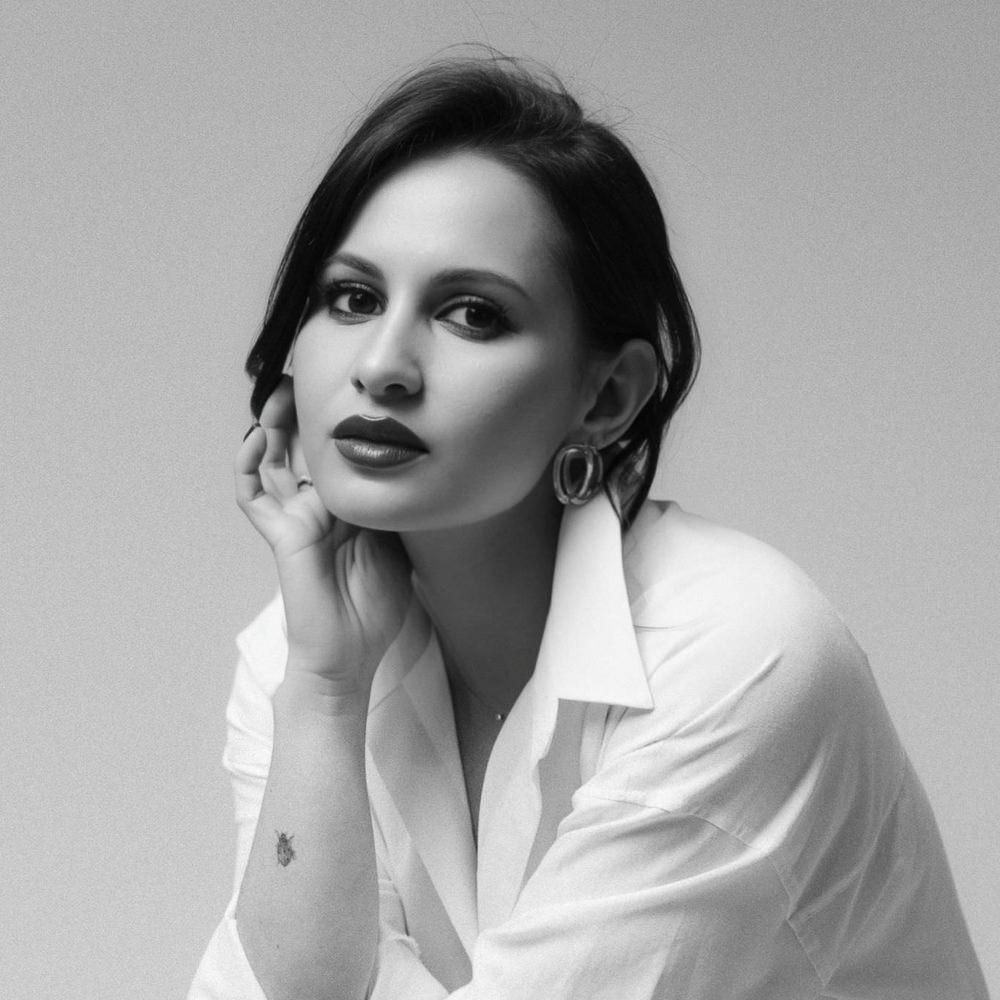
Episode 5 · Season 1
A busca por um menor desequilíbrio
Jenny Miranda Hair & MakeupJenny Makeup Land
summary
Jenny Miranda's episode is a masterclass in the unglamorous reality of scaling a creative business while maintaining your sanity. She arrives with disarming honesty: the search for balance isn't about achieving equilibrium, it's about reducing the imbalance. This reframing sets the tone for a conversation that refuses easy answers.
The through-line of Jenny's 14-year journey is learning to work less, not more. A chance encounter with André Teixeira at Rui's wedding—a moment when she was exhausted, postpartum, overworked—became her inflection point. André's observation wasn't harsh judgment; it was permission. Permission to stop. Jenny restructured her entire practice: instead of five weddings a week, she now does two to four, combining makeup and hair to increase value and reduce logistics. The counterintuitive outcome was that her pricing went up, her stress went down, and her work deepened.
She articulates something many creative professionals feel but rarely voice: makeup is not her passion. What makeup allows her to do—contribute meaningfully to an important day, make a difference for a person—that's the passion. The work is a vehicle. This distinction matters because when you're not locked into an identity ("I am a makeup artist"), you can evolve. You're not fighting yourself when your interests shift.
The conversation then pivots to what haunts many successful creatives: the difficulty of building a team. Jenny has three people. Adriana is something like a photocopy of herself—they have enough mutual understanding that Jenny can step back while knowing the work maintains her standards. Sofia, her daughter, works part-time. But filling team gaps is agonizing. She wants clones of herself, which she knows is impossible. The real issue isn't just competence; it's working with brides, who are archetypal figures laden with vulnerability and insecurity. Not everyone can hold that space. Not everyone should try.
She's equally candid about her emotional practices: therapy weekly with an art therapist, yoga, moments alone. But even these non-negotiables don't create balance. There are months when she's fully submerged in wedding season. There are breaks from work that terrify her—the sudden stillness after months of urgency. She knows intellectually that this is normal, healthy, seasonal. Emotionally, the silence feels like ending.
A fascinating tangent explores the wedding industry's closed-loop culture. Unlike photographers, who share openly and build community, makeup artists operate in silos. There are groups, but Jenny feels outside them—not excluded through action, but through perceived inaccessibility. She's different, older, accomplished, so they assume she won't join. The irony is that this very isolation means everyone's solving the same problems alone, when shared knowledge could accelerate solutions.
Yet Jenny's presence speaks differently than her words. She does everything: works constantly, travels, spends time with her kids, tries new things, hosts people, makes bread. How? Partly structure and support—she has help at home, doesn't iron, has systems. But mostly, it's the philosophy that if you want to do something, you do it. Period. You don't ask permission or wait for the stars to align. You ask for help where you need it, and you show up for what matters.
The final insight is her own: don't call it balance. Call it the search for a lesser imbalance. Accept that pulling from one side means something else gives. The goal isn't stasis; it's reducing the oscillation over time.
key quotes
"If I continue on this path of work, work, work, I won't be enjoying what I'm doing. I'll enjoy the ride, but I won't be able to take it."
"I do makeup. I'm not a makeup artist. I do makeup in this context. In this context."
"What I do doesn't define me, because I do so much more than that. I like to photograph women, to do portraits. Makeup is my passion? No. What makeup allows me to do—that maybe yes, which is to give my contribution and make a difference on such an important day."
"Your portfolio is your advertising. You show what you want to do. Not everything is worth showing. I usually say we have margin for one mistake per year."
"I don't think there is balance. There may be a search for a lesser imbalance. If you work more, something will go to waste. If you spend more time at home or with friends, your work will go to waste."
"I have to have a lot of confidence in my team. I wanted to have several photocopies of me, but I know that's impossible. I have half a photocopy because Adriana is very... it's very me."
"The makeup community is very closed. Unlike photographers, who are open and share, we each work for ourselves. We all go through the same problems alone, when we could solve them faster together."
transcript + show
episode: 5 title: "Ep. 5 - A busca por um menor desequilíbrio, com Jenny Miranda" pub_date: "Mon, 29 Apr 2024 05:00:00 +0000" original_language: english source_audio: "b183f06e.mp3"
Hello, welcome. I'm Rui and this is The Wack Podcast. This week I have with me Jenny Miranda, founder of Jenny Makeup Land. Jenny is an incredible person and full of qualities, but she has two that I particularly admire. Sincerity and transparency. We can always tell what she's feeling, whether she likes it or not, in a certain situation, and that, both as a friend and as a colleague, is something I admire a lot. She doesn't use false modesty, nor does she hide her flaws and imperfections, and the conversation we had is an excellent example. So, without further ado, follow my conversation with Jenny. Hello, dear Jenny. Good morning. Hello, Rui. So, how are you? I'm fine. We weren't talking until two seconds ago, so it's all good. Look, I'm going to start by telling you two things I have prepared for you, and then we'll have a good chat, okay? Look, I don't know if I've ever told you this, or if Elsa or I told you this, but, basically, to think about you is to think about elegance. And you created a brand that is completely a reflection of that. And we've known each other for a long time, and in the beginning, you were a makeup artist well above average. But today you are a reference of quality. In fact, one of the things I think about a lot, was an answer you gave me to a question I asked a few weeks ago, which was the luxury service. And your answer, quiet over delivery, that is, you do more than you expect, you do more than they expect you to do, and they pay you. Without exaggeration, then the reward comes later. And this is something that we associate a lot with you, and we think a lot about you with that. So, both I and Elsa have a huge admiration for you. You are often an inspiration, both in the wedding world and outside of it. Thank you. And the way you do it... Oh, I'm loving it! I see you're a makeup artist and you prepared yourself for this. But this is all very true, because the way you do it, you do everything to make it so easy, your ability to make it happen, the effort you make to keep close to you who you like, it's literally an inspiration. And in the last few years we've been, in our case, me and Elsa, very turned inwards, because you've always remembered to include us in your invitations. And I'm very happy about that, because you like Elsa, which means I'm also going to... You're the backpack. Exactly. So, thank you very much for all of this, and thank you very much for being here, for accepting this invitation to talk to me. You're welcome, I thank you. By the way, I think I've already told you, first of all, thank you for inviting me to such a new podcast, to be remembered as and to be one of the first guests. Maybe you want to say something, especially after what Nata has already said, which I've already heard, I've heard a podcast this morning, and talking after these people is like, okay, okay, I'm here, it's cool, it's cool, and at the same time you feel a little bit of pressure. But it's nice. Thank you. It's been many years, a lot has changed, but it's been many years in this market, and if a few years ago, I was also in that period of more introspection and of understanding what I am, maybe today I'm more confident and I can, somehow, go out there and be a reflection of what I've done. Look, you started answering my first question, you are a genius, you were ready, I imagine you had no script, right? Exactly. But that was exactly what I was going to say, you started in 2010, right? I started in 2010, at the end of the year. And there you are, as I told you a little bit in the introduction, in these 14 years, you really created a brand that became a reference. And there you are, I know the journey was long, it has been long, and you went through many trials. My question was, if you started today, what would you do differently? Well, I arrived here, but it's a journey, as you said, it's a very long journey. This didn't happen overnight, or overnight. Things were much slower, maybe they're not as fast yet as what I was, right? When I want to do something, I'm in a hurry, I get very anxious, I want things to go very fast, but things don't go that fast. And if today... I don't know if I would do many things differently, or very different from what I do today. I know that nowadays, with social media, and Instagram, everything seems very easy, and maybe people can do, or think they can do, things happen faster, and alone. But I think that, for me, and you know that, and I think everyone knows that, for me, the community is very important. So, I don't know if I would do many different things. Maybe I would have another level of communication that I don't have right now, because we're from another generation, and we're not used to being always connected, and always looking at our image. So, I have this communication difficulty. Maybe it was something that I would have to explore, and expose myself more than what I expose. Maybe it would be something like that. But always with a very big sense of community, which is something that I have. I'm a person of people, although I need a place of introspection, and I need to go to the cinema alone, and I need to go to exhibitions alone, and I need my time very much alone. But then I'm that person that connects, and I never feel alone. But I'm a person that connects. So, maybe always continue with this sense of community. You may not have one or two things that you thought you would do differently, but you had one, two or three lessons that you learned at 14 that you thought were a turning point. I think I talked about a turning point with you a few days ago. I already talked about this with a lot of people. I think maybe I didn't talk directly with the person, but I talked with part of the person. We can talk like this. I already said this to Sofia. And ten years ago, I was a cuckold. A cuckold about work. Things were very different. The way I saw work was also very different. And maybe it was the path, it was what it had to be. It was like that. It's gone, it's gone. It brought me a lot of lessons. But ten years ago, on the day of your wedding, I was still in postpartum care of Vicente, my second son. He was a few months old. I didn't stop working. As everyone in the industry, or the dinosaurs at least, know. Vicente was ten days old and I went to work. It wasn't planned, so my schedule was already done, and I had to do everything I was supposed to do. And on the day of your wedding, I was going to look horrible. And a person that I consider and always considered, and that I had to hear this morning, I'm going to hear him talk on the podcast, a person that I admire a lot, that I'm not as many times as I liked, but that I admire a lot, both personally and professionally. And that person, André Teixeira, from Branco Prata, looked at me and I don't remember the exact words he said to me. But he realized that I was very ugly and that if I continued on this path of work, work, work, work, work, I wouldn't be enjoying what I was doing. I would enjoy the ride, but I wouldn't be able to take it. And on that day, I came home and did an introspection, and I decided that I was going to radically change my way of working, and I started working in a way that was perhaps smarter. I started accepting less work, and that's it. And it was from the day of your wedding that Jenny came to tell me that I changed. And maybe he has no idea of the importance he had on this path, but I see Branco Prata as a reference, as a reference of balance, not only at work, but yes, of balance of work and personal life, in the path they have. And so those words, he said, look at me, I have, what age did he say, I have this age, and blah blah blah, I don't remember exactly what he said, but what he said touched me deeply, and I completely changed my way of being. And you changed, do you feel that it was the process that changed, or do you also feel that your own definition of success and what you wanted for your life also changed? Yes, I think I was very lost at that time, because I had a lot of things in my hands, I had a lot of roles in my life, I had the role of mother of two small children, a brand that is growing very fast, and that has to hire people, and that I was completely overwhelmed, and yes, it made me think, ok, how can I be these two people, how can I be a mother, and at the same time be the professional that I want to be, and at the same time have time. So what do I have to do? I have to work less, right? What do we have to do to work less? Work better, I increased my service, as you know, all my jobs include makeup and hair, so, by doing two jobs, I can do a morning job and an afternoon job, I don't have to do five, I don't have to run, I don't have to walk in the stress of arriving or catching traffic, or, I don't know, having the stress of hitting a tire and being completely panicked, and just not doing so many trips is already a huge change, so I changed my service, instead of just makeup, it became hair makeup, which allowed me to accept less clients. And at the same time, you continued to increase your service? Increase, or at least at the time, I don't remember, but at least maintain and with less stress. Of course, the service was increasing, the type of client was changing, a lot has changed, and this year I feel like I'm more or less at the same point, where I look like, ok, I'm changing, what am I going to do, how am I going to change my way of working, to work even less, even less because I work a lot, ok? Even less because I really work a lot. You know, there's a funny point, there's a funny thing that we, I think that in general, no one has the notion of not being irretrospective, and you, these are the advantages of learning from those who came before us, not necessarily in our area, which is, we have the feeling that success is an increase more or less homogeneous, or growth, but what the theory and the story tells us is that it's a step, where you go up a step, and then there's another piece of time there, and then there's going to be a moment when you're going to have to take the other step. And we we tend to think that everything is going to be very calm and serene, but you know, then we end up with what you're going through now, which I'm also going through in a similar way, and then you see yourself forced, there's a phrase that I love, which is one of the most obvious things, but which is funny, so obvious, but which is very funny, which is you go somewhere, you have to leave where you are. And this is so ridiculously obvious, but you go to another place. You have to leave the island. You have to leave where you are, and this, in business terms, in terms of work, you have to stop doing what you're doing, because what you're doing is giving you the results you're having. And this is the great difficulty of change that we often have. And there's no... There are helps, there are sharings, but you have to dig your own grave. You have to learn how to climb that step. Alone, many times. Exactly. In my case, I don't work alone, but it's a very small team, but I'm the one who climbs the step. I climb the step, and... And I need them to come after me, and if they don't come after me, it's also very difficult to move forward. And tell me something. You touched on that point. How do you feel, or what do you feel is the importance of your emotional balance in all that process? Not only in the good part, but in these difficult parts, and also in the question of keeping the inspiration and enthusiasm for what you're doing. I feel that the more I work, if I'm working a lot, I think this happens to everyone who is creative, your creativity drops. Because you need to rest, you need to breathe deeply, you need to see other things, you need to talk to other people for your creativity to be there. And when you work a lot, you're in survival mode, you're there. I'm not saying that the work is poorly done, it's not like that. The consistency is always in my work, and everyone knows that. And maybe that's why I'm where I am today, and that's why I'm here to talk to you. Consistency is always there, quality in the work is always there. Now, the extra mile, seeing beyond what's there, maybe not. I usually say, for example, the month of August for me is a very difficult month. Very difficult also in creative terms, because I work too much. I will always execute in the best possible way, but my aesthetic vision, or maybe in February I'll be much fresher and I'll see other things. Emotional balance, I do therapy weekly, I don't fail. How long have you been doing it? With my therapist, who is an art therapist, it's not for nothing, she did it in January one year. It's a more traditional therapy, I don't identify so much. More than a year ago, I work with an art therapist, who also gives me mentorship, to also help me in this part of the business, when I'm more overwhelmed, because there are a lot of weddings. I was listening to André a little while ago, and he said, I only do 10 weddings. Incredible, I work in a completely different wedding sector. I have to have quantity, even because I have a team that needs to work too. So I never, and personally, maybe because of the way I was raised, where work, work, work, your value is at work, and I still can't say no to work. If they call me to work, and I'm on a day off, I'll go. So, emotional balance, look, therapy, I do therapy, I need my moments alone, I need to do yoga, I need to be with the kids, and sometimes I need to get out of here. Do you feel you're in that balance? No. No. No, I think, like in everything in life, there are moments where you're never in balance. Or you're with your family for a long time, and you're not working, and you have to dedicate that time to work, and there are moments when you have to give everything in our wedding season. It's big, nowadays it's much bigger than it was a few years ago, so you're more time in imbalance, you're working more time than you are with your family. And there are moments when it's to give a litre, and we have to give a litre, and the family has to understand, at least here at home. And there are moments when I'm much more at home, and that also stresses me out a lot. Ok? That also stresses me out a lot. Having to relax stresses me out a lot. Really? Yes, because I think the break, I feel that the break is so big, suddenly you don't have a wedding. Ok. For me, that I work, that I have several weddings per day, that in the summer I have weddings every day, and if I don't have weddings, I have rehearsals, it's very intense, for suddenly, from one day to the next, you say, ok, this was the last one, now I have this period, here I have these two months, in which I'm not going to do anything. And that's scary. It's scary, it's not scary, it comes from a very accelerated rhythm, for suddenly, ok, I'm going to be here, quiet, what am I going to do? Don't you get that, maybe you're going to tell me, rationally, do you get that with open arms, but maybe the problem is really emotionally, the fears and those things? Yes, the fear of forgetting, now I'm not doing anything, I mean, I'm not going to do anything from now on, it's nothing like that, right? It's a problem that women have, I think. You live much more the now than a future, or can you find that balance? No, I worry a lot, I think no one is in that balance, we're never here, I think we should be, and my goal is really to be here, not here, not now, but in terms of work, I'm always very worried about tomorrow, about what I'm going to do, how it's going to be, we work with weddings, I know there are a lot of people who are complaining that they have less work, it's not my case, but I always try, I worry a lot about the next year and the next few years, and maybe that doesn't let me enjoy what's happening now, and maybe what's happening now, a lot of positive things can be happening, and I'm just going to realize in two or three years, that I did this, that this was happening, and I didn't enjoy it, I think we all focus on the next goal. That's what I also talk a lot about with Elsa, Elsa has that similarity with you, and I think the point is that you live the now in terms of worries for the future, that is, if you have a problem now, you are very focused on that problem, even if you can say that in 2 or 3 months the problem will be solved. And maybe that's what you feel when you have this break, it's a big job. Yes, I think the break of work, which is natural in this environment, because this, whether we like it or not, continues to be very seasonal, it's really, ok, now what am I going to do with this time? It's not worrying, it's really... You come at such a fast pace, that suddenly you're standing still, and you say, ok, now I'm going to have to come up with things to do. And you know that I come up with a lot of things to do. I know, I know. At times when I could be simply enjoying it, and I say, no, what are we going to do? Where are we going? I always have to be magicing something. And it ends up being interesting things, because you leave your comfort zone, because you try to do other things, and you try to have a vision, to have a hand in the creative vision, because not always at weddings, of course my vision is there, but it's a lot at the mercy of what my client wants. So when I'm not at peak work, I always try to do creative exercises, and do other things, and get out of the box, and do things that have nothing to do with makeup and hair. I like to say, I don't even like the feeling of makeup and hair, I like it, but you don't misinterpret me. It's not what gets me out of bed. It's not, it sounds bad to say this, but it's not my passion. It doesn't sound bad at all. But what is your passion? It's a lot of things, when they say, what are you? I'm afraid to say, I'm a makeup artist. But I agree with you, and I think it's close. Why not? Because that's not all I do. I actually do a task very well, and I go beyond, and I know that, well, I'm going to exaggerate a bit here, I know I'm very good at what I do, but what I do doesn't define me, because I do so much on that day, and before, that I know just one more thing. And I like a lot of things, you know, I like to photograph, and I really like to photograph women, and I really like to do portraits. So makeup is my passion. What makeup allows me to do, or allows me to give, maybe yes, which is to give my contribution and make a difference on such an important day, and make a difference for that person. It's just a means, a means that I know how to control, and that I know how to do very well. It's funny, you touch on that, because André really said something similar, and I deeply agree with him, which is the question of, there are times when he says, I'm going to like it when you let me photograph weddings. But there it is, I'm not going to the street to see works. What am I going to do? Let's do a chat. But the big difference, this applies to a lot of things, and I've had this conversation with my daughter. I don't see myself doing makeup in any other place than weddings. Yes, but it's that question that I was going to tell you, the question of am I or am I not? Am I or am I? I often have this conversation with my daughter, and I say, you're not lazy. You're lazy to do a certain thing. Because when you associate a certain word, a certain feature with you, your identity changes. So when you say, imagine that I define myself, I, Rui, am the wedding photographer. On a day that is for a reason, they take everything away from you. Exactly. What are you when you don't do that? So, what do you do? I do this, but I'm not this. I'm a lot of things. I'm not a makeup artist. I do makeup. In this context. In this context. Yes, and in fact, even in small points, I touched on this in the conversation with Vanessa. The episode will follow yours, but the conversation was already recorded before. She was a videographer, she worked as a videographer, but now she assumes herself as a photographer. She was only able to do this with the quality and success she achieved exactly because she didn't stick to the identity of being a videographer. Or maybe in an initial phase she was sticking to that identity and then she had difficulties. But during the conversation she said what if I wanted to be a DJ? I'm a DJ, what do you want to know? And it's a bit like that, when you stick to a certain feature. Yes, I'm a bit like Vanessa in that sense. I was an English teacher. I didn't know. I thought it was general knowledge. I always assume France and French and elegance and all those things. Oh, yes. My mother tongue is French, but I studied languages and literature, English and Spanish and I gave classes and just that. I'm not going to do this. I'm not going to do this. I hated the experience. You're already the second teacher I have in the podcast. I think it was for different reasons. Yes, but I think we're not doing a good job for the teacher's career in the podcast. Yes, poor thing. I don't regret anything, I left when I left. I taught for two years and in the first year I taught in another context, in the second year I was teaching which I had attended, so maybe that was a big mistake and I said no, I'm not going to do this. I'm not going to do this for the rest of my life as well as I know I'm not going to do this for the rest of my life because I just won't make it. That's why I think it's very important and I think it's amazing that people are not stuck in that identity of defining what they are through what they do. And that's it, I'm not a make-up artist, I'm a cool person who works in the studio. No, that's really a fact. You really have this incredible ability to make up like few people. Yes, yes, I know that I have and I give training to other make-up artists but I think I'm very different at that point in which my colleagues maybe live the profession in a different way and get inspired in other things or see other people make up and that's it and what they consume other people make up or focus a lot on the products and everything that is always on the market and when they ask me what do you think of this product and this one? I don't know, I don't know I'm not stuck Many times they ask this question about camera and my advice is I don't know, but if we're not talking about the professional, basically I say buy a good phone and you're not going to walk around with a camera They ask a lot of these questions and I say, maybe it seems a little silly and I don't know how to answer but I don't really care from the moment I choose the textures and I'm not always looking for the wheel if what I have here is enough I think it's an interesting teaching and an interesting sharing because the reality, and I totally agree with what I said and many people agree is that this can and maybe should be a way to express and it can be an incredible way to express as an artist, as a professional or whatever as long as you don't focus too much and don't limit yourself because if you do it will naturally work well in a phase of your life this obsession, this passion in an initial phase can be spectacular but sooner or later, all the people I met during these 15 years had this phase where in the beginning everything is exciting everything is incredible but then there's a moment when you need whatever the reason whether it's because you changed your enthusiasm or because you changed your family and things had to change if you're too attached to it, it will be difficult while if you have some margin for change it will be easier let me change a little the scope, although it's not a big change which is, let's talk a little about the management you have and the marketing and the positioning you have in the market you're focused on brides who look essentially, which I agree and I like we do the same, which is a perspective of timeless elegance timeless elegance Audrey Hepburn used to say and maybe you're less interested or you look for brides who are less interested in those more momentary trends and all that and my question is did you always have this focus was it something that you received from brides and you found that passion there or was it something organically focused and decided I see the bride and what I see and it's the name of my book Timeless Bridal Book so timeless is there it's always been there if I go to my stereo records and look for works from 13 years ago I will find the timeless there the work was changing, obviously but it wasn't changing so much and I look at my work from 13 years ago it was equally elegant and well executed so you do what you show if I show always this kind of bride very, I won't say very natural because I don't even think my bride would be as natural as that I think people have the false impression that my work is very natural it's not but it's elegant it's extremely elegant and balanced I think people translate it as natural because there is balance in the image that comes and yes, this is conscious I want a bride I want to look at my work and I want to like what I'm doing if I don't like it, I don't want to do it and then it has to do with the type of client that you want the environment in which you want to be if you're going to work with a very tendency audience then you're going to be in environments that are a bit different from what you want so yes it's purposeful but at the same time I think it's organic because you also attract the type of client you are so you felt attracted to it at the beginning I feel attracted to elegant things I like elegant things I like to work in weddings because I'm working in a beautiful and happy environment so that's why I like to do this job and I like to be surrounded by beautiful things for me elegance and timelessness are part of it I have to apologize for a casting error but in general, my client is very elegant it's the reflection of the job that I show and in terms of marketing, it's very important that you say exactly who your client is because if you're shooting everywhere then suddenly no one understands what you are I think when you enter both my site as on Instagram as on any platform where I am I think it's that what you're going to do we have consistency we have this age range my fiancée is not very young we have this age range and then we always have this elegance, I always have a balance in makeup and hair you will never see things very extravagant except in creative exercises sometimes we do some things like hair on the head hair on the head hair on the head it doesn't sound strange but you didn't see what we were doing on Saturday yes, but extremely elegant yes you will always have a client that you show I get very surprised when I see makeup artists showing things that have nothing to do with it this is the client you will have this is what you want this is the path if I do something with which I don't identify so much which also happens as I just said, casting mistakes happen I simply won't show done, it's done but I won't show because then I will have 30 more I think it's basic you show what you want to do in my head it's very basic I think this is a thesis easy to believe difficult to put into practice because then you think Vanessa gave me an example in the conversation I had with her she made a video, a wedding of a colleague photographer that was super out the theme, the concept was something like, wear whatever you want I don't remember exactly the example she gave me but I think it went badly guests dressed like characters from the 80s scenes even with the best lighting but super incredible in creative terms and Vanessa said I loved doing that, it was incredible but I won't show because it doesn't have any framing with my editorial line my positioning I think it's easy to define it's easy to understand but it's not very easy to execute and it's not very easy I speak for the makeup artists everyone at some point in the year everyone is working and everyone wants to show that they're working too so I'll show whatever I won't have this attention to what I'm showing and what you show is your advertising and I think there's a lot of this this is happening I also have to show this FOMO that makes us anxious in some way and people want to show their work but not everything is worth showing yes I love when I say yes I'm thinking about it there are mistakes that happen to everyone it happens to everyone I usually say we have margin for one per year I think this year we have two something is failing I don't know but you know we're talking and I believe that eventually we'll reach the younger people who are thinking about starting or started recently and it's like you said you need to show that you're working but one of the conversations we had recently is that everything is too immediate 10 years ago we did an editorial we published an article and I was even commenting with Elsa these days I remembered editing a wedding and saying I'm going to love sharing this I'm going to make an article on the blog about this and suddenly you'll have a conversation with half a dozen people about that wedding nowadays this doesn't exist you post a photo, that photo lives for 15 seconds if you're lucky and that's it maybe you don't even publish anything I talked about this with you and I've talked about this several times I remember doing an incredible editorial and you'll remember and everyone remembers I was pregnant I don't remember which one it lasted a whole day it was very hard but I had a huge life it was amazing everyone saw that everyone talked we used the images for a long time it was an editorial that we did in Amendoeiras em Flor do you remember this time? yes I feel like doing things but I feel like there can't be an investment both monetary and time that big because everything has a very short lifespan people are doing a scroll so fast that it's very ungrateful you're giving so much of yourself you're spending your time to create beautiful things to inspire other people and that has a very short life but this comes with advantages and disadvantages however on the one hand it allows you to do smaller things I think you have to do more you have to do more but more than just that you can't want to do a lot in one day spend hours and hours because it's not worth it yes, because we came back to that question you have to do things that are coherent with your editorial line or you can't I was talking about the creative process you can do anything as long as it's to exercise your creative muscle you don't need to share if it doesn't fit with your editorial line yes it's easy to understand it's not necessarily easy to execute because then you have the tendency to want to show and do and this is so cool but sometimes it can work against us within this question of your positioning let's see you have done more references to skin care than necessarily to make up I know that in practical terms and in health I have a logic but do you think you play a role in terms of positioning and marketing? I don't think of it as positioning and marketing although I think everyone realized that I don't talk about make up I talk about skin care it's not on purpose I'm going to talk about skin care because I'm going to be the make up artist who's going to talk about skin care no, it's because if I don't communicate that I need skin care they come to me and think I'm going to do a miracle and I think it's my responsibility to alert to the importance of a skin care routine am I an expert in skin care? no I have a lot of knowledge but I'm not a dermatologist or anything like that I had recently Adriana telling me she wants to do a meeting with me because she wants me to see her skin and I said I'm not a dermatologist and she was a doctor and I said who had dermatology was her, not me I don't know much about makeup, I understand a lot about skincare because I like skincare a lot for me and I understand and I think that maybe this has changed a little bit since Covid that people spent more time at home and paid more attention to personal routines maybe there was a growth, maybe not, there was a growth in the consumption of skincare and people worried a lot more and it's very important for makeup, if my client doesn't have a skincare routine I will see that on her skin and where am I going to work? On the skin it's the same thing as, I don't know, a troll preparing a wall he won't get there and start painting the wall, right? and he has to prepare the wall, right? My father, he taught me a few things he has to prepare the wall so that when he paints it will look as good as possible and a lot of times people hire a makeup artist thinking that I don't have to do anything, when she gets there, she takes off her makeup and I'm going to look amazing but it's not like that, I'm sorry, I would have liked to give you that information but it's not like that if I don't have a screen in condition I won't be able to work so yes, I talk a lot about skincare, a lot more than makeup but it's not to position myself, it's really to inform and educate my client my client and the client of other people, right? because the people who follow me are not just my clients so I think it's a public service yes, and then it ends up having the end result, right? as you were saying, if the foundation, if the base is good, if the skin is good your work starts at a different level, right? yes, yes, completely if you've been correcting a problem for half an hour now it's not reflected as a form of positioning but yes, I share very little makeup and I share a lot of skincare because on a daily basis I don't wear makeup but I'm a consumer of skincare look, let's go back to your team and there it is, you started alone and now you have a team of three, Adriana and Sofia, right? other people have already passed yes, a lot of people have already passed how was that growth? how was the process? it's not a very big growth, right? there are only three of us and Sofia is in part-time yes, I understand that it's not a growth of 1 in 10 people of any kind but it's a company growth and then there are different responsibilities look, for me it's very difficult it's very difficult to pass, you know? to pass the testimony I have... I don't know if one day I'll have a very big team now, I know that in business terms and that's where you grow you have more people in your team, you work less, you earn more and I agree with all of that but I have to have a lot of confidence in my team I have to... basically I wanted to have several photocopies of me but I know that's impossible I have half a photocopy because Adriana is very... it's very me and if Adriana knew that, I think I would be very surprised because she has my total confidence she knows everything that goes on at Jenny Makeup Land sometimes more than me because she's the one who has direct contact with the brides I had a period of time working alone which is actually quite big but it's completely impossible because then you have to have several functions and I'm a lot of the creative function and the bureaucratic function and the function of customer service and it's not for me and I know that's not for me and if I do that job then I don't feel like doing the creative part because I get completely absorbed and overwhelmed and stressed and nervous with the work of... mainly the work of customer service so I always have to have someone to do that part in addition to the work team part of people to go to weddings and then recruiting people is also very difficult because it's a very creative area it's very difficult to have someone who will have your eye although of course, Adriana and I my daughter Sofia we work the three of us in a different way but Adriana, if she wants to work in my way she knows, if she wants to work today I'm going to incarnate today I'm going to incarnate she can do it and it's very difficult for other people for other people to correspond and besides that in this area that is so... I'm working with the image of a person but it's not just any person it's not like having another member in a hair salon it's a person who is in a different state because it's a bride, it's a very strong archetype very strong and there are people who don't like this but you get completely into the archetype suddenly you feel insecure you question all your choices you know, right? I don't want to get into the bride cliché because there are people who don't like it but it's a reality but it's a reality it's a reality, just like... a lot of insecurity, you have a lot of insecurity because it's all... exactly, you get very... dealing with this client is not easy and it's not for everyone that's why I have this difficulty I know I have to overcome and find other members who are as capable as me or even more but I have a lot of difficulty giving opportunities to other people maybe even because... now we're going to get into another topic a little more... a little different because this world of makeup is very closed or at least the impression I have I know there are groups of makeup artists but I'm not included and I didn't self-exclude you're not cool I'm not cool, that's why I'm a bridesmaid and not a makeup artist but do you feel that this is... I know we've talked a little bit about this but do you feel that this is specific to makeup artists? or do you think that this discipline of marriage tends to be more closed for some reason? Look, I don't know if it's exclusive to makeup artists I know it's a community I think it's a closed community very closed and critical or it's this younger generation that talks a lot to each other and I'm much older than them so this gap can go away a little bit but I think we've always even when... I know these people don't work so much in the middle of weddings I think it was always each one for themselves contrary to what I saw in my other colleagues I'm going to talk about your profession the photographers it's a much more open community between each other where they shared where they were together where they were friends and in my area I don't see that but there it is maybe it's me that I don't see because I'm much older and somehow I'm not here with the poor thing speech but somehow I'm excluded because they think I'm something different from what I'm actually I don't understand as if I was far away as if somehow I was inaccessible like, no, she won't want to be here they won't want to be here but they do, right? I think the community is important although I find my community I find my tribe Yes, but it's really funny because it's a little bit what you say but apart from the photographers that group was a little bit more isolated and more active a few years ago so I think COVID disrupted a little bit and it was one of the reasons why I'm doing this but what I wanted to be different was this question of not doing microgroups of disciplines because I think it's so interesting that we can bring together the different areas because we all have examples of interesting things or bad things that happened with other colleagues be it delays or difficulties at work and if we could somehow create a community that was multidisciplined and didn't have aspirations maybe all of a sudden we would all be friends and sing the kumbaya by the fire but if there was a little bit... Yes, I think we've been through and you remember that 10 years ago maybe this community existed and I was part of it and there were no more maquiladores at least here in the north and I think it was incredible and it was lost and it was lost this communication between everyone and I think we all lose we all lose as individuals I think we also lose as an industry I believe so because you have these questions we all go through different disciplines and have different characteristics and different problems Yes, but we all work with the same purpose and in the same place and we have many things in common I work as a team my contribution is makeup and hair or one of my contributions I'm working with a photographer I'm working with a video I'm helping, I'm doing what I can and many times if I don't know the photographer which continues to happen there are many new people I'm not even so willing to work because I don't know that person we're sharing the same space we're mixing my things but what is this? if I find if we have a wedding together well, I don't know how long this is possible because it may take a while but the environment is completely different even the brides look and say how cool, you know each other you're all much more comfortable even I'm more comfortable because we're all there for the same no one is a virgin we're all there working André talked a lot about this it's obvious that we have this part of being an artist and I think it's super important yes, when you have some visualization and you've been in the market for many years and people recognize you and you start to be a reference in your market people like you and want to talk to you but you're not a virgin on that day not even on that day I'm not a virgin on any day but on that day much less yes, I don't know I don't know so much about you about your makeup and all that but in photographs you have many artists and many people and there are many egos I think that in the wedding area while a few years ago there was a lot of work on weddings yes, that changed completely that changed completely and now they're all rockstars exactly the problem is that you only know you're only a rockstar for your colleagues at work the best example I have is Rosa Vila she's clearly the best yes, but who knows her? I know her but maybe other makeup artists don't know who Rosa Vila is and she's a rockstar for photographers exactly, we're talking about Greg Fink and André you have a number of them 4 or 5 in which Rosa Vila is at a higher level in the media she's earning 100 or 150 I live in Olimpo but then I don't have anyone in my life who doesn't work on weddings who knows Rosa Vila and I have a lot of colleagues who don't know Rosa Vila and even André in his conversation said I don't make celebrities I made two of the biggest celebrities that I've made so far a baseball player and a former Miss Puerto Rico yes, but I think Instagram gave a lot to that status yes, because suddenly you have 10,000 50,000, 100,000 followers and you think you have 100,000 people to listen to you, when in reality you don't it doesn't happen yes, but people really like to listen to themselves and then they get 10,000 I think that's it no one wants to know what you're saying because everyone is too focused on themselves that's why you can say anything you want, no one wants to know exactly the other day I heard a short excerpt from an interview from Anthony Hopkins talking about ego and he had some of those experiences he has some funny moments but when you have one of the biggest dinosaurs of the world cinema that everyone who ever sees a movie knows and he tells you the problem is the ego you're a normal guy and you think, if this guy says this who am I? that I'm not even older to think I have such a cool ego and that's it we isolate ourselves we are the biggest in our village yes, and when you leave when you create this ego you have a hard time connecting with other people that later, you create a shell and you feel you don't have the capacity to become vulnerable you don't have the possibility to connect with someone to share a pain with them or help them to solve a pain that you have and that's it, we create egos we create the idea of Rockstar, we are all special we are all bigger, and then we don't have the courage to share the problems that we have and we are, year after year with the same problems that if we had shared at the beginning, we would have solved faster but that's it I have here just one or two last questions but since we already talked about this part of the community that is usually the end I'm going to do a little rewind and how did we become a community? I started making brunches in my house but that's it those have been in the last two years were my moments of community in the weddings I have my friends here from my life away from weddings and we have had a connection during these years but the part of the weddings I missed because there it is I had problems that now I know I could have solved earlier if you talked to someone if we had that conversation that now we have we are going through the same pains and maybe other people have gone through them you talked to Andre, you talked to Ivo here in my house and everyone is going through the same things but the emotions are a little bit different depending on your personality and what you want for your brand yes, independently of what I was telling you at the beginning you are clearly an inspiration for us, for me and for Elsa she sent such a beautiful message on my birthday that I even cried she is a crybaby but there it is you are an inspiration for us not necessarily in your work for her it is because she loves your work and I do too, but in a more related perspective with photography with this face there is not much I can do the more beard you grow the better one of the things you are an inspiration for us is the feeling that you can do everything constantly you work a lot you have activities with your children you travel, you have walks you have moments just for you and I know, because I know you personally well enough to know that it is not all harmony and all roses but you can make it seem easy and that, on the other hand inspires us to try I think that if I want to do something I will do it, period it is not because I am working a lot that I will not be with people for me it is a lot out there I really want to be with people I really want to do a lot of things I really want to try a lot of things, now I'm like I want to try to do capoeira that's it, if I want to do capoeira why not do capoeira I think that if we really want we can do it we don't even have to ask for help I ask for a lot of help I have, I don't pass iron the other day you have so many hours with a plane no, you don't have so many hours a day with a plane because a plane has a driver, who takes care of the kids a cook who cleans the house who chooses clothes so she has more than 10 hours than you her 24 hours are different her 24 hours are different maybe mine are a little bit because I don't pass iron, for example I have I try to always have someone to help at home I have someone who helps me with the kids I couldn't I could do so many weddings and work every day and work on weekends if I didn't have that help I have to ask there's no way I couldn't do half of the things and then there are things that I really want to do and sometimes people say there are people at home but that's a lot of work no work, nothing done what were you doing at home? weren't you making bread with Ivo? it was bread, yes I don't know what it was called. English Muffins. But you call people, everyone contributes a little bit. Put your hands in the dough, it doesn't cost anyone. And everyone is here for hours in the conversation. And it's a cool moment. I work, I need to clean up. Anyone with a child at home knows that this is just another day. It's just another day. I have two kids at home, two cats. The house has to be cleaned up well. More glass, less glass. I make the same question of being with people and having these moments and having this sharing. I didn't want to celebrate my birthday, but this is another 500. But if not, I really like having people at home. I really like having my time, my yoga, doing my scenes. And if I don't have it, my work goes to waste too. Without a doubt. And then you have the cycle. If your work goes to waste, you're going to end up losing because you're more worried. Would you say that the fundamental word is balance? No, because I don't think there is. I don't think there is. There may be a search for a lesser imbalance, let's put it that way. I like it. But balance, I don't think there is. It's like a little doll. You pull from here. It's a sheet of paper that you're pulling. If you work more, something will go to waste. If you spend more time at home or with friends, your work will go to waste. It's not always about pulling from the same side, I would say. I like it. I think it's the perfect point to close. The search for a lesser imbalance. Well, Jenny, thank you. I'm going to make another dessert. I'm going to make another dessert. Jenny, it was a great pleasure to have been here with you. It's always a pleasure. But recording here, so you can study at the end, it's going to be cool. Thank you very much. Bye, bye. Thank you. Bye. Bye. We have reached the end of episode 2. If you liked it, I ask you to subscribe to the podcast. See you next week.
New episodes, twice a month. Be the first to hear them.