
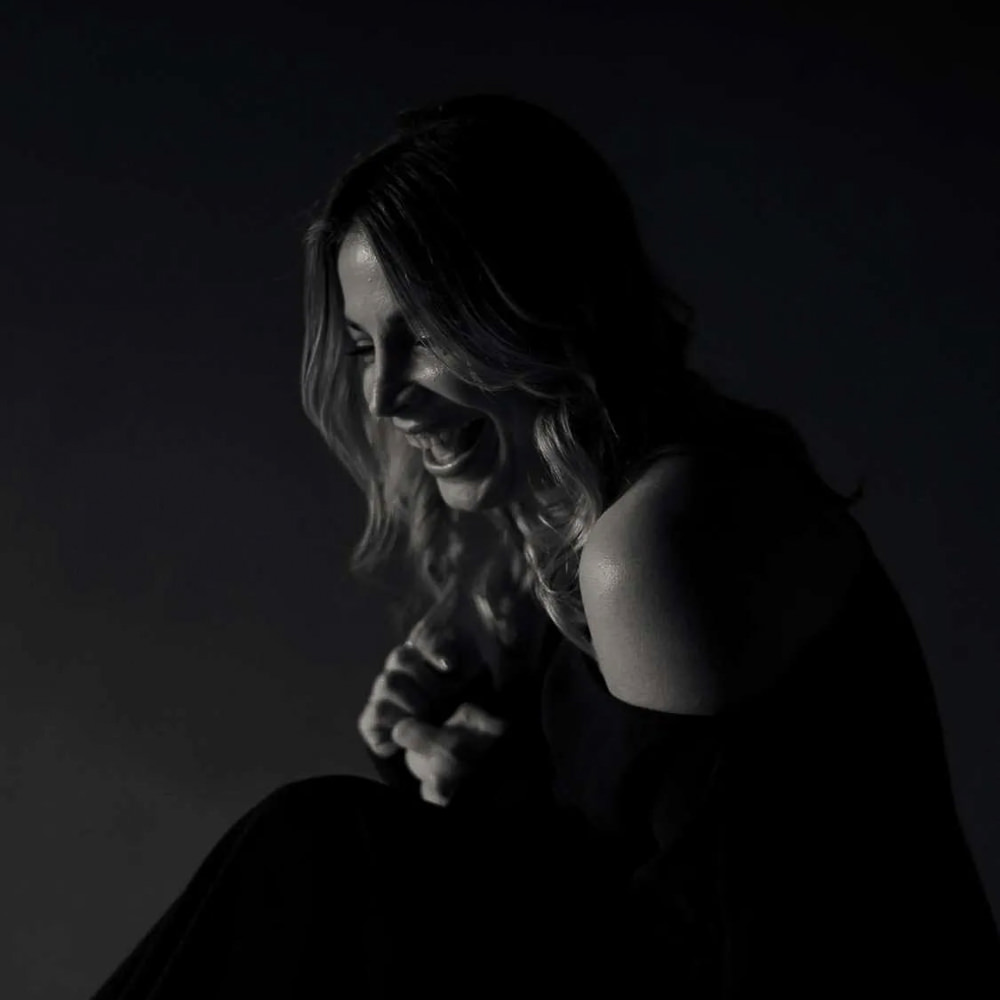
Episode 6 · Season 1
"Eu posso ser o que eu quiser!"
Vanessa da Silva VideographyVanessa & Ivo
summary
Vanessa da Silva's journey mirrors a tension that runs through many creative professionals' careers: the pull between building a focused brand identity and remaining flexible enough to evolve. When she and her partner rebranded from Something Blue to Vanessa & Ivo, it wasn't just about changing a name. It was about giving themselves permission to be something new, something that reflected who they'd actually become rather than who they'd been five years earlier.
Vanessa came to the wedding industry as a communication professional, not a photographer. That background shaped everything—her strategic thinking about brand positioning, her understanding of how visual identity communicates before a client ever hears you speak, her instinct that the logo redesign would be transformative. But it also meant she spent years watching photographers she admired, learning their craft in private, almost apologetically, as if she wasn't entitled to claim that identity alongside her videography.
There's something fragile about an industry that oscillates so dramatically between collaboration and competition. The same community that shares knowledge and mentorship can turn fiercely territorial when it comes to pricing, positioning, and market share. Vanessa talks about this honestly—the relief of moving to a different region partly because it meant escape from the anxiety of local competition. Yet she also speaks tenderly about the mentors who gave her permission to add photography to her practice, who saw her work and said: yes, you can do this too.
Her approach to Instagram content reveals a philosophy many creators miss: curation isn't about showing your best work, it's about showing the work that tells your story and attracts the clients you want. She's ruthless about portfolios—every image must serve the brand. Three brand words—romantic, intimate, classic—become a filter for every decision. It sounds simple until you're actually culling 5,000 wedding images down to the 100 that live on your site.
What emerges across the conversation is a portrait of someone learning to trust her own judgment after years of second-guessing it. The doubt doesn't disappear when you rebrand. But the act of choosing a new name, a new visual identity, a new positioning seems to give her permission to stop apologizing for being a photographer, a videographer, a brand strategist, a business owner all at once.
Vanessa doesn't claim to have all the answers. She's clear about what she's still figuring out—how to scale, how to maintain quality, how to not burn out. But she's learned that sometimes the most powerful thing you can do is look at who you actually are, and then design everything—your brand, your portfolio, your Instagram feed—around that truth. And maybe give yourself permission to become someone new when the old version no longer fits.
key quotes
"I think I was always inspired by blogs like Bridal Musings and The Knot. But I never saw people like me in those spaces. That was a big thing—not seeing people who looked like me or had backgrounds like me."
"People didn't know I was also a photographer. It was something I did on my own, in secret almost. I would photograph things, but I wouldn't show anyone because I felt like I didn't have the right to."
"The moment we invested in the logo redesign, everything changed. It wasn't just about the visual—it was permission to believe this was real, this was serious, this was ours."
"I'm very intentional about my portfolio. Every image has to serve a purpose. It's not about showing my best work—it's about showing the work that tells our story and attracts the clients we want."
"The wedding industry can be so generous and collaborative, but it can also be incredibly competitive and territorial. It's hard to navigate."
"My mentors gave me permission to do both. They saw my photography and said, 'This is good. You're allowed to claim this.' That permission was everything."
"I think about romantic, intimate, and classic. Those three words filter every decision we make. If something doesn't feel like those three words, it doesn't go on our feed."
transcript + show
episode: 6 title: "Ep. 6 - "Eu posso ser o que eu quiser!", com Vanessa da Silva" pub_date: "Mon, 06 May 2024 05:00:00 +0000" original_language: english source_audio: "c4dc6828.mp3"
Hello, welcome. I'm Rui and this is the The Wack Podcast. This week I have with me Vanessa da Silva, the other half of Vanessa Eve. Vanessa has the gift of improving our state of mind instantly. Her good energy is absolutely contagious, which is great, because sooner or later she will touch the wound and attack our most limiting beliefs, always with the aim of making us better. According to the legend, she is somewhat pessimistic, but from my point of view she is full of optimism and good disposition. Without further delay, my conversation with Vanessa. Welcome, Vanessa. Thank you, Rui. Are you okay? I'm fine, thank you. An official thank you for inviting me to test the waters of the podcast. It's a pleasure to be here in the beginning, middle and end. I demand two more participations, at least. At least. At least. Because I know that if we mix well what you have in there, we can do a good half a dozen. I haven't lost weight. I would say. Let's just talk about the top part, but it's okay. You're wonderful. I'm also capable of losing weight. When you don't remember that word. I had a meeting yesterday in English, and in the middle of the meeting I said, I. I. I didn't remember a word, and I complained with, I. It could be worse. It could be worse, right? It could. It could be worse, Neira. This is a safe space to say, Neiras, right? Say what you want. Your husband has already inaugurated the words here, so you're at ease, don't worry. I'll try not to, but... No, you're at ease. Go, go. A thousand questions, go. That's what I was saying, when... Whoever wants to hear, will hear. Whoever wants to be an hour and a half, will be an hour and a half. This is a safe place. Whoever doesn't want to, loads in the 15 seconds ahead. Exactly. We're all at ease with that. But now, starting in a more serious way, and important for me, I already told you yesterday, yesterday, for us, during the recording, but whoever will hear, I think it's two episodes before, with Ivo, which is... I already showed you all the gratitude that I feel, and that Elsa also feels, because you've been... You've had two or three moments in our lives that were absolutely crucial, and you've always had that super assertive word, but always affectionate and enthusiastic, and... I already thanked you yesterday, for the part you took, and I also want to thank you, and in a slightly different way, because while what I take from Ivo, and from Ivo's words, are some thoughts that are a bit philosophical and abstract, from you, we always take very practical advice, very important strategies, that have been very special for us, and I think that your balance that you have, is not only amazing for your success, but I think it's also been super valuable for us, and for you, specifically, thank you so much for all that role you've played in our lives. This part is going to be... Look, I'm glad, because sometimes a person says things and doesn't know if he's sending them to the world, or if... Because it's easier this way, sometimes we're from abroad, we have some things that I also know are strong points, because we didn't work in this, we came from companies to this, just like you, I think it's always a strong point that we bring to this world of marriage, to come from a business scene to here, and... and those who are from abroad sometimes see things in a different way, right? One thing is to look at you and Elsie, and how you deal with your things, and since I'm not involved, just like other people who are from abroad, they look at my things and say, what if I did this? And I say, oh, look, why not? Yes, yes, no doubt. But there's a lot of people, and a lot of colleagues, it's really an obligation, we've said it several times, but it's a very meaningful obligation. Now let's go to that part, to my 17 billion questions, I have to say that I'm ashamed to take the block whenever I'm with her. I'm ashamed, you see, to take notes, and that's why I made a podcast so it's all recorded and I can study at the end. It looks more like 2024, you see? And it's funnier. But at least it's more honest, you know? It's more honest to say, look, I need, what you're saying, I need to point that out. I really need to. And I need to, clearly. It was like, I need to, because I'm going to forget, and that's a great idea. No, no, I need for both reasons, because sometimes I forget, and because they're really good ideas. That's the thing. Let's start from the beginning, and I'd like to ask you, in your perspective, what was the beginning of Something Blue? This comes from you. So, when I know you, Ivo has a degree in audiovisuals, you don't. You have a degree in social communication, right? So, I studied communication, communication sciences, at the Universidade da Beira Interior, and I specialized in that course, you could specialize in a branch, I specialized in public relations and advertising, and then I studied, and then I did a post-graduate in marketing. So, of course, it helps, doesn't it? Of course it helps in everything we do. So, in the beginning of Something Blue, what was your vision of things? What was the beginning of the project, in your perspective? So, I was already working at Teatro das Beiras, which is a theatre company, and I did communication there, and when I started working there, we were still in the blogging era, of reading blogs, of having a program where you had, I don't know, several different topics, where many people only talked about their lives, and you were reading, and in those 20 or 30 blogs that I had, and that I read almost every day, I had Green Wedding Shoes, and I had Green Wedding Shoes, which is an American wedding blog, because my sister was also, in another way, involved in weddings, and I had already found that site, I had already shared with me, like, look at what cool weddings there are, very traditional ones, and they, I don't know, in 2007, they were like, in the Boho weddings, the Green Wedding Shoes, which was, now it's a bit different, but at the time it was a blog of different weddings, of weddings out of the traditional, and I followed that blog, and of course, there were many wedding videos, American wedding videos, which were shorter, much more rhythmic, and much more, I don't know, more colorful, more beautiful, it wasn't what we were used to, of an hour and a half of cassette, that they forced us to watch, and Yves must have told you, probably, how he started this, and I remember showing him, I said, showing him the videos, sometimes I would say, look at this video, look how cool, it looks like a movie, it doesn't look like a wedding, so I started there, and when they decide to create a film production company, and you need to put money in the film production company, and the idea of why not do weddings, just to get money, is why not do weddings like this, because this is even cool, and I was still working at Teatro das Beiras, and I told him, let's use what we have, we were kids, let's use what we have, let's create a super beautiful website, a Facebook page, which was what existed, and I only dealt with that, I dealt with all the communication, I knew all the wedding platforms, I dealt with communication, I received e-mails, I answered e-mails, I advertised the videos, I cut, I made print screens of the video, to have pictures, because we had pictures, and it was a bit like that, it was like that. Yes, it's funny, because I'm asking, what was the division of tasks, you just said, and it's really interesting, that is, it was a super natural thing, and you did your part exactly for that. But at that time, did you have more people, more partners, or were you just the two of you? I was the girlfriend, that is, I was just with Ivo, I worked at Teatro das Beiras, and I did the communication, because I liked it, I did it from the company, from the producer where they were, there were four partners, I was not included, I was just the person who did the communication, because I wanted to do it, in my curriculum, to make communication for a movie producer, and to make communication for a wedding film producer. So, it was him and three more partners, who really had the producer, and I just did the communication for them. And then, how did you jump to to Summertime Blue, just the two of you? So, Ivo started to like doing this, the weddings, it was something that he really started to like doing, I came to accompany him, in the first weddings, he would go, and I would not stay at home, because I worked during the week, and on the weekend I was at home, and he really started to like this, he started to see that a movie producer is not easy, especially at the beginning of a career, it is not easy to inject money, and a movie producer needs material, and that material costs a lot of money, then he starts to see a little misunderstanding between the partners, who thought that making a wedding film was not cool, it was ugly, it was something like cinema, art, cinema, I mean, they were going to sell us to make commercials, they were going to sell us to make a commercial for the ferry, but they were not going to sell us to make weddings. So, they separated, and Ivo said, I was already in a phase, I was already a few years in the theater company, I could not advance in my career, and it was like, well, let's try, let's see what happens, the first wedding I went to, I was hidden behind a column, I just carried it on the rack. So that's where you started filming the first little ones? Yes, I remember one of the first weddings we did in Castelo Branco, of an incredible Brazilian couple, I just went, I went and told him, you have to hold the backpack, I was still working in the theater, I carried the backpack, I did nothing, the second time I went, I carried it on the rack, he put the camera on a tripod, it was to film the whole ceremony, he put the camera on a tripod, he focused, and he said, at the time with the Canon, they only filmed from 20 to 20 minutes, that's what I did, I carried it on the rack, hidden behind a column, I was full of shame, and I carried it on the rack. What a beautiful path you have there, from just going, to carrying it on the rack, and now I'm going alone. Yes, but that's it, let's get to that part, I have another question about it, but it really is an incredible path. You also have the scene, you have the whole communication, and I help as much as I can, because he was in charge of the technical part, and I thought, what could be different? There is an innocence, when you start doing things, without knowing if you are doing it right or wrong, suddenly they hire you, and you say, look, success! In fact, today it's the same, you do the things, they hire you, and you say, success! It's funny, because you seem to be reading my script, because what I was going to ask next, was the fact that you have this huge passion for marketing, and that you really do the technical part of the thing, and you do the rest. This is my introduction to the next one. Perfect. I have the notion that you have this divided part, and you have this taste, not only for training, but you have this great taste for marketing. Putting the chronology of the thing, you started Alguers for 2012, Something Blue, and then it was more or less Alguers for 2014, that you changed from Something Blue to Vanessin. Yes, more or less. What was the main reason for that? It was to get to the same weddings with you, the four of us would enter the room, and they would say, hello Elsa, hello Rui, look, they are the ones from the video, or, look, they are the Something Blue. When they said, they are the Something Blue, it wasn't bad. It wasn't bad, they had the notion, but it was, hello Elsa, hello Rui, how are you? Look, they are the ones from the video. Really? But did this ever happen? I don't have the notion, I don't remember a specific couple, but it happened many times, and it was normal, because you did the session, first, it's normal, the relationship with the photographer is closer. First, because you are hired first, normally there is a session before, there is still one, which is normal, there is a wedding session, so you already had a trust, and we tried, and that was the first impact, we arrived and it was, hello Elsa, hello Rui, hello, look, they are from the video. And then, as a result of insecurity and inexperience, we were still learning, when those key moments arrived, in the preparations or in the session, we didn't have, we didn't feel confident to say, ok, now it's my turn, now I need to do this. Especially because they didn't know our names, like, the video is not recent, obviously it's not recent, but it was still, at least with the Portuguese couples, the Portuguese clients, they were always associated with photography, with the photography team, that is, it was always the photographer who recommended or who had the team, so there was no need to know, and then the fact that they didn't know who we were, because we were just two more elements of the photography team in their heads, even if they had hired separately, it was more difficult for us to get them to look directly at the camera, this in a very, sorry, very visual way, to look directly at the camera, or a complete unwillingness of not posing for the photographer, but posing for us, that is, and it was, and we thought, man, no, it can't be, and there were 20 weddings, then there were another 20 weddings, and this repeats itself, and we thought, we couldn't license the brand, because at the time there was a shortage of events, if I'm not mistaken, in Spain, called Something Blue, so we couldn't register the brand for being this, Something Blue, which is not an original name, and because there was this proximity to Spain, I know we were not able to register, so we tried to go through the window and if it were our names, why not, it made things simpler. And did you feel those big differences you were talking about, or was it just a coincidence? It wasn't a coincidence, it was a set of things. I remember we went through a transition phase, maybe in 2014, which was Something Blue by Vanessa and Ivo, and then we had Vanessa and Ivo Something Blue, that is, we went through that transition phase, but the phase comes, I don't know if it happens to you because you really work a lot in just one year, so the following year you say it's going to be different, and suddenly you make a big change to your business, because you've already experienced a lot in the past year, you've experienced several attempts and errors of what you said, this year it's right, it's going to be Something Blue, and then you're like, no, maybe not, but at the same time, you have the other side, everything happens slowly, we live a lot of things, for us one year is a lot of time, a lot of things are happening, but then the results for us, you have something happening that you know will only be put into practice in the next year, and that maybe only has that result in the following year, so we live a lot, we have to sow, sometimes it's a mix of those things, but did you feel that change was really crucial, or was it just a seed of many others? It was one of many things, they changed the name, we already had more experience, we already knew more people, then what we feel that in one year it's really a lot of experience, you're going to approach the following year in a different way, so even if it wasn't Vanessa Yves and it had been Something Blue, they were going to look at me and when they said hello Rui, hello Elsa, they were going to say hello Vanessa and hello Yves, because everything comes together, we are more comfortable, we have more confidence, now it's our name, we're going to change the site, we're going to change the logo, we invested, for us it was the biggest investment we had made so far, besides the material, was the logo, Alejandro Gómez and for us it was like all our savings were to make the logo, it may seem slow, but for us a lot was happening, but it helped, of course it helped, I like it, they are still our names. But in retrospect, what do you think about this investment of the logo? And I ask this question, I'm sure you know who Seth Godin is, the world marketing guru, and I understand what he wants to say, but on the other hand, you have companies that spend millions, and at the same time you have Coca-Cola, which has the same logo 120 years ago, which was designed by the inventor himself, and which remains the same, that is, the logo is just a very small piece, and there is a very cool graphic, which is an iceberg, where at the tip you have the logo, and then you have everything else, and a part of it that is underwater, that is, in this perspective, you have a big investment in the logo, what do you feel about this investment? The investment was, we now change through the logo, the investment was almost the same, but the logo now, it was almost the same, a difference of 100 to 200 euros, really, but at the time, we needed a visual representation, visual of all the changes we wanted to have and that we were doing, that just changing the name and just starting to put another portfolio in sight was not enough, maybe it was more for us than for the outside world. Because we also had a logo that I had made playing in Photoshop. And we needed that, it was almost, no, it was a validation, a validation that we needed, like, no, look at this amazing logo that cost the eyes of the face, that represents everything we want to do, who we are. Because then there was also that super cool process, you had to give an idea date, make a Pinterest picture, which will obviously help you. We then started to transmit, after he told us, I want you to put here ideas that you have. And we started, ok, we are living in the north, we want the N in the north to be there. We want it to be a compass that points to the north, because that's where we are, we're not going to leave the north. Like, we want it to be a compass because it has to do with travel, we want to travel, you know? And then you start thinking about it, that is, you already start to create a plan, it helped us to create that plan, which is also cool, if it were now, I wouldn't need the logo, now I would write it, I would write a lucky analysis. But at the time, when it was decided, no, let's make a logo with this guy, he has amazing logos. It's very fashionable. But always, always, because that's really that point that sometimes escapes us, which is, to be able to have a visual identification, be it a site, be it a logo, be it all that, the truth is that to get to a point of contact, you have to define some things first, right? And that exercise is one of the most incredible things to create our own identity. But then, basically, what did you feel in that first construction of the logo? Do you feel the same now in this renovation? Or was it something entirely different? And if it was, why? Now it was entirely different. First, because we thought the logo was already dated, and clearly it didn't reflect where we wanted to go, and where we were going. And we were realizing a lot of changes, all the people that we really like to change to simpler things, we wanted a logo that worked well on top of images, and our old logo was very elaborate, hand-made, which made sense for when we moved to it. We had a tagline, which was hand-made films, and the logo was hand-made, and our names were hand-written, it made a lot of sense. And now we're following all the trends, and now we want a cleaner, simpler logo, that doesn't make so much noise. It's our names that are well read, a lot in the fashion line, the logos of Balenciaga, Zadig and Voltaire, Louis Vuitton, that very clean thing. And it was much easier, because we already had that notion and that idea. The clearest idea, you know? We were doing the opposite process, everything was already in us, our communication was going in the right direction, we just needed a logo that represented us. Speaking of those two examples, in the first logo, you needed the logo to define where you wanted to go, and in the second, you used the logo to represent where you were already. Yes, and being almost the thing of the logo, I don't know how to say it, it's already a small thing in all communication. There are a thousand more important things than the logo. When you move to Vanessa and Ivo, I don't know if it was a question when it was Something Blue, but you used to go, and until recently, before doing photography, you used to go both, right? You always filmed both. But at some point, did you feel like sharing or having someone to film for you? We used to do it sometimes, yes. We used to do it, I don't know how to say it precisely, like the first time. I even know. I think I even know. Look, I think I got sick. I got sick, I was down, I had been operated on and I couldn't go. And it was a film colleague of Ivo's. This goes back to 2013. But as a business model, no? No, as a business model, we think about it many times, and we talk about it with you, that you also thought about it and tried it. Yes, I got there. Of course, it's a way to make your day profitable. But if I think that in photography it's simpler, in video, we always lack the second camera, for example, in the votes or in the speeches, and we lack an assistant. That is, someone who is there, they may not be filming, but someone who is there to deal with a lot of things, or the sound, or to go get the cameras, or to go to the car to get a tripod and a light, and to set up the light, or to hold the light. Sometimes it happens, the person who is talking with the speeches, walks back and forth, and someone has to be with the light, sometimes following him a little bit. In other words, in your case, this change to Vanessa and Ivo did not create any limitation to that possibility. It was no longer part of the goal. No, and the pandemic, after 2020, and the COVID and the pandemic, and we had all the weddings postponed, there were some clients who were very restricted in terms of the date they wanted to change. Sometimes we were already with a closed wedding, and they said, but we want to get married on this day. You are two, and we... So, us and everyone, because 2021 was cool for that. Fortunately, we were already starting to cement a videographers community, and we had the help of a lot of people, and we went to help friends who needed it, because it happened with everyone. Almost everyone we knew had duplicated weddings. I don't know if that's the right word. They had two weddings on the same day, and they had to split up, or they had to send second teams, and we got a group of people there, that we went to help some people, as well as those people came to help us, and we always split up, each one of us went to a wedding. I think there was maybe one case, I don't know why, that we both went to one, and we had a guy with total confidence to the other. Which was amazing, because we suddenly have a team here, maybe three or four people, who work regularly with us, even if we both go to a wedding, we need a third videographer here, and a third person comes, so suddenly we have a team, it's not a fixed team, but almost, who are the people we always go to, for when there are these needs, because sometimes there are needs of a third or fourth person, these are the people we go to. So, this is always open, we only have one videographer, the package of one videographer, and often we both go for this, because you always need an assistant. If I go to another wedding, someone is hired to help the other. So, in a general way, you don't block that possibility, although you call yourself Vanessa and Iso, the experience, as you have a website now, the experience you give, is yours, is it what you idealized, and you don't let yourself be blocked by that possibility of going both, not going both? Yes, because the process is all with us, that is, we are in charge of the whole initial process, and if one or the other goes on the day, unless something happens and we can't really go both, but now we have these people who have already filmed with us dozens of times, who are well-educated, who are nice, who are as if we were there. The difference is that we edit, we deliver, the difference is that we may not have been there, but it doesn't happen often, it happens sometimes that there is a problem with the calendar, for some special reason, or if one of us gets sick, or can't go, you know, those things. How do you manage these doubts in a meeting? I know that it is usually Ivo who does the meeting, how is that done? Do you have someone who asks you that question? Do you ask that question or do you clarify that question independently of asking the question? We usually ask that question, because usually it's us. If it's not us, there is always a reason that we clarify, because we like to do this, and we like to go both, and we like to be working both, so we want to be the ones doing it, it's not for any kind of smoke and mirrors, that I say I'm going to Venice and Ivo, and then I don't go to Venice and Ivo because I want to make more money. No, we like to do this, and if we don't go, there is a reason behind it, and we like to clarify that reason, which can be, look, yes, we have another wedding in another place, and we have to go both, because I don't want to leave her alone, or she's going to have an operation and she's going to be down, or I don't know, there are so many reasons that can happen, and we always say that we have a team, because we do, there are people who have gone many times with us, and who work exactly like us, and the whole process is with us, apart from filming during the day, and I'm very proud of those people, who are the guys who started coming to our workshops, who later, with the pandemic, we always needed someone, I trust them 100%, I know they go, and it's as if I were there. Besides being good professionals, one, right? Point one, they are good professionals in what they do, I want them to be nice, and to act as if I were acting, maybe they still act better, they still do better than me, and of all the times they went with us, the clients always talk to them, you know? Look, for example, one of the guys who comes with us the most is Jota, Jota is as if we were there, he is amazing, and we have all the weddings he went with me, or with Ivo, the clients always send us hugs and greetings, and then they follow his brand on Instagram, I think that's great, that is, if we wanted to have a fixed team, there were three or four people here, that we would always have. Continuing the chronology more or less, that is, we were more or less there on the 14th, and then, according to what Ivo told me, you basically, between... This is a fact check, Ivo told me. I'm sorry, Ivo told me. But he told me that somewhere between, maybe 16, 17, 18, you found your ideal wedding, the most classic, elegant wedding, in the palaces, that thing of the smokings, and from that moment on, you had a more or less linear strategy of the genre, this is what we want to do, this is what we are going to do, and according to Ivo, he also told me that in 2019 you had a big boom, in that kind of weddings, right? And then, in 2020, you had a crash. I'm not seeing it. What are you talking about? Okay, and my question is this, at that moment, you already had realized what was the ideal you wanted, right? You already had realized, okay, this is what we want to do, but maybe our brand is not exactly, the visual identity is not exactly aligned, and you started a process of either renewal, or update, whatever you want to call it. What were the first steps you took? Look, you were talking, and I... You were thinking about the shopping list, that you have a new dinner. No, I was thinking about several things. And I remember, and I think I said this to a fiancée we had together, Adriana, which was in Braga. Braga, yes. Yes, yes, it was in Colonata. We talked about it a long time later. Exactly. Adriana, it was, what year was it? 2017? Maybe? 18, maybe, around that. Adriana, visually, was everything I wanted in a fiancée. And I remember seeing her enter the dressing room, I saw the dress, and she showed the earrings, which were Viana's hearts, the hairstyle, and I remember talking to her, saying, you are, like, that's beautiful. And she said, I think... I remember her saying this, and she was like, I think the classic will stay forever. And I was like, ah! And then she puts on the dress, she had an amazing hairstyle, she only wore those earrings, she didn't wear anything else. And he, I think he was... Smoking, yes, he was smoking that day. And I remember looking at her, we took some pictures of her in the room, and in the corridor of the hotel, and I was like, wow, she's beautiful. And then she said to me, you're right, I think you're right, you're perfect. Your pictures, in 20 years, will be perfect. And I remember thinking, we were talking about the hair, the earrings, we weren't even talking about anything else. And I said, in 20 years, this will be perfect. And then we showed up for the ceremony, he was smoking, and I thought, wow, she's much more ahead. She, at the time, still now, she's older than me. And I remember thinking, she's the one who knows the scene. After her, I remember, in 2019, we got married in Leiria. A fiancée, who could have been, everything could have gone wrong, everything could have gone wrong for us, it would have been amazing for her. And she shows up with a dress, very similar to Adriana's, the similar hairstyle, and he looks at her and says, ah, now you got me. Because I was thinking, we go to her room, and I say, ah, now you got me, you're beautiful, you're elegant. And I remember thinking, I like this, because I like that. And then there are those things, I don't know, from your childhood, your teenage scenes, that my mother would say, or my mother liked to wear a lot of clothes, and she would say, ah, elegant, you know? And suddenly I thought, ah, it makes sense. She already told me. But Adriana, I remember, I think about it a lot, because she told me that during the rehearsals, and in fact, you start to see, what did I like to do more? Visually, just visually, because that's what you're doing, right? Visually, ah, I like this, and I like this, and I like this more, it's easier, it's not easier, for us it's more natural to find beauty in a very elegant bride, or classic, in a very classic scene, which is not the classic that we were used to, Portuguese, the classic Portuguese was all the weddings that came out simply white, which in fact, now that I look at it, after so many years, it was a little silly, it was the little dress of income, it was the straw hat, the little things, do it yourself, that is, they were not the classics, because the classics we assumed that they were in church, that they were boring, that they were beautiful, we had never seen people like Adriana. No, but really, because when you speak, sometimes we use the words a little badly, and the truth is that classic, classic was already ... You thought it was old. Yes, and it doesn't mean it's not, because we're already talking about old things, but a fact, a smoking was invented, in fact, the fact stopped being used when jeans were invented, before there were jeans, before the Peaky Blinders, and everyone walked, in fact, who walks like those bastards walked at the time, who walks today, walks absolutely impeccably, which is funny to realize that something like that happens, so the idea that we had of classic was boring, uninteresting, but when it comes to weddings, I fully agree with you, you clearly have brides and grooms who will take that classic this is what I want, this is what I like, this is what you said, this is the style that I naturally like to work, spectacular. And now, how do you go after more of this? Where do you start? You specifically, a person who likes marketing, strategies ... I specifically start changing the language on the site, start changing the photos and videos we have on the site, because last year, no, last year, in 2022, we had a wedding totally out of our scene, we had a wedding of a colleague, our photographer, that she got married in a field where the theme was you wear what you want, what you always wanted to wear, she had a guest who was dressed as Freddie Mercury in the video clip I Want To Break Free, smoke bombs, scenes, Indian ancestry, Indian scenes mixed with anime, her brother did the ceremony dressed as a superhero, did a cosplay, that I don't remember now, but we did, because the root of weddings, the map is always the same. And I did it with a lot of pride, and we did it with a lot of affection, which was for her, the wedding was for her and I think it's pretty cool, but I'm not going to show it, and it's not because I'm not ashamed of what I did. It's not what I want to do, as we do, and this has been said for a long time, you can do 20 weddings, you just have to show 2, which are the line of what you, as a professional and creative, want to follow, because we can do whatever we want, deep down, we can do whatever we want, so we started changing that, we started changing the photos, because we identify with what we see, and all of a sudden you go back, you become a black bride, on a website, and you're a guy who dresses in black, and you like it, this is just me making a stereotype, you like black, you like metal, you're gothic, your boyfriend is too, you say, ah, I like this, this is what I'm going to do, this is going to be my photographer. It's a bit of an unconscious thing, because we also had a friend of mine, getting married in 2018, and I helped her choose her photographer, she had two photographers in mind, and I was waiting for her to choose one, she chose the other one, and I said, ah, why did you choose that one? And she said, I don't know, I opened the website and liked it, and I opened the website, and the picture he had in the background was her dress, and it was so simple, they had both, but she had a sense of that? She had a sense of that? No, she didn't, the type of photography was similar, I liked the other one more, but I didn't tell her, but I saw things in the other one that my eye was going to the other one, but she said, I don't know, I opened his website, and I loved it, and he had, it was her dress, exactly her dress, that she had already chosen at the time, then there were several photos of that wedding, and I thought, ah, the dress. And do you think the site still has the same importance today, or is it being completely supplanted by Instagram? I think so, it's not the gateway, but it's where you show authority, who you are, what you do, where you can explain yourself better, where you can show more of yourself, I think so. The truth is that we receive a lot of requests on Instagram, which I almost always refer to the website. I say, look, go to the website, leave your information there so you don't lose them. And because there I can show what I want, in an elegant way, and suddenly, what I want is that they open the website and say, oh, wait a minute, they have cool things on Instagram, but look at this, here it is more beautiful, it is organized as you want, with the type of letter you want, the marriages you want to continue to do. How do you manage, you just said the issue of phase 20 marriages, you only need to show two. I totally agree with you. But how do you feed a social media channel just with two marriages? It's easy, you're a photographer, what do you get out of it? Do you have 700 photos of a good marriage? Good, I have three. Good, I have three. Seriously, this is like, look, seriously, every time, like, passing the publicity, Ana Luisa Pinto is the person who doesn't know how to choose the photos, and she's going to hate me for saying this, but I love it, she finishes a marriage and sends it to me. Like, it's validation, she sends it to me. And besides, I love her photos, I'm super in love with her, for many, many years, before I started the marriages, I was already following her. And she sends it to me, and like, my look is a log. I tell her, I'm going to put favorites in the ones that are to be published. And she tells me, oh no, this is not for... I tell her, what? I start saying, look here, look at this, look at this, you can make a post about marriage drinks. You can make a post about shoes. Like, 700 photos, okay? I'm being nice, I think it's a little, but come on. 700 photos of a marriage. You can get 20. It's 20 posts. And you can repeat those 20 posts... At the end of the month, right? Yes! Because... Yes! Because... First of all, we are flooded on Instagram. I can't... I used to reach the end of Instagram. He must have told me this. We used to reach the end... No? We talk about this a lot. Reaching the end of Instagram. At my age, I used to reach the end of my Instagram. I used to say, you don't have anything new to see anymore. And you have a lot of... I imagine... There's one thing we have to take away. You're not publishing for your peers. You're publishing for your possible clients. And for your peers too. But if your peers have to go through that marriage 20 times, they will. They don't like it, they stop following it. But even your peers... I realize this a lot. I'm going to pull a video. So, with the pandemic... 2020 was great for this. There was no content. I went back there to get things. And I managed to publish the video of Seville three times. I'm lying. Not Seville. Three times the video of Scotland. And there were colleagues saying, this is amazing, when did you do this? And I thought, I published this three times and you didn't see it. Because I don't see everyone's work. I work a lot on social media. But I don't see everyone's work. And my clients... The clients are new. They don't... Today I'm going to follow Instante. I'm going to follow Vanessa Yves. And then I'm going to follow Branco Prata. And then, ok, they're going to show up. But then I start... I'm not quite sure. And Instante marked... I don't know, another video team. I'm going to see that video team. And then that one is already in my feed. And suddenly I have 20 suppliers showing up. And things are getting lost. I mean, the client is always new. And it's true, every year, at first, we will always have new clients. Although I'm going to have one. Are you going to have a remake? Yes. I'm excited. I love the validation you're giving. And sometimes it's really necessary to have someone from outside saying do this, which is the obvious. You're too stuck in your head. And Elsa and I feel that a lot. Although Elsa is the one who creates Instagram, we often talk about finding new photos, new things. And it never occurs to us publish again the same one you published half a year ago or a year ago because no one remembers it. And maybe no other image will be worth as much to find the client you want as that one. So repeat it, show it again. I use this example a lot. I'm not going to refer to brands, but there is a Portuguese photographer who, in a good way, cheated on me with two marriages he had. And for a year or a year and a half, I couldn't see those two marriages anymore. She was always making stories, always publishing, always, always, always, always. But what is true is that those two marriages and the fact that she did them so many times, of course, because I followed her and because I like what she does, it appeared a lot. Whenever she published again, I was always seeing that. And I saw the stories saying this marriage again. It was what she wanted to do. Why? Because the client is new. The client went to her page for the first time and saw that marriage. And it's like, ah, look, I like this. It's this. And she publishes again a week later and another new client comes saying, ah, I really like this. And tell me something, what importance do you give to the text of the posts you make on Instagram? Instagram? I give a little bit to SEO. I still haven't found proof with Google. I still haven't found proof. I don't have anything to prove. I don't have a link to prove that Google reads the text of Instagram. But it does. That's it. But it does. I don't write a lot. I write small things that can be interesting with people who are interesting because partnerships are always interesting. And... I don't communicate that way. Now... I don't communicate that way. But I also think you can have an audience that likes to read the stories behind that photo. And it can be your way of communicating. And I think it's a good scene. If you're a guy who wants to show the photo and you want to tell the story behind that photo. It's not only beautiful, but there's an important being there. I don't see why not. In the end, you do what you want. What you do is think about the communication you want to make, the words you want to say, what you want people to understand. On the website, yes. But what you use on Instagram also has that thought in your head, right? On Google, the most basic thing is the image. Because it's what occupies the most space on the screen. More and more... We started in the era of Facebook. And on Facebook I needed a cover photo. And I needed a photo. So, sometimes, in the Canon session, I would change to a photo. And I would take a photo, because I needed a cover photo. And then, to deliver it, we still printed DVDs. So, I needed a photo. But then I was very ashamed. Because the photographers weren't very happy when I took photos, because I was in the video. But with time, I started to let go of that. And many times, I take photos at weddings, vertically. I always tag the photographer. I'm not the photographer of that wedding. But a vertical photo occupies more space on the phone screen. And that's it. When I'm choosing for Instagram, it's like, you're scrolling infinitely. Oh, look how cool. And you're taking notes. Vertical photo occupies more space on the screen. I didn't discover that. You're taking notes. And that's what I'm recording. If I don't need to take notes now, I'll do it later. Vertical photo occupies more space. You don't have a horizontal photo. You cut 5x4 or 4x5. But you know what's funny? Because we changed that a lot. It wasn't very conscious, but there was a big change. We mostly took horizontal photos. And the percentage was still higher. But I can say that maybe 10 years ago, 15% of the photos were vertical. At this moment, I think we should be at 40%. It was a big change. Normally, you tell the story horizontally. And the portrait goes vertically. But we, almost by chance, and then it stopped being by chance and started to be a little more intentional, we did that. And now the studio work also forces us to photograph more vertically. And we saw that in the last weddings of last year. It was a big change. But there have been super cool ideas from guys... Super cool! From guys, from photographers, who must feel this pressure. They also photograph horizontally. Then they feel this pressure from Instagram. And suddenly they see a carousel and it's like vertical, vertical, vertical, horizontal, but turned. You know? And I think, cool! Yes, but it's style. They really like that horizontal photo. They think it's necessary for that carousel to tell that story, that mini story they're telling. And it's like, boom! And I think, cool! And I also admit that if I did that in the first one, it would make me stop on Instagram. But this is marketing. I'm already walking like, look, look, look, you're going to stop to turn your head. Note, second note, horizontal photo. Look, this is basically like this. Continuing along this path, we've been here for three hours. So I'm just going to ask you one more question about this part and then we'll move on. No, no, it's not to shut you up. I want to talk to you about other things, also super interesting. But to finish, there are two points. I know you have one thing that in a conversation with someone you talked to stuck in our heads and it's an exercise that we've been thinking about doing a lot, and those are the words that define you as a brand. You did that, at what point did you do it and what was the moment when you thought it was most important to do it and how did it work out? This is the first part of the question. And then, of all these small elements of the renovation that you did, what were those two or three points that you feel worked out the most and impacted your brand and your marketing? That's a difficult one. For starters, I don't remember when, but suddenly, in meetings, especially in meetings, because you often repeat the same speech and clarify the same doubts, we were often told what we thought was romantic and that we were romantic because love is a marriage and it's always romantic. We often started to repeat the word intimate, the intimacy of the couple, the intimacy we want to have with them, and the classic, we won't stop doing classic things. When you're explaining your work, it also helps when you're invited to talk to you, or if I have to give a workshop, or give a training, I have to explain what I do. And these words start to repeat themselves. Maybe a few years ago I would say romantic, that's disgusting, that's horrible, that's disgusting. No, we even get married, they're essentially romantic. And love is there, and we tell the stories of love. Of course, we also tell a little bit of fashion history, a little bit of social history, especially during COVID, everyone took pictures and filmed people wearing masks, putting on masks, taking off masks, washing hands. We tell a story, but we're there for love, and more romantic than that, we're at the pinnacle, at the pinnacle of romance. We often repeated these words, and then we thought, no, these are our words, let's put them everywhere. And I remember when we changed the website, before this, in 2020, we changed the website and put these words in the spotlight, in almost all communication, emails, in the proposal, in the description of the movies, in the about us, we have a meeting with an adorable bride who says everything, you know that thing when you imagine the ideal client, and we're talking to her like this, I watched your videos, and that's what I want, I want it to be romantic, I want it to be intimate, I want everything to be classic. And we... And she... I don't know if... I remember Ivo saying, we were both in that meeting, I don't have anything to say, you've described everything, and I don't know, what do you want to ask? Because my pitch is done. You've described what we do. And then we thought, how does it work? The words you put on the website, how do you describe your photography, your product, how do you describe yourself, yourself if it's compatible, right? It made a lot of difference. Because that bride, who was Emi Suzuki, she has this amazing name, said everything we wanted to hear. So it was validation. It looks like a scene made, but it was really cool, man. And we realized that the meetings were getting simpler and simpler. They said, I really liked coming to the website, and I really liked the proposal, and that's what I'm looking for. It's going to be something more romantic, it's going to be intimate, because I'm going to bring a few people, because we want this moment of intimacy between us, but we're ashamed. I've heard that a thousand times. I'm going to simplify the second part of the question. Because the truth is that all elements are important, I'm going to put you in a different way. If you were to start again, a new renovation, which would be the first? Where would you start? It depends, or a text, it doesn't matter. What do you want to do? Visually. It's easier because we're people of the images. Visually. What do you want to do? I'm not asking how much you want to earn, what kind of camera you're going to use, but visually, how is your fiancée dressed? Because that's what we do. Is she wearing a long sleeve dress, a short sleeve dress, is it silk? Does she have a hat, a veil? How is she going to get married? Is it civil? Is it a ceremony? Is it the parents? Visually, what do you want to do? Of course, this is me, because you can start with, I want to earn this, but visually, we're in the area of the image. What do you want to do? I like it because we're visual. I think it's important to write about the visual issue. And I would also agree with that for a simple thing. If you start looking for images, thinking, okay, this is what I want to do, it's not a problem, but it can become a kind of limitation. I think if you write, I think you can let your imagination go wherever you want and not stick to what you're seeing or what you found on Pinterest or something like that. And I think it's an amazing starting point because it forces you to describe what you want. Yes, that's why Pinterest is so successful. And all our life we want to be better and be better people. But if you have someone who has the ability to see, because you may not have that ability, but you have the ability to see, everything that is around you is sold to you. If someone comes, as you were saying, someone dressed in ganga pants or someone in panties, like Peaky Blinders, your feeling about those people is different. The person who comes in ganga pants, you're relaxed, you think, he's a calm person. If the person comes to a meeting with you, you already feel better and already get some attention or some respect. We also want to be naive and say no. But McDonald's is yellow and red for some reason, because it's the colors that make you hungry. Politicians wear a blue tie when they want us to trust them. Because I remember maybe 6 or 7 years ago saying I don't want to do church weddings anymore. The problem was not in church weddings. Now I do church weddings with pleasure. The problem was not the church wedding, it was not the religious ceremony. It was not a problem at all. I was not super happy. But it took us a few years to realize that if we had started with the visual thing, because after we defined this, even the words I was telling you a little while ago, we started going to the videos and the photos we had and we have things there. We already had things that would find this path, we just didn't show them. Or we hadn't highlighted them. Sometimes we had shown them, but we hadn't highlighted them. But to start again, it started with a visual scene. A while ago you were talking about your path, and you were talking about you just went, you started loading on REC, then you started taking some pictures for fun. In fact, first you started taking pictures for the DVD, then some pictures for fun, then you started accepting some small photography jobs, and suddenly you assume yourself as a photographer and you internalize that, I hope you have already done it, that you are not only a photographer, but that you are a good photographer, an excellent photographer. How do you go from one side to the other on this path, taking into account that our industry is fertile in some transitions, but that are rarely well seen? They are never well seen. Yes. How was your transition, how was your discovery, and how did you and those around you deal with it? So, before I got married, I don't know, in 2008 or 2007, no, maybe 2009, I bought a camera, a 450D, because it had, it had several people around me, friends and acquaintances, who took pictures for pleasure, and my scene was, I want to take pictures of girls, I want to take pictures of girls, and it's not something I want to do now, I have to move forward with it, but I want to take pictures of girls, for a number of reasons, I want to take pictures of girls, I want them to feel beautiful, I also want to take pictures of girls. I even bought a camera. And I was working in a theater company, where everyone, in fact, they were all actors, and all very open, and all creative people, who were both actors today, as they were stage directors tomorrow, as they made light, as they later wrote a play, and suddenly I entered the weddings, like, I can do whatever I want, I can even be a DJ, which is also a scene And all of a sudden, some of the photographers that we met, that I made for Facebook, they were like, are you taking a picture? And I was like, yes, I am. And then on the Facebook cover, with the video, the print screen was not very good, the frame was not as good as it is now. And people got very upset. Everyone was very upset. I took a lot of pictures in secret. Then I used that for Facebook. And sometimes they asked us for pictures, we never accepted them, we always recommended them, but they said, no, we make videos. And the first wedding I do, is of a friend of Ivo's, who says, I want it to be you. I had already had this conversation with her. And she said, no, you have to take a picture. And I said, no, I'm not going, are you crazy? And she said, no, no, you are not understanding, you are going to take a picture of my wedding. And I said, no. And she said, yes, yes. And I said, what are you going to do? I sweated a lot. And I took a picture of her wedding, and I didn't tell anyone. I took the picture, edited the photos, I didn't tell anyone. After her, I was the first. But it was like that. It was a friend, an acquaintance. And I said, yes, yes, but I didn't tell anyone. I hid it deep down. Why? Because there was a wedding where I took several pictures that only existed on Facebook and on the website. They were all so cool. I edited them, I don't know, I had about seven. I edited them all. I had a personal blog. I put them in the personal blog. Like, context to say, I'm getting married. At the time of the blogs, right? I'm getting married, I'm making a wedding video. But these pictures were so beautiful, I'm sharing them here. And the wedding photographer saw it. He gave me a sermon, he sent me a message. My God, it's still recorded today. That I was the photographer. That people would now think I was the photographer. And that I couldn't, and that you don't do that. Look, that marked me in such a way that every time a friend said, I don't want to. Look, I have so many good photographers here. No, no, but what are you? I said, oh my God. Here it is, it hadn't come out yet. And I did it, but always hiding. Always, always, always hiding. Because things didn't... I didn't like this feeling of not having a job. Because photographers no longer like me. They won't recommend me anymore. They are no longer my friends. And in fact it happened. When I started to put my foot out of the water. And on the site we didn't say we had a picture. But I would post half a dozen pictures. And I would say I had taken the picture. I would meet someone and say, are you taking a picture now? You don't make videos anymore? No, I don't make videos. But look, it was an elopement. I would post half a dozen pictures. And I would never receive recommendations from that person again. You know what it's like to receive 10 requests saying, we were recommended by... And we stopped receiving those recommendations. And I would think, seriously? Because the truth is, in all these years, I've done like 4 weddings with photography a year. It's nothing, man. There are like 35,000 weddings a year. And I thought... Then I realized this thing, we are in this creative area. You can make videos, take recorders to record the sound of the session. And do like... And suddenly make a gif. Or film a little bit, but videographers can't take pictures. Because they are a threat. They are a threat. They are a competition. And I was always like this, I would do some things. I was alone at home and I would think, I'm going to publish. And I would publish. And then I would publish on the website, never on social media. And then I would publish on social media and I would never identify what I had done to the picture. Stupid scenes. The big change was... Man, in 2019 I did some really cool weddings. Like, one of them I must have published. It was really cool. And in 2000, pandemic. In the pandemic I realized, I didn't know anyone. No one helped anyone. And we were like, we have to do what we can. And last year, I go to a workshop, things slowly start to come to my mind. Like, one of these days I'm going to publish that we do photography. I never sent proposals. If this continues until today, if a couple comes to us and says, we were recommended by Rui, by Elsa, by Instante, we sent a video. Oh, wait. We never sent a photo. We sent a video. Look, it happened to us. We were going to do a video wedding in which we had been recommended by the photographer who was hired. And the bride, in the middle of the process, says, I saw that you take pictures. Don't you want me? I prefer... And I said, no, no, no. Ethically, we're not going to do that. It was super nice of you to recommend us. We're not going to do that. We never do that. Because we already knew the story of other people who did it and we didn't like it. Or, like, offering weddings and saying, no, look, fuck your photographer. I do everything. No, man. I don't think you do it. Ethically, you don't do it. It's pretty bad. And it was only last year that I went to a workshop. I went to the workshop for the business. And, like, I was so scared to show my work to someone with a lot more experience than me, with many more years. But I thought, I'm just going there for the business. I'm just going there for the business. And the business part was amazing. And, like, I was the last one to be evaluated, like, two or three in the morning, because he was on the last day. Jesus, I had a moment, like, him saying, what are you doing here? I don't know what you're doing here. And I, what am I doing here, why? I said, I know, I'm a videographer. And he, no, no, what are you doing here? You don't need any indication to be a photographer. And I, what? I said, what do you mean? And, man, it gave me an inspiring speech, because it was inspiring. I got to the hotel, I cried my eyes out, I called Iva and said, because now no one is going to like me. The photographers are going to hate me. Because Pablo, it's Pablo the guide, it was his workshop, it was really good. And he said, I have to put it on the website. I said, I'll open your website, where does it say photography? He said, nowhere. I said, well, no, because I don't want to tell people that I do photography. He said, but why? I said, because the photographers are going to be bad. And, in fact, the photographers were bad, because I went to Bodaf, I saw incredible Mónica Frias, who I've loved for many years, and now she does photography, she's a wedding planner, she's a DJ, she's whatever she wants. And I came with this scene, like, I'm going to tell the world that I do photography too, when I feel like it. And I can make videos, I can take pictures, I can do nothing, it doesn't matter. And she goes there and says, we are creative people, and who's going to stop me? And I thought, yes! Sometimes you need a little something on your back, right? Yes, it's really that validation that we sometimes have, and speaking of this, André told me exactly the same story when he did the workshop with José Vila, and he got there and José Vila said, look, self-genre, what are you doing here? I have nothing to say about your images, they're amazing, they're perfect. But it was already André, it was already Branco Prata, and he said, I came from there validated by someone that I admired a lot. And it happened exactly the same. I went to the workshop of Guia, and I didn't even know him very well. I almost apologized to him, like, I'm sorry, I don't even know you very well. Because he's been photographing for many years, he made a big change in image and brand, and he appeared to me, I saw that he was going to give a workshop, I went to see it, I said, let me see it. And I opened it, and I thought, this business part must be interesting. Then I said, but it's expensive. And he said, go man, why don't you go? I said, I'm going there, I'm taking a photography course. Like, no, it doesn't even make sense. And he said, but go, don't you want to start photographing? I said, no. And I have a... I have an eternal debt of gratitude to him, and I realize that the fact that he gave that push and then came from China and said, man, we are creative, we do what we want. Come back to the theater scene, I could be whatever I wanted. I used to work in communication, everyone asked me, are you an actress? I said, no, I work in communication. If I wanted, yes. If I wanted, I would work on a play, if I wanted, I would help with light design. I even helped with the concept of a play for children. It's normal, in all other artistic areas, it's normal for you to do more than one thing. That's what makes you valid, and gives you pleasure. And then I see her from China and I think, I want to be everything she is being. I'm a videographer, now I'm also a photographer, I also want to be a DJ, she's a DJ now, and why can't we all be? If I wanted, I went to Sofia Ferreira's creative offices, I went to a creative office of product styling. Do I do product styling? No. But I liked it, I liked it, I understood how her head works. And I think we shut ourselves out of fear of what others say, and yes, after I came from Pablo Lago and said, I'm going to say I do photography. People who told me that they weren't happy and that they were a little upset because I was doing photography. I'm sorry, because they could have helped me and helped me along the way, and now we were side by side, sharing all of this, and suddenly, but I'm very lucky, I do this workshop, and last year I did a wedding as Pablo Lago's second photographer, and I did six tours with Andretta Eixeira. I paid Andretta Eixeira to photograph with him, and he took me! He took me! He said, look, you're doing photography, do you want to come with me? And I said, of course! I loved sharing this with two or three people who gave me a side look. I loved sharing this, and we all grew up together. But now I'm a DJ, be careful DJs! You just answered the question of the community. The community is cool. No, the community is cool, but I think we still have a lot of dead angles, and maybe we have to put them all out there to be able to see them, because it doesn't make sense. And I think that during the six years of crisis we saw that. I was very happy with the videographers community we had, because it was cool. We had the videographers community, and the cool part of the videographers is that you are used to being treated like the guys in the video. That is, there are few of you who have the mania to be artists. And the photographers, even those who are not there, almost everyone thinks they are. And this is real, the difference that the market still puts between photography and video. To the point that it makes sense, to the point that it doesn't make sense. I was talking for another seven hours of podcast, but the truth is that I think it doesn't make sense to block the progression, the transition, and the creative experience we have. Because the truth is that I think we really gain a lot when we leave that box where we are. And the more, what you were saying, you lose the possibility to share what... I'm always talking about André, but I think it makes sense mainly for the four of us, for me, for Elsa, for you and for Ivo. There was a time when André photographed my wedding, and a few months later, or a few times later, it was the Rural Workshop, and there was a possibility of choosing, I don't know how many, some photographers were doing a Masterclass and I chose André. I already knew him, I had already photographed him two or three times, we had talked a lot, and I paid another Masterclass to go with him. And when you learn from other people, when you share things, and when you do this course, it's so... it's so rewarding. It's a sharing, it's a path you take together, and as you were saying, it's not so much fun, it's not so much beautiful, it's not so much important to do the course by hand. Yes, and it's easier. The cliché is the cliché, but here it is, together we go further. If you want to go fast, go alone, 2020, pandemic, there are difficulties, and in fact, the community of videographers of the Something Blue Workshop and Joao, Women on Weddings, it was beautiful, the sharing there is, and suddenly they start to grow. And now I notice that this year we are again in a year of crisis for wedding providers, for a number of economic reasons, there are fewer weddings, and you start to see ugly things again. That's how fragile our industry is. And it's ugly, because why should we continue to send fake emails, to speak ill of each other, I'm going to stay with this wedding, I'm not going to tell you my secrets, it's worse. When we gave the workshop for the first time, when I saw that there were 22 people, I thought, look, we are not alone, we are not alone in our bunker, we have to work all year long, and whenever we share, and whenever I'm with other people, I always win. I think our path is also being cool, these 10 years are being super cool, and we are doing better and better work, and in fact, translating in numbers, we are winning more, because, first of all, we are always asking questions to everyone, we are working with many different photographers, with many different wedding planners, and we are always asking questions. Look, how much do you charge? Just to understand, how much are you charging for this wedding? Just to understand how low I am. And yeah, sometimes I was really low. And how much do you usually pay? And how do you do it? How do you respond? If you have this problem, how are you going to respond? What do you do? How do you do it? The cameras, personally, I don't really care, some of the best photographers out there, in Berra, walk around with old Nikons, and people say, they must have the latest material. No, they don't. It gives them pleasure to photograph with those older Nikons, with old lenses, because they like that look, and they walk around with their little camera, just one, they are photographers, right? And I think, we have been lucky, we see a lot of people who are in front of us at work, working, and we learn from their experience. I was thinking, how do they handle a wedding day, a super demanding wedding day? Just like us. Change. The shoes can be Prada or Bershka, they handle it the same. Maybe they are calmer, safer, and they handle it the same. And, I think we have advanced a lot, because we share, and I always ask. I can tell you, that I learned a lot with the videographer I worked with, but even before I met you, I was very lucky, the first videographer I worked with was Carlos, so you know, the master. And, over time, technical things, ways of measuring, incredible things, and you learn a lot with that sharing. When Carlos came to give the workshop for the first time, he told me an incredible scene, not everyone liked it, but I thought it was one of the best. He was showing his mistakes, and he said, these are my mistakes, learn from them and do better, because tomorrow I am learning from you. And there was someone who said, if this doesn't work, or if this was a mistake, please take that, and try to do better, because tomorrow it will be you telling me how to do it better. And that's how we win, back and forth. If I try to tell you now, that the vertical photos work better, because it takes up more screen space, you try it and it works, and tomorrow Instagram changes anything, and it's not what works anymore, I say, ok, I'll try it. And the exchange is... I think we are very fragile, and I'm sorry, because every year it's the same conversation. And this year, we are in a fragile scene again, because people have little work... We have to work to help. We have to work to do that. I'm going to close. No, no, I'm going to close. I only have two or three more things to say, and I already have a huge thank you to repeat, for being here, for the incredible sharing you do, it's always surreal to talk to you, and you really have a capacity to not filter the things that go to your soul, which are extraordinary for those who are here, and I think anyone who will hear us will feel the same. This is my thank you, and I have another thing to tell you, which is that you were talking a while ago, and once you told me this, and I wanted, within my micro dimension, you shared that when you were elected to the Rising Star, which is the publication? The Rangefinder. The Rangefinder. You had some pity for not having... for people not having perhaps said what they thought. And I would like to say it's a huge pleasure, it's a huge pleasure, it's a huge pleasure, it's a huge pride to have seen you do this path, as we have known each other for 10 years, and to see all that enthusiasm, all that creativity, you are an incredible photographer, you were already a videographer, now you are a photographer. You are clearly at that point, and it's one of those things that we see your photos on the website, yours, right? They are amazing, so I never have any doubts because you have a huge talent in there. And Elsa also wanted to say this, and we are really proud to have been elected, and I think that's it, and much more. So, our congratulations. Thank you. And much more, I told you, and much more. Thank you. You are part of my story. Thank you, it's also fun to do. It's not fun. It's more fun because you caught us, I don't know how you started at that time, but you, besides being photographers, had already done some work. That is, when we caught you, you were the instant. So, I knew that if I was going to marry the instant, it would be beautiful. I already knew that I was going to have flowers, I was going to have a dress of purity, a dress of income, that she was going to take her hair to the waves, and I thought, yes, it's going to be beautiful. It was like, oh, it's with the instant, oh, it's going to be good. It's not even funny. I don't know if you have this idea, this notion. It's like you say, I'm going to have a wedding with André, wait, with Carlos Ferreira, it's going to be cool. I was like, oh, we're going to have a wedding with the instant, oh, it's going to be cool. Almost all of them were really funny. There are some that I like a lot. Adriana's, Catarina and Gustavo's, in December 2014. Mini Francinhas. Yes. I leave here in public that the phrase, money for diapers, comes from that marriage, from the mouth of Rui Fernandes, and that is still used today. Money for diapers is very important. I had Beatriz for a year at that time, so we were still making money for diapers. Now we already have three, so imagine the diapers. I mean, only one thing, diapers. Money now is money for the zip. It is. No, it's not for the zip anymore, it's for luck, it's for enthusiasm. My daughter now has a meter and a half. Yes, there are children, I don't know. But she already has a style. It's true, but she has a style, and she already decides, and she doesn't like this anymore, and she doesn't like that anymore. That's why we need a lot of money for diapers. Money for diapers. I'll just leave it as well. When you say money for diapers, it's that extra money that we're not expecting. For those who are listening to this, it's money for diapers. It's the money we're not expecting. Or then you say, I even have time, look, do you want to come take pictures, be my second photographer here, like, help me? And you, yeah, money for diapers. Or even when you're doing that job that you feel is not the most wonderful thing in terms of portfolio, but you feel like, I have diapers to pay. Yeah, that's it. Money for diapers is the best expression ever. It is, isn't it? It's amazing how there are certain things that are out of our imagination. That's the thing, we don't have the perception that others have of us, and that the things we say, like, you were saying that at the beginning, that there were things that I sometimes said to you, or that I said to you, and that you kept thinking about that. Whenever you say, I don't know what, you say that, and I think, huh? Did I say that? Yes, yes, yes. Money for diapers marked me. The mini frances. The Adriana wedding, when we were together. Look, my dear, it was a pleasure. Tell me, tell me, tell me. It's nothing important, it's just a conversation. No, I'm sure. Then you'll be out of the recording. Look, thank you so much again. It was a great pleasure to have been here with you. Thank you. Bye. We have reached the end of episode 2, I hope you liked it, I ask you to subscribe to the podcast and see you next week.
New episodes, twice a month. Be the first to hear them.