
Episode 7 · Season 1
"Luxury is a feeling"
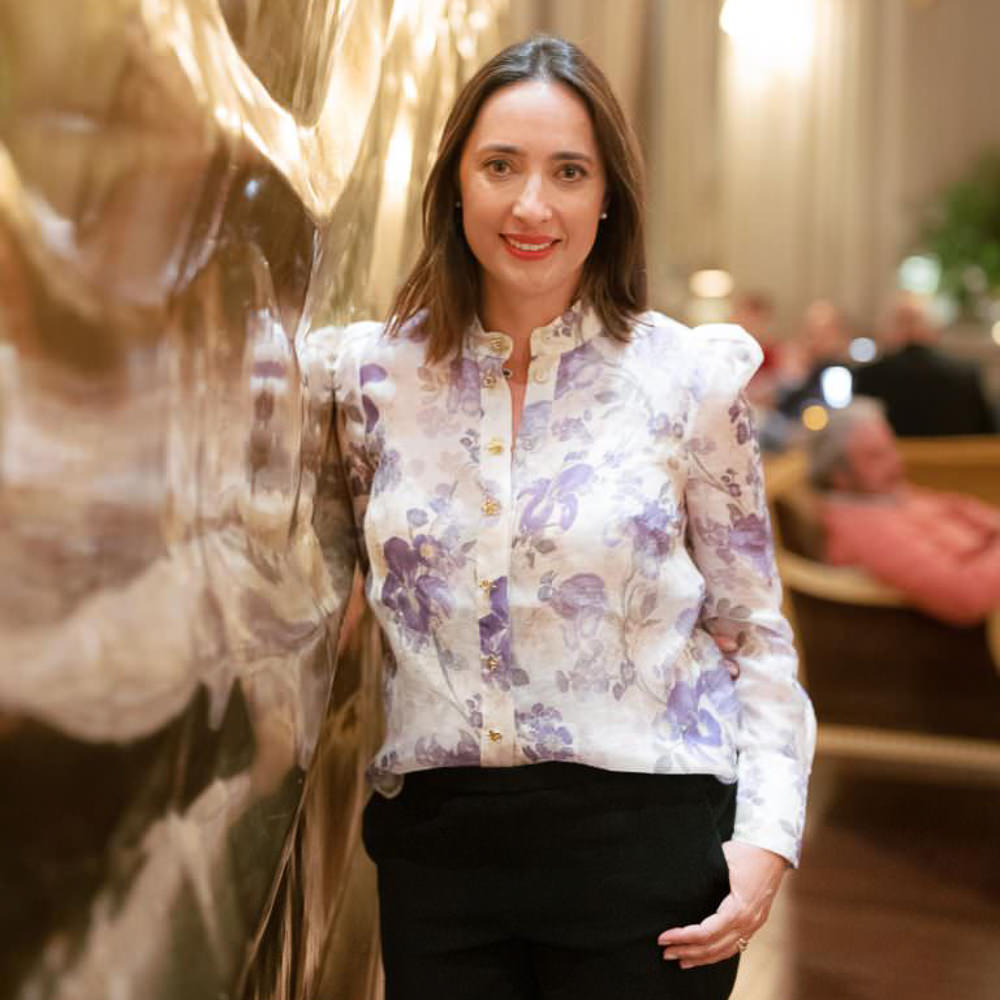
Jasmine Lazzari PlanningThe Wedding Co Portugal
summary
Jasmine Lazzari's career reads like a masterclass in understanding what luxury actually means. She spent years in the heart of London's fashion and luxury industry—Cartier, Chloe, Hermès—surrounded by the signals of exclusivity that most people mistake for the thing itself. But working with these brands taught her something more valuable than any Instagram following could convey: luxury isn't about the logo. It's about how you make someone feel.
When she moved to Portugal in the early 2000s, the wedding industry barely existed. There was no vocabulary for it—the word "wedding planner" didn't exist in Portuguese. What she saw wasn't a problem, though. It was an opening. Here was a country about to discover destination weddings, with the climate and architecture of Southern Europe, but without the infrastructure or the people who understood how to deliver at that level. So she built it herself, bringing with her not just technical skills but something more fundamental: a philosophy shaped by years of working with the world's most demanding clientele.
The conversation around luxury in weddings, though, reveals something more complex than it first appears. Jasmine articulates what many in the industry sense but struggle to name: luxury isn't exclusivity by scarcity anymore. You see Chanel everywhere now. The feeling of distinction has evaporated. Real luxury—the kind that justifies itself—has migrated upward to brands like Loro Piana or Brunello Cucinelli. These aren't louder brands. They're quieter. More refined. The service is impeccable, the attention to detail is obsessive, and the experience leaves you feeling like you've been understood at a deeper level.
But there's a particular grief in what Jasmine articulates about Portugal. The country has infrastructure and talent, but it's fragmented. Hotels don't understand international clientele. Rental companies have become wedding planners by accident, not by studying the craft. Venues are overbooked or unsuitable. Musicians come in without understanding that international clients expect a certain level of visual production alongside the music. It's not that Portugal lacks capability—it's that the pieces don't fit together. And clients feel that lack of coherence.
Her approach to building The Wedding Company reveals someone who understands that service is the true luxury good. She surrounds herself with people who have been with her for over a decade—Marta, Luís, Paulo—because she's learned that you can't change people, but you can understand what they do well and build around that. She takes care of her team visibly: she buys them good clothes, invests in their presentation, because she knows that a clumsy appearance contradicts everything else you're trying to communicate about care and quality.
What's striking is how she navigates the tension between following trends and remaining timeless. She's skeptical of blurred photography not because it's trendy, but because it often lacks purpose—it becomes decoration without meaning. She thinks about mixing the modern with the 18th-century aesthetic she loves, letting things breathe visually rather than throwing every idea at the page. Perhaps most importantly, she's learned that the people who end up working with her long-term are those she's met socially, face-to-face.
key quotes
"Luxury is a feeling. It's how you make people feel. It's refinement. You can only be refined."
"When we see something everywhere. The feeling of exclusivity is lost. That's why brands like Loro Piana, Bruno Cuccinelli, they make a very subtle shape."
"People don't care about how you look, they care about how you make them feel. You remember how somebody makes you feel."
"Everything has to do with taste, with a specific taste. And everything has to do with being a brand, as if it were a Chanel, Loro Piana, Gucci, everything, and the person chooses to enter the door, he likes it, then he sees the price, he accepts it."
"It's hard to be simple. Because deep down, people complicate a lot of things. It's simple, just keep it simple."
"We can't change people. If we can't change ourselves, how can we change people? We have to understand what they do well and build around that."
"Cheap is cheap. There's another fantastic sentence that says, the best things in life are free. According to the best, they are very expensive."
"If someone wants it, it's because they saw something that reflects a part of that person, in our products. Be it the invitations, the photos, something attracted that person."
transcript + show
episode: 7 title: "Ep. 7 - "Luxury is a feeling", com Jasmine Lazzari" pub_date: "Mon, 13 May 2024 05:00:00 +0000" original_language: english source_audio: "666d86eb.mp3"
Hello, welcome. I'm Rui and this is the DUEQ Podcast. This week my guest is Jasmine Lazari, Wedding Planner and Founder of the Wedding Company. If there is someone with authority in the area of planning in Portugal, that someone is clearly Jasmine. In this area that has grown so much in recent years, both in terms of the number of professionals and the quality of the services they offer, Jasmine represents for me the foundation and the foundations. But let's not waste any more time, follow me in the conversation with Jasmine. Hello Jasmine, how are you? Hi Rui, I'm fine, and you? Also, thank you. Look, I have a little introduction here that I prepared for you. You were the first Wedding Planner we worked with, almost 10 years ago. I don't know if you remember the wedding, it was Dana and Rui. Yes, yes, in Guimarães. At Santa Marinha da Costa Inn. And since that moment, for us, the quality of your work, of your work, has been etched in our minds. The detail, the care with which you dedicate yourself, has always been an inspiration and also a source of learning. Thank you. And the little comparison I'm going to make now wouldn't be useful for anyone, not even a little, everyone would understand. But I think, as far as your professional past is concerned, you are able to understand. Virtually everyone has heard of Cartier or Rolex. Yes. And the vast majority of people think that this is the maximum limit of exclusivity or luxury. However, when you study the market a little better, you realize that there are others, a few steps above, that elevate the quality, the art, the exclusivity and all that to a new level. Like Patek Philippe, Audemars Piguet or Vacheron Constantin. You know everyone's names. Let's say I'm in love with jewellery. Of course. But it's at this level that I put you. And that's why it's such a pleasure to have you here today. And that pleasure and pleasure that I have to have you here is hard to describe. So, thank you very much for being here, thank you very much for accepting this invitation. Thank you very much, Rui, for inviting me and I have the pleasure of talking to you. It's been 10 years, I can't believe it. I think it's been... Nine. I think it's been nine this year. I think it was in 2015. I'm not sure if it was 2014 or 2015, but I think it was 2015. And now, a funny detail from that day. You said something that has stuck with me in these nine years. I remember because I already forgot. Obviously. Exactly. But this doesn't have much importance, but I sometimes remember random things. But I already know the answer. I already know the answer, but I already know the answer after reading your interview to Vogue. At the time, you said, we got married, it was all abroad. Right. An incredible day. Yes. And you told me that you had never had a rain wedding. You said, it's not going to rain because Wedding Company has never had a rain wedding. However, you already had. We didn't have rain weddings. We had rain welcome dinners. In the most unexpected moments possible. That is, at the end of June, during Lent. Things like that. But weddings, on the day of the wedding, rain, rain... No. Until now. Of course. This year it's totally strange. So, you never know what's going to happen. Yes, but I think the weather is getting more and more strange. But was that what I told you? Yes. Yes, it's impressive how, during nine years, this stayed in my memory. I told you that I remember things a bit randomly. But it really stayed in my head. I have some questions prepared for you. Go ahead. Let's start from the beginning. Not exactly your beginning, totally, but to have a base. But it doesn't seem like it. I realized that you worked for a good period in luxury brands, in the luxury market. What did you do? What was your position? What was your job in these industries? Well, first of all, I was born in Italy and grew up in London. I studied... I did my bachelor's degree in London. And when I finished the course, I had already left home very young to go to college and I never came back. So, my path was very independent and I had to start working right away. I was already working during college. I started in an area called film publishing. I was promoting films at the time, which was very interesting. Because the area I wanted to study was theater. I ended up not studying theater, I studied English literature. But I wanted to continue with theater, with films. So, I got into that wave of film publishing. And then I started with the fashion part, public relations. I interviewed myself every now and then for a position in a company. And I worked with a brand, I don't know if you know it, called Joseph. It's a very well-known Italian brand in London, it's very high-end. And with Chloe, and with the company that manages all the eyewear brands. It's an Italian company too, Marcolino. It has Chloe, it has several... It's an eyewear brand. And also part of Chloe. And at the time, we had Burberry. At the time, Burberry was wearing Cherie Blair. I'm so old that the Prime Minister was Tony Blair at the time. So Cherie Blair came to the office and did the tests and everything. So, the beginning of my career was always in London. And I was 21 years old, because I'm from August, so I studied a year earlier. I left college at 21. I already had a lot of work. At 25, when I came to Portugal, I already had four years of experience in London, working constantly. And I say to my daughter, who is in London now, if someone can work well in London, they can work well anywhere. It's like driving a car, I presume, in Bombay or Mumbai, or somewhere totally chaotic. If you can drive a car, you can do it there. I don't say Portugal, because I think the Portuguese are very calm in relation to Italy or France. So I came to Portugal already with some training. And after having my daughter, I had a break for a while. I started, my first job here was with a public relations agency, with whom I stayed for four years. And I started with Cartier's account. I was Cartier's cashier. And the launch of a watch, I remember perfectly, of a Roadster, which is a man's watch, as you know, was at Ritz-Full-Seasons in Lisbon. I didn't speak Portuguese. I understood Portuguese. At first, I spoke a little, but very poorly. And during these four years, I got a lot through this agency. Namely, a very large account, which was H&M. Because I visited the offices of H&M in Stockholm every week, picking up the phone, hello, come to Portugal, come to Portugal, because there was nothing. When I arrived, I was like, where are the shops? It was all in the text, it was all used. And I realized that there was a lack of a market. So it went backwards and we were able to bring a very strong brand to Portugal. And it was very pivotal at that moment for me. So all your journey, before marriage, was already with PR, with public relations. It was Taxapress, yes. And I dealt with the Portuguese press. I sent the press releases. Imagine, someone wanted a Mala Kelly. We had the photos in JPEG, even in the same format, like a slide. How do you say? Yes. It's a slide. We sent it with all the information. We did, I've done many events, even alone. I did events for Hermes, at CCB, many events, press releases, events, many things. Here in Portugal. I already did it in Nones, but here in Portugal I started doing it. So I was already immersed in the field of fashion and luxury. And Cartier also has an art foundation, which I was part of. I also had the perfumes. Then I had Hermes and then I had H&M, among other brands, but I didn't do the other brands. So, after this journey, I worked as a freelancer in several events. Namely, one specific event was great, which was the Laureus World Sports Awards, which is a group, which Cartier organizes. And the Laureus World Sports Awards, at the time, the presenter was Morgan Freeman. And all the celebrities came here, including David Beckham, blah, blah, blah. I don't remember. Many, many things. So I went to a series of events, a very intense project, for a short period of time, three or four months, but we're talking about 10 hours a day, every day. With an international team, in addition to the people here. And I started working, working, working. In 2006, I thought, wait a minute. Hold on. Let me just ask you a question. All this before you were 30. That is, at this time you were about 28. Yes. No, I was 29. No, 30. 30 years old. 31 years old. At the age of 31, the idea of the Wedding Company came up. So, how did that come about? Was it a light that lit up? No, it was a lot. I've always lived a lot, because I'm not from here, I'm a foreigner. So I have family in London and Italy. My father also lived in Rio de Janeiro for a while. And I read a lot. I'm a person who always reads, I read every day. And at the time, I was following the trends of everything that was happening. And I realized that there was a giant industry of luxury travel, but at the level of destination luxury travel, which involved events, where the main market was the United States and England. Because we know the weather in England. How is it? It's the opposite of here. Rain, horrible. And people were always fed up with that weather. And the food, that's it. So they preferred to go to Italy, or France, or whatever. To a certain group of people, obviously. And I thought, damn, there's nothing here, there's no one here who can do that. And another thing, at the time, I got engaged. Just like those brides who only got married once. But during the process, I had to get engaged several times to find the right person. And when I got engaged, at that time, with another person, the idea of getting married in England came up. Because, in fact, I didn't come from here, logistically speaking. So I went to see what was happening in London. And I realized that if I came back to Portugal to get married, there was no one who could do it for me. Because there was no one who spoke the same language. And I'm not talking about the English language. I'm talking about language. Our language. Our new language. And at the time, I spoke to a person who had a company called A Vida Bela. I don't know if you remember that company. Experiences. And he was the owner. And I spoke to him. I remember perfectly well the day, where was it? It was in Berlin. We were having coffee. And I said to him, why don't you get married? Because it's part of an experience. And he said, it's a lot of work. I'm not interested in that. And I was like, everything is work. Everything. Makeup is work. Working out is work. Everything is work, right? And I thought, okay, he's not interested. No one in the luxury area. I wanted to do something that wouldn't step on anyone's feet. In the service segment, luxury, experiences, everything that is beautiful. I love everything that is beautiful. Beauty, for me, is extremely important. In my day-to-day and in life itself. And I thought, well, I'm going to do this. And at the time, it was very clear. I had a very specific vision. And I launched it. And at the time, I invited someone to help me with this path. And it came out in 2012. Now, in 2015. And that's it. A stroke of luck. The only time. It came many years ago. Just one. But you talk several times about the word luxury. And I have this question for you. What is the definition of luxury? It's very interesting. Because it's something that I think about many times. Because it's something that I don't feel is an individual thing. I think it's a collective thing. When we're talking about something that people feel. So, for me, luxury depends on what we're talking about. If we're talking about clothing, I'm going to say that quality is extremely important. It can't be bad quality. What is bad quality? Nylon, polyester, that's it. It depends on the effect, but it can't be. It has to be the touch. It's really a feeling. And comfort. And comfort extends to many areas. It has to have a touch. It has to have lighting. It has to have colors. It has to have everything. Everything that involves something very refined. I think you just said an interesting word about refined. You're talking about quality. And, clearly, to be something luxurious, it has to be. Don't you think it needs something more? Exclusivity? Limitation? Yes. The problem with exclusivity is that there's a lot of accessibility for many people now. I remember a few years ago. I can't remember when it was. I think it was in 2012 or 2015. I bought a Chanel bag. Very pretty. I love it. I've always liked bags. I had a Bottega Veneta many years ago. I already have several Bottega. I have Ursuline. I have Patrice, Mala Ursuline. I have many brands and bags. I've always liked them. But speaking specifically of Chanel. When I think of brands, I think of Hermès. But Hermès is something that I grew up with. My mother always wore a lot of laces. I have a panoply of laces. Hermès is a luxury brand. But it's not like Chanel. Chanel has a different touch. But now I see Chanel. I was in London recently. For example. Where there's a lot of luxury everywhere. Why? Because of the cars. Rolls Royce giants. And Chanel everywhere. And what does that do? When we see something everywhere. The feeling of exclusivity is lost. That's why brands like Loro Piana, Bruno Cuccinelli. Or other brands. They make a very subtle shape. I was at the Loro Piana store. And the Loro Piana store is extremely well lit. In addition to being a delicacy. Impeccable. It's not found in Hermès. And it's not found in Chanel. But it's found in Loro Piana. It's the feeling that is transmitted to people. It's a feeling. Luxury is people. It's a feeling. It's refinement. You can only be refined. A person can wear Chanel all day. But they open their mouth and don't treat the person well. It's not that they don't treat them well. It's a delicate shape. We have to make people feel special. If not, that exclusive part. Everyone now. Relatives, but everyone now. Has the accessibility to buy. If it's not a Chanel wallet. Then a Chanel lipstick. Or a big car. Why? What's the trick? I think you said it all. Your phrase, luxury is a feeling. It is a feeling. It's how you make people feel. It's how you make people feel. And how you feel about yourself. We have to sell that. Without selling. Yes. It's also that interesting part. Luxury is something you want to buy. You don't need someone to sell it to you. You want to sell it. It's a fundamental desire. Essentials. Luxury essentials. And applied to weddings. How do you see the light in weddings? It's a battle I have with this dear country. I see that people increasingly want something that comes in a gigantic way. Weddings of the 50s. 40 million, 40 million, 30 million, 20 million. Let's talk about peanuts, 2 million. And they want to come to Portugal and spend 20,000 euros. On a bad day. And why? And what's going on? Well, let's talk about that in another phase or also today. What do I think luxury is in a marriage? It depends a lot on the couple. And that depends on us listening to the couple and what is important to them. And in a way, educating them too. Saying, maybe instead of investing a lot in wine, let's invest more in a photographer. Many times, luxury depends on the culture of the people too. Because it's something very... I don't say much, but some cultural weight has to do with it, for sure. And I think, in general, people want to have a perfect image of themselves on the day. And they want to feel that perfection. And to have that, you have to have a panoply of people around you who make you feel incredible and fantastic, without having a rainy day. And everything outdoors, and everything fantastic. It's impossible. Do you feel more the need and the need for an image now than a few years ago? It's funny that I've always been very demanding with my image, and with my team, and with the people around me. Because I like beautiful things, and I've always liked them. And I feel that our physical presentation, the way we present ourselves to a client, is extremely important. And the way we present ourselves to ourselves, speaking apart, ok? Many years ago, when I started, I didn't have a reference here in Portugal yet, there wasn't a strong reference of someone who could make images like I imagined. So it was even easier to educate the client at the time, and say, look, let's do something that looks like this. Because they had never seen anything like this before. So, ok, yeah, amazing, fantastic, great. I'm talking about the Portuguese client. Now, our clients have access to everything, probably more than I do, because I don't watch TikTok, so I don't know, I don't have time to watch TikTok. And they have everything, they have Pinterest, TikTok, they have this, they have that. They already have 10 friends who got married, friends. They already have this, they've been to all the sites they can imagine going to. What's the surprise? What's the next step you can take? They've already seen giant things, small things, bands, they have everything. What could it be? What's the next step? There was a wedding in the pyramids, in Egypt. I think I saw it. A week ago. I think so. I'm like, what about the moon? Like, what's the next thing? What can we do to fill this satisfaction, this need? Because, really, what you mean is personalization, that is, trying. At this moment, would you frame it as trying to find what the bride and groom really want, or really expect, and invest in it, and not go to the basis of comparison or do it just because? Yes, I think it depends on the groom. There are grooms who know what they want, and there are grooms who don't know, and there are grooms who have never done a wedding together, and there are grooms who have already done huge weddings together. We have to listen to the grooms. Each person is very different, and we have to try to shape, in a certain way, so that we can put together the right team for these grooms, and understand the bride and groom's personality, the look, the image they want to convey. Everyone wants to convey an image. Us, our ancestors, and the grooms. The image, of course, is of the grooms, but it's all a collective work, it's not something separate. It's all a group effort, and that's very important. Luxury has always been, for me, personalization. Always. That's why, as soon as I started, I could work with, for example, the guests. The people who make the guests. We worked with incredible people, from all over the world, to do something that couldn't be found here. And personalize, and do it in a unique way. This is fundamental. Without a doubt. Now that we've brought these two things together, what did you bring from the experience you had in the market, that you had worked with before, and how did you apply that to what you started doing in Portugal? In Portugal? Yes. Customer service. Customer service, which is very important. Knowing how to deal with this type of client, and not being intimidated, which I am, frankly. I never was. And knowing how to deal with all these issues. This eccentricity of rich people. In short. And good taste. Always conveying good taste. And showing Portugal in a way that has never been shown before. Do you think you have an advantage for not being Portuguese? Yes. In what sense? Unfortunately, people have a lot of prejudice against Portuguese. And this has nothing to do with the tourism in this country, which is being done in a way... The publicity of tourism in this country is in a way... I'm not saying it's wrong, but it's at a level that could be slightly... I don't know. Don't you think that the Portuguese themselves have this limited image of us? Some do, some don't. I think it depends. Those who stayed here, maybe. But as a people. But as a people, don't you think that we... Because I have this feeling that... People who leave and come back, come with a different appreciation or appreciation of the country. Those who are always here, never leave and don't know the country, hardly appreciate Portugal. But that's the problem. You touched on the right issue. The problem is that people who feel that way are people who can't leave and don't leave and don't see. And if they leave, they go to the usual places and don't go back. And that's it. I don't know. In my entire life, I started to travel alone, by plane, almost at the age of four, alone. I'm a person who doesn't... I don't know what it's like to be quiet for more than six months, during COVID. So it was very interesting. You went through COVID here, I imagine. You went through COVID in Portugal. Yes, yes. I was thinking if I was alone, but yes. No, my daughter was alone and then she came back. No, I went through it here. It was fantastic. Fantastic in many aspects and not fantastic in others. But anyway, that's the way it is. I think there's a lot to work on. But I believe, in Portugal, I've always believed, and I believe it's a country that doesn't have its own value. I believe. And I believe many things, but I'm certainly not the only one. There are many people who think the same way. It's very interesting because two of the wedding planners I know who work the most on the promotion of Portugal abroad are not Portuguese. One is you. And the other, I don't know if you know her, is Marlene, from Hello Portugal Events. I don't know her. She's from the Netherlands. She also does a lot of that kind of content. And I think it's very curious, I'm not going to say that the Portuguese wedding planners and even the rest of the professionals don't do it, but it's curious to have two wedding planners who do so much work that they're not Portuguese. It's really funny. But I think, as we were saying earlier, we Portuguese have the habit of thinking that things are only good when they come from abroad. And it happens a lot, in other professions and all that, that only when they go abroad and come back are they good. But I think it's a cultural issue that we see in the little ones. I think it's a matter of being a little more aware of what's going on in the world. We've had access to the internet for many years now. There's no way that a person can't know what's going on in Rio. You can read, you can see, there's so much. So it's a matter of studying, it's a matter of knowledge. I think people have to open their eyes a little and not say, oh, it's because of this, because of that. Because it's amazing. I don't want to learn and see. Because if I want to know something about what's going on in Cape Town, it's going to be difficult, but it's not going to be impossible. I can go and see, and read, and try, and discover, and blah, blah, blah. And I can do it. So I think people have to have some inner motivation to have that other knowledge. No doubt. Now that we've talked a little bit about the community we have and the growth we're having, as I've said before, you were the first wedding planner I worked with. Stop saying that! It's like I've been doing this for 100 years. Those interviews, like, oh, she survived the shipwreck, the Titanic, you know? Come on! That's too much! Anyone who tries to identify your age, at least 7 or 10 years less, so you don't go that far. But it wasn't like that for a long time. It was 9 years, right? When I had the conversation with Sofia and André, I also started to say, I've been working on this for 20 years. I'm only talking about 9, so it's fine. But what I wanted to ask was... The community. You were the first one we worked with. We've worked a lot together, but I feel that in the last, I don't know, 3, 4, 5 years, there was a huge growth in quantity and quality of wedding planners in the market. How do you see that growth? How do you see that community? It's not really my community as a photographer, but how do you see your community in that sense? I don't see it as a community, because in reality I talk more about wedding planners outside of Portugal than here in Portugal. I see that, as there is no regularized standard of value practice, you never know what's going to happen. And this means that in the market, it's very unstable. A person can charge 2,000, another person can charge 8,000, another 40, and another 25,000. It's a very large panoply. In a very small country, we're not talking about a country like the United States, for example, which is much bigger, and has many other areas, we're talking about a small country. I feel that if there really is a community, it's something that defines it. We're not going to be subject to this question that foreigners come here to get married, to make fantastic, beautiful marriages, for a third of the price they make in Northern Italy, or Southern France, or I say Northern Italy, because the prices are different in Laglicomo, Venice, Florence, than in Puglia, for example, in Sicily. And you have to have a little more community. Firmness to say, no, I don't accept to work, we never accept, because we only work for a certain amount of money. But I'm saying in general, to maintain a level, to put a better level, and not to accept these things. Not to accept that people come to Portugal to say, we have money, but we don't want to spend it with you, because you are Portuguese, and we think you don't deserve it. That's what people do, many times, literally. And we say, oh, okay. No, it's not okay. So, bye-bye. Or they come back twice as much. Bye. That's a community. The community here is not very united, I feel. It's a little bit everywhere. And there are many people who, contrary to other wedding plans in the United States, there are no wedding planners who also have rentals. For example, the Portuguese rental companies I started working with, had no idea what wedding planning was. By the way, the word wedding planning, I had to go on TV, I did several interviews on TV, and the question was, what is being a wedding planner? And I was like, wow. I had to explain, wedding planning, because the word didn't exist, in the language, in our vocabulary. And now, these original companies, from many years ago, that started as rentals, also do wedding planning, which is great. But there it is, it confuses the market a little bit. Because I know they don't charge a fee, it justifies, it's not a fee that can be compared to a wedding planner, just a wedding planner. This is not good for the market. Do you understand what I'm saying? Yes, I understand. But do you think we have a way? Do you think we are on a positive path? Or are we still at the beginning? No, no, no. I think we are on a very positive path. The problem we have, in Rui, is much more practical than that. It is a country that lacks places to get married. It lacks spaces. We had, a few years ago, an incredible palace in Lisbon, where we had many weddings and parties. The last party we had was a welcome dinner by an incredible client, in 2016. And it was the last party, we were the first and the last to open the space, which was a St. Vincent outside, in Greece. An incredible palace, which was later sold to a particular artist, and he lives there. Nice. Except for the palace. The Marquês da Fronteira Palace is now in a phase, as you know, if they are going to accept it or not. The Marquês da Fronteira Palace also has its limits. So, if we are talking about palaces, which for us, for the wedding company, is extremely important, to have an offer for our audience, we are talking about Palácio de Coluz. Palácio de Coluz, in Hawaii, has no vacancy. It is totally booked. Yes. Ok? So, what do we have? What do we have? This is a problem. So, the government should think about it. I don't know if there is a palace in the Manga. There must be a palace somewhere. You have to start thinking about it, because if not, we have to go abroad. And that's why we also started going abroad. I feel the lack of space here. You were talking a little while ago about the comparison with Italy, and even in the south of France. Do you think we would have that possibility, because they are bigger countries, with a different economy, but do you think we could play in the same division as them? The other day, I had a conversation with someone, and he, through an event, where he is an older person, and he is an architect, a well-known person, and he talked to me, and he told me that the client had already done the first wedding of the daughter in Eden Cap Rock, that hotel in the south of France. Less than a million, you don't put your foot in there. You have to have a million, if not, they will close the door on you. The daughter got married there, the first daughter, the second daughter, she doesn't want something like that, she wants another type of gender, blah, blah, blah, a little bit more, okay? And he said, his sentence was, if she wants something like the south of France, the south of France goes to Italy, not to Portugal. So, in people's heads, Portugal cannot offer what the south of France offers. We, I feel that, with the right teams, in the right place, we can do it. But I know, because I have spoken to other international wedding plans, they say, they are afraid to come here. They are scared to come to Portugal. They are afraid. Why? Because they don't believe that they can have the service that they have in other places. And, going back to the beginning, which is luxury, luxury is service. Service, we are not talking about wedding plans, because I feel that if we have many competent people, doctors, the sponsors here are extremely competent. I think they even work better in many areas, honestly, than I saw. Because they don't take that as a guarantee. It is something that they feel that they had to work a lot to get to that point, and they really want to dedicate themselves, compared to other countries, which is already, ok, it's another one, let's do it. I can do this. It is more a confidence that I still don't feel here. But the hotels, the hotels here have to have a huge breath of fresh air. The hotels here are breaking a lot of things. Breaking, I don't know if that's the right word, but they are breaking, breaking a lot of things. Because the service in a hotel like Capit Rock, or The Four Seasons in Florence, is incomparable to any other hotel. And we have good hotels here, I'm not saying they are bad, but the service is good, isn't it? And the food, the food. You are talking specifically about weddings. Yes, I'm talking about weddings. And in general, it's a good hotel. and the food, and everything, the physical aspect, the environment, that we have a lot of potential. But going back to what you also said, the Portuguese don't understand what they have. The hotels don't understand, and they don't want to improve, or they don't know how, or they go to get it. It's all a mess. I don't feel that they are prepared. To do events for people from outside, you have to know what they want, and what kind of event it is. And there are events here, that I see, where you have to cut your wrists, literally, run away, cut your wrists, jump out of the window, and never come back. Like in a cartoon. And there are others that I think, ah, ok. Now, I feel that I loved, I always had the vision, of putting Portugal on the map, as a destination for weddings. But not bad weddings, good weddings, with good sponsors, and everything fantastic. But it doesn't depend on me, and half a dozen sponsors that I have hired. It also depends on the place, the hotel, the catering, everything, a set of things. I'm not saying that the catering is bad here. In fact, there is one that I particularly liked, that I'm going to talk about, it's from the North. But I'm not saying that, I just feel that people go with a bit of a commotion. Ah, so now this is it, let's not go this way. Ah, now this is it. Just think. Think a little. To have a more focused, and more long-term vision. Touristic, too. In one of the conversations I had with Ivo, he told me that one of the problems was the professionalization of our... Yes. Of our... There it is, of our professionals, going over the top. And he said that it wasn't related to the quality of the people, of the professionals, but exactly like that, with the professionalization, when you say, this is my profession, and I'm going to study what is necessary, and I'm going to declare myself as a professional of this. Do you think this is one of the problems? I think the problem here is the lack of knowledge of what is practiced, and what is the... I don't know, a parameter? A standard. A standard. I think the lack of knowledge is deep, in general. In the world of hotels, at the level of who are the clients who come here, what kind of client, how can we communicate with the wedding planners, the wedding planners also... Now, as there are many more, they are in competition, so maybe I'm going to lower the price, or I'm going to do this, or I'm going to do that, they mix everything. I think it's a bit of ignorance. Of course it was important to have a professional part, but I think it's not... Then I see in the United States, it's not that thing of I'm a professional wedding planner. It's not like that. The professional wedding planner in the United States has more clients, it's just because they've been in the market for many years. We have to remember that. We're talking about people who have been in the market for 20, 25, 30 years. I think the market is still very young. Portugal has always had that. It grows very quickly. It gets in the way. I remember everything about technology, it's something that people absorb a lot here. They want to have it, and they want to have it quickly. And that desire to have it very quickly, I understand. Because it's something that is almost a thirst of people, but then they don't have the right steps, and it gets in the way. Yes, it's an unsustainable growth. I think so. I think this year we're going to see a big difference in many things. This year has been very different in terms of events. I don't believe that if I talk to someone, I'm very busy. I don't believe that. Because I think this year is different compared to last year, the previous year, and the other years. But I feel that people have a lot to learn from each other. More than showing what they have. And that's lacking in the community. Yes, I totally agree with you. So, when you talk about comparisons, about showing what you're doing, we have... I think we have a common problem, which is sharing and doing marketing for our peers, instead of for our clients. We all show what we do just to show what we're doing. And then we do it without focus, without purpose. And now that we're talking about that, I was talking about the difference that people have in terms of knowledge of those brands like Cartier, Omega, Rolex, and then the others, Patek Philippe, Audemars Piguet, and Chirão Constantin. And going back to that comparison, because I think it makes sense to me, your company, The Wedding Company, is not one of the most media companies in terms of social media and digital media. However, in my opinion, you've done some of the weddings, bigger, more exclusive, more interesting, here in Portugal. And what I'd like to ask is how do you navigate that market going a little bit I don't know if it's counter-current or simply in other ways, how do you navigate your market? How do you position yourself so that your clients find you? Yes, this question is very interesting. We may not have a large number of followers, but our followers, there are people who follow us, many international wedding companies that only follow us, they don't follow anyone else here in Portugal. And so, since I personally know many of them, and since I not only know them personally, I keep in touch with many of them, that opens up a network so that they can contact me, talk to me, to come to Portugal. I feel that everything, everything, everything has to do with taste, with a specific taste. And everything has to do with being a brand, as if it were a Chanel, Loro Piana, Gucci, everything, everything, and the person chooses, chooses to enter the door, enters through the door, he likes it, then he sees the price, he doesn't like it, he likes it, he accepts it, and he will launch it. If someone wants it, it's because they saw something that reflects, a part of that person sees a reflection of it, of him, in our products. Be it the invitations of the weddings, the photos of something, something attracted that person. If a person has a good eye and can read, he will, or she will, but I think it has more to do with the brand. I would love to have a company that dealt with the digital part of my company, but I don't feel there's anyone here in Portugal doing that. I don't feel it, I don't feel it, I know there isn't. Because language, it's all a matter of mindset, and language, and I don't feel there's anyone. Much better now than a few years ago. And I have people I know who do excellent behind-the-scenes networks, and I hire during the weddings because I never take photos on my phone, but I don't feel there's anyone who really knows the positioning I want here in Portugal. Because my positioning isn't here in Portugal, unfortunately. It's for people like me, an international person, I would love to do some Portuguese weddings again, but it hasn't happened. But you know why? You're essentially made of foreigners, right? Yes. Many times I have people who call me and they're from Porto, they're from the North, and even if they don't know me, as you know, I go there often. And they aren't prepared, the client isn't prepared to have a conversation with someone who isn't from the same city. Even if they know they can hire a wedding planner from Porto, a wedding planner can't have so much visibility, or can, but hiring someone from Lisbon, it's like guys from South Australia, it's the same thing. They're not prepared. And they say, it's too far, and it's not up to here. I say, but nothing is up to here. But that's a really fun thing, because you have a country where you literally leave your little breakfast, you go have lunch at the other end of the country, and if you want, you're still at home having dinner. And how do you manage to say that this is too far? The issue of comfort for that person, psychologically, of having someone close, has to do with personality. Everything has to do with taste, personality, it's a very subjective thing. And that's it. But back to the question I asked you, your clients come to you, from the perspective of the international contact network, but they come to you more digitally. I always ask how you found us, those who are interested. They have to fill out a form. Many times, I think it's Google and Instagram. And sometimes, we had recommendations, someone recommended us. And then I ask, who recommended a person who lives in San Francisco? And it's funny, it's very interesting, going back to how people feel. Because I had a conversation with a person who said, during COVID, I live in Chicago, I don't remember, I don't even remember what I did yesterday. So I talked to someone and I really liked the conversation, Jasmine was very nice, and I'm usually nice, otherwise I wouldn't do this job. And she really liked you, and I remembered, and I thought, it's how you make people feel. How people feel, make sense. And she said something, a quote, I don't want to kill it, but it says something like, elegance is not how you look, it's how you make people feel. People don't care about how you look, they care about how you make them feel. You remember how somebody makes you feel. I remember the first site I did, I've done many sites, I remember perfectly, I'm laughing because it was interesting to do the first site of Worrying Company, which had written it's hard to be simple. And it comes from Amália, your Amália. And why did I write that? It's hard to be simple. Because deep down, people complicate a lot of things. It's simple, just keep it simple. Without a doubt. That's what I thought. Now I'd like to change a bit more. As you know, the podcast is very inward, we talk to the community, to our colleagues, and one of the big pains that I think we all feel is the growth. You touched on that a bit, you started with another colleague, who in the meantime you have a team of 5 people, and one of them I know very well, who is Marta, who is incredible. I imagine you've already met other colleagues, but by name, I also met Sofia, who got married to her. But Sofia is no longer part of the team. Yes, I know. For a few years. Basically, my question is, how do you find the person who will help you? How do you deposit, how do you go from being a one-man show, or in this case, a one-woman show, to delegate... How do you go from this complete and total responsibility to learn how to delegate and learn to share responsibilities? First of all, obviously the company is mine, but I don't feel it's only mine. For example, Marta works with me for I don't know how many years, I think it's 12 years, I don't know, I'll have to ask. Every time I ask, I forget. At least 12 years. The other people aren't there all the time. It depends on the projects we have. But Luís has been working with us for over 10 years. Teresa joined relatively a few years ago. And Paulo Ferreira has been working with us for over 10 years as well. I think it has to do with, again, how much we share our work. I give a platform for people to stay. I give a... I can be the director, but Marta has her job. She has an essential job. Luís as well, in the days of the wedding, and Paulo before that. All of us are like pieces. And without those pieces, it won't work out very well. But was it difficult for you to distribute those tasks? No. What I find very important... It's difficult to work with many people. I feel that... Because you always have to give energy to many people. I feel that we have to understand who does what well. Not all people do the same thing well. That's the most important part. To understand, this person knows how to do this, while that person doesn't. But they complement each other. That's complementary. For example, I don't do Excel. I don't cheat with numbers. I never cheated with numbers. I have a terrible memory with numbers. But I don't do Excel. I don't do it. After 17 years, I won't do Excel. But I do other things, like not cheating with numbers. There are many things that we have to see. What is good about that person? What can't we change? Because we can't change people. If we can't change ourselves, how can we change people? Tell me. If you can change people, tell me the trick I'm going to do. We can't. As we change the client, we also have to change our team. We have to understand where we can stand. Obviously, I treat my team well. Americans talk a lot about being kind. Of course you're being kind. We're talking about working 15 hours a day, 15, 16 hours a day, day after day. Last year, we had a week that we never had like last year. We had a celebrity wedding. You know who it was, right? Then, the next day, we had three days of wedding where we had to put everything from one place to the other. Tents and everything. And wait for it to rain. It rained, but only at midnight. It was a tent. I didn't care. And to have everything in a well-oiled machine, without saying the word, a well-oiled machine, we have to count on people. If I didn't work, if I didn't do anything, no one would. No one would tell you. So, in a way, the energy we put in is what we're given. Energy and many other things. But I have very high expectations from the people who work with me. I work a lot. I always worked a lot. I feel that the people around me also have to make that effort. If they don't, it's not possible. It's not easy at all to keep a team with the quality you have for so long without creating aspirations to go out and do their own thing. Because a lot happens in the market of marriage. It happens. For example, I already told Marta if she wants to do something, she always has my support. Now, I doubt that she will want to start a wedding company. It wouldn't make any sense. But we are free people. It's very important to be honest. And also, the market for me is not only for weddings. It's also for parties. It's also for making manchurian, which I do with a lot of effort. I do it because I like it a lot. It's not just for weddings. For wedding planners? Yes, for wedding planners and for hotels. And also, everything that has to do with a wedding company. but everything that has to do with customizing towels, patterns, everything that has to do with fabrics, linens. You in Guimarães have that, in the mountains, the ears can no longer handle the fabrics, and the guardraps, and you have incredible companies doing it. But there has always been a lot of trade in the North, that way of working has always been there. Yes, and the textile issue of Portugal is here, so there is always a big difference. Changing a little bit, but not much, one of the things that you already talked about a little bit, but in the interview with Vogue you talked about the issue of the bands that we don't have in Portugal. Bands with... A repertoire. With the repertoire, I don't know exactly what you were referring to, but you constantly have to... What do we lack? Ok, I'll be very specific. Our clients are not from here, they are not from Portugal. They are people who live in London, or live in New York, or live in Los Angeles. Most people, or maybe Hong Kong and France, it doesn't matter. But they are people who live in big cities. Occidentals. Who grew up with music that was different from the music of the people here. And going out, going to a disco, is not going out in sneakers and pants and a white shirt. To be a man. To be a woman is not... It's a highly sophisticated production, like Beyoncé or something. Let's go to a disco looking like Beyoncé or another superstar. And dance and have a band, if there is a band in a disco or a bar, which is also highly produced and fantastic. It's not a band that comes with a t-shirt, badly dressed, without makeup, badly dressed. And it's not a band that can be amazing musicians. By the way, my old violin teacher plays here. He is the maestro of São Carlos. He plays with us. I studied music, I studied piano and violin. And he is amazing. I need to have a band that is, in addition to being excellent musicians, and having a repertoire that is more R&B, hip-hop R&B, something more contemporary from that time, or something like that. I need to have a very well-arranged image. And I didn't find one. I've worked with many different people and there are amazing musicians here in Portugal, that I know personally, and amazing people. But in terms of music and bands, we had to send bands from abroad several times. From afar, namely. Because it's a set of things. Do you understand what I'm saying? Yes, now that you say it, I really understand. And I think that you will agree with me when we make that connection, even with photographers and videographers. Because we've been working together for some time, since 2010. And there has been, in recent years, if at the beginning, for us photographers, we were almost ashamed to say that we were wedding photographers, because it wasn't clearly the most glamorous part of the thing. In recent years, you've had many incredible artists, and a lot of quality people coming in. What I feel is that the look of an artist has also come. What you say about being clumsy, or simply a style... Disgusting. Yes, we're not going to get into big issues, but that are not suitable for a wedding day. No. There are people who are dressed in tuxedo, and long dresses, who paid thousands and thousands and thousands to have a clumsy person in front of them. I mean, it doesn't fit well. It doesn't fit well. It can't be. There it is. It's the lack of knowledge, and the lack of connecting the dots. It's so simple. You know, when Luís, who works with me, started working with us, there's a store on Lisbon Avenue, a brand... Can I talk about brands? You can talk as much as you want. Zegna's sister, which is an Italian clothing brand. So, we had gone there many times with several grooms, to the point that, when I went there, I talked to them, and I said, there's a person who's going to work with me, and they offered the suit, the tie, and the shirt to Luís. Luís is going to hear this and laugh. He's grown up a lot now, and I can't even talk about him, I've spent a lot of time with him. They offered me an amazing suit from a brand, it was like a present eager. And why? Because they wanted it, because he was a good client, and because he hadn't offered anything before. And I thought, great, this is what I want. I want my team to be wonderfully well-dressed. I buy clothes, clothes from abroad, I give value to people, people have to give value. Does it have to be expensive? Yes, it does. Sorry. Cheap is cheap. There's another fantastic sentence that says, the best things in life are free. According to the best, they are very expensive. Exactly. To finish a little bit, with the issue of trends, this has also been a theme, on that side, on that side. But true. I had a question to ask you. You talked about, I think everyone in this world lately has talked about blurred photographs, blur, and all that has been, this in particular is one of the trends that has emerged with a lot of force, and I, as a photographer, it costs me a bit, I'm not going to talk too much about this, but it costs me a bit, a person learns to work with things, learns to work with material, learns to take technically well done photographs, and suddenly it seems that everything is worth it, even if there is no thought behind it. Because it is logical if you have the movement, if you have blur in the movement, it makes sense, but there is one thing that makes me very uncomfortable, which is that you have a blurred center of mass. Yes, no. I can't understand the purpose, but in artistic terms everything is worth it, right? But we are a service, we are providing a service, which is memory. Yes. But I would like you to think about how you see this in particular, and how you see other trends that may be, that you may feel are too strange. I think that trends are something, well, there are people who say, we should do something trendy or non-trendy, and I think people have to do what they want to do, because in 20 years they will go back, and everything is a trend, I don't know if this is a trend or not, but imagine that this is a trend, in 10 years this trend won't exist, they will look at it and say, ah, it was from the years 2024, ah, I don't remember. So, all of this has to do with where we are. Now, the blurred part, I fully agree, there are some images that are beautiful, particularly in black and white, blurred, the lights or something, a feeling, that feeling that they want to convey. But a table, some flowers, something that is not a moment, I think it's a lack of notion, and then people think it's very cool, whatever it is. I had a couple, she wanted to have a photographer who would use that form, and I thought, people don't really know, they see something and go back, they don't think a little, they don't reflect a little. And then I explained, you will have to have classic images, some classic images, because it's a classic event, a wedding is not a blur, it's not a rave, it's a more classic and formal wedding, it doesn't exist, it can be informal, it can be in the middle of, I don't know, a forest or whatever, it doesn't matter. But it's a little formal moment, especially if it's in a church, in a religious place, it's even more formal. And how do you think we can show, in a decent way, the modern and timeless? How can you show, have a combination of images that show that, and maybe have a moment, I think I see a lot of moments before the bride and groom, having a photoshoot with the bride and groom, it's funny, I think that's more of a trendy thing, with the two of them, I see that a lot, before the wedding. But not only in relation to photography, how do you think about the mix, even in the event itself, how do you think about the mix between the modern and the timeless? Well, our aesthetic is very... I love everything that is from the 18th century, so for me the 18th century is fantastic, but we are not living in the 18th century, so I have to mix the modern with the 18th century. And if I see that, I have to think about the colors, I have to think about the fabrics, the textures, the shape of the objects, and mix it all. I feel that it can be mixed. Now, I see a lot of confusion in a table, sometimes, I see a lot of patterns, I don't say a lot of patterns, but a lot of textures, patterns, colors, then blur, then things, I think it has to be something a little more... it lets you breathe. How it makes you feel? Yeah, it makes you feel. That's how it makes you feel. It has been an absolutely amazing conversation, and I'm going to ask you one last question, and this one is really... it's almost a joke, but I think it will help a lot of people. I think it will probably help you, but I think it will help wedding planners in general. I imagine that you have dozens, perhaps hundreds of messages, emails and all that, all kinds of professionals, photographers, videographers, everyone trying to be included in your list. Yes. So, my question is, what is the best way for people to present their work? How do you feel and how do you like to receive that presentation? I think a direct email to me, or to Magda, is better than an Instagram email. I know it's terrible, but I delete everything I can't. I can't answer anymore. I can't. And then, a social meeting. I know it's difficult, because not all people are social. I have a social agenda, sometimes filled, sometimes not filled, but trying to find the person and talk, simply talk, not talk too much about... It has to do with how we give ourselves as a person, if we like them or not. Rarely do I let my fiancés choose the photographers, in this case, especially the photographers. And I had some fiancés who chose the photographers who have a very good name in the market, they are not from here, they are from abroad, and I didn't like their experience at all, because they didn't... Simply, it was like... It was like an operation, entering and leaving, almost a clean-up operation. And there was no touch, there was no social component, there was no friendship. And that, for me, is very important. Perfect. I think it's a great way to finish. Be nice. Look, I shared my gratitude with you at the beginning, because you accepted the invitation to be here today, and I do it again. Thank you very much. It was an incredible conversation. It was incredible. And I'm sure that... I'm sure that whoever listened to us, whoever listened to us, I think it will really take away a lot... I've already taken away a lot of things, and I think everyone will take away a lot from your experience and from what people are going through. Okay, count on me. Once again. Thank you. Thank you very much. Bye bye. Bye. We have reached the end of this episode, and if you liked it, I ask you to subscribe to my podcast, and see you next week.
New episodes, twice a month. Be the first to hear them.