
Episode 9 · Season 1
A importância de saber viver
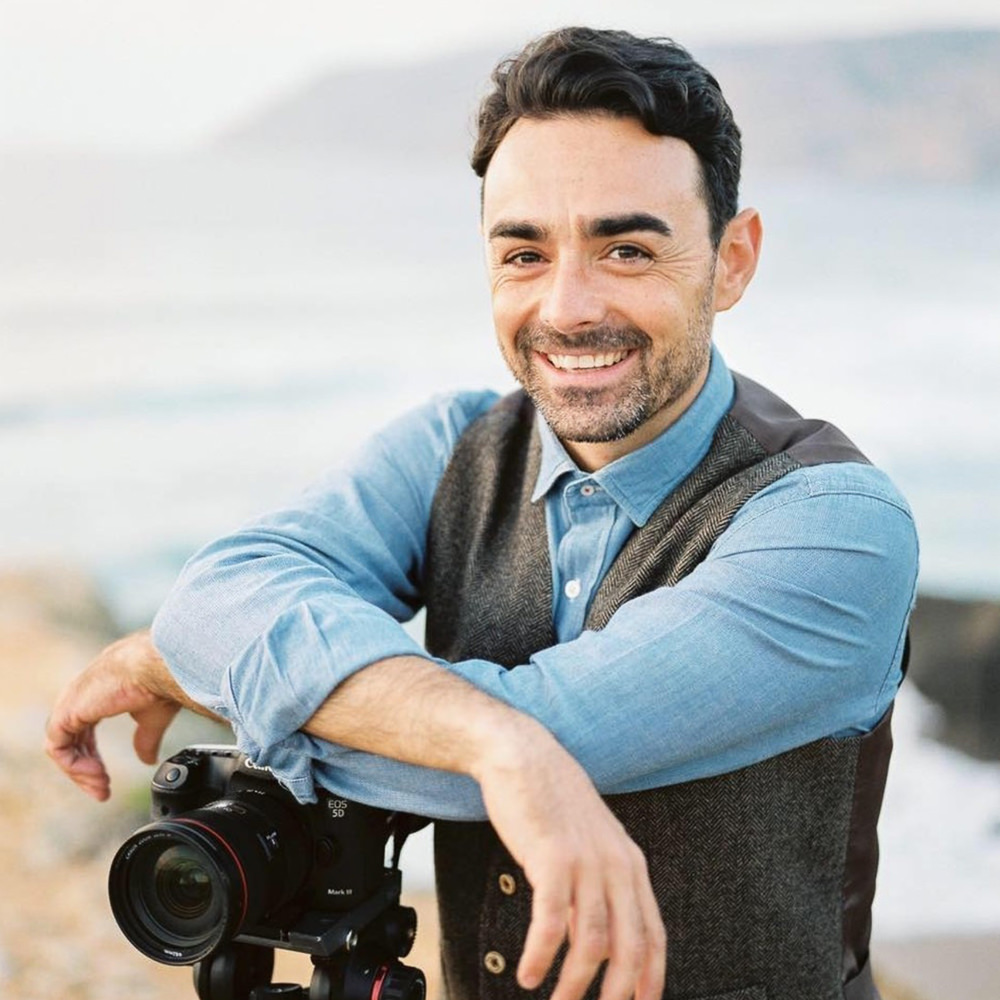
Carlos Ferreira VideographyVideoart Storytellers
summary
Carlos Ferreira sits down for a conversation about what he's learned over 20 years of running Video Art Storytellers, and it's clear that his journey has been less about building an empire and more about learning to live well while building one. The conversation opens with Rui and Carlos reflecting on their first wedding together in October 2011—nearly 13 years of collaboration that's taught both of them more than any business school could.
But the real heart of this episode emerges when Carlos reveals the turning point in his life: a crisis born from relentless overwork. He describes hitting a wall—losing a relationship after eight years, not because of external factors, but because his life had become exclusively about work. There was no space for anything else. That moment forced him to ask the question that matters: what does it actually mean to live? And he realized he'd been postponing life, waiting for the magical moment when he'd "get there" before actually starting to exist.
What emerges is Carlos's framework for recovery: health first (the foundation of the pyramid), then learning to delegate, then redefining success itself. He went from managing 64 weddings in a single year with multiple teams—a figure that speaks to ambition but also to burnout—to creating a smaller, more intentional operation where he films alongside editors like Pedro, Tânia, Miguel, and Alexandre, supported by virtual assistant Carla Frias handling the administrative load. The shift wasn't about becoming smaller; it was about becoming sustainable.
Perhaps most interesting is how Carlos describes his evolution on success. He moves from wanting to be "the number one videographer" to wanting to be better than he was the weekend before. From competing against others to competing against himself. This mirrors something Rui explores later—the idea of the infinite game, where winning isn't about reaching a summit but about staying engaged in the game, doing work you love with people you care about, being paid what you deserve, and continuing to matter in the market.
The conversation gets deeply practical when Carlos walks through how he's codified his philosophy within his team. Video Art, he explains, is built on four pillars—people, place, plot, purpose—and these aren't marketing language. They're embedded in everything from pre-production meetings with couples to the editing process itself, where editors work through a rough cut phase (based on emotional richness and those four pillars), then structure, then fine cut. Even as his team has grown, this philosophy travels intact through every project.
What strikes you listening is how much Carlos respects both structure and freedom. He reads Tony Robbins, Robin Sharma, Simon Sinek. He understands that to have the freedom he values—to choose clients, to take days off, to prioritize what matters—he actually needs structure. But he admits the struggle: the paradox between needing order and craving liberation is a daily tension, especially with three kids and a partner who works alongside him in the business.
Toward the end, the conversation turns to community. Both Carlos and Rui lament the loss of what once existed in the wedding photography and videography world—a genuine sense of people supporting each other, meeting regularly, sharing challenges, celebrating wins together. Carlos remembers gatherings like Fun Shop (organized by Sofia in 2011) and a weekend trip to Fornos de Algodões where a small group of colleagues came together. He suggests something simple but powerful: meet once a year. Not as competitors or strangers on Instagram, but as people who share the same beautiful struggle.
It's a fitting note to end on. Because what Carlos has learned in 20 years, and what this conversation makes clear, is that the real success isn't the videos or the reputation or the client list. It's the ability to show up as yourself, to be present with people who matter, to keep growing, and to know that you're not alone in the journey.
key quotes
"I thought that in order to get somewhere, you had to work in a completely disheartening way. And there was a certain moment when I thought that my focus should be work. And exclusively work, and dedicate myself 1000% to work, put in the maximum hours, put in the maximum effort. What happens is that I think that's counterproductive, because that makes you run out of energy, it makes you, at a certain moment, lose the reason why you're doing that."
"What matters is to find a balance between all the dimensions of your life, to integrate those dimensions, and without a doubt, someone who is constantly working as I was, in all its dimensions, is not at a completely healthy level."
"One of the great lessons. When that relationship ended, was that click that told you, this is really asking me to change."
"Learning to delegate was essential. If you want to have more time, you can't do everything, you can't go everywhere."
"Success, success for me, is not so much getting to the top of the mountain. Being at the top of the mountain is not success. I think the idea of success for me is being involved in the whole process."
"The simple fact that you're alive, on that path of preparation for anything, for me, that's already success."
"If your happiness depends on success, if you say something that, for you, is success, it's possible to achieve it. If you say success is being alive, how many people are alive compared to those who are dead?"
"A simple thing that could be cool was to meet once a year. I think being together once a year was super cool."
transcript + show
episode: 9 title: "Ep. 9 - A importância de saber viver, com Carlos Ferreira" pub_date: "Mon, 27 May 2024 05:00:00 +0000" original_language: english source_audio: "5dee5a7c.mp3"
Hello, welcome. I'm Rui, and this is the The Wack Podcast. This week I have with me Carlos Ferreira, videographer and founder of Video Art Storytellers. I've known Carlos since 2011, and every time I've been with him, whether it was in the countless jobs we did together or in any other context, two things always happened. First, good disposition. Second, an inevitable desire to be better and better. This conversation wasn't fun, so, without further ado, follow my conversation with Carlos. Hello Carlos, how are you? How are you, my dear? Impressive. Look, let's start here and welcome this podcast of mine, which has a weird name, which is Wack, The Wedding Artist's Community. It's all in Portuguese, but the name had to be in English, or I'm that weird person, so it's all good. It sounds like a lot of money, a lot of money. A lot. But, internationalizing the thing, right? Speaking in Portuguese... Exactly, everything you say in English, all of a sudden, it seems... Exactly, it seems a lot more fun. It has a different look, right? I wanted to start by saying one or two things here. So, you were the first videographer we worked with. Do you remember the date? Man, I remember... I think it was 15... Do you remember the wedding? I remember the wedding, and I even suspect I remember the date. I think it was November 15th, October 2011. It would be... man, something like that. Almost, almost. October 15th, 2011. October 15th, 2011. Yes. In Lisbon. In Lisbon, yes. And that wedding was amazing, for a lot of reasons. And it was with you that we had the most epic wedding of last year, in 2023. Between one and the other, a lot of things happened. A lot of amazing moments, others not so much. By the way, a little aside, as you know, we don't do all the weddings that show up, right? We try to figure out if we are the right team for each one, for each wedding. And we don't always accept when we think it doesn't happen. Except when we know you're hired. If you're there, keep going. And that has two main reasons. First, the probability of it being an amazing wedding is high. And second, even if it doesn't happen, it's going to be a huge pleasure to work with you. We're going to have fun. And it's going to be cool. And you're one of the people we're happy to work with more regularly. Not as often as I'd like, but we have a cool regularity. And we've really learned a lot from you. I've learned a lot from you. Not only what to do, but also what not to do. And there we go. There we go. But among many other things, I've learned to always make an effort to do better. Even when the conditions don't allow it. And I've learned to do it with a smile and good disposition. So I want to thank you from the bottom of my heart for accepting this invitation, for being here with me for a little bit. And to share with those who want to listen to us what I've learned over the last few years. So thank you very much for being here with me. Well, I thank you for the invitation. It's a pleasure. It really doesn't seem like it, but it's been 10 years, 10, 11 years since we had that first wedding. Which went very well. And from then on, it was like a snowball. It was a friendship that was built. It's very funny, because, very curiously, I think that even though it's cool, politically correct to say that it's cool to meet new people, without a doubt it is, all of a sudden, when you work with people you already know, that you have a great relationship with, it's a whole other thing. And it's very funny. And I think we elevate each other a lot when we're at a wedding. There are times when you're like this, with people you have a great relationship with. There are times at weddings where it feels like we're guests. It's very funny. Lately, maybe once or twice, even more. But let's leave that for other conversations. Exactly. Let's do this as a little chat, but I have some questions and things that I think were very useful for me. And I think they can be useful for those listening. We're doing this recording now, you're the fifth person I'm talking to, but your episode will be a bit later on. And with the people I've talked to so far, we're talking to some of the most amazing people. I've talked to Sofia, André, Ivo, Vanessa, and I'm also going to talk to an amazing guy. And you're in this group of people, not only amazing, with amazing professionals, but you're also in this group of guys that have been doing this for 20 years, if I'm not mistaken. Videobard is from 2004. 2004, yes. The first wedding. And what I wanted to talk to you about, what I wanted to ask you is, you've had 50 weddings a year, you've had several teams filming for you, you've had many colleagues editing for you, you've had a big team. At the same time, no, but you've also had the other extreme side, when you were the only one working 7 days a week, every day, what you could and what you couldn't do. And you've also had the other side, where you took 2 or 3 days a week to surf and all that. You've lived in the extremes. And I believe, in some way, you've found a balance in these last few times. And my question is, in these 20 years, in these extremes where you've lived, which 2 or 3 lessons did you learn that are really the most important and that you look back and feel as if they were the most important? Look, I think the most important lesson I've learned is what is truly priority in life. I thought that in order to get somewhere, you had to work in a completely disheartening way. And there was a certain moment when I thought that my focus should be work. And exclusively work, and dedicate myself 1000% to work, put in the maximum hours, put in the maximum effort. What happens is that I think that's counterproductive, because that makes you run out of energy, it makes you, at a certain moment, lose the reason why you're doing that. And in the meantime, I've discovered that it's not so much the amount of hours you put in, it's much more about finding a balance between work and your professional side. Sometimes I'm much more productive working less hours, because I procrastinate less, because... I saw a scene the other day about productivity where someone was saying that the longer you have to do something, the more time you'll take to do it, because you'll end up procrastinating, or stretching it out in a way to fill the time. If you have a much shorter time, you'll end up finding a focus that will allow you to do it in a much more direct way, and... I learned a little bit in a more difficult way, that life can't be just work. One of the things that happened was that I had a relationship... You really had to hit the wall with your head to understand that? Yes, I got to a point where I got a bruise, and I felt that my health wasn't... There was a day when it seems like you stop and look and you don't... You don't look back at who you are. Because you're completely immersed in work, and you question everything, basically, what's important in life. At that time, there was a moment of crisis, I had a relationship for 8 years, and that... Also as a result of that excess of work, and my lack of investment in that relationship, it came to an end, and that forced me to look at my life, and forced me to do a lot of personal growth work. And at that time, the lesson I learned was that what's most important in life is what you do with your time. What is it for you to live? And you're always waiting for that moment when I'm going to do this work enough, and I'm going to get to a certain level, and then I'm going to start living. And it's the craziest thing that exists. Tomorrow you can write it down, in two days you can write it down. What matters to me, the conclusion I came to, what matters is to find a balance between all the dimensions of your life, to integrate those dimensions, and without a doubt, someone who is constantly working as I was, in all its dimensions, is not at a completely healthy level, I wasn't well physically, emotionally, spiritually, and mentally. I was tired, I was exhausted, and suddenly, when I realized what was important, I realized that the scene I had to do was to invest in myself. I had to take care of myself. The final conclusion I came to was this wasn't just a relationship that ended, it's you, yourself, that's not well, you have to stop, you have to invest in yourself. And that was the lesson, one of the great lessons. That was the moment when I really believe I had other little ones, but that, when that relationship ended, was that click that told you, this is really asking me to change. Yeah, that was like an alert. It's those moments that sometimes happen in life, that happen in people's lives. It wasn't something as big as having a heart attack, or having those experiences, the near-death experiences that people have. But sometimes, it happens, scenes in your life that are very challenging. For example, my ex-girlfriend, her father, when he died, she changed her life radically, she realized she didn't like what she was doing, she realized she didn't have a purpose for her life. And sometimes that's it, sometimes it's a disease, sometimes it's the death of someone close to us, that leads us to see life from a completely different perspective, and look at what you're actually doing, and realize you're aligned with who you are. It's this shit of time, life goes by, and you don't get that time back. So, living just to work, has great disadvantages, at various levels, you know? And do you feel you've found your balance? You asked about the lessons, this was one, and I feel that I went from 8 to 80. The second, one of the lessons, one of the lessons that helped me a lot was learning how to delegate, because if you want to have more time, you can't do everything, you can't go everywhere. And learning, I thought I had to film, I thought I had to edit, the first thing I learned was to delegate, the editing part, which was extremely difficult to do, but it was essential, to have life, to have time, and I think it wasn't just essential, I thought that if I wanted to lose quality, I would delegate the editing part, but it's the complete opposite. Cinema, where I was before, I made a film, and cinema is a team work, it's a collaborative work, so, the idea that you have to do everything, that you are an artist, and if you do everything, things will go well, it's like a myth, it's a story that we tell, it's a story that limits us, and basically, when I started delegating, at the beginning it was a bit difficult, because you do things automatically, and you have to invest time in the relationship with the other person, but that person is also investing in you, and suddenly she will bring things, she will bring a perspective, not only will she help you do what you do, and it's another pair of hands to help you in the work, to liberate you, how will she do it better than you? In certain aspects, for example, she can do it better than you. For example, now, I have Carla Frias, who is a personal assistant, who is helping me with the emails, with the contact to the client, and with the organization, the administrative part of the organization, and she is a virtual assistant trained in the area, and she understands a lot more about this part of service, management, emails and processes, than I do. So, the second lesson, I think, was delegating. Learning to delegate was essential. So, going back to this question, do you feel that you are in balance right now? I feel that right now I found balance, yes. I have a team, we are a very small team, of all the phases I've been through, that you said, the craziest peak was 2016, when I had 64 weddings, we were two teams, but in the meantime, I decided to change the scenes, it was hell, then edited, 64 weddings, and suddenly, now, I'm the main videographer in the team, and then I have some editors who work with me, Pedro, Tânia, Miguel and Alexandre, who help me in the editing process, and then I have Carla, who is responsible for the emails, for answering, I was taking a long time to answer the emails, she answers very quickly, it's a precious help. That's really amazing, it's an amazing part, and this management issue, but still being alone in the part, as a CEO, as a director, whatever you want to call it, the only responsibility is yours, to have these helpers by your side, it's clearly amazing. Yes, it helps me a lot. And you, by the way, I'm curious to know in this question you asked me, I'm going to ask you, What part? During this time, in this trip you made, did you also go through these processes in your business that made you rethink everything? How much time do you have? I can start by saying that and I'm going to summarize this because the episode is about you, but this podcast is the answer to all this journey. Not only in terms of work, in terms of inspiration, in terms of motivation, in terms of diversification of what we do, of the processes we do. It's been 14 years when, yesterday Elsa and I were talking about this, the first 7 or 8 years, between 2010 and 2018, more or less, everything seemed to happen effortlessly, you know? The first weddings were amazing. The first wedding I did with you, which was the third, we were photographing at Coconuts. Before that we had been in two hotels, I don't remember the name exactly, but we had been in two amazing hotels. Basically, a lot of things happened. In the beginning, everything was very easy. And then, suddenly, it stopped. And in the last 4 or 5 years, there was a pandemic, Elsa's father died, we had a lot of personal stuff going on, however, in the last two years, our third son was born, he's now 15 months old. And all these things, in the last 4 or 5 years, not only happened very quickly, but they made us think and question a lot of things. And I feel that now I'm going a bit in the other direction, in terms of inspiration, motivation, all of that. And, in part, a good part, is the reason for this podcast, because I really feel like doing it. This is, in a way, a selfish project. I know that the goal, we'll talk about it later, but my main goal is this perspective of creating a community and having a community again, which I feel we had, and in a way, I won't say we lost, but it was worth it, but it's a very personal need to be with people again, with colleagues, and to understand what's happening and to realize that I'm not alone in these 14 years, and that there's a lot going on. So, answering in a line, yes, we went through different things, of course, but many challenges, without a doubt. Do you feel that the biggest one was the question of motivation, or the question of the balance with work, too? For me, it was a question of motivation. It also has to do with how my brain works, that I'm very excited to start things. For me, the beginning is... That's the problem, I get it. In these years, I tried to create small things, small projects, many, but then, there you go, I have a project that works, and it's instant. This was not only the great motivation and the great creation of professional wealth in my life and in Dayelsa, But he's also the one who pays the bills, and he's the one who keeps us together as a family. And this worked, impeccably. Now, I wanted to start doing other things on the side. But I'm going to take time from what gives me the performance for the others. I don't take much. But then I started and it was cool, but then I didn't have the same investment force, the same desire to invest the time, and the enthusiasm passed me by. That's why my brain works a bit like this. Until it got to a point where I got tired of always doing the same thing. And it's funny that now, very recently, what I realized, in retrospect, was that I got tired because I stopped asking for the things I wanted. In terms of work, specifically in terms of boyfriends, I thought I wanted a certain type of marriage, I thought I wanted a certain type of boyfriends and styles. The universe gave them to me, they came to me, and now I look back and think, but maybe it wasn't what I wanted. And now I feel like, ok, let's reposition, let's re-align. And the issue is, you were talking about being alone as a decision-maker, I believe that has enormous advantages, it also has disadvantages, naturally. In my case, I have exactly the same thing, but on the other hand, it also has advantages and disadvantages, but the fact that we're both deciding with exactly the same weight, when things align, we feel like we're an almost unwavering force. When you disalign, the process of coming back is difficult. That's why it's been challenging, but very interesting, and in my case, with Elsa, I thought you were testing our relationship a lot, because you not only have a company that gives you the life you have, but at the same time you have three children, you have a 24 under 24, so the emotional management has a lot to be said. They always worked well together, because I find it very funny that couples can work together. You and Carla have no professional connection? No. No, we've worked together. At this moment, we did... But it's more or less separate. For example, I had a final video, she did the script, the part of the script, and then I filmed it. We shared a little bit of the initial brainstorming, regarding the idea, but we never worked together. No, we work well. Working together for 14 years, 24 under 24, with three children in the middle, and many family issues, diseases and things like that, I can say that it's 97% positive. The problem is that those 3%, when they happen, they multiply. Because if you have a problem, even if it's just a little love, it's something... A while ago I had a friend who said he hadn't spoken to his wife for 15 days. They were in love, and they hadn't spoken for 15 days. And I realize that they're together two hours a day. It's easy to spend 15 days without speaking. Now, Elsa and I are together all day long. A week for a normal couple, that you see at the end of the day, for us is like a morning. Exactly. That is, sometimes when we have a little fun, or when we have some more discussion, or a more difficult problem, it's challenging. And you really have to learn to turn it around, whatever it is, and you create many tools for life with this. It's challenging. But on the other hand, you live everything together. When things are really good, it's amazing to be able to live... You're at home, you're on vacation, you're in a personal, family context, but even so, you feel that you have an enthusiasm shared with work issues. If something spectacular happens at work, you always live. And on the other hand, when your personal life, when everything is fine, you go to work together with an incredible spirit too. That's why you have the two sides that are amazing. But in a global way, you have the problems that anyone has. But you don't take pictures together anymore? No. We never stop doing it, but it's been a long time since we did it exclusively. Since João was born in 2016, we opened the possibility to take pictures separately. Each one of us takes a colleague, we have a team. And we continue with that possibility, but we decided for this year, as we are aligning ourselves in a different way, we decided to prioritize more and go just the two of us. But it's always a possibility. It's as it makes sense. There are things that really make sense, but they arise in two opportunities. You analyze case by case, right? But let's go back to you, which is why we are here. But that's why I told you to release the agenda until 8pm. We are here. But, in this process, do you feel that your definition of success has changed? Yes, yes, yes. Completely. Because what happened next was born... This crisis I told you about earlier happened in 2015, at the beginning of 2015, and in 2016... In 2015 and 2016 I reorganized the business, I had more time, I had more life, but then what really changed was when Vicente was born. My son was born in 2016. And then I came to do a job in 2015 and 2016 to create the team, to organize the business in a different way, to have more time. But when he is born, everything changes. Because I defined there... The definition of success for me was to be a present father. I wanted to be present, I wanted to be with him as long as possible. So much so that when he was born, in the end of 2016, in 2017, I decided I would stay with him. The mother would stay with him two days a week, and I would stay with him Mondays, Wednesdays and Fridays. And for a year that happened. I would only go to the office on Tuesdays and Thursdays. And then I would go to weddings. But on Tuesdays and Thursdays I had to do everything I would normally do in the other five days. So there was a focus, those Tuesdays and Fridays were highly profitable. And my measure of success was to have a business that continued to work and to be present, to be with him. I don't know, something hit me here when he was born. Suddenly, a huge part of my focus was on him. It was very funny. Throughout all this time, the notion of success was always... It always changes. Because... When we talk about success we're talking about personal life, we're talking about professional life. What are we talking about when we talk about success? In my case, when I think about success I think precisely about a life lived fully in which you can be your best version in all the roles you play. Being present in Vicente's life, that's the main thing, having time for me, having time for my friends and for my family, having time for what's most important in life. And then, having a business that works, that can make the people who hire us happy. Having brands that have a good reputation and that can attract clients who are willing to pay and recognize the value of what we deliver. Basically, I think that's it. Then, it can have specificities depending on the moment of your life. For example, when Vicente was born for me, my focus was that model of success, being able to have that lifestyle, that allowed me to be with him those three days a week. That was a success for me. I felt successful, I missed some opportunities, I won others. I won other things like being with him and the relationship we created. I have an amazing relationship with him and it was a result of that time we spent together. And then, there's another thing that I think has to do with my definition of success that has to do with me feeling that the growth, the idea of growth, for me, has a very important weight. For me, success is not achieving something, because in reality, if my focus is to grow, if my focus is to develop, it's almost like that idea that success is something that you achieve, for me, it doesn't make much sense. Have you ever heard Matthew McConaughey's speech at the Grammys, if I'm not mistaken, when he said, I'm my idol in 10 years. I think he summed it up in an incredible way, because it's what you say, if your goal is to reach a certain point, you can reach it and continue to rethink and all that, there's no problem. But when you make your goal the growth, it's an organism that's always alive. Yes. Completely. I'm very inspired by that movie, I've seen that movie two or three times and I have to see it again, 14 Peaks. It's a movie that's on Netflix, by a guy called Names, I think it's Names Die, he's Nepalese, and basically he made 14 peaks, the 14 biggest peaks in the world, if I'm not mistaken, in 8 months, I don't want to lie to you, but he broke a record that had never been beaten, of climbing the 14 biggest peaks in the world. I don't want to lie to you, but the previous record of climbing the 14 peaks was, if I'm not mistaken, 7 years. And the guy reduced those 14 peaks to 7 months. 8.000 meters in 7 months. 8.000 meters in 7 months. It's ridiculous. And what inspires me about this idea of success? Success, success for me, is not so much getting to the top of the mountain. Being at the top of the mountain is not success. I think the idea of success for me is being involved in the whole process. It has to do with what you have to transform to reach that goal. Basically, success for me is not reaching the peak, it's the whole process. The process of growth. You see what he had to train, what he had to study, what he had to prepare. The simple fact that you're alive, on that path of preparation for anything, for me, that's already success. Then you can reach it, then you can not reach it. Success, what can it can not even depend on you. Success can even depend on so many things, on atmospheric conditions. But I think that you can even not reach the top, and have been incredible in it. And you have transformed your life to get there. And you have had an incredible pleasure in the climb and in the descent. And maybe, imagine that to reach success you had to reach the top. Like João Garcia, who also managed to climb Everest, a Portuguese guy who also made a brutal amount of peaks. But maybe, all of a sudden, you lose your nose, you lose your fingers. Your great friend dies. And you reached the top. And it's like... I think it's... Is that the goal? After reaching the top or not, I think it's very important to relativize. But there was a time... This has to do with the question of goal. There was a time when I thought that success was to reach the top of the mountain. And I wanted to be, in 2010, I wanted to be the number one videographer of the most recognized marriage video company. And all of that. But, all of a sudden, there was a moment when the shift changed and my mindset changed. I want to be... I just want to be... The competition, the question of competition, didn't have anything to do with the others, but it had to do with me being a better version, almost as if I was competing with myself. I just want to be better than... I just want to try to be a little bit better than what I did last weekend. I just want, even if I'm not better, I just want to try to be a little bit different. I just want... A feeling in which, if you focus on the path, if you focus on that process, you will always have pleasure. You will always have... There will be learning, there will be... There will be everything that makes a journey worth it, you know? Yes, that's exactly what you said, that simple question of... Take advantage of the path. Yeah, whatever. Because when you can take advantage of the journey you're on, everything else is worth it, everything else makes sense. Because I felt, during a certain period, in a phase in which I was less motivated, I felt that I was spending my year waiting for the next phase. That is, I spent the summer at work, with a lot of weddings, with a lot of work, always waiting for the end of the summer to be able to rest. And then I spent the winter editing, tired, waiting for spring to come in good weather and to work. I was never happy where I was, I was never well where I was. And that doesn't make any sense. One of the little things that I was able to do, I think I'm still in that process, but in terms of the year itself, I was able to be happy, or at least to try to take advantage of each part of the journey. But it's difficult. It's difficult when you're in a phase of a lot of work and tiredness, it's difficult to take advantage of that. But I think it's really an effort that you have to make. If you're unhappy, if you're not having fun on the way to that goal that you achieved, getting there won't make you happy. It's the same thing that you try to win in a football game, if you don't like football, you're going to get to the end of the game and say, ok, it's over, I won, cool. I don't know if you've read this book by Simon Sinek, The Infinite Game. Look, I have it here, but I haven't read it yet. It's about personal development associated with work. It's probably not. It's the author I like the most. I've already read his three books. And this one talks a lot about, as you said, the infinite game. He talks about the way that many companies look at the market. And he says, it doesn't make sense to talk about competition, it doesn't make sense to talk about winning. Because you're winning against whom? Coca-Cola, Pepsi, whatever, any of those giants. You win, you define yourself, ok, in this last decade I sold more. Spectacular, we're in first place. And suddenly the year changes and you're not in first place anymore. What was the point? In other words, this competition doesn't make any sense. He calls the book The Infinite Game because, in his perspective, success and winning this game is being in the game. Yes, yes, yes. In other words, if you continue to do the jobs you want, with the people you want, happy in this process, if you continue to be relevant in the market, if people continue to like what you do and pay you well and value you the way you want to be valued, this is success. In reality, success is what you say is success. Exactly. What you say is success. The funny thing you're saying is that... I also believe that... If your happiness depends on success, if you say something that, for you, is success, it's possible to achieve it. If you say success is being alive, fuck it! How many people are alive compared to those who are dead? It's stupid to say this, but it's amazing. We now have health. The other day I was at home. I was sick. I did the Covid test. I was sick. This is one of those obvious shit that we take for granted. But having health is crazy. For a week and a half, I spent 10 minutes in front of the computer. I had meetings to do. I couldn't do it. I was just lying down. I couldn't watch TV. I couldn't do it. I just needed to keep my eyes closed. I was exhausted. And that's the thing. I believe more and more that happiness... If you define your happiness and your success, in reality, it's just that. It's in the game. It's to be alive. It's an incredible meme. And there will be a day when we will realize this shit, man. Even with more certainty than this one I'm telling you, which is like... One day, you're going to be old, you're going to want to have more time in life, you're going to want to see your kids doing shit, your grandchildren doing shit, and you're going to realize... Man, fuck this shit, man. Really, being alive was the scene. That's it. Yes, you must have heard about that... I don't know how long ago it was, but it was an article from a nurse, I don't know if it was a book or not, but it was a very talked-about article. It was about the main regrets of people in bed and all that. You must have heard about it. It was a TED Talk too, it was a very good TED Talk. And it's as simple as that. You don't have anyone, in the last few days, in the last few months, in the final phase of life, saying, I wish I had worked a little more. No one says. No one. Because that's not what matters in the end. And it's obvious that we're saying, I don't think I can imagine anyone disagreeing, but it's all very beautiful. But in a little while, our conversation ends, we're going to give our lives and time to work. Because we have to make money, we have to make a living, we have to pay for our lives. And the big difficulty here is the balance. That's it, the balance. How can I fit all these aspects of my life? You talk about health and it's another one of them. You have this issue, and I, fortunately, I think I can include myself as well, which is, as age passes by you, you get younger. You're completely wrong. This is a white beard, man. Yes, but that's how it is. They say it's charming, I don't know. But mentally, I feel like a child, I really feel like a child. And yes, I think so. So much so, and even in physical terms and in terms of appearance... I'm going to get out of hand, I'm going to get out of hand, between the drops of sweat. The guy is going to get out of hand, he doesn't know when. No, I'm turning 40 this year, in August. 40, man. Imagine, I'm turning 10 years old. I'm young, man, I'm young, 40. I wish I could turn 40 again. You have to be, what, 42? 43. But, man, I feel like, in the last few years, I've been having, in the last two years or so, I've been having my own version of a middle-aged crisis. And I don't want to buy an expiry date from other places, mainly because I have a family of five people, I have three children, and it wasn't easy. I don't know if I'd put them in my bag, but I don't think it would even fit. But I feel those thoughts, which I think, when you get to a part of your life, which I think I've known for a few years, which is, what I've done so far, I'm more or less halfway through my life, what I've done so far, was it worth it? What do I have ahead of me now? All these thoughts. And one of the things that I focused on a lot, and thought about a lot, and felt I had to do, was the question of health. I really felt that whatever I decide to do in the next 40 years, health is the first point, because if I don't have it, I'm screwed. And I've tried so many times throughout my life, but this time, I'm going to the gym in a year, quite accurately, and I got a modulation of my body structure, fat levels and all that. Very cool. I'm still not at the point I want to be, but there it is. Even yesterday I was here playing with the kids on the floor, I was with the three of them on top of me. This only happens, that memory only happened, because I was a deficient at the gym, to the bone, because otherwise I couldn't do it. And all these things, I think you need to get to a point where you have to decide and go for priorities. You have a little pyramid, and that pyramid is built from bottom to top. I don't know if you've seen the documentary Stutes, by Jonah Hill, have you seen it? Yes, I've seen it a lot. I saw that, and it made a big impact. It's a great use. It was the phase I saw, but it made a big impact. And there's a time when his psychiatrist shows him a pyramid. And it's as simple as that. The pyramid is at the bottom. Badi, your body is not the most important thing, but if you don't have it, you don't do anything else. If you know it and start taking care of it... It's essential. And moreover, if you talk about our work itself, you come to a weekend, you come to a wedding, you have... 12, 13, 14 hours. You have a period of weeks, you may have 16, 17, 18, 20 hours of work, and you have to deal with it. And then you get home on Sunday, and you have your kids who want to be with you. And it's not easy to find that balance. But you're at that point, in terms of appearance, you're much more handsome than you were 10 years ago. And you were already a handsome guy at the time. I was so fat, man. I was so fat. That's what I'm saying. Do you know what I feel? We need structure. You need any kind of structure. We, the human being, need any kind of structure to orient ourselves in life. There are people whose structure can be religion, it can be following a philosophy, it can be... Well, there are people who don't have it, they're completely drifting, they're a bit of a victim, they have a bit of a victim mentality and all that. But I feel that it's very important that you have a structure. And during the pandemic, a guy who gave me a structure and helped me a lot was Tony Robbins, who you certainly know. The guy has a scheme, which is a kind of triangle. And I'll never forget this scheme. And whenever something isn't working, I think about this scheme and I clearly identify where it isn't and what I need to change or pay attention to so that I'm better. Basically, this scheme, I don't want to be boring, but basically, this scheme is a triangle in the middle of your state, that is, the way you feel. And he says that this state is directly influenced by three things, which is, as you were saying, the body, he calls it physiology, that is, those things we know, the importance of sleep, the importance of physical exercise, the importance of the things you eat, everything that has to do with the physical dimension influences your state. Then he has two other things, which is, one is the focus, what you decide to focus on. For example, there's a Portuguese coach called Jorge Coutinho, whose daughter died and instead of entering a spiral of suffering, of course he suffered when his daughter died, that's obvious, but instead of choosing to focus on the negative side of that, he re-signified that event in his life and transformed the death of his daughter in a brutal teaching for his life. And that's it, just to give you an example of this focus issue. And in our daily lives we're always focusing, choosing to focus on the positive or negative, it's a matter of mindset. Then the other thing is the issue of language and meaning. The importance of the things you say, the importance of the words, the power of words, of affirmations. He has this triangle, these three things, the physiology, the focus, the meaning and the language influence your state. And then he has two other things, which are at the top and at the base. At the base he says it's your identity. He says it's super important, you have to be very careful with who you say you are. Because, this is just his lecture explaining this, but who you say you are influences everything in your life. It's much better to believe that it's possible, that you're a person who can do things. It's much better to have, to build a stronger identity than an identity that weakens you. And this has to do with immense beliefs. It's just a rabbit hole. And sometimes it may be necessary to do therapy to solve this shit and all that. Let's talk about the book The Giant Awakens in You. This was a lecture called UPW. I think that's it, about the giant in you. Yes, because I have both, but I haven't read The Power Without Limits yet. I first read The Giant Awakens in You. And that's a lot of what you're saying. The question of identity. I think it's in both books, this scene. And then, just to conclude, the guy has another shit, which is the compelling feature. He says it almost helps you to have a future, a tomorrow you aspire to. To have a vision, to have a dream, like the other guy who had the dream of climbing the 14 peaks. To have a dream, to have goals, to have something that makes you wake up in the morning, that makes you... And then, here, your purpose can come in, that kind of scene. In your case, how do you have those purposes, those objectives, structured, you defined them, you sat down to write them, and to think about them. At the time, yes. At the time, I defined personal goals and business goals. For business, for business, at the time, there were 4 pillars. There was video art, apart from weddings, and there was a certain amount of things I wanted to do in video art. Then, there was another pillar, this was at the beginning of the pandemic, and my idea was not to have all the eggs in the same basket. Then, the other pillar was video art brand stories, specific to the market of brands, institutions, corporations, events, things that are not weddings. It was video art brand stories. Then, I wanted to do... There was another pillar that I didn't develop, which was sharing inspiration, which was a specific project for tourism. Then, there was personal work, that is, I wanted to start doing personal work of documentaries, and in that area, there was a publicity producer that invited me to start collaborating with them, and I started doing work for them. Then, there was also the opportunity to do a documentary series with a director that I admire a lot, which is Jorge Pelican, which is a type of documentary. At the time, that scene, Pw, at the time, that shit, that was intense, it was like 3 days, from morning to night, it was online, now you can also do it in person, and before you could also do it in person, but he did that, and you have to do the exercises, I have the notebook of Pw, and you have to do the exercises, and it helped me a lot, you know? From there, I started working those dimensions, then I realized that there was one that was more, and that I wouldn't be able to do it, time doesn't give everything, right? Yes, yes. But really, it's those basic things, I think that most people don't tend to describe and organize the future, and the goals, and there's a phrase, I don't know who said this, but it's don't confuse movement with progression, and sometimes you take the opportunity to move a lot, to work a lot, to do a lot, but in reality you're progressing towards what you want, because if you don't define this, where are you going? By the way, one of my favorite quotes of all time, happens in the movie, or in Alice in Wonderland, there's a time when Alice comes out of a hole, and finds the cat, and says to him, I want to get out of here, which way is it? And he asks him, where do you want to go? And she says, I don't know, I want to get out of here. And he answers, so any way. Exactly. If you don't know where you're going, any way works. Any way works, yes. And you'll realize that, only when you get to the end you'll realize that maybe that's not the way. And that exercise you did at the time, do you still do it? Man, I'm going to tell you I think what's most challenging for me is the management of time and organization and creating habits and because one of my values is one of my core values is freedom. So, everything that is structuring, it's complicated because there's a paradox and that paradox is that which gives you happiness or that which sometimes takes you further is also what holds you back. And one of the things that gave me motivation to have my own business to make that business successful and all that was this will to have freedom that I have, to be able to do things in your own terms, to try to attract the clients you want to be able, if you want, to take that day, you take that day you manage your schedule, that's freedom. That's very important to me. But it's a big shit because sometimes to get to a certain level you need to abdicate a bit of that freedom, you need to define certain strategies, a certain plan go back to a structure scene, you know? Go back to a scene of, no, man I have to do this I have to wake up at 6 in the morning maybe at 6 or 7 I have to do this scene if I want to read, I'll have to read I don't know if you ever read Robin Sharma's Club at 5 in the morning I spent a year waking up at 5 in the morning The guy has his day completely structured if you want to live a life with everything you want you have to you have to structure yourself and all of that has to go back to a schedule and that's a big challenge it's something I struggle with I recently did something that helped me a lot it's called by a guy called Luis Afonso Luis Fernando, exactly it's called Spiritual Productivity it was a lot of scene, a lot of information I needed to do it again because I couldn't apply everything he shared it was amazing it's that scene that you know is a wealth of your part and you have to work it's something I have to work on focus I already read that book Club at 5 in the morning I remember reading it in 2019 I loved it but others it's a challenge you know that this path that not everyone but some of us go through in personal development and all of that sometimes you're a bit absorbed by all of that you have to relativize and balance because I felt I stopped reading the kind of books I read the kind of podcasts I listened to and the kind of audiobooks I listened to because you get to a point where you're saying I can't apply everything and it's curious because more recently I met a Chrom he's really a Chrom Alex Ormosi, I don't know if you've heard of him he has a podcast yes, he has a podcast he's a businessman he's the guy with the handles exactly he's a great guy exactly and he has a very interesting way to approach things because I think for me it was literally the balance while on the other side I was reading all the classics Napoleon Hill Dale Carnegie and then the more recent classics like Tony Robbins and Jim Rohn and all those guys and I learned incredible things even more related to Simon Sinek's work Seth Godin I learned a lot I read a lot of amazing stuff from Tim Ferriss, for example we talked about the four hours a week I learned incredible things but all of them were based on what you said which is the question of processes and some of them have incredible processes that will empower you in an incredible way the question is can we all at a certain point organize our brain or do we have our brain connected in a way that allows us to do that? probably not and even though I'm a very structured person and I like routines I have a family of 5 people with 3 kids that really like to change their routine life gets in the way and that Alex Ormos for me was the other side of the coin that said constantly in the most varied ways everything is fine if you can't do that routine that I don't know how many it will work you didn't wake up at that time because you couldn't and you have to go to the gym and how much later? so giving us this validation and this permission to do this structure organize yourself prepare yourself think about what you want to do but at the same time forgive yourself and tolerate yourself when you can't implement it because it's all very beautiful in the books and the structures that they teach themselves are spectacular but you need to have a tolerance because I don't believe that implements that 100% and there is also the other issue, which is the phase of life you are in many of the authors I read and know talk about these structures and routines of life in the end, not in the end of life, but in a more advanced life in which you don't have small children, your business you may have already sold and you don't have any need to fight like in the beginning there are different phases of life there is a phase for the hustle and there is a phase for the take it easy and enjoy it and it's a bit of that structure that you talk about yeah, no doubt moving now a little more to this more practical side more pragmatic side of your day to day you were just talking about the delegation and all that and working with other people you already answered me in a certain way but I wanted you to focus a little more on that part how did you manage to maintain the language of your brand even in the different segments you talk about how did you manage to include new people how did you manage to pass on the values that you and your brand have and how did you manage that having a bigger team you manage to get those values to go to the other side how was that team building process? I think it's basically an internal work of you having clarity regarding what are your values what is your vision, what is your mission in general defining that, having that very clear the values, the mission and now, I would like to write I haven't written yet these are all things that are better if they are effectively structured these are things that I pass on orally but I would love to build, for example, a culture manual last year I did an entrepreneurship course and they talk about the importance of having a culture manual and it's something I really want to create but first I did that internal work of gaining that clarity and defining those values, that mission and that vision and then it's about analysing and you defining looking at what you do either automatically or instinctively and finding the pattern because no matter how much you try no matter how much in video art, for example we try to personalize there are certain pillars there are certain pillars, there's no hypothesis and so, basically, it was defining in our case, for example, to give a practical example in the case of video art, it was defining ok, what are the pillars of our work? the pillars are stories, storytelling they are the realization phase the editing phase so, what is important in the story phase? what is important for us from a storytelling point of view? we define the pillars our four pillars are people, place, plot and purpose I'm not going to bother you about each of these pillars but these are our pillars from a storytelling point of view this will allow you, in the pre-production phase to meet with the grooms and explore each of these four pillars with them so, from a people point of view who are the most important people for each of them? is there a relevant story? we have, for example, a wedding in which the father, for example, was super important to the bride so the father ended up having a role here a little bit more important I was more attentive to the father to the role of the father in the day and he ended up having a funny role she was in make-up and hair and I was looking for him, where is your father? I don't know where he is and suddenly she started receiving messages it was the father who was sending her a lot of messages and then I went looking for him and then I asked her where he was and she said he was in the hotel, in another room and I found out there and I got caught sending these messages so we did this parallel editing you have her saying, my dear father, look what he is saying he sent a message and then we interviewed the father in the room and that was a whole scene with her father during the preparations that culminates with the father leaving the church the father leaves and he's like that, with a big smile and the story, what seems to make sense is that the father feels that he fulfilled his mission and he was resting and, well, we were talking about this pillar of people and we identified this, what was important to us from a storytelling point of view and why? this has to do with one or the other these are important to us from a storytelling point of view why? Because from the point of view of the mission of video art is to capture the richness of the day we don't want to capture we don't want to make a movie we think the day is very rich and so, we want to capture the richness of the day in its different perspectives and so, what is capturing the richness of the day? It's from the point of view of these 4 pillars and so, this helped later having this structured having this structured mindset this structured approach from the point of view of realization gaining clarity regarding this this is something that was only structured around in 2000 and, I would say, maybe 2016 structured more seriously but we were already doing this I look back and I already had all these things in mind but there was a moment when I prepared to do this internal work and I gained clarity regarding this and then, regarding... then, what did I end up doing? This ended up helping me to structure the way the preparation meetings are done helped me to structure the way the day is approached and then, I also had to think about the way I prepared and organized the editing and I identified an editing process which is a very classic process from the audiovisual cinema school where we divided the editing process into 3 parts but it's 2 almost as if it were 1 which is the rough cut and the structure because it was about finding a way of how I continue to assume a creative direction so, basically, an editor never edits a film and delivers me the finished film with a song and everything edited and all that because if not, I'm not part of the process so, we defined here a way of structuring the post-production in which the editor does a rough cut which is a selection of images and the structure in a certain way according to a video art philosophy basically, the rough cut, everything that has emotion that is, everything that adds richness according to those 3 pillars people, place, plot and purpose and above those, there's the question of emotion everything that has emotion has to go in everything that adds richness according to emotion and those 4 pillars will have to go in that's the rough cut and then, that's the selection so, according to the selection I usually, to go to the first weddings I'll still see the editor's rough cuts to see if I did that rough cut well according to those 5 criteria emotion and those 4 pillars and after having the rough cut done they structure, that is, they have the selected images and they organize them in a certain way that way is very classic it has some principles telling the story with a beginning, middle and end for example, coming from space to action coming from people to plot coming from outside to inside too after that, there are some ideas regarding the structure that are defined the editor structures that in that way and then I analyze and the editor proposes a song the editor can propose a song I analyze that rough cut and that structure and that choice of song having that approved we approve the song too that is chosen according to the story and then the editor goes to the fine cut and then I see the fine cut again I went a bit into detail here No, but I think it's incredible I'm always fascinated by these parts and I think it's really... but it's really funny because you feel that you really need to stop to look inside to understand what you're doing and structure what you're already doing and that's a really interesting part Yeah. And what you do is perfectly identifiable it's like, you don't... you do things for a reason that you may not have as clear but if you think about it there are certain things that you value more than others there are certain things that you give priority to and that, for me, was brutal doing that exercise, I mean I feel that when I gained that awareness one thing that also helped me was doing the workshops I did... then it took my work a bit to another level there was a time when I did a workshop inviting Vanessa and Ivo then I did a workshop inviting the Association of Photographers and Image Professionals then I did another workshop inviting Dreambooks that also forced me to structure my thinking better and to structure better the way video art works Did you change anything after realizing what you were doing? Did you change anything? Yes. Yes, yes, yes. For example, the preparation meeting there was a lot of things I mean, there was a lot of things that I realized during the day or I realized after the wedding I started to give a lot more value to the preparation meetings, for example now I have a questionnaire a deeper one in each of these questions and I like to go to the preparation meeting I like to talk as much as possible with the bride and groom before the wedding because then there are certain things that pass you by we have the two concepts umbrella which is wealth and because of that are those pillars and then the other concept is personalization so I want to capture the wealth of the day but I also want to try to make the films have a degree of personalization that each film is effectively a reflection of those people, that family and all that but for you to do that you need to know them you need to dive into that story it's like when you make a documentary you don't make a documentary without having a phase that is the research phase you need to have that research phase and I invested a lot more in that meeting Look, I was here with you for two or three more hours but I'm going to ask you I'm going to ask you two questions one of them is considering all this that we've talked about your 20 years how do you look to the future? I look to the future with great enthusiasm I feel that there's still a lot to do there's still a lot to do I feel that it's almost like I'm starting again every year it's almost like I'm starting again because every year new people come new clients that have no idea who you are so, first of all I look with great enthusiasm to the future I feel that there's still a lot to do in practice I visualize three pillars for my work one, video art stronger with everything I have to work internally video art to work better I didn't publish a video two or three years ago I published yesterday for the first time on Instagram in two years it's ridiculous last year I had an amazing year I had 25 weddings but it doesn't make sense not to publish on Instagram I have a lot to do in video art then I see to grow and to attract interesting projects and then I see my work from a personal point of view to happen there's more documentaries I want to do I want to continue to be open to do projects with a more documentary charisma and more personal and to do work that is not even paid I would like to gain a little space for personal projects a few years ago I went to an event called Exodus in Haverk from National Geographic it's a very inspiring event and every time I come from there I'm very inspired to do personal work and then life gets in the way and I end up never doing any personal project but I would like in the future to gain space for personal projects to happen and I'm very excited about this possibility of these three pillars of my work to grow and develop them in a professional way a scene that I would like to do more and more last year I did a scene about entrepreneurship but I would like there are two pillars the pillar of creativity and personal projects I want to continue to feed the creativity this passion thing cinema, storytelling and on the other hand I would like to grow from the point of view of someone who generates a better business because there are in the same way that you learn everything is already studied there is knowledge about everything and I would like to learn a little more to have businesses that work better that work better for me that make people happier who work with video art and that make happier the clients that we are here to serve this business part is super interesting in our area specifically in the part of weddings as most of the people who enter on the second days are artists many come from film schools photography schools, art schools and all that besides that we are not a country with a very entrepreneurial culture in the theoretical perspective you have a lot of people who undertake in the fight from day to day and really bring this theory, this knowledge that is not clearly invented two days ago it is always interesting for all of us look to finish I wanted to put you this last question maybe the pandemic was a period of change but I will not limit it but a few years ago we had a feeling of community I think a feeling superior to what we have now the people I have talked to here on the podcast make me feel the same I would like to ask you what do you think? how do you feel? and what do you think we could all do a little better so that it comes back to grow and be more beneficial for all of us I think without a doubt that this spirit of community has been much more felt I already felt much more and I think it is missing because we all learn from each other we all have the same pain the same challenges and it is high to be able to talk and learn from each other there was already much more of that spirit especially between us and a group of friends and colleagues that was closer and was more together what I think your podcast I think is a great scene I think it is a seed I think it is something that I would like to be able to put a little more firewood in this community fire a simple thing that could be done I think it is a very simple thing to do because sometimes I feel that we failed I think the spirit of community was difficult to maintain because there were some initiatives that we tried to do that due to the fact that we have different lives and we are from different geographical locations that made it impossible to carry out certain initiatives that we had planned to do and that created a kind of frustration that made it impossible to do anything else Do you remember any in particular? I remember that we talked in some workshops together we did a kind of festival together if I'm not mistaken we even talked on a platform I think a simple thing that could be cool was to meet once a year we got to be together sometimes I remember one or two meetings I think being together once a year was super cool I think I invite you to organize that talk to the guys since you talked to several people and maybe you will talk to more invite the guys to meet us once a year, be it a day, be it a weekend I think that was very cool and it was a pleasure to be with the guys I'm sure you already talked to several of them I would love to be with the guys again see them all together I have a picture in my head It's for those memories, it's true that we weren't a community but we were still a good group of people we were about 20 when we went to that... I don't remember where that was but it was Beatriz Beatriz was 2 years old we all got together and spent a weekend and we went there to take some pictures Fornos de Algodes Here she is telling me that it was Fornos de Algodes Good, good, good We went there to take pictures with the people of the village it was unbelievable I remember perfectly that picture where we were all on those stairs On those stairs, yeah, yeah It's true that that wasn't... that wasn't our small community it was incredible but it was really small and I believe that from those small communities they still exist even because in our case all of us our family life changed at the time there was a child that was Beatriz and now if we all get together I think there are more than us so there are other things that came into play but I really liked doing what you said I didn't like it, no, I will do it I don't know when, I don't know how, but it will happen because I think that more than... André already talked about this in the conversation I had with him which is... we talk for too long it's not with, it's against a mobile phone we talk for too long against a mobile phone and we have to learn and to go back to create the necessary mechanisms the necessary initiatives so we can sit at the table which is what we can do eat, drink and talk I think that's amazing let me just say one thing I didn't go to that I couldn't, I didn't have that meeting but I never forget the energy and the good feeling of a scene that was organized by Sofia in the North in 2011 I think she had a scene called Fun Shop some suppliers producers a small group that we all had together and the energy she gave us the vibe of that I think it was a weekend the vibe of that weekend the spirit of sharing the spirit of having fun it was amazing it was amazing and I think it was very cool to have this group back together Yes I hope it will happen Thank you so much I want to congratulate you for the initiative for this conversation and I hope we can be together more often and when you come to Lisbon say something at or outside the weddings Yes, it will happen soon but I have to thank you it's always amazing and I'm sorry we don't get closer to be together more often but it's always a pleasure to talk to you you are clearly an inspiration and I hope whoever listens to this will also feel inspired because you have a lot to share and I think you are a motivating person so thank you so much I have to say the same about you it's always a pleasure to talk to you and to realize that there is this constant desire to be better and this search for knowledge The desire exists I don't know if there is the gratification but we will see The gratification is here you are already doing an initiative that I think is very cool Thank you so much A big hug She sends another one We have reached the end of this episode and if you liked it subscribe to the podcast and see you next week
New episodes, twice a month. Be the first to hear them.